
What Are Backlinks?
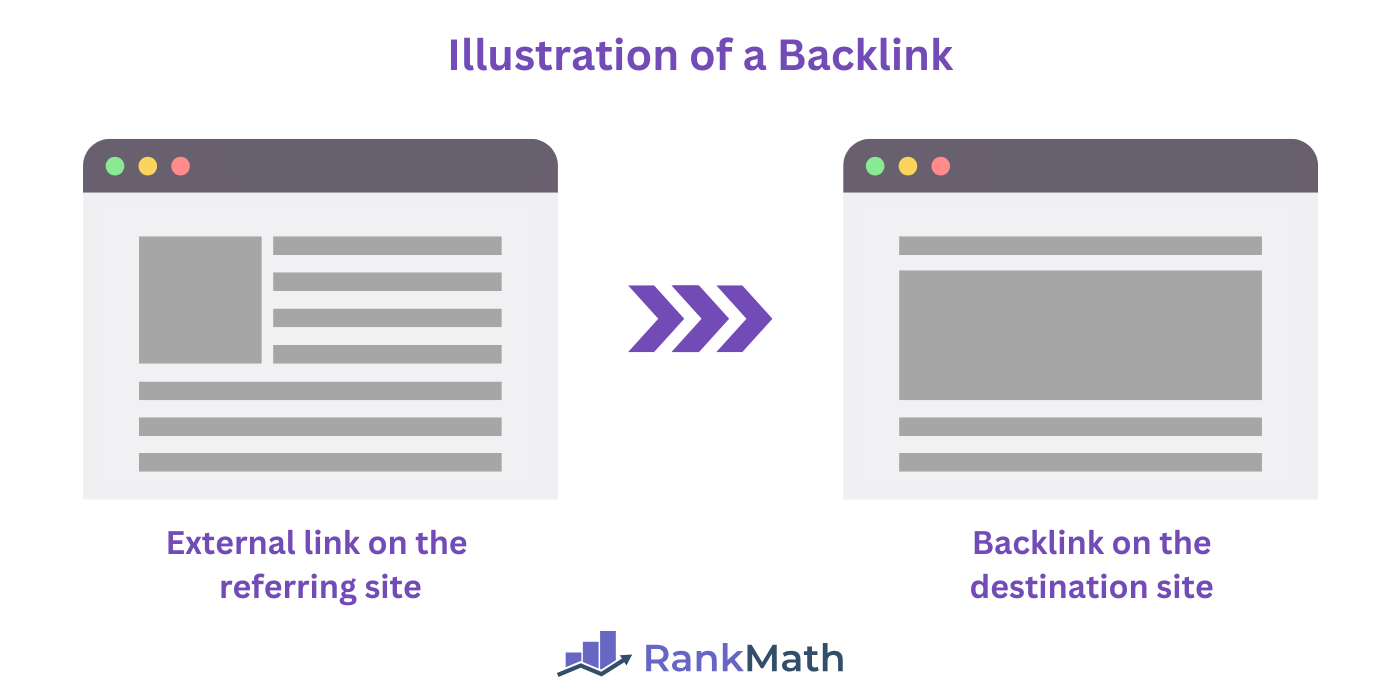
A backlink is a link from one website to another. If the site belongs to you, a backlink is a link that originates on another site and points to your site.
Backlinks are also called inbound links. They are the opposite of external links (also called outbound links), which are links that originate on your site and point to another site.
A backlink and an external link are two sides of the same coin. The same link is called an external link on the page it originates and a backlink on the page it points to.
Backlinks are an important ranking factor as search engines consider them a vote of confidence in your content and site. As a result, sites with many high-quality backlinks tend to rank higher on search engine results pages (SERPs).
In this article, we’ll cover:
- Example of a Backlink
- Difference Between a Link and a Backlink
- Why Backlinks Are Important
- Backlink Quality vs Quantity: Which Is Better?
- How to View Your Backlinks
- Characteristics of a Good Backlink
- 6 Types of Valuable Backlinks
- How to Get High-Quality Backlinks
- How Google Detects Black Hat Link Building
- Black Hat Link Building Techniques to Avoid
Example of a Backlink
The image below shows a link that points from our site to Google Analytics homepage.
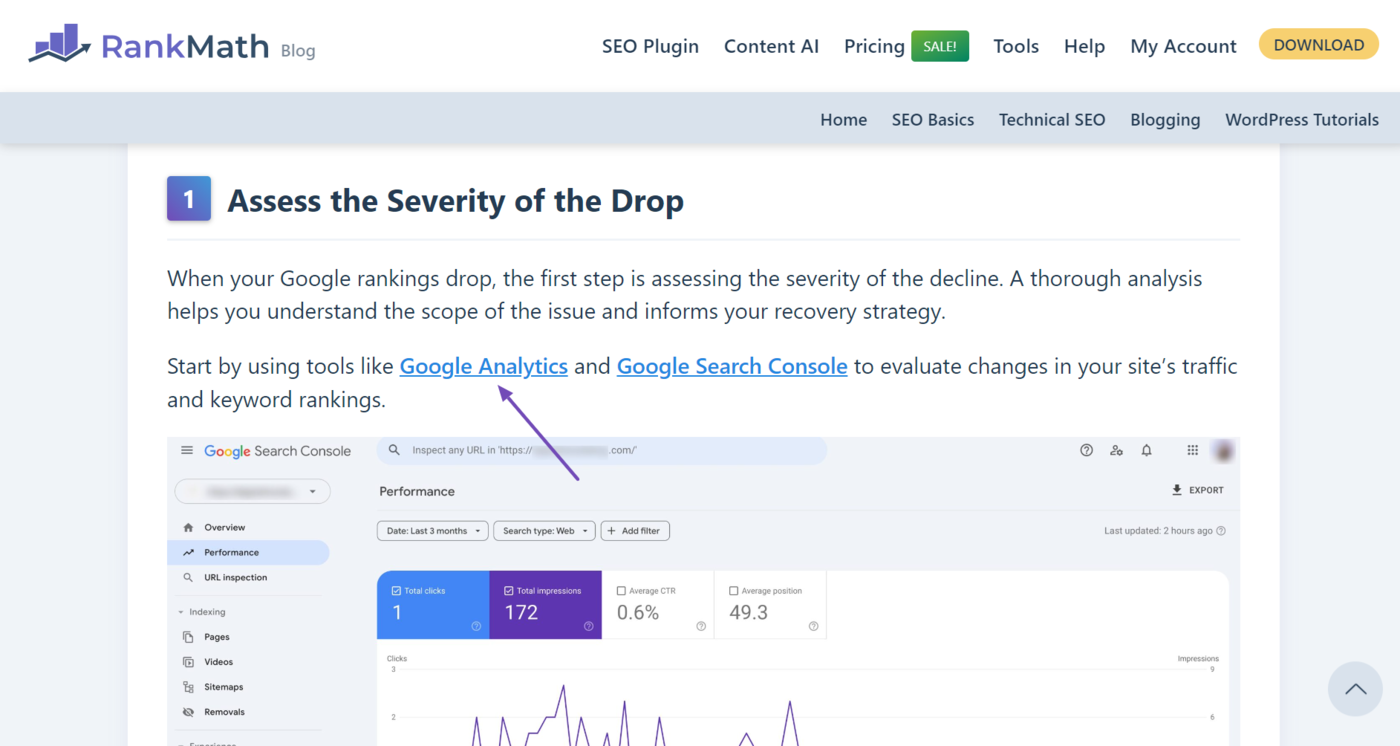
This link is an outbound link to us but a backlink to Google Analytics. When we click on it, our browser takes us to the Google Analytics homepage.
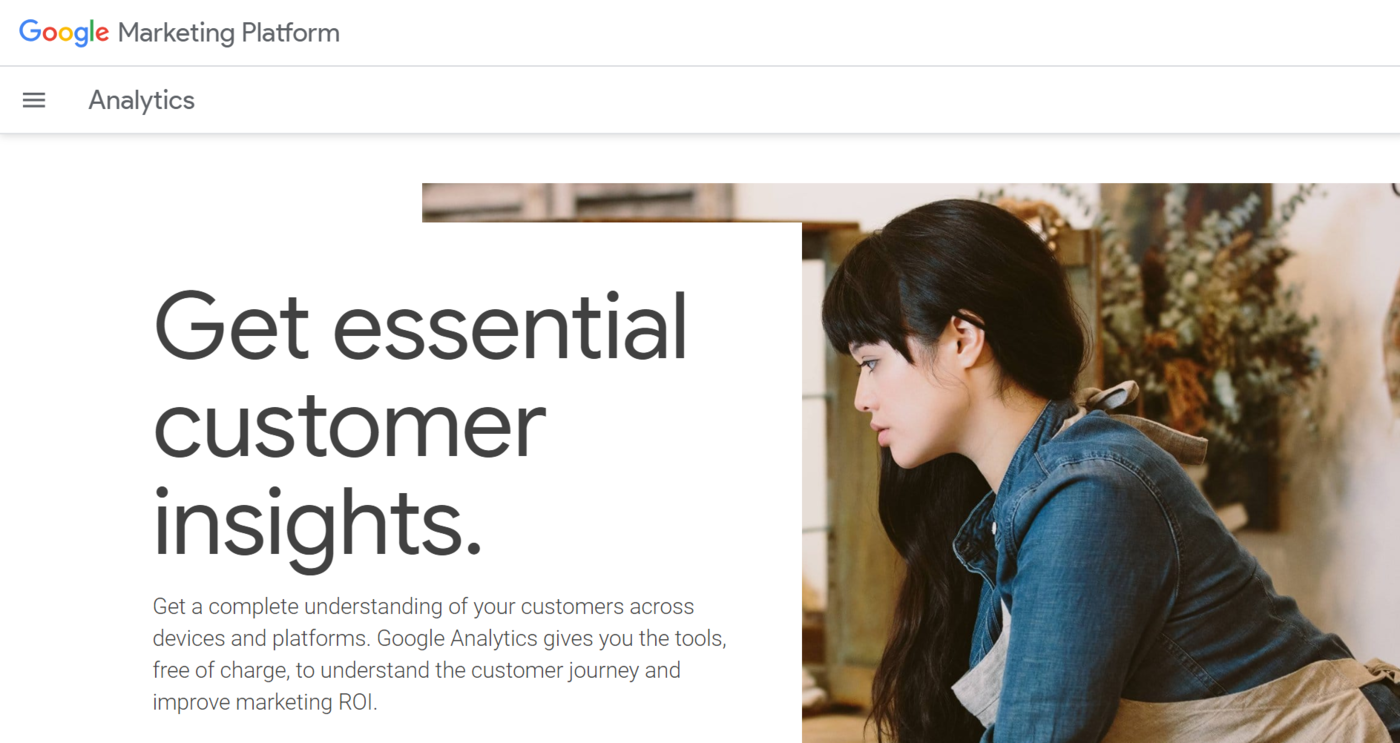
There is no visual indicator on Google Analytics homepage to indicate they received a backlink from us. However, search engine crawlers like Googlebot and Bingbot can see the link in our page’s source code and will follow it to Google Analytics homepage.
Difference Between a Link and a Backlink
A link (or hyperlink) is a clickable element that points from one webpage to another. They are generally categorized into three, depending on their origin and destination.
- Internal links: A link that points from one page to another page on the same website
- External links: A link on your website that points to another website (also called an outbound link)
- Backlinks: A link on another website that points to your website (also called an inbound link)
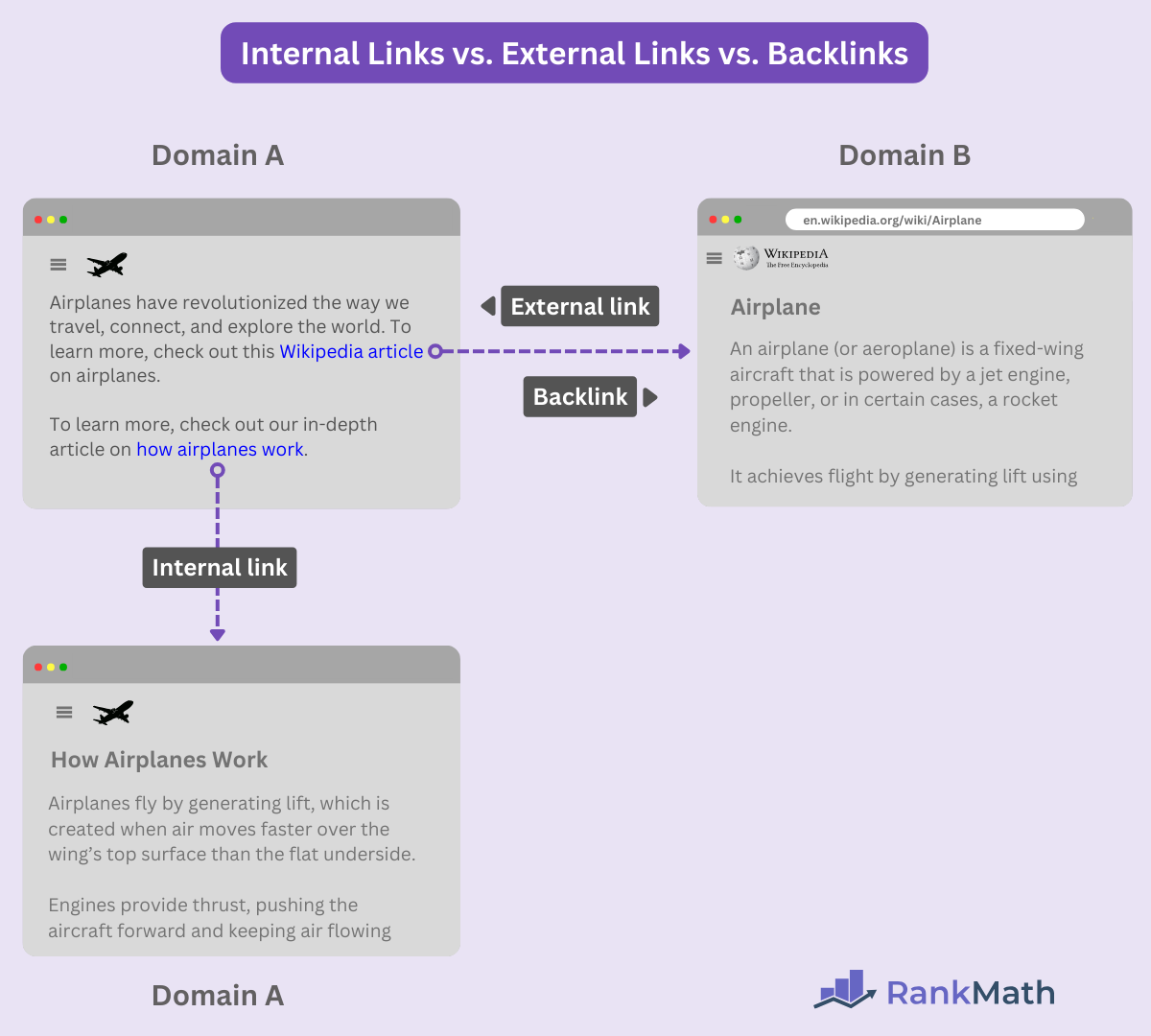
Overall, backlinks are a type of link. It is important to understand this to avoid confusion as some bloggers use both terms interchangeably.
Why Backlinks Are Important
Backlinks are important because of the positive effect they have on a page’s rankings. Back in the early days of search engines, multiple search engines had different methods by which they determined what content to display on their results pages.
However, Google came up with PageRank, which used backlinks to determine where a site appeared on its search results page. The usage of backlinks was based on the premise that other sites will always link back to relevant, high-quality content.
Google has other algorithms and systems to determine a page’s rankings. It has also modified the original PageRank algorithm and still uses a variation of it today. However, Google still considers backlinks an indicator of value, making them a crucial factor in how it ranks webpages on its result pages.
Backlink Quality vs Quantity: Which Is Better?
When evaluating backlinks, quality carries more weight than quantity. A single backlink from a relevant high-authority site can deliver more SEO value than dozens of low-quality links from multiple spammy and unrelated sites.
In fact, having an excessive amount of low-quality backlinks can harm your SEO performance and may even cause Google to issue a “unnatural links to your site” manual action penalty against your site.
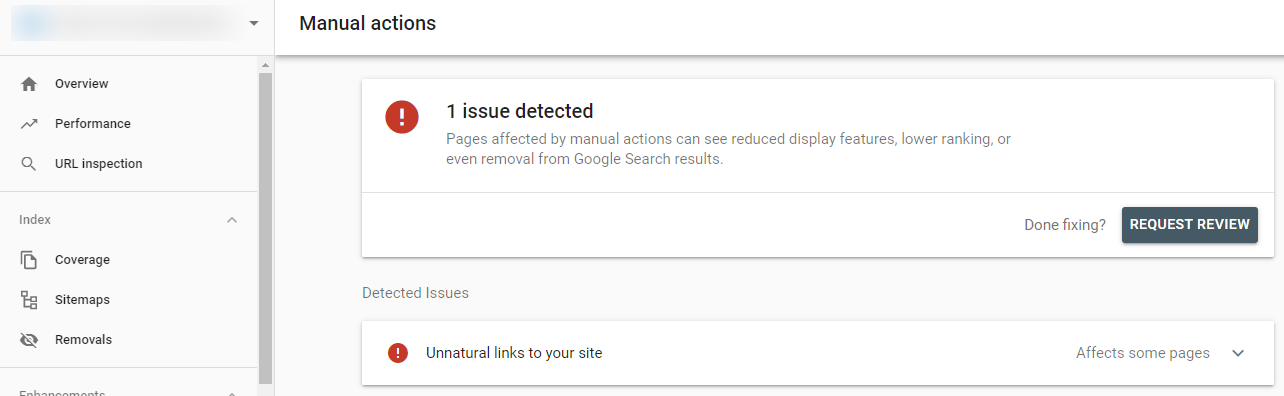
This means you should focus on earning high-quality backlinks rather than earning lots of low-quality ones. However, quantity also has its place with respect to backlinks.
Specifically, you need multiple high-quality backlinks to rank highly on search results pages. The number required varies depending on the keyword difficulty. The higher the difficulty, the more high-quality backlinks you will need.
How to View Your Backlinks
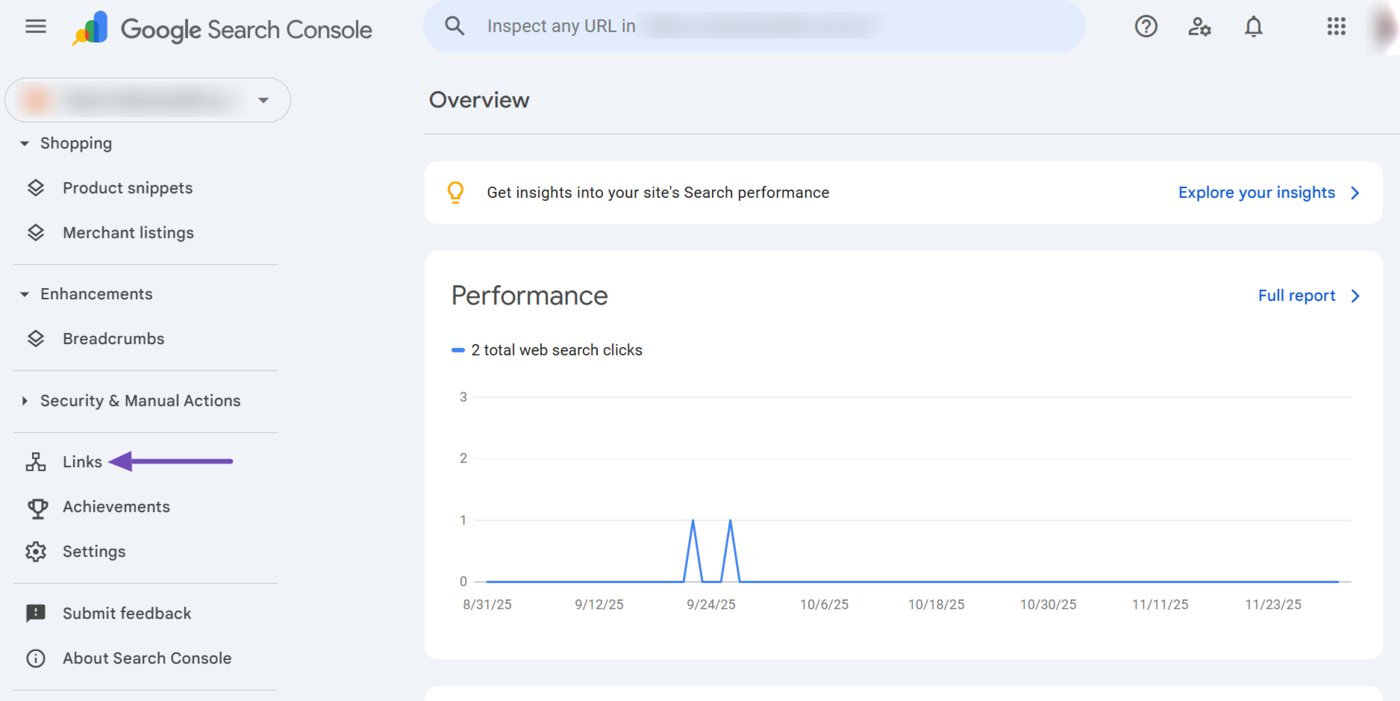
You can view your backlinks using Google Search Console. To get started, log into your Google Search Console account. Then, click Links in the sidebar.
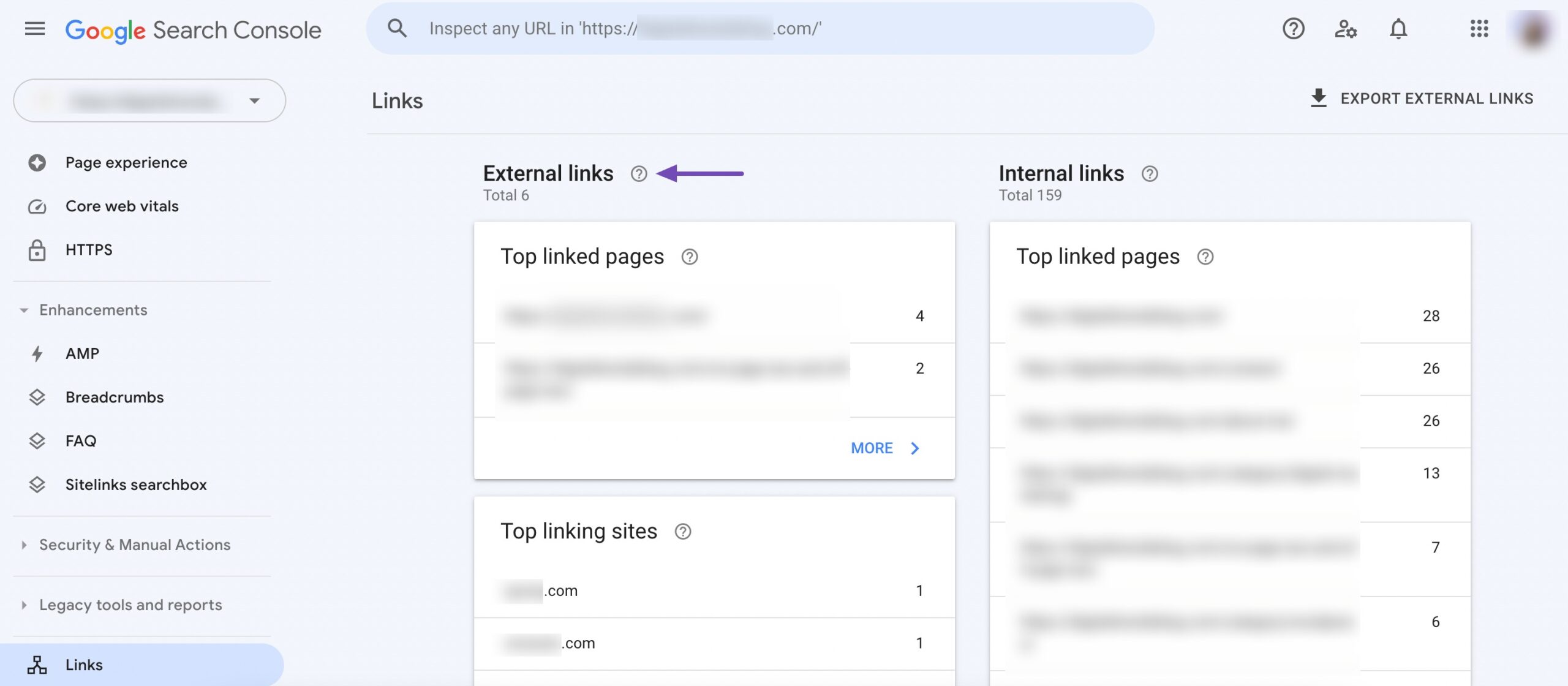
Here, you will see your link report. You will focus on the External links report because it contains the details of your backlinks. It is split into top linked pages, top linking sites, and top linking text.
- Top linked pages: Shows your webpages that receive the most backlinks
- Top linking sites: Shows the sites from which your backlinks originate
- Top linking text: Shows the anchor texts used for your backlinks
However, the Google Search Console report may not include all your backlinks. Because of this, you may have to rely on third-party SEO tools like Ahrefs, Semrush, and Moz. These tools also allow you to analyze the backlinks of websites you do not own, something Google Search Console does not support.
Characteristics of a Good Backlink
All backlinks are not equal. Some are beneficial and high-quality, while others are low-quality and should be avoided. However, even good backlinks can have varying levels of benefit for your SEO. Overall, the more criteria your backlink meets, the better it is for SEO.
1 It is a Dofollow Link
Links can be dofollow or nofollow. A dofollow link (also called a follow link) passes link equity and PageRank to the site it points to. Search engines consider such links a vote of confidence from the URL providing it to the one that is being linked to.
In the case of backlinks, dofollow links improve the ranking of the page they point to and increases their chances of ranking on search results pages. A nofollow link, on the other hand, does not pass link equity and PageRank.
2 It Comes From a High Authority Domain
Links from authoritative websites carry more weight and influence than links from low-authority pages and domains.
A common way to assess authority was PageRank, but Google no longer publicly provides this metric. Today, bloggers rely on third-party metrics such as domain authority, URL rating, citation flow, and trust flow to evaluate the quality of pages and domains.
3 It is Relevant to Your Content
A good backlink should be contextually relevant to the content it points to. This signals to search engines that the content on both URLs are related and relevant to one another.
An irrelevant backlink, on the other hand, could signal the existence of a link scheme, which can earn you a manual action penalty.
4 It is Positioned Within the Main Content
A good backlink is embedded within the page’s main content. This means it is within the actual content the visitor is interested in. This sort of placement suggests the link is relevant to the content.
In contrast, links in other areas of the webpage, such as in the header, sidebar, footer, or widget are not usually considered for ranking purposes.
5 It Uses Descriptive Anchor Texts
A good backlink is embedded within a descriptive anchor text that reflects the content on the page receiving the link. The text should be natural, readable to a human, and not excessively optimized with keywords, else it becomes keyword stuffing.
6 It Comes From Multiple Domains
Backlinks from a variety of domains signal diversity in your backlink profile. This diversity is favored by search engines as it indicates that your content appeals to multiple bloggers and a broad audience.
7 It Originates from First-Time Linkers
Backlinks from the same domain have diminishing returns. When a site links to you for the first time, such link carries significant weight. However, when the same site links to you again, Google discounts the link, making it less powerful than the initial one.
8 It Originates From Sites With Low Spam Score
Search engines prefer backlinks that originate from sites with a low spam score, as this indicates the site is well maintained and less likely to engage in unethical SEO practices. On the other hand, backlinks from a site with a high spam score can harm your SEO and negatively affect your rankings.
6 Types of Valuable Backlinks
Valuable backlinks generally fall into two categories: natural and manual.
Natural links are the links you earn organically without reaching out to other bloggers. These are the most valuable types of backlinks as search engines consider them authoritative and high-quality.
Manual links, on the other hand, are the backlinks you earn due to your outreach and marketing efforts. These backlinks may not give the same return as natural backlinks, but can still pass link equity and PageRank. They are also a great source of referral traffic and brand mentions.
Some examples of natural and manual backlinks include:
- Editorial backlinks
- Guest post backlinks
- Social media backlinks
- Resource page backlinks
- Press release backlinks
- Directory backlinks
Note: Editorial backlinks are natural backlinks, while guest posts and press releases are manual backlinks. Social media, resource pages, and directory backlinks may be natural or manual, depending on how you earned them.
1 Editorial Backlinks
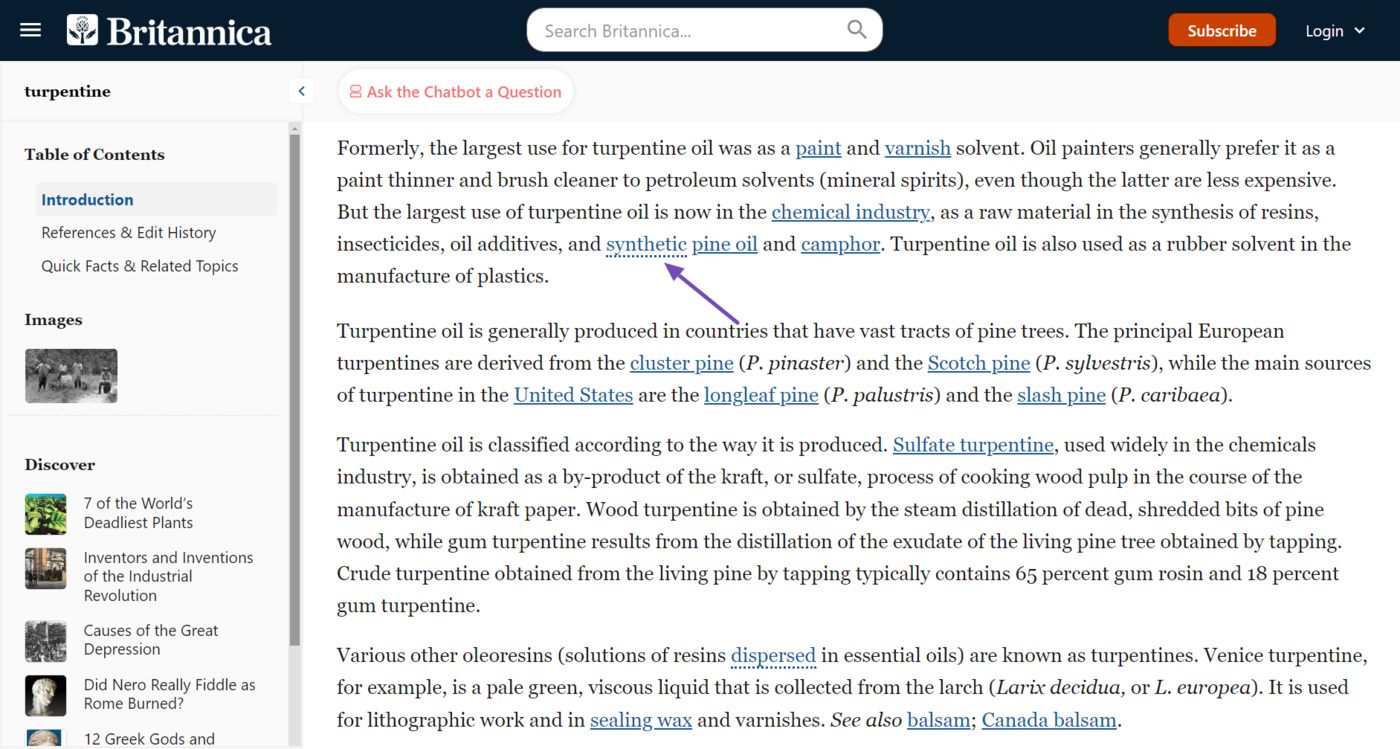
Editorial backlinks are backlinks that come from other websites without any solicitation from the site receiving the link. The bloggers of the referring site usually add these links because they found the content relevant and helpful to their audience.
2 Guest Post Backlinks
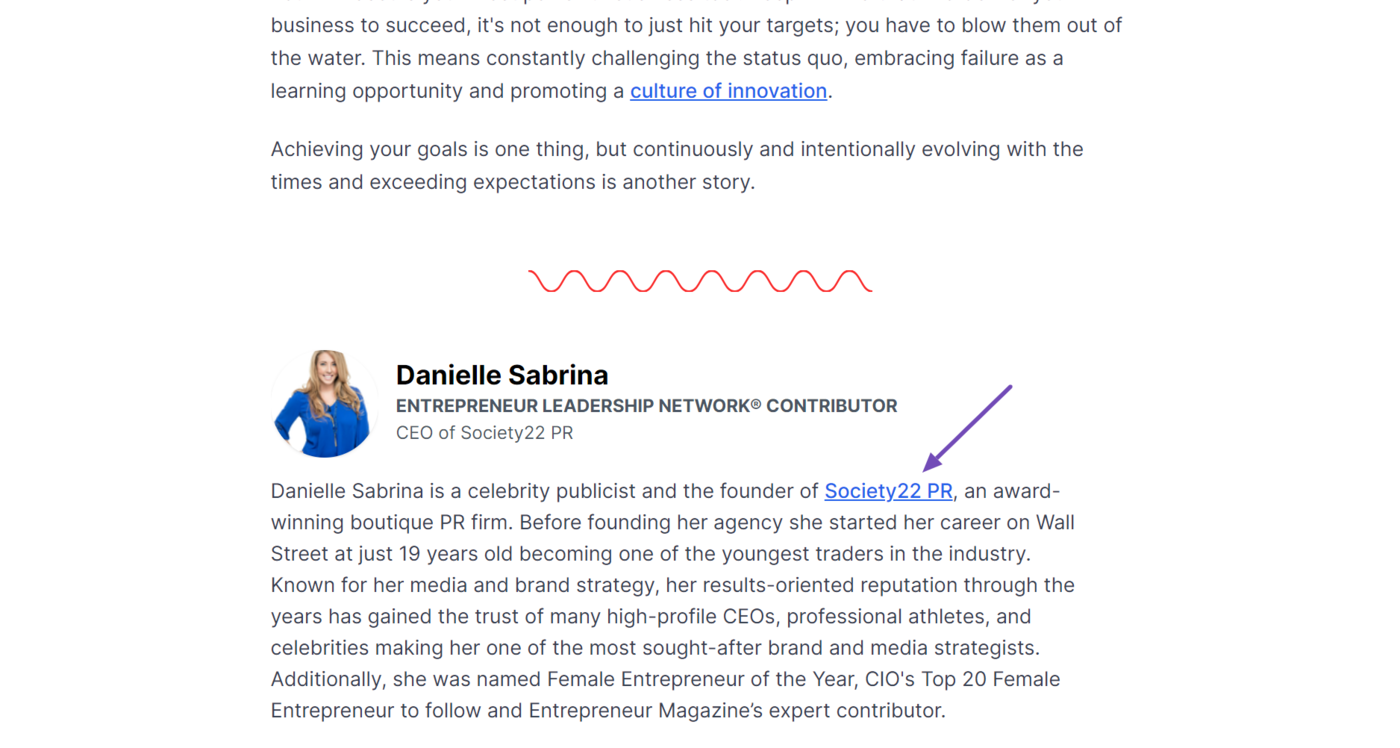
Guest post backlinks are created when you write an article for another website and include a link back to your own site within the content or author bio.
3 Social Media Backlinks
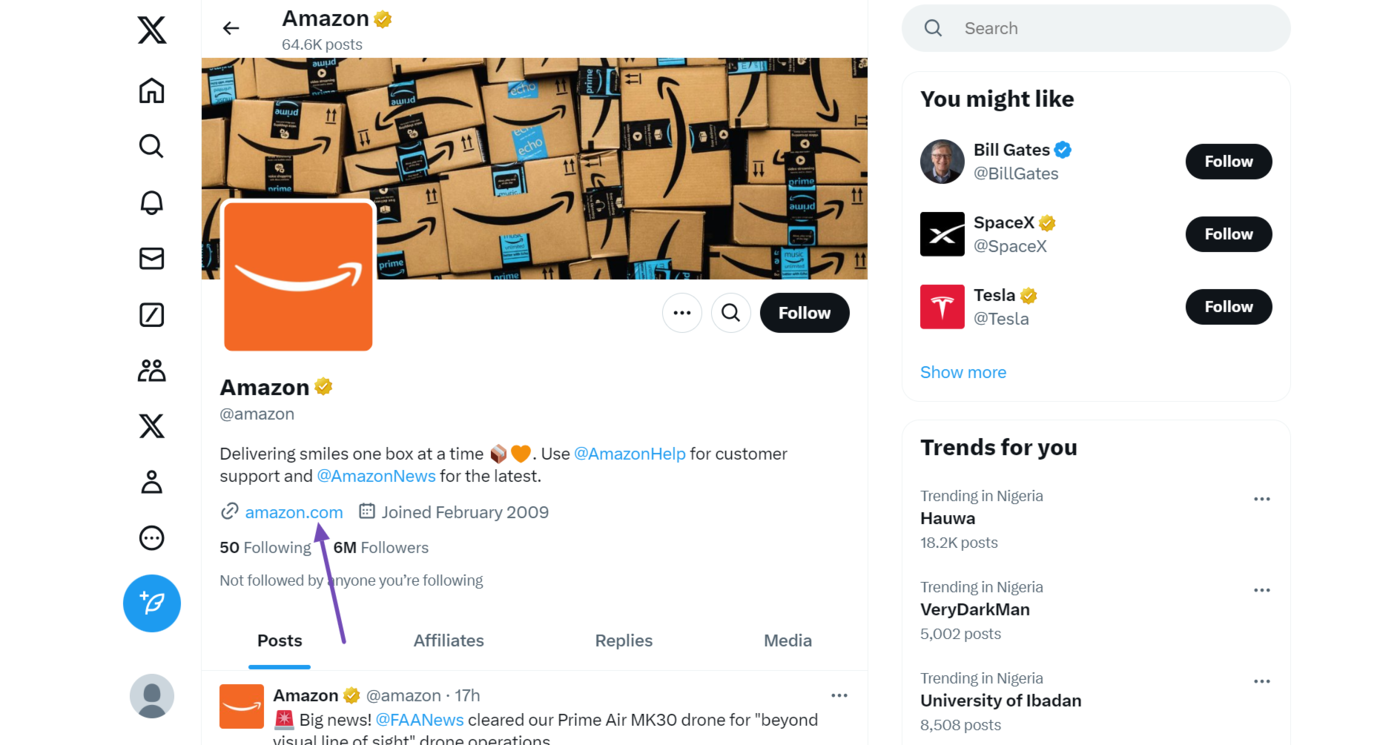
Social media backlinks are links from social media sites. The links could appear in the comments, posts, or profile of users. The links are typically nofollow.
4 Resource Page Backlinks
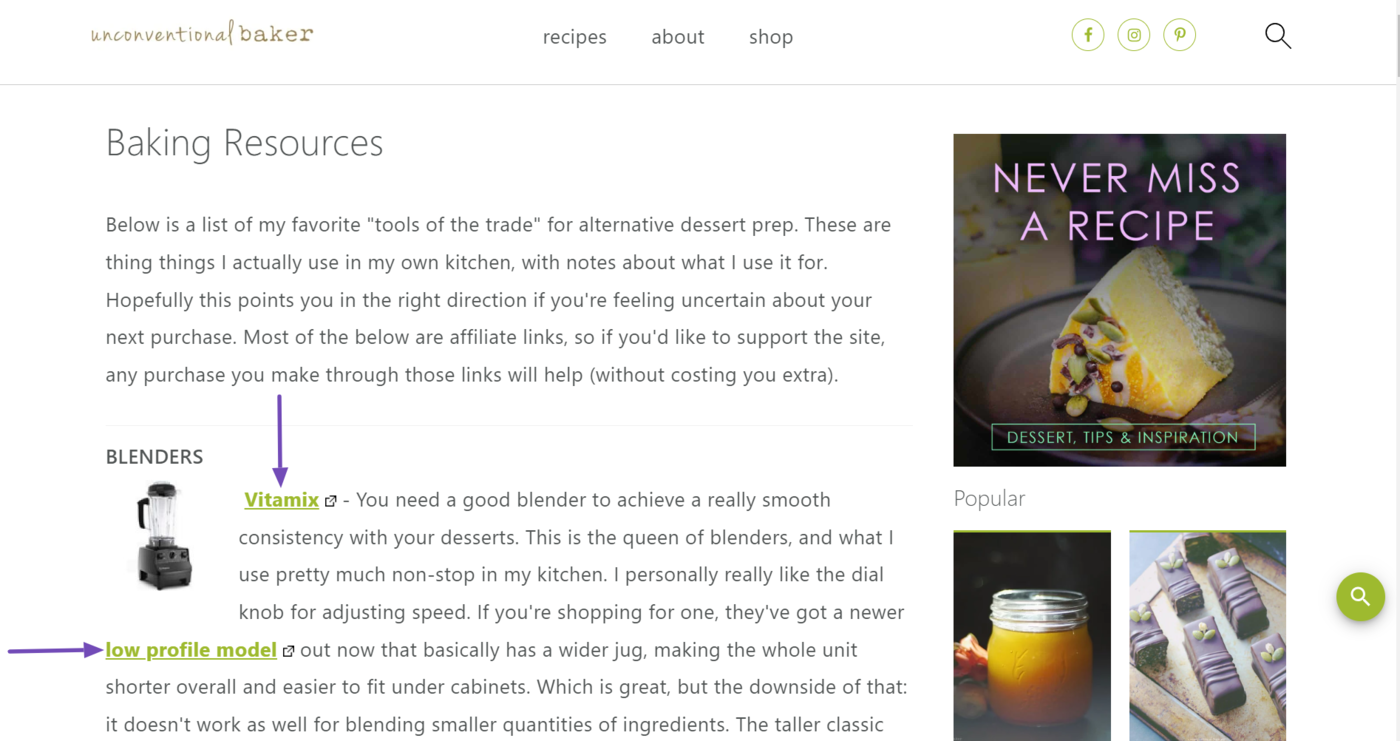
Resource page backlinks are links obtained from pages that curate and list valuable products, tools, or content related to a topic or industry. Besides the SEO benefits, these backlinks also generate traffic to the URL being linked to.
5 Press Release Backlinks
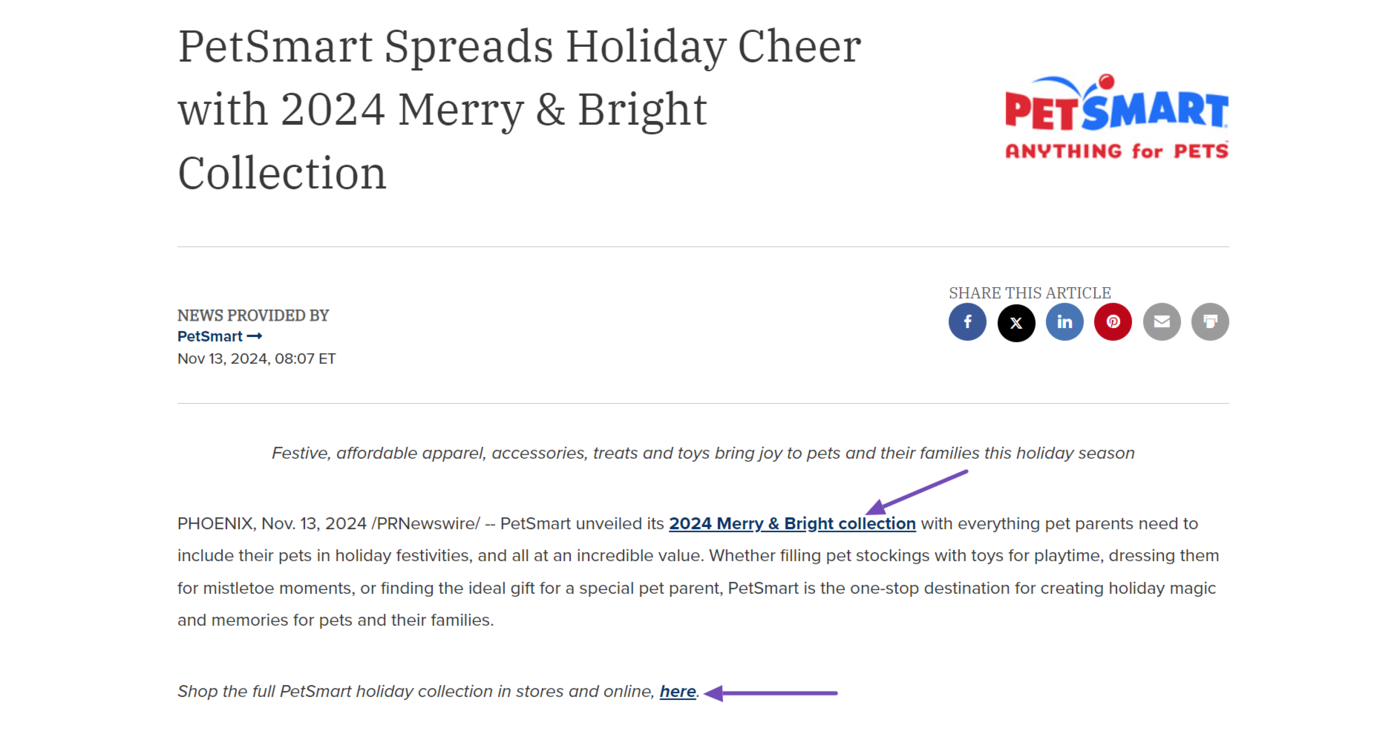
Press release backlinks are links that result from distributing a press release to various media outlets and news websites. Each time a press release is picked up and published, it will include a link back to the company’s website.
6 Directory Backlinks
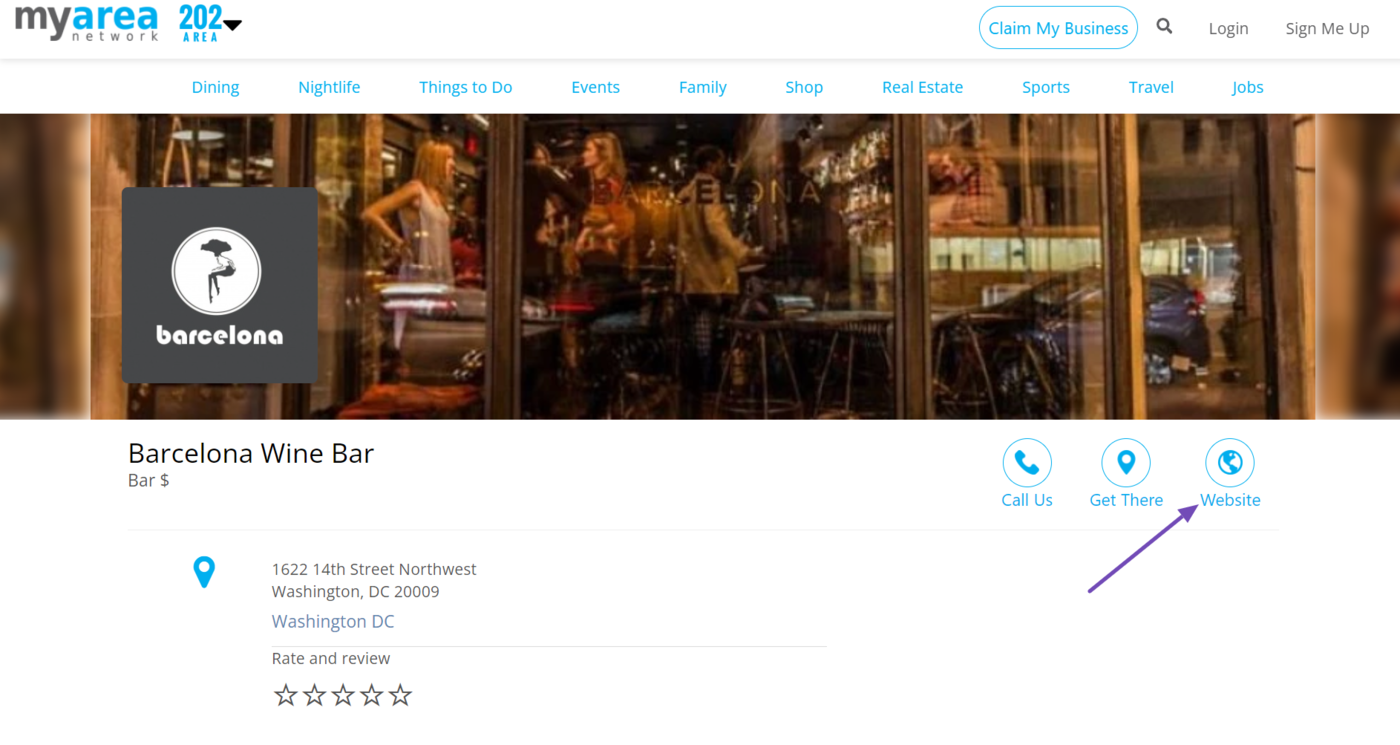
Directory backlinks are links obtained from business directories that list websites based on category, industry, or location. These links are often used for local SEO and will usually include the details of the business, including its name, address, phone number (NAP) and website URL.
How to Get High-Quality Backlinks
Getting high-quality backlinks can be challenging. However, there are proven strategies to get valuable backlinks that can boost your website’s authority and traffic. Let us explore some of them below.
- Create linkable assets
- Build links from broken links
- Perform link reclamation
- Create guest posts
- Use PR link building platforms
- Copy your competitor’s linking strategy
1 Create Linkable Assets
Linkable assets are high-value resources that other bloggers find useful enough to include or reference on their own websites. These types of content naturally attracts backlinks.
Linkable assets vary and can include:
- 10x content
- Infographics
- Original research
- Interactive-style content
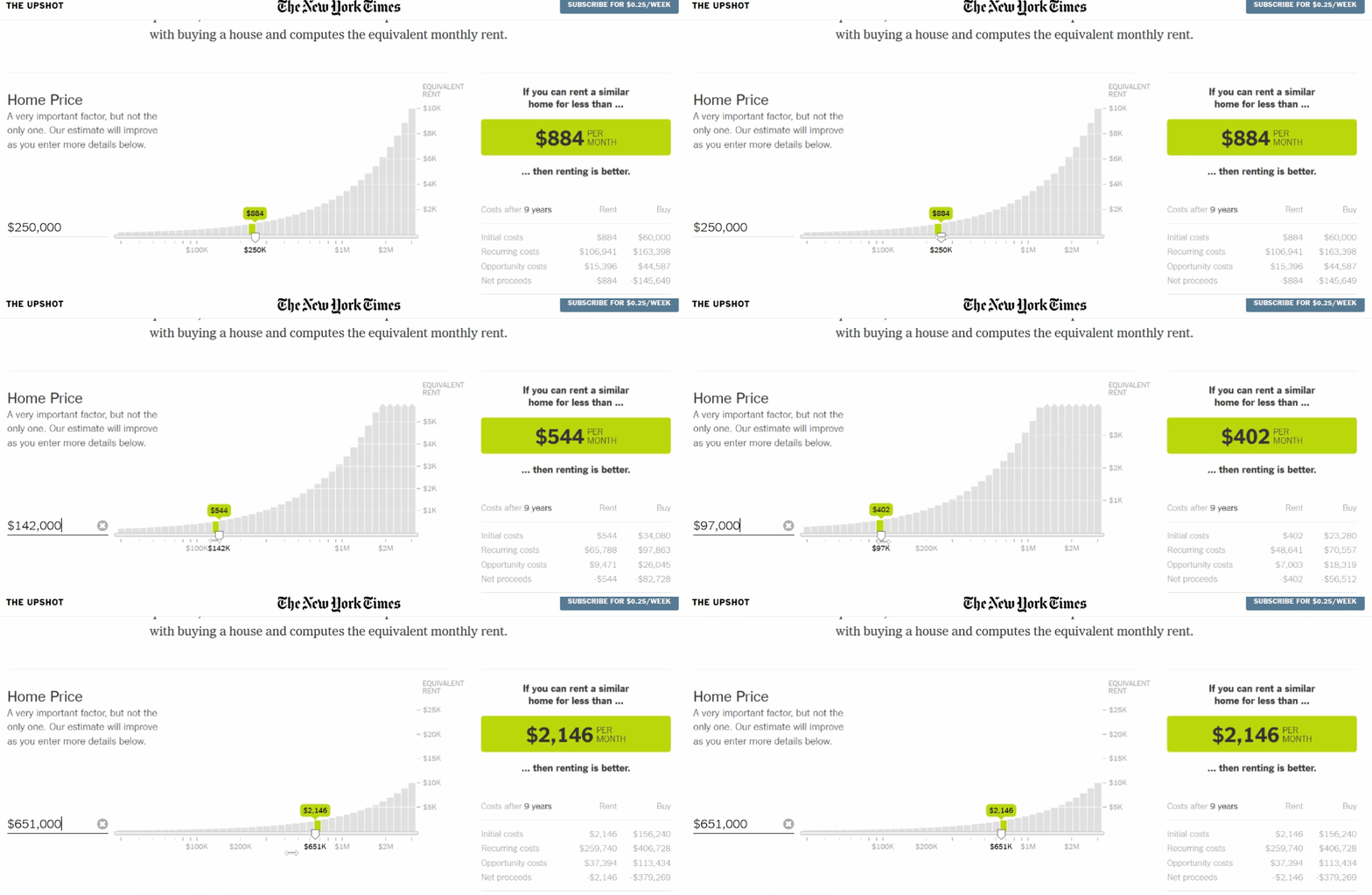
As a rule, these types of content must be in-depth and well researched and formatted to attract high-quality backlinks from other bloggers. For example, this webpage features interactive content that users can control using a slider.
2 Build Links From Broken Links
Broken link building is a link building strategy wherein you identify broken links on other websites and offer your own content as a replacement.
This technique helps bloggers to maintain the quality of their pages while providing you an opportunity to gain a relevant backlink.
You will typically require third-party tools to find these types of links. Once done, you reach out to the blogger or site manager, usually through email (called email outreach) with a polite request to replace the broken link with yours.
3 Perform Link Reclamation
Link reclamation is the process of recovering lost or uncredited mentions of your site, brand, or product across the web. This includes finding websites that mention your brand without linking back to you and then requesting they link to you.
You will require tools like Google Alerts or Mention to find these types of sites and content. These tools are great because they automate the process of finding these pages and inform you soon after they have been indexed.
Optionally, you can manually search for your site on Google and review the webpages that mention your brand. If a page mentions you but does not link to your site, you can reach out and request that they add a link.
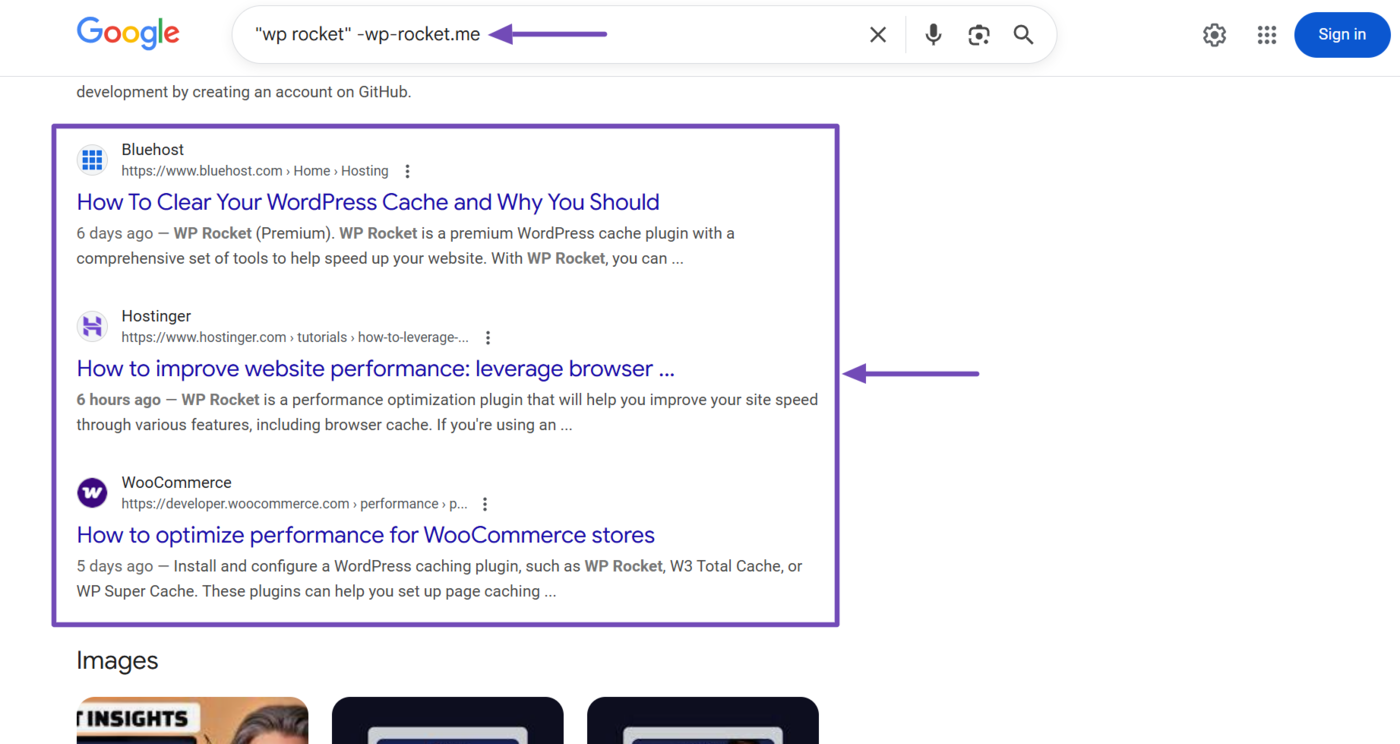
To get started, you will enclose your site, brand, or product name in quotes and search for it on Google.
Note: You can include a hyphen followed by your URL to prevent Google from returning your URLs in the result.
For example, if your product name is WP Rocket and your domain name is wp-rocket.me, you will enter this search term into Google: "WP Rocket" -wp-rocket.me.
Google will then return relevant webpages that mentioned your product, as shown below. Review them individually to see whether they linked to you.
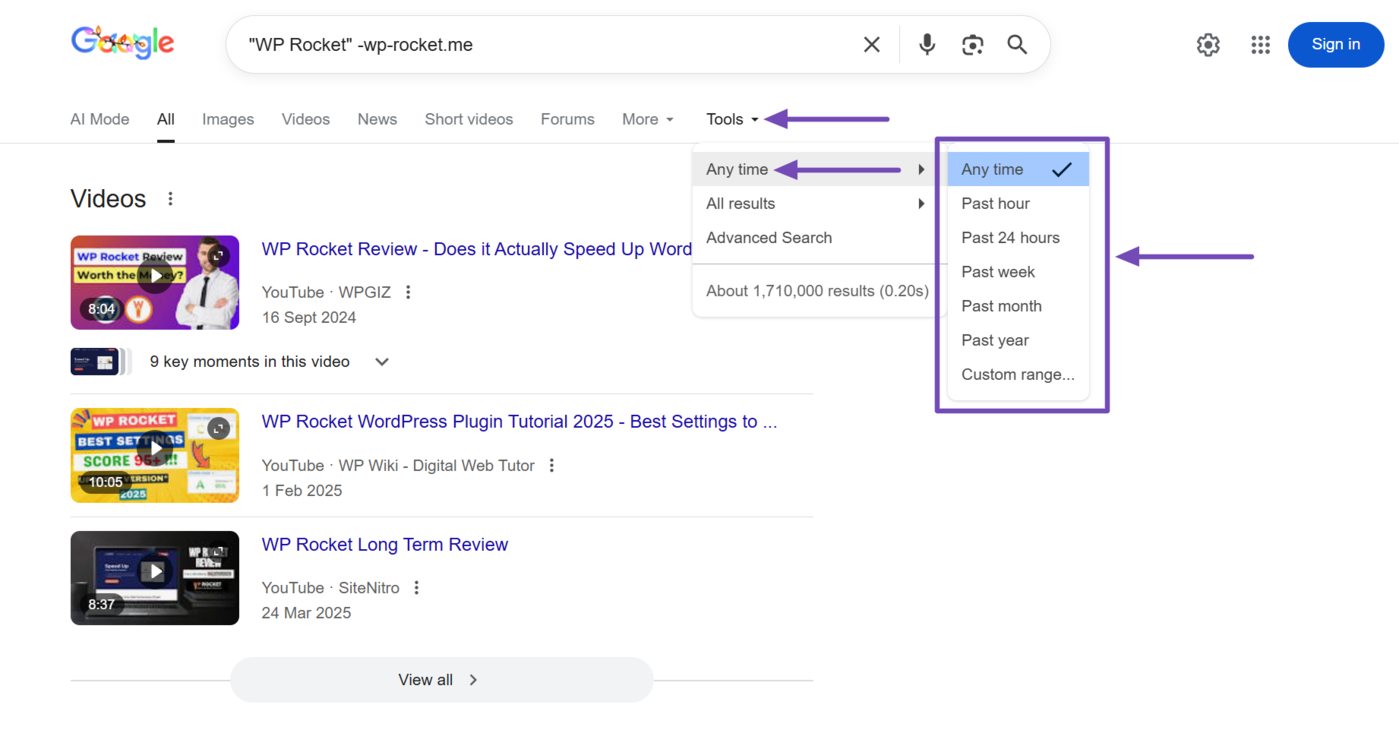
Additionally, you can use the time range option to limit the results to recently published webpages. You will do this by clicking Tools → Any time on the search results page. You will then select a time range like:
- Past hour
- Past 24 hours
- Past week
- Past month
Note: You can start with the past hour filter and gradually expand to the past 24 hours, week, and month filters. This is because the chances of securing a backlink decreases the older the article is, so you want prioritize the most recent articles before moving to older ones.
4 Create Guest Posts
Guest posting involves writing high-quality articles for other websites in your niche and then including one or more backlinks that point to your site. Many sites include these links in the author bio. However, you may also include the links within the article.
To get the best results, you should ensure your guest posts:
- Is actionable and not overtly promotional or self-serving
- Aligns with the editorial and linking guidelines of the host site
- Demonstrates your expertise and credibility on the topic and niche
- Provides valuable and actionable information to the audience
5 Use PR Link Building Platforms
PR linking platforms are tools or services that connect experts to journalists and media outlets. These platforms are helpful for press releases and other newsworthy content you want to publish on news sites.
The type of content you can publish as part of a PR link building campaign include:
- Product launches
- Company milestones
- Unique studies and research
- Industry insights and expert commentary
- Announcements of awards or recognitions
6 Copy Your Competitor’s Linking Strategy
Sometimes, it is better to just copy your competitor’s backlink strategy and then replicate it on your site. This is a great link building technique since it allows you to find and replicate what is already working.
Here, you will look for the sites that link out to your competitors and then get those sites to link to you too. This will usually require you to create high-quality content that is worthy of receiving the backlink.
In the case of roundup posts or product reviews, you will reach out to those sites and request them to review your product or include it in their roundup.
How Google Detects Black Hat Link Building
Google relies on multiple methods to identify webpages involved in black hat SEO link building techniques. Some known ones include:
- The Google Spam team
- Link spam algorithm updates
- Spam reports submitted by users
1 The Google Spam Team
Google has a dedicated spam team that monitors websites for manipulative or low-quality link building practices. This team manually reviews suspicious sites, investigates unnatural linking patterns, and can issue manual actions against websites that violate Google Search Essentials guidelines.
2 Link Spam Algorithm Updates
Google regularly releases algorithm updates to detect unnatural link building patterns. Google refers to some of these as “link spam updates,” although it does not always explicitly label them as such.
Some notable ones include the Penguin algorithm update and the December 2022 link spam update, both of which heavily impacted sites engaged in manipulative link schemes, such as paid links and low-quality backlinks.
Google also uses AI-powered systems like SpamBrain to detect and neutralize spammy link building practices. Some bloggers also speculate that Google uses an algorithm called TrustRank to analyze a site’s backlink profile for spam. However, Google has not confirmed this.
3 Spam Reports Submitted by Users
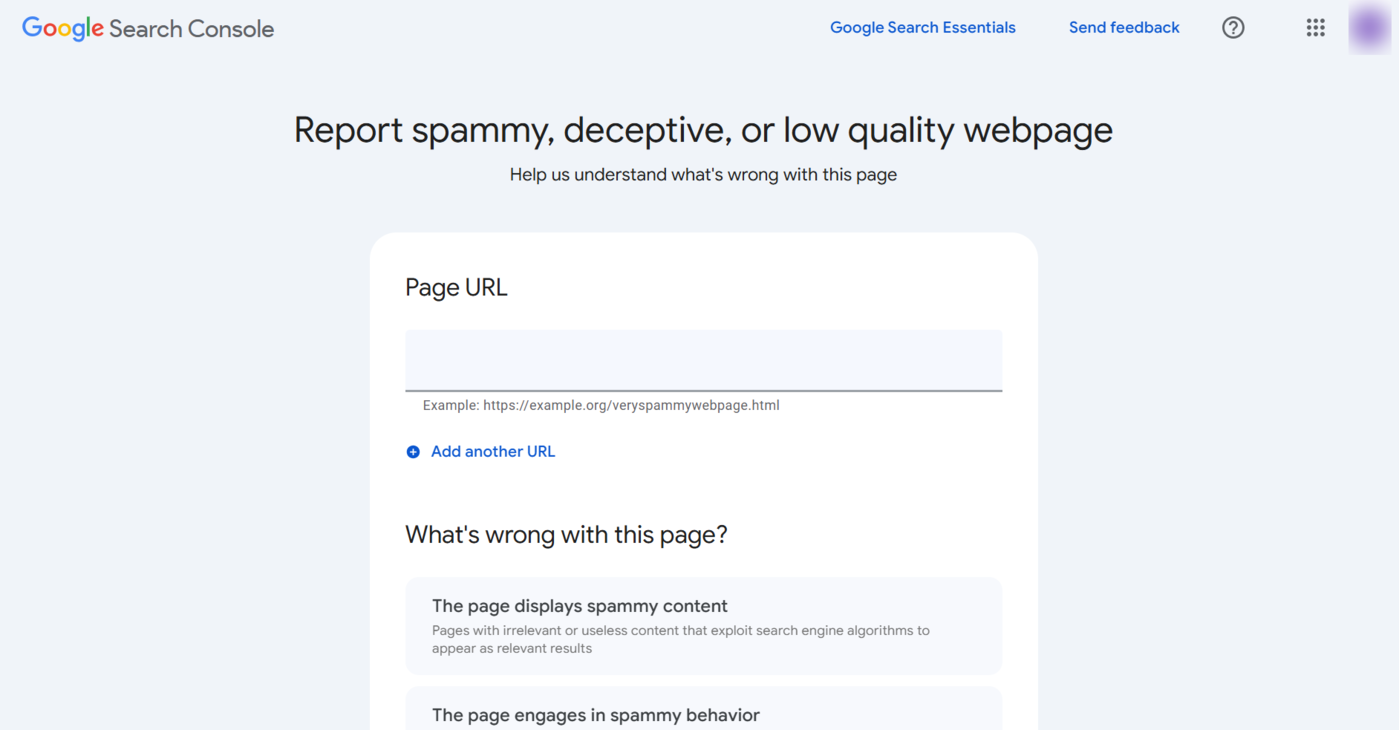
Google allows web users to report webpages involved in deceptive content creation and link building practices. These reports feed into Google’s spam review process, and alerts both manual reviewers and automated systems to potential violations
Black Hat Link Building Techniques to Avoid
Link building can be complex and time-consuming, which has caused some bloggers to resort to black hat link building techniques for quick results. However, it’s best to avoid these methods, as Google can detect them and may issue a manual action penalty against you.
With that said, here are some common black hat link building techniques you should avoid.
- Paid links
- Link exchanges
- Link farms
- Private blog networks (PBNs)
- Automated link building
- Links with keyword-rich anchor texts
- Low-quality directory submissions
- Mass guest posting on irrelevant sites
1 Paid Links
Paid links are links given to a site in exchange for money or other item or service of value. Google requires these links to include a nofollow or sponsored link attribute to indicate they have been paid for, otherwise they will violate Google Search Essentials guidelines.
2 Link Exchanges
A link exchange occurs when a blogger links to another blogger in exchange for a link from that blogger. Google permits sites to exchange links. However, the link should be relevant to the content and done in moderation.
3 Link Farms
A link farm is a group of sites that link to one another. The sites in the farm are usually not contextually relevant to one another and rarely provide any tangible value to the user.
4 Private Blog Networks (PBNs)
A private blog network (PBN) is a group of blogs that link to a target site. It is almost like a link farm except that the target site they all link to does not link back to them in return.
5 Automated Link Building
Some SEOs use bots to generate backlinks to their site. One common method is to post comments on other blogs and sites using specialized software. These links are typically irrelevant to the content published on the site they are posted.
Bloggers can protect themselves from the effect of these comments by including a user-generated content link attribute (UGC link attribute) to the comment visitors leave on their site.
6 Links With Keyword-Rich Anchor Texts
Google uses the anchor text to better understand the content on the site receiving the link. While it is good practice to include your keywords in your anchor text, you should ensure it is natural otherwise it becomes keyword stuffing.
7 Low-Quality Directory Submissions
Low-quality directory submissions involve listing your website in random directories that accept random URLs without any editorial review. Google considers these directories as link farms and treats their links as link spam.
8 Mass Guest Posting on Irrelevant Sites
While guest posting is a white hat SEO link building technique, doing so on sites unrelated to your niche, especially at scale, can be considered black hat. Instead of that, focus on creating helpful articles for high-quality, relevant sites rather than publishing on any site that will accept your content.