

If you’ve searched for anything recently using ChatGPT, Google AI Overviews, Gemini, Claude, or Perplexity, you’ve probably noticed something interesting.
Instead of showing a list of websites, these AI platforms often provide direct answers. They recommend products, suggest tools, compare brands, and summarize information without requiring users to click through multiple search results.
For businesses, this changes the rules of online visibility. Previously, your goal was simple: rank on the first page of Google.
Today, you also want AI platforms to mention your brand when users ask relevant questions.
For example, if someone asks:
- “What’s the best SEO plugin for WordPress?”
- “Which project management software should I use?”
- “What are the best email marketing tools for small businesses?”
The brands mentioned in those AI-generated answers gain visibility immediately, even if users never visit a search results page.
This is why brand mentions are becoming one of the most important metrics in the AI search era. The more often AI platforms mention your brand, the more opportunities you have to influence buying decisions, build trust, and attract customers.
Let’s get started.
Table Of Contents
- What Are Brand Mentions in AI Search?
- What Influences AI Brand Mentions?
- How to Track Brand Mentions Using Rank Math AI Visibility
- Track Average Mentions Across All Brands
- Track Mentions for a Specific Brand
- Track Competitor Mentions
- 7 Proven Ways to Increase Brand Mentions in AI Search
- Create Content That Answers Audience Questions
- Build Comprehensive Topic Clusters
- Add FAQ Schema Wherever Appropriate
- Publish Comparison Content
- Create Original Research and Data
- Strengthen Your Brand Entity
- Track Progress Consistently
- Common Mistakes That Reduce AI Visibility
- Frequently Asked Questions
- Conclusion
1 What Are Brand Mentions in AI Search?
A brand mention happens whenever an AI platform includes your company, product, or service in its response.
Imagine a user asks ChatGPT: What are the best SEO plugins for WordPress?
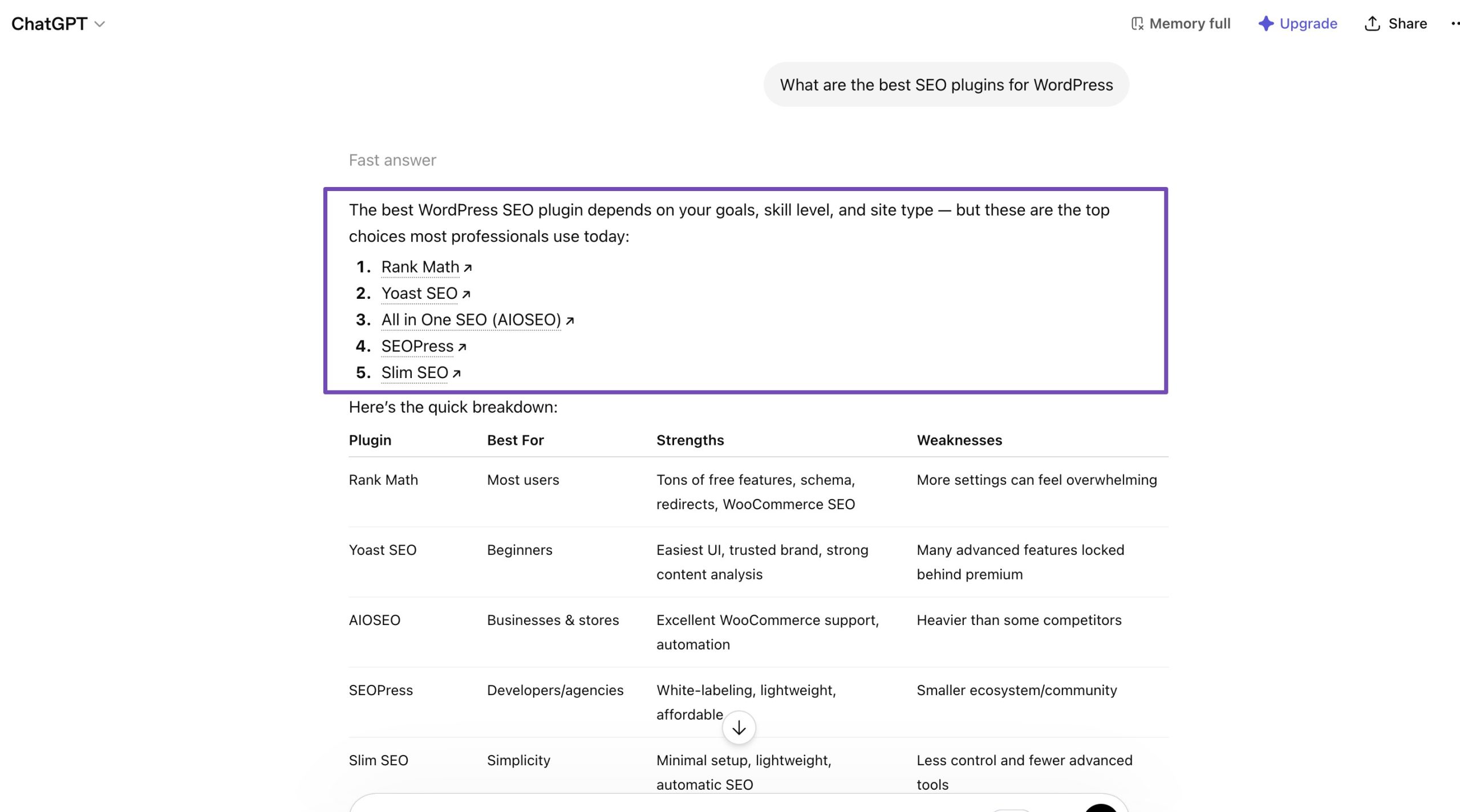
The AI might respond with: Rank Math, Yoast SEO, and All in One SEO are among the most popular SEO plugins for WordPress.
In this example, each product receives a brand mention because the AI has chosen to reference it while answering the user’s question.
Brand mentions can appear in different types of AI-generated responses, including:
- Product recommendations
- Tool comparisons
- “Best of” lists
- Educational explanations
- Buying guides
- Step-by-step tutorials
- Frequently asked questions (FAQs)
Every mention gives your brand additional exposure.
For example, imagine two companies offer similar products with comparable features and pricing. If AI platforms consistently recommend one brand but rarely mention the other, users are significantly more likely to discover, research, and ultimately choose the recommended brand.
This is why brand mentions have become an important measure of visibility in AI search. They indicate how frequently AI platforms recognize your brand as a relevant and trustworthy answer to users’ questions.
2 What Influences AI Brand Mentions?
One of the most common questions marketers ask is: How does AI decide which brands to mention?
There isn’t a single ranking factor.
Each AI platform uses its own methods for generating responses. However, most rely on similar signals to determine whether a brand is relevant, trustworthy, and authoritative enough to recommend.
Understanding these signals can help you improve your chances of appearing in AI-generated responses.
Let’s look at the most important ones.
2.1 Strong Brand Authority
AI systems prefer recommending brands that appear trustworthy and established.
For instance, if someone asks: What are the best project management tools?
If hundreds of websites, reviews, comparisons, and discussions mention a particular tool, AI becomes more confident recommending it.
This doesn’t mean only large brands win.
Smaller brands can also earn mentions by becoming recognized experts in a specific niche. The more authority you build around a specific topic, the more likely AI is to recommend you.
2.2 Consistent Brand Information
AI systems collect information from multiple sources.
If your website says one thing, your social profiles say another, and directory listings show outdated information, AI may struggle to understand your brand.
Consistency helps AI connect the dots.
Make sure your:
- Company description
- Product information
- Services
- Contact details
- Social profiles
remain consistent across the web.
Think of it as helping AI build a complete and accurate profile of your business.
2.3 Third-Party Mentions
Many businesses focus only on publishing content on their own websites. However, AI platforms also pay attention to what other websites say about you.
These mentions can come from:
- Industry blogs
- News sites
- Review websites
- Podcasts
- Forums
- Community discussions
- Comparison articles
For example, if ten respected SEO blogs recommend Rank Math, AI systems gain stronger evidence that it is a trusted solution.
This is one reason digital PR and brand-building efforts are becoming increasingly important.
2.4 High-Quality Content
AI systems are designed to answer questions.
As a result, they often rely on content that explains topics clearly, answers common questions, and provides useful information supported by examples.
Let’s compare two articles.
Article A: “SEO Tips for Better Rankings”
Contains:
- 500 words
- Generic advice
- No examples
- No unique insights
Article B: “How to Improve SEO Rankings: 15 Actionable Strategies With Examples”
Contains:
- Detailed explanations
- Real examples
- Step-by-step instructions
- Original insights
Which article will AI trust more?
Usually Article B. Creating content that is accurate, comprehensive, and easy to understand improves both your users’ experience and your chances of being referenced in AI-generated responses.
With Rank Math Content AI, you can research topics, generate content ideas, create detailed outlines, and write well-structured articles in less time.
Whether you’re writing blog posts, product descriptions, or in-depth guides, Rank Math Content AI gives you the tools to produce content that is both helpful for your readers and optimized for search engines.
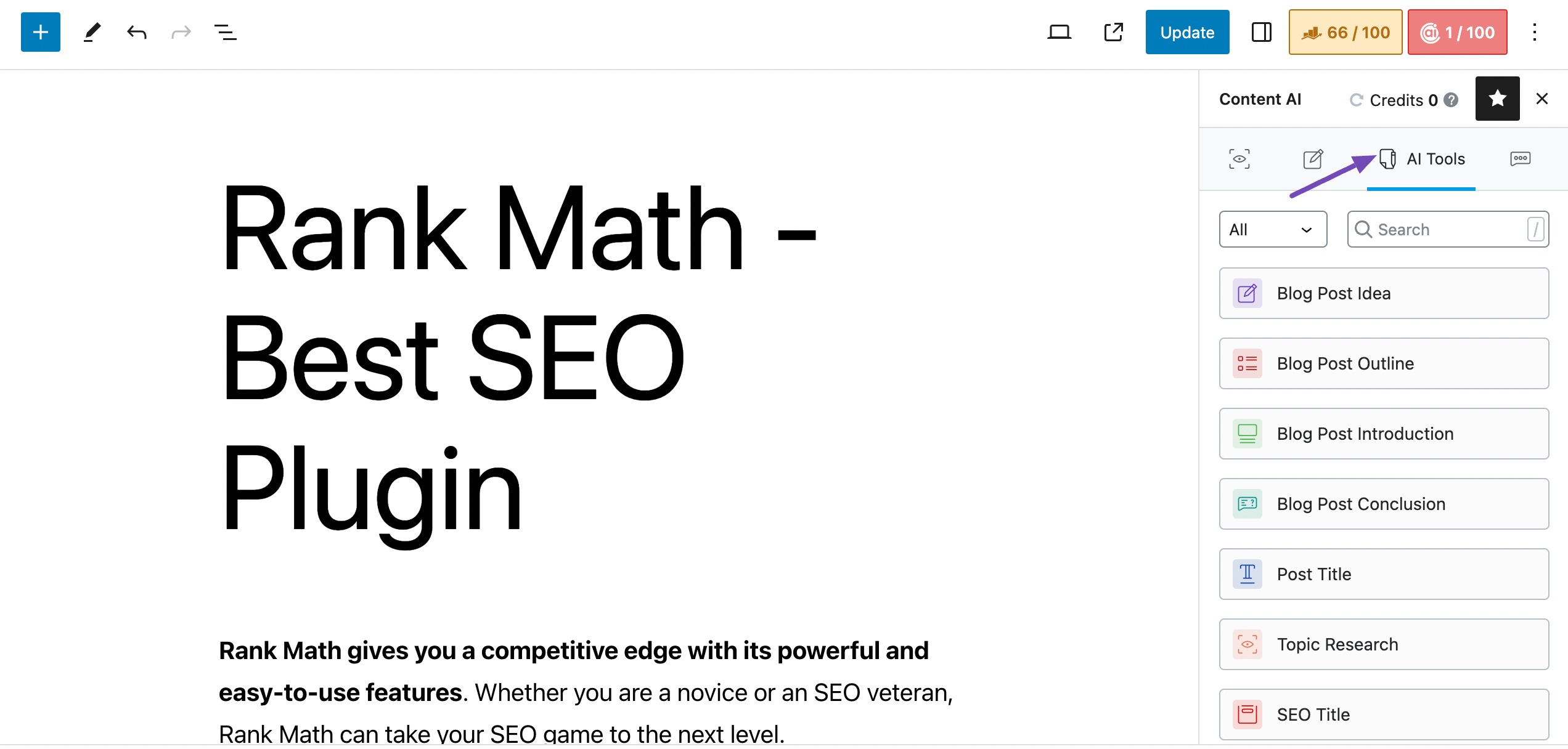
It helps you optimize your content for your target keywords while keeping it clear, engaging, and easy to read.
2.5 Schema Markup
Schema markup provides structured information that helps search engines and AI systems understand your content more accurately.
Rather than asking AI systems to infer meaning from a page, Schema explicitly identifies important entities and relationships.
Think of Schema as labels that explain:
- Who you are
- What you offer
- Which pages contain FAQs
- Which pages describe products
- Who wrote the content
Providing this structured information reduces ambiguity and helps AI systems understand what each page is about.
With Rank Math, you can add Schema markup to your pages without writing code, making it easier for search engines and AI platforms to interpret your content correctly.
To do so, ensure you’ve enabled the Schema module from your WordPress dashboard.
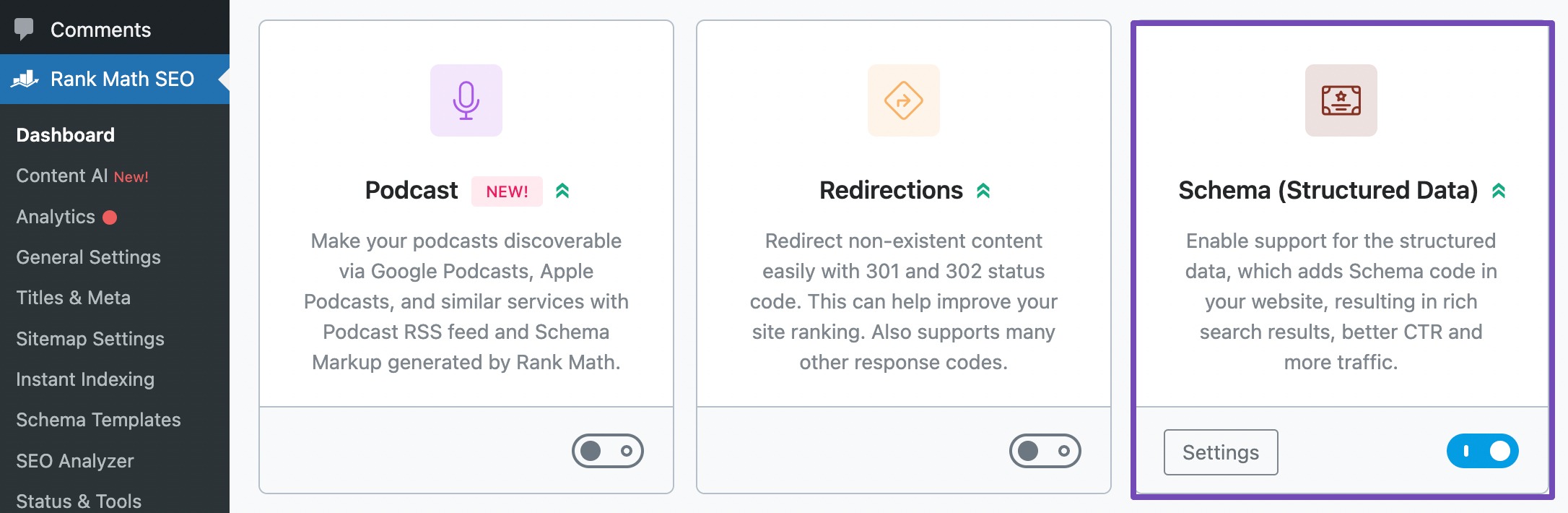
You can then add Schema of your choice, as shown below.
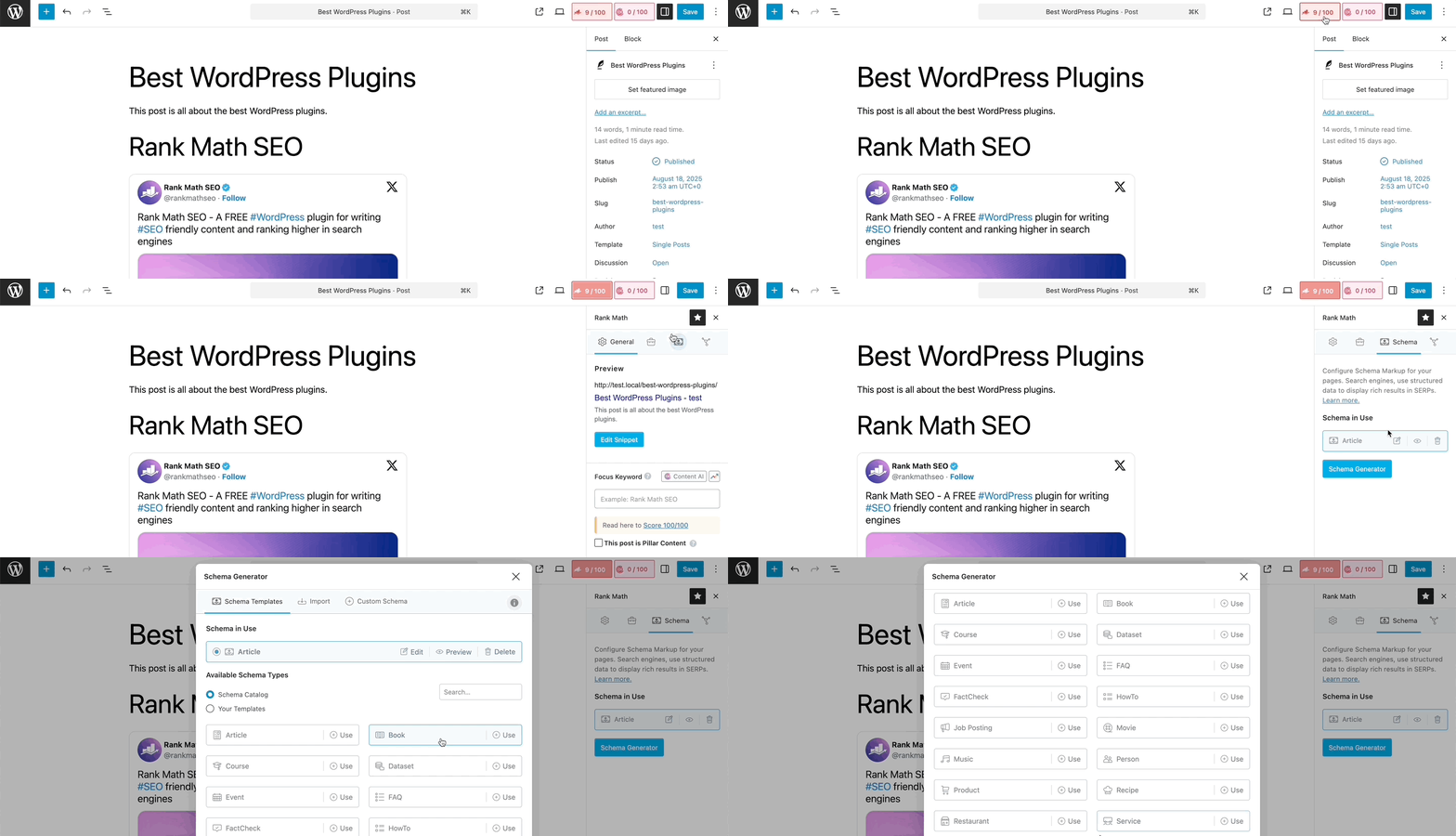
Refer to our dedicated tutorial on using Schema markups in Rank Math.
3 How to Track Brand Mentions Using Rank Math AI Visibility
You can’t improve what you don’t measure.
Many businesses assume that AI platforms mention their brand regularly because they rank well in Google. However, that’s not always the case.
A brand might rank #1 for several keywords yet barely appear in ChatGPT, Gemini, Claude, or other AI-generated responses.
That’s why tracking AI mentions is essential.
Rank Math’s AI Visibility tool helps you monitor how often your brand appears in AI-generated responses, whether your visibility is increasing or decreasing, and how you compare against competitors.
Let’s look at how to use it.
3.1 Track Average Mentions Across All Brands
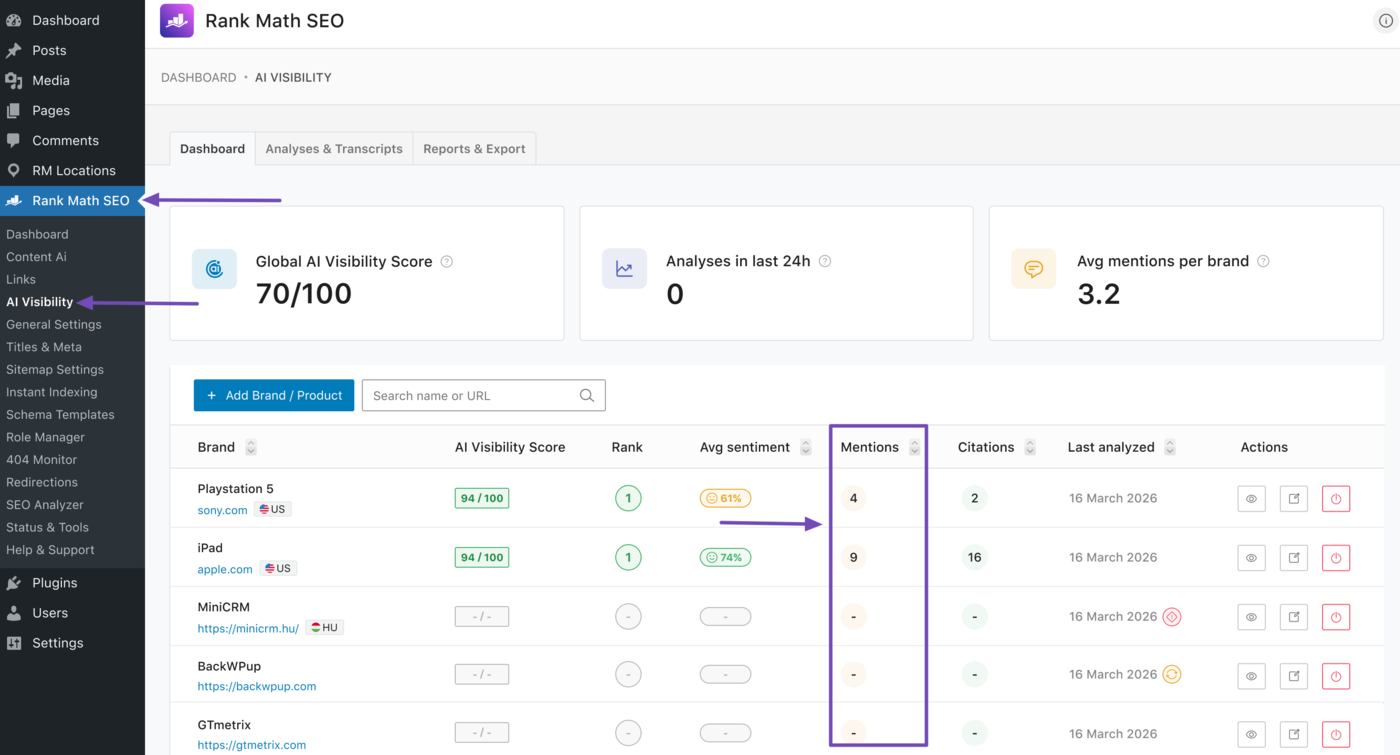
The first metric you’ll see in AI Visibility is your average mentions across all tracked brands.
To do so, navigate to Rank Math SEO → AI Visibility. You’ll see your average mention count of your brand, as shown below.
Why This Metric Matters
Think of this as your overall AI visibility score.
Instead of analyzing individual prompts one by one, you get a quick snapshot of how visible your brands are across AI platforms.
For example:
| Month | Average Mentions |
|---|---|
| January | 18 |
| February | 24 |
| March | 31 |
This trend indicates that your visibility is improving over time.
If your mentions suddenly drop, it may signal:
- New competitors gaining visibility
- Reduced brand coverage online
- Outdated content
- Changes in AI platform behavior
By monitoring trends regularly, you can identify issues before they become larger problems.
When reviewing average mentions, pay attention to:
- Consistent growth
- Sudden spikes
- Unexpected declines
- Seasonal trends
Over time, these patterns can help you understand what activities contribute most to AI visibility.
Refer to our dedicated tutorial to track brand mentions in AI search.
3.2 Track Mentions for a Specific Brand
Average mentions provide a high-level overview. However, you’ll often want to understand how individual brands are performing.
For instance, if you manage multiple products, you may discover that one product receives significantly more AI mentions than another.
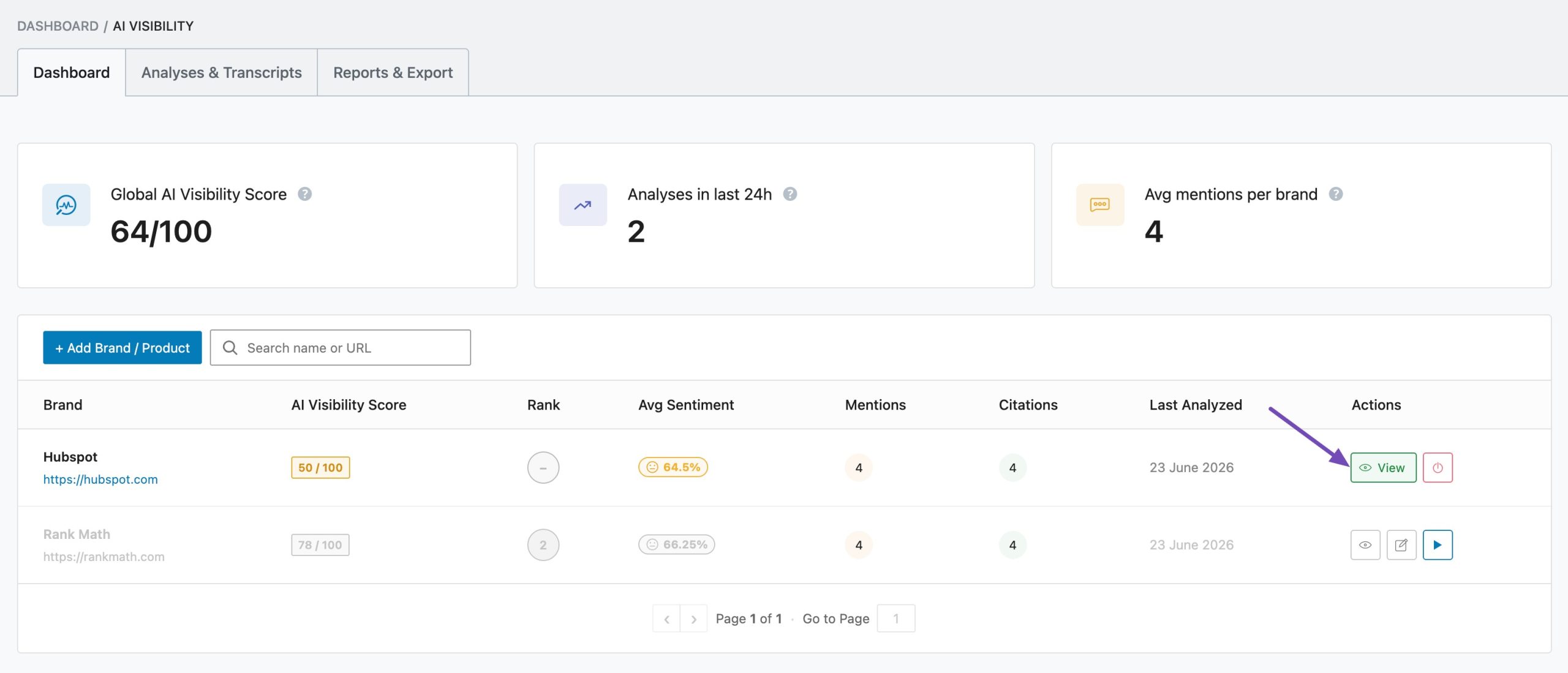
To view brand-level data in Rank Math, navigate to the AI Visibility dashboard. Next, locate the brand you want to analyze and click the View icon, as shown below.
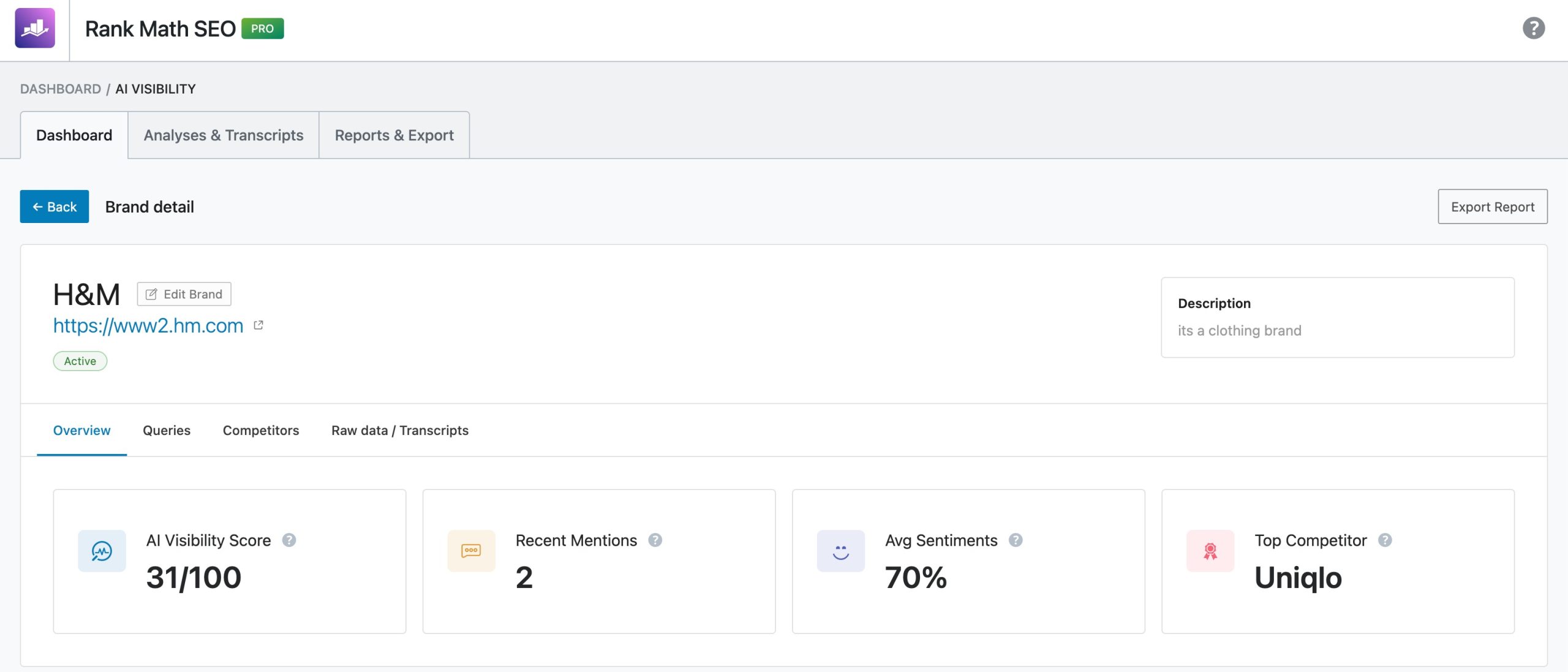
You’ll see detailed information about your brand.
3.3 Track Competitor Mentions
One of the most valuable features of AI Visibility is competitor tracking.
After all, visibility is relative.
Receiving 50 mentions may sound impressive until you discover your competitor receives 200. That’s why competitor benchmarking is essential.
To compare competitors, navigate to the AI Visibility dashboard in Rank Math. Select the brand, click the View icon and navigate to Competitors.
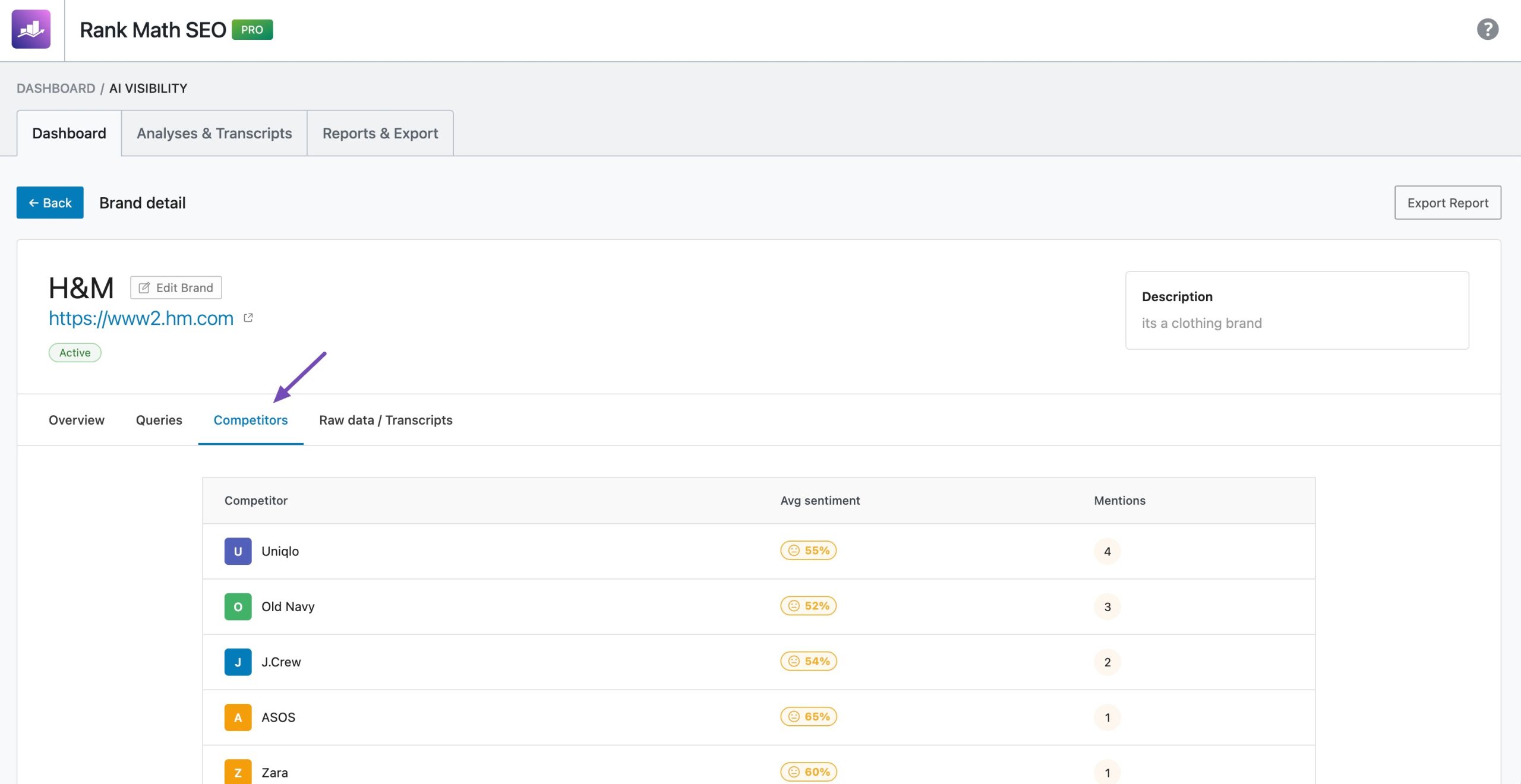
Why Competitor Tracking Matters
Competitor tracking helps you identify visibility gaps.
For example:
| Brand | Mentions |
| Competitor A | 120 |
| Your Brand | 75 |
| Competitor B | 42 |
This immediately shows that Competitor A is appearing in significantly more AI responses.
The next question becomes:
Why?
That’s where deeper analysis becomes valuable.
You may discover they have:
- More comparison pages
- Better FAQ coverage
- More third-party mentions
- Stronger topical authority
- More citations from trusted sources
Understanding these differences helps you prioritize the right improvements.
4 7 Proven Ways to Increase Brand Mentions in AI Search
Improving your AI visibility isn’t about optimizing for a single ranking factor. AI platforms evaluate many signals before deciding which brands to recommend, including the quality of your content, your brand’s authority, third-party recognition, and how consistently your business is represented across the web.
The following strategies focus on the signals that commonly influence AI-generated recommendations
4.1 Create Content That Answers Audience Questions
AI platforms exist to answer questions. The brands that provide the best answers often receive the most mentions.
Instead of focusing only on keywords, think about the questions your audience asks.
For example:
Instead of: “SEO Services”
Create:
- How Much Do SEO Services Cost?
- What Should You Expect From an SEO Agency?
- Is SEO Worth It for Small Businesses?
- SEO Agency vs In-House SEO: Which Is Better?
Each article gives AI platforms useful information they can reference when answering related questions.
Best Practices:
To make your content more useful for both readers and AI platforms:
- Answer the primary question within the first few paragraphs.
- Include practical examples wherever possible.
- Support your advice with evidence, screenshots, or data.
- Cover related questions within the same article.
- Keep information accurate and up to date.
The more effectively your content answers users’ questions, the more opportunities AI platforms have to reference your brand.
Rank Math Content AI helps you identify relevant topics, generate detailed outlines, and create content that aligns with user intent. This makes it easier to produce comprehensive articles that are valuable for readers while improving your chances of appearing in AI-generated responses.
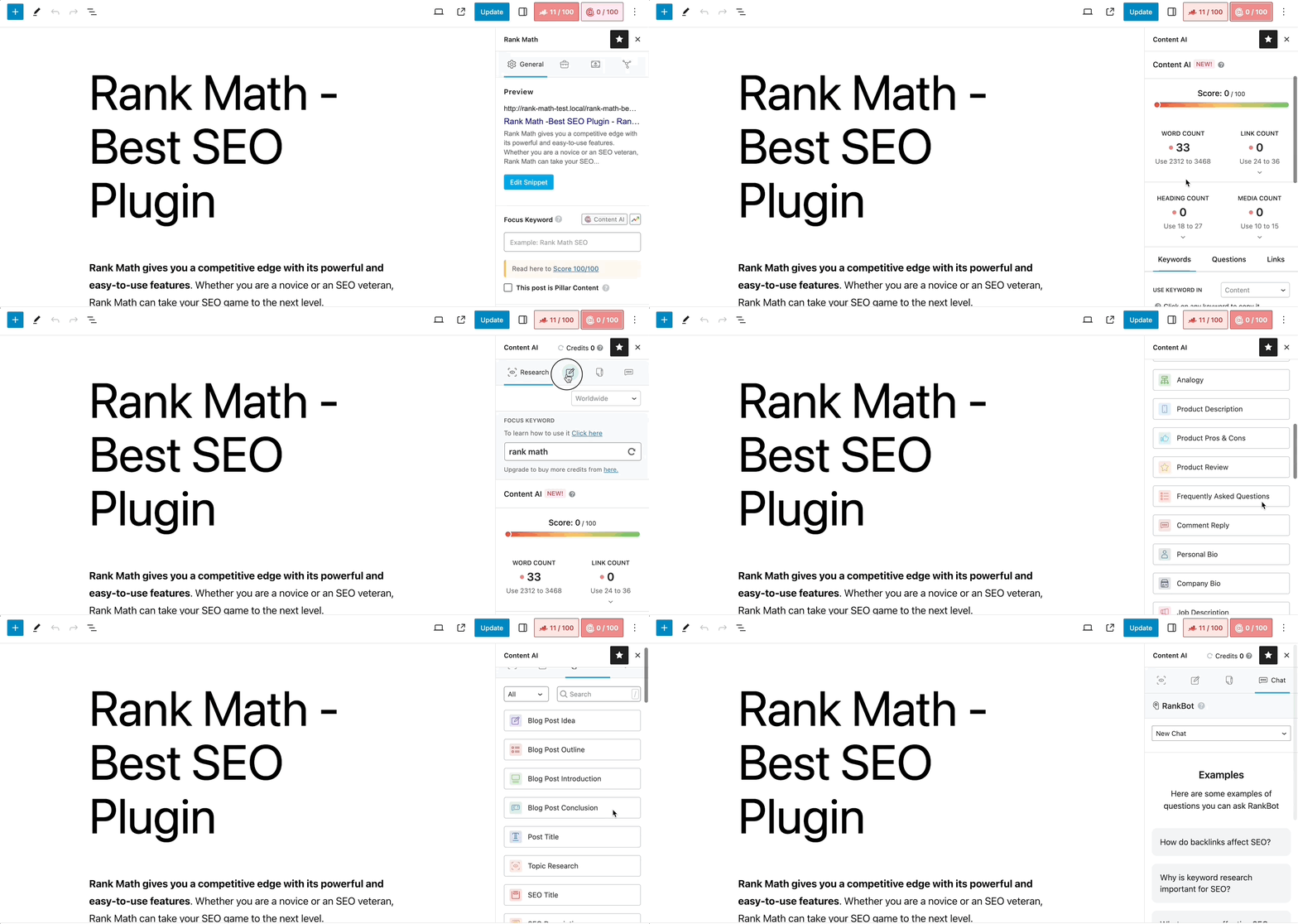
Refer to our dedicated tutorial on how to use Content AI in Rank Math.
4.2 Build Comprehensive Topic Clusters
Many brands publish content randomly. AI platforms tend to trust brands that cover topics comprehensively.
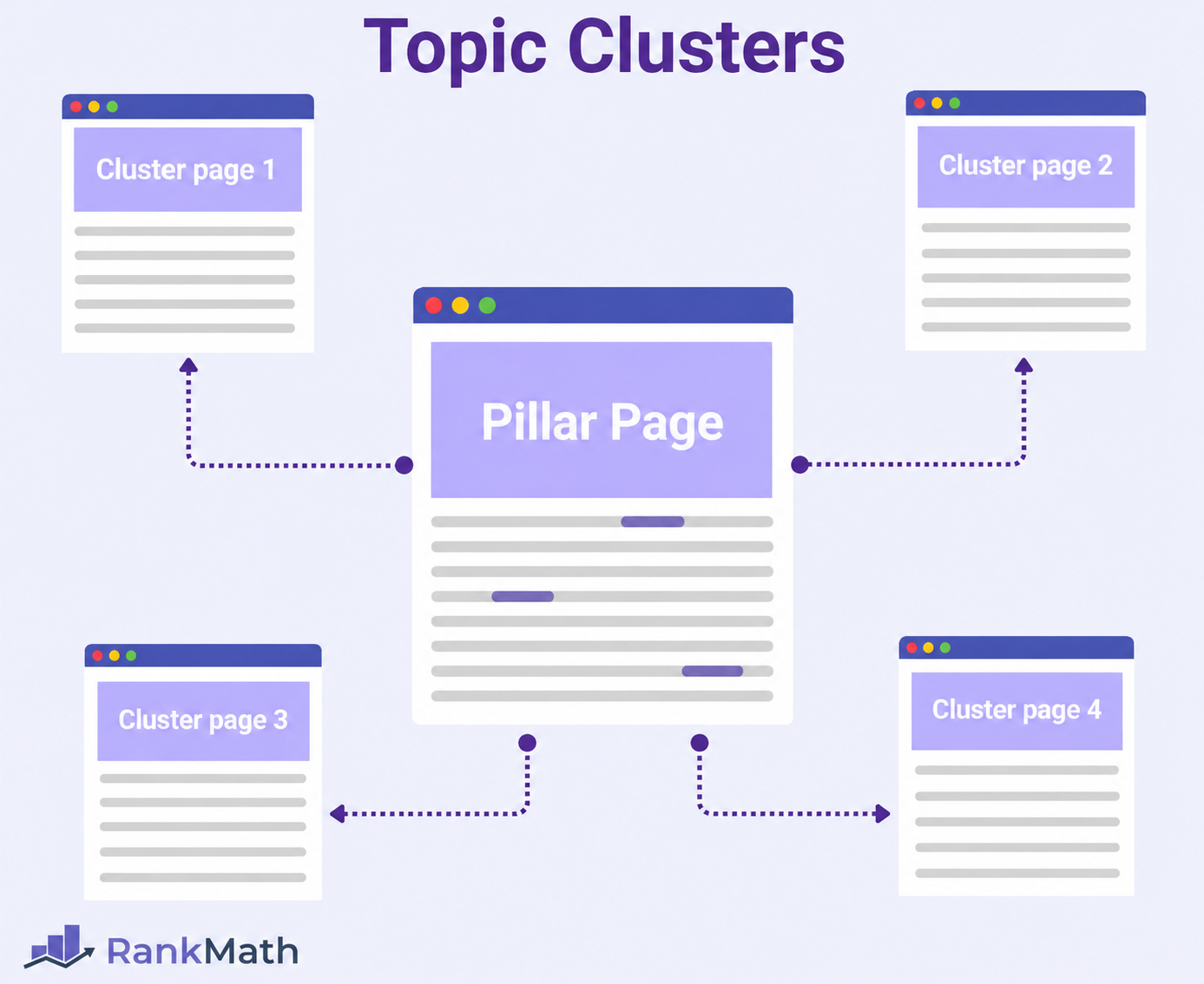
For instance, if you sell email marketing software, don’t just create one article about email marketing.
Build a complete content around:
- Email marketing basics
- Email automation
- Email deliverability
- Email segmentation
- Welcome email sequences
- Newsletter strategies
- A/B testing
The more complete your coverage, the stronger your topical authority becomes.
When AI systems see consistent expertise across multiple related topics, they’re more likely to recommend your brand.
Refer to our dedicated tutorial on topic clusters and improve visibility for a wide range of keywords.
4.3 Add FAQ Schema Wherever Appropriate
Many AI interactions begin with a question.
Adding FAQ sections to relevant pages helps answer those questions directly while making your content easier for search engines and AI platforms to understand. However, while Schema markup doesn’t guarantee AI mentions, it helps search engines and AI systems interpret your content more accurately.
For instance:
A pricing page can answer:
- How much does the product cost?
- Is there a free trial?
- Can I cancel anytime?
- What’s included in each plan?
Adding FAQ Schema provides additional context by identifying these questions and answers in a structured format.
Rank Math makes adding FAQ Schema simple through:
- FAQ Blocks
- Schema Generator
- Advanced Schema settings
To add an FAQ block in Rank Math, in your post/page editing screen, simply click the plus icon that is present on the right of the content area to add a block. Select FAQ by Rank Math, as shown below.
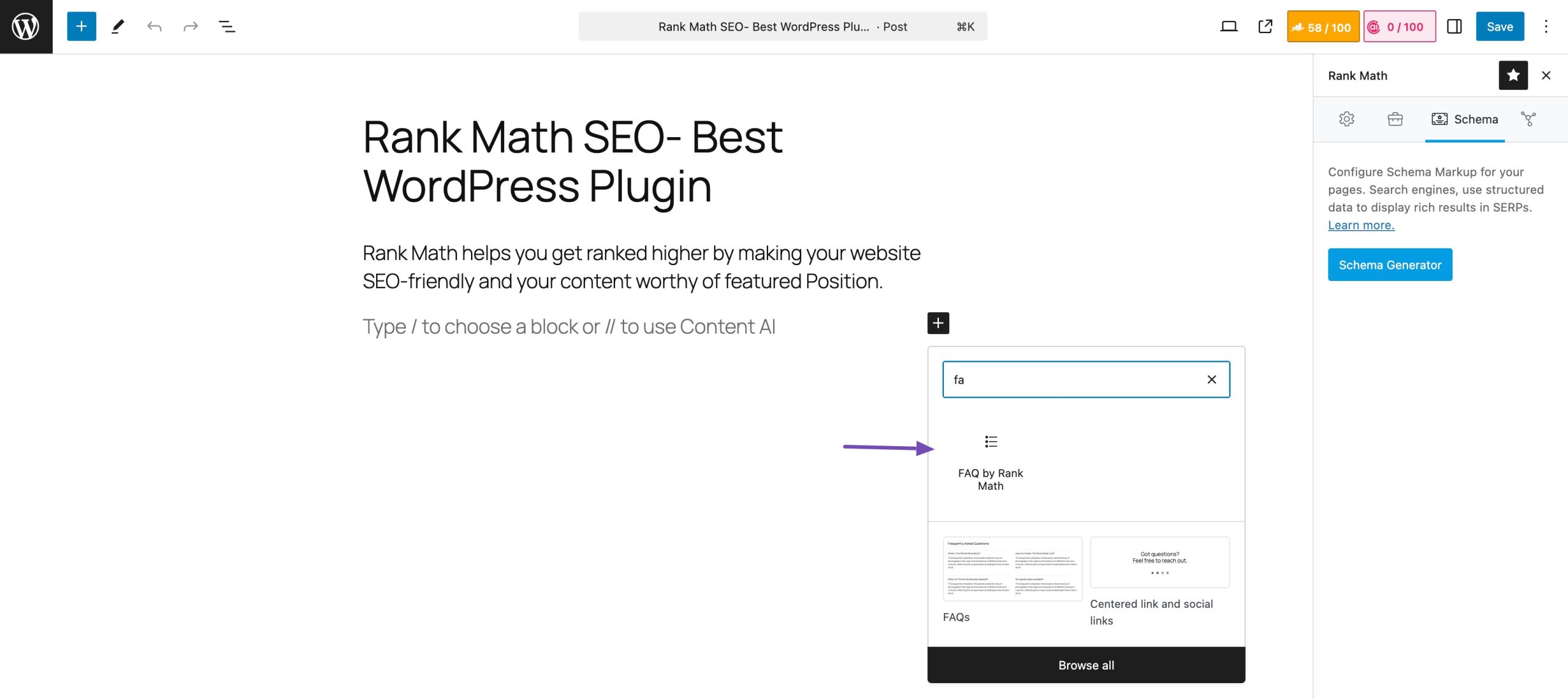
Refer to our dedicated tutorial on adding FAQ Schema with the help of Rank Math.
4.4 Publish Comparison Content
Comparison searches are among the most common queries across both traditional search engines and AI platforms.
When AI platforms answer these questions, they often summarize information from detailed comparison articles.
Publishing balanced, well-researched comparisons increases your chances of being referenced in those responses.
A useful comparison should include:
- Key features
- Pricing
- Advantages and limitations
- Ideal use cases
- A clear summary to help readers choose the right solution
Avoid creating comparison pages that focus only on promoting your own product. Objective, well-supported comparisons are more useful for readers and provide stronger signals of trust and expertise.
4.5 Create Original Research and Data
One of the biggest challenges AI platforms face is finding information that offers genuine value rather than repeating what’s already available online.
That’s why original research often gets cited more frequently than generic content.
When AI systems generate responses, they look for trustworthy sources that provide unique insights, statistics, and findings. If your content includes information users can’t easily find elsewhere, it becomes a stronger candidate for citations and brand mentions.
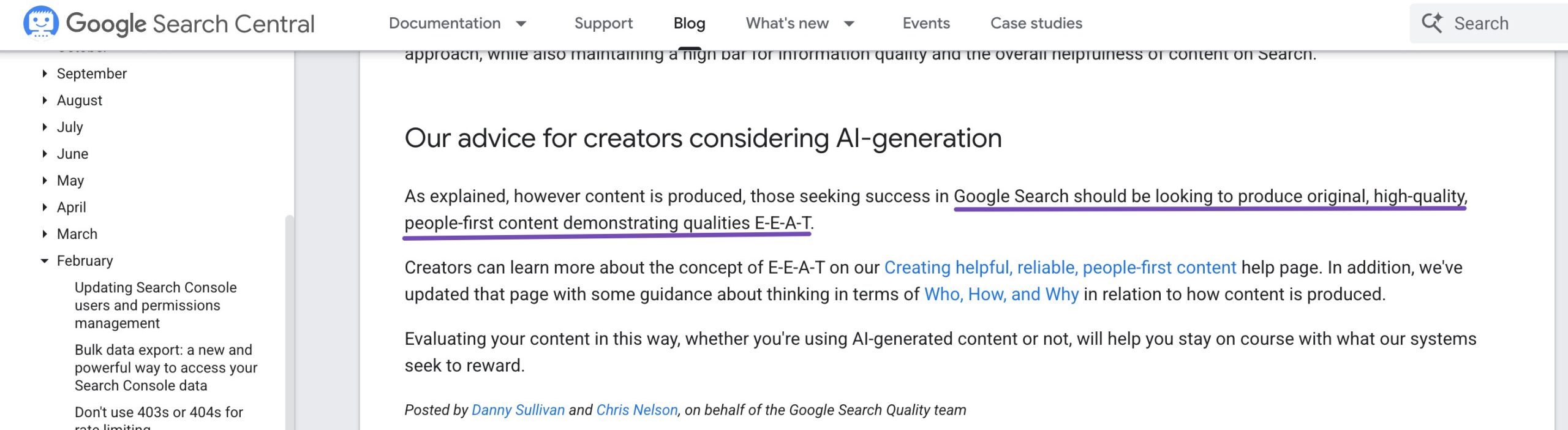
Think about it from the AI’s perspective.
If hundreds of articles say, “SEO is important for improving search visibility.”
There’s nothing unique to reference.
But if your content says: “After analyzing 10,000 websites, we found that 62% were missing optimized title tags and 48% had duplicate meta descriptions.”
Original statistics, survey results, experiments, case studies, and industry reports provide information that AI platforms cannot easily find elsewhere.
This makes your content more valuable for both readers and AI-generated summaries.
Over time, publishing original research can help establish your brand as a primary source of information rather than another website repeating existing advice.
When you consistently create original research, your brand moves from being one of many voices in the industry to becoming the authority that shapes the conversation.
4.6 Strengthen Your Brand Entity
Before an AI platform recommends your business, it first needs to understand who you are and what your brand represents.
This understanding is built through entities.
An entity is a clearly identifiable person, organization, product, or concept that AI systems can recognize and distinguish from others.
For example, AI platforms recognize Rank Math as a WordPress SEO plugin because consistent information about the brand appears across websites, documentation, reviews, social profiles, and structured data.
The stronger your brand entity becomes, the easier it is for AI systems to associate your business with relevant topics and recommend it in appropriate responses.
4.7 Track Progress Consistently
Improving AI visibility is an ongoing process rather than a one-time task.
Publishing one article or adding Schema markup won’t immediately increase your brand mentions across every AI platform.
Like traditional SEO, AI visibility develops over time as your brand earns stronger authority and trust.
As you continue to:
- Publish high-quality content
- Build topical authority
- Earn mentions from trusted websites
- Strengthen your brand entity
- Keep your information consistent
AI platforms gain additional evidence that your business is a reliable source of information.
Regular monitoring helps you understand which strategies are working and where further improvements are needed.
The AI Visibility dashboard in Rank Math displays all the important metrics for your brand, such as the AI Visibility score, brand mentions, average rank, citations, average sentiment, as shown below.
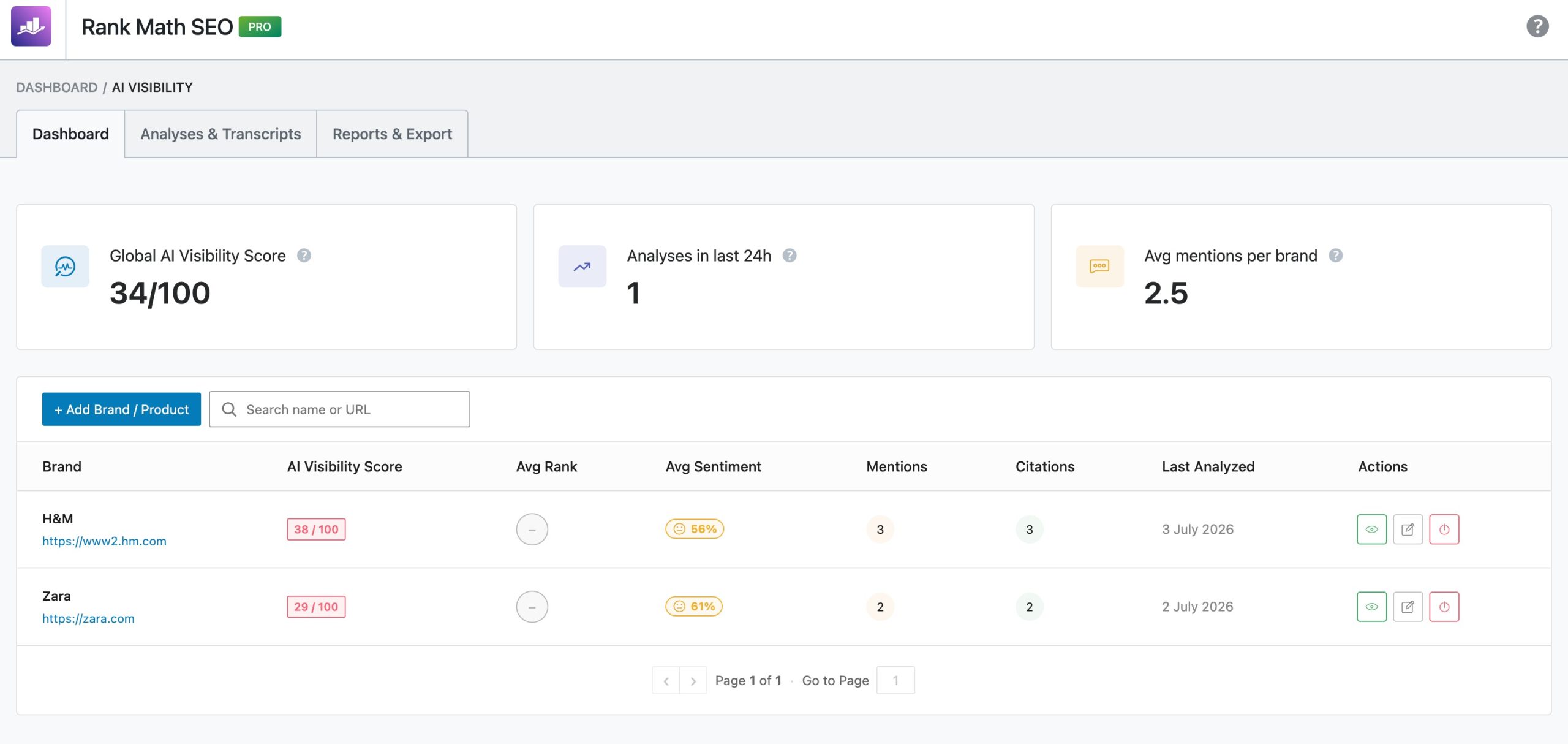
Review your AI visibility data consistently, compare trends over time, and adjust your content strategy based on measurable results rather than assumptions.
Small improvements made consistently often produce stronger long-term results than occasional large changes.
5 Common Mistakes That Reduce AI Visibility
Many brands unknowingly make mistakes that limit how often AI platforms mention or recommend them. Here are some of the most common ones:
- Publishing thin content: Short, generic content that lacks depth, examples, or unique insights is less likely to be referenced by AI systems.
- Ignoring FAQs: Failing to answer common customer questions creates opportunities for competitors to become the preferred source for AI-generated responses.
- Using inconsistent brand information: Different descriptions, messaging, or business details across platforms can make it harder for AI systems to understand and trust your brand.
- Focusing only on rankings: Ranking well in traditional search results doesn’t automatically mean your brand will be mentioned in AI search.
- Neglecting brand building: AI platforms often rely on signals from reviews, media coverage, social profiles, and third-party mentions, not just your website.
- Not using structured data: Missing Schema markup can make it more difficult for AI systems to understand your content, products, and business information.
- Publishing content without topical depth: Covering a topic with only one or two articles makes it harder to establish the authority AI systems look for.
- Skipping original research and data: Brands that only repeat existing information miss opportunities to earn citations from AI platforms.
- Ignoring competitor visibility: Failing to monitor competitors can cause you to miss content gaps and emerging trends in your industry.
- Tracking AI visibility inconsistently: Checking mentions occasionally instead of monitoring trends over time makes it difficult to measure progress and identify opportunities.
6 Frequently Asked Questions
Does ranking #1 on Google guarantee AI brand mentions?
No. Traditional search rankings and AI visibility are related but not identical. A website may rank highly in Google Search while receiving few AI-generated recommendations. AI platforms evaluate additional signals beyond search rankings when deciding which brands to mention.
What is AI Share of Voice?
AI Share of Voice measures how often your brand is mentioned compared to competing brands across AI-generated responses. Tracking this metric helps you understand your competitive position, identify visibility gaps, and measure whether your AI presence is improving over time.
How long does it take to improve AI visibility?
There is no fixed timeline. Improving AI visibility is an ongoing process that depends on factors such as content quality, brand authority, industry competition, and how frequently AI platforms update their knowledge and responses. Consistently publishing helpful content and strengthening your brand authority typically delivers better long-term results.
Can small businesses earn AI brand mentions?
Yes. AI platforms don’t recommend brands based solely on company size. Small businesses can improve their visibility by publishing helpful content, building expertise within a niche, earning third-party mentions, and maintaining accurate, consistent brand information.
7 Final Thoughts
AI search is creating a new type of visibility.
Instead of competing only for rankings, brands now compete for mentions, citations, and recommendations within AI-generated answers.
The good news is that many of the strategies that improve AI visibility also improve your overall marketing.
The brands that start measuring and improving AI visibility today will be in a stronger position as AI search continues to grow. If you like this post, let us know by tweeting @rankmathseo.