

AI platforms are increasingly shaping how audiences discover, evaluate, and trust brands. While tracking brand mentions is important, understanding how AI talks about your brand is even more valuable.
A mention alone doesn’t tell the full story. AI may recommend your brand enthusiastically, mention it without any strong opinion, or describe it negatively. These perceptions can influence potential customers long before they visit your website.
This is where brand sentiment tracking becomes essential.
With Rank Math’s AI Visibility, you can monitor how AI platforms perceive your brand, identify negative brand sentiment early, and compare your reputation against competitors.
In this post, we’ll show you how to track negative brand sentiment and use those insights to strengthen your presence in AI search.
Key Takeaways:
- Brand sentiment measures whether AI platforms describe your brand positively, neutrally, or negatively.
- Average Sentiment provides an overall view of how AI platforms perceive your brand across all tracked AI responses.
- Query-level sentiment analysis helps identify the specific topics generating negative AI responses.
- Competitor sentiment comparisons reveal opportunities to strengthen your positioning in AI search.
- Regularly monitoring and improving brand sentiment can increase trust, strengthen AI recommendations, and improve your visibility across AI-powered search experiences.
So, without any further ado, let’s get started.
Table Of Contents
1 What is Brand Sentiment in AI Visibility?
Brand sentiment measures the tone AI platforms use when mentioning your brand.
AI Visibility analyzes AI-generated responses and categorizes brand mentions based on their sentiment. These insights help you understand whether your brand is being portrayed positively, neutrally, or negatively across the prompts you’re tracking.
Rather than manually reviewing hundreds of AI responses, AI Visibility summarizes this data into actionable metrics that are easy to monitor over time.
Monitoring brand sentiment over time helps you answer important questions, such as:
- Are AI platforms recommending your brand positively?
- Which topics generate negative AI responses?
- Is your brand perception improving over time?
- Do competitors receive stronger recommendations than your business?
These insights help you understand not only how visible your brand is in AI search but also the quality of that visibility.
2 Why Negative Brand Sentiment Matters
Being mentioned by AI platforms isn’t always beneficial. If AI-generated responses consistently associate your brand with criticism or unfavourable opinions, those perceptions can influence potential customers long before they visit your website.
Negative sentiment in AI-generated responses can affect:
- Brand trust and credibility
- Purchase decisions
- Customer perception
- Competitive positioning
- Long-term brand reputation
For instance, AI platforms may consistently describe a product as expensive, difficult to use, outdated, or less capable than competing solutions. Even if those perceptions are based on outdated information or isolated sources, they can shape how potential customers evaluate your business.
By monitoring sentiment regularly, you can spot reputation issues early and take action before they become larger problems.
3 Track Negative Sentiment for Your Brand
Once you understand how AI platforms perceive your brand, the next step is monitoring that perception over time.
Rank Math’s AI Visibility provides several ways to analyze brand sentiment, from an overall sentiment score to detailed query-level insights and competitor comparisons.
Note: AI Visibility is a Content AI feature and requires an active Content AI subscription. You can view the available plans here.
3.1 View Your Average Sentiment
The quickest way to monitor overall sentiment is through your brand’s average sentiment score.
First, ensure that you’ve enabled the AI Visibility module from your WordPress dashboard.
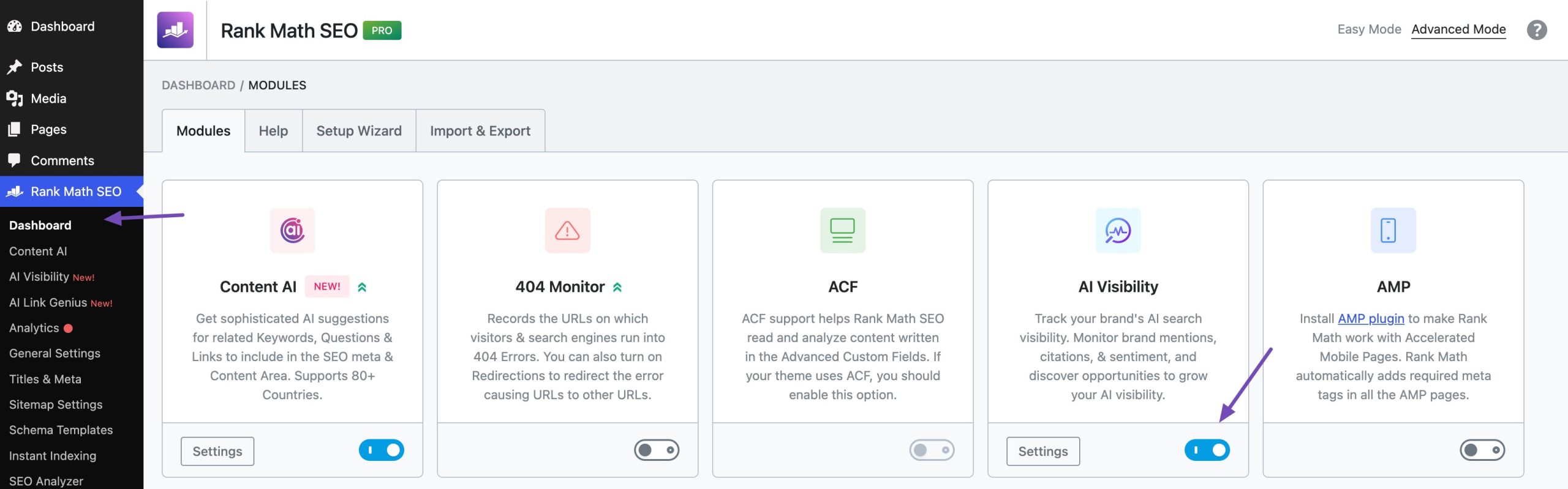
Next, to view the average sentiment, navigate to Rank Math SEO → AI Visibility from your WordPress dashboard. Locate your brand or product. Review the Average Sentiments metric.
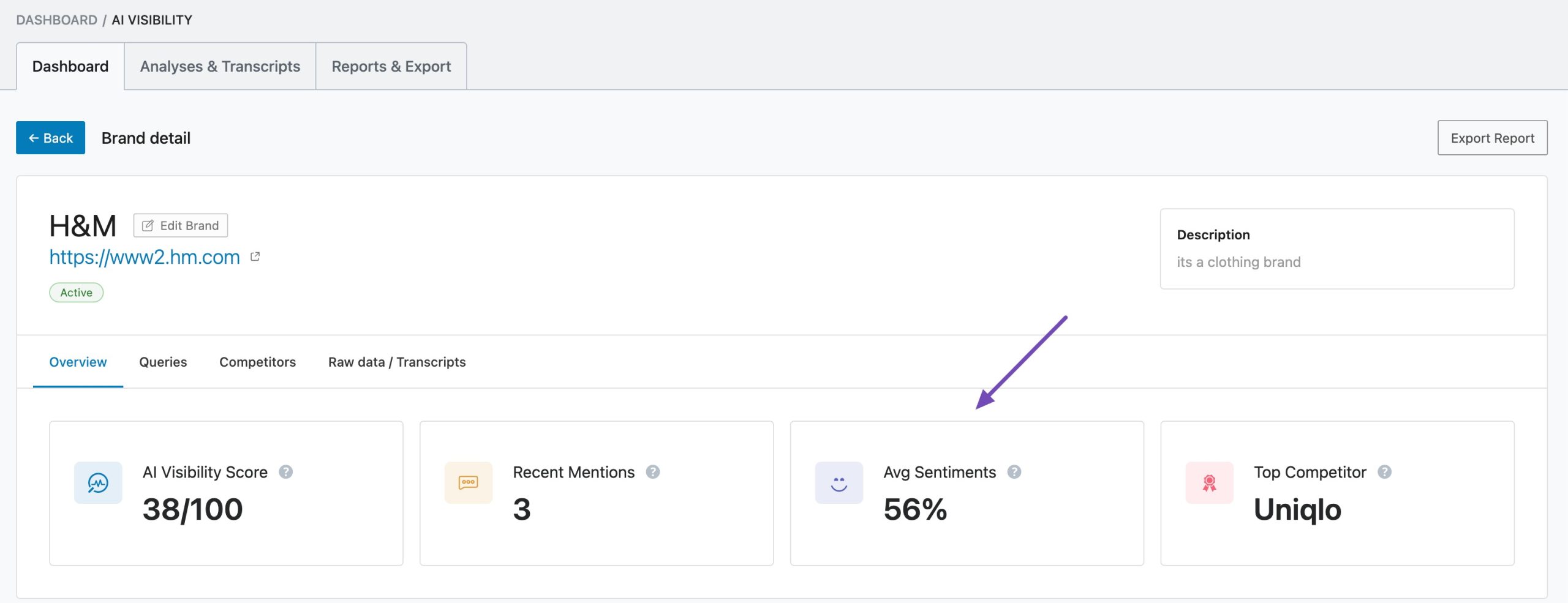
Average Sentiment is an aggregated score calculated from every tracked AI-generated brand mention across your monitored queries. It provides a high-level view of whether AI platforms generally describe your brand positively, neutrally, or negatively.
Although this single score provides a useful overview, it should be treated as a starting point rather than the complete picture.
3.2 Monitor Sentiment Trends Over Time
Brand sentiment is not static. As AI platforms discover new information, analyze updated content, and reference new sources, the way they describe your business can change.
Monitoring sentiment trends helps you determine whether your brand perception is improving, declining, or remaining consistent over time.
To see sentiment changes over time:
- Open Rank Math SEO → AI Visibility.
- Click the View icon next to your brand or product.
- Review the sentiment trend section.
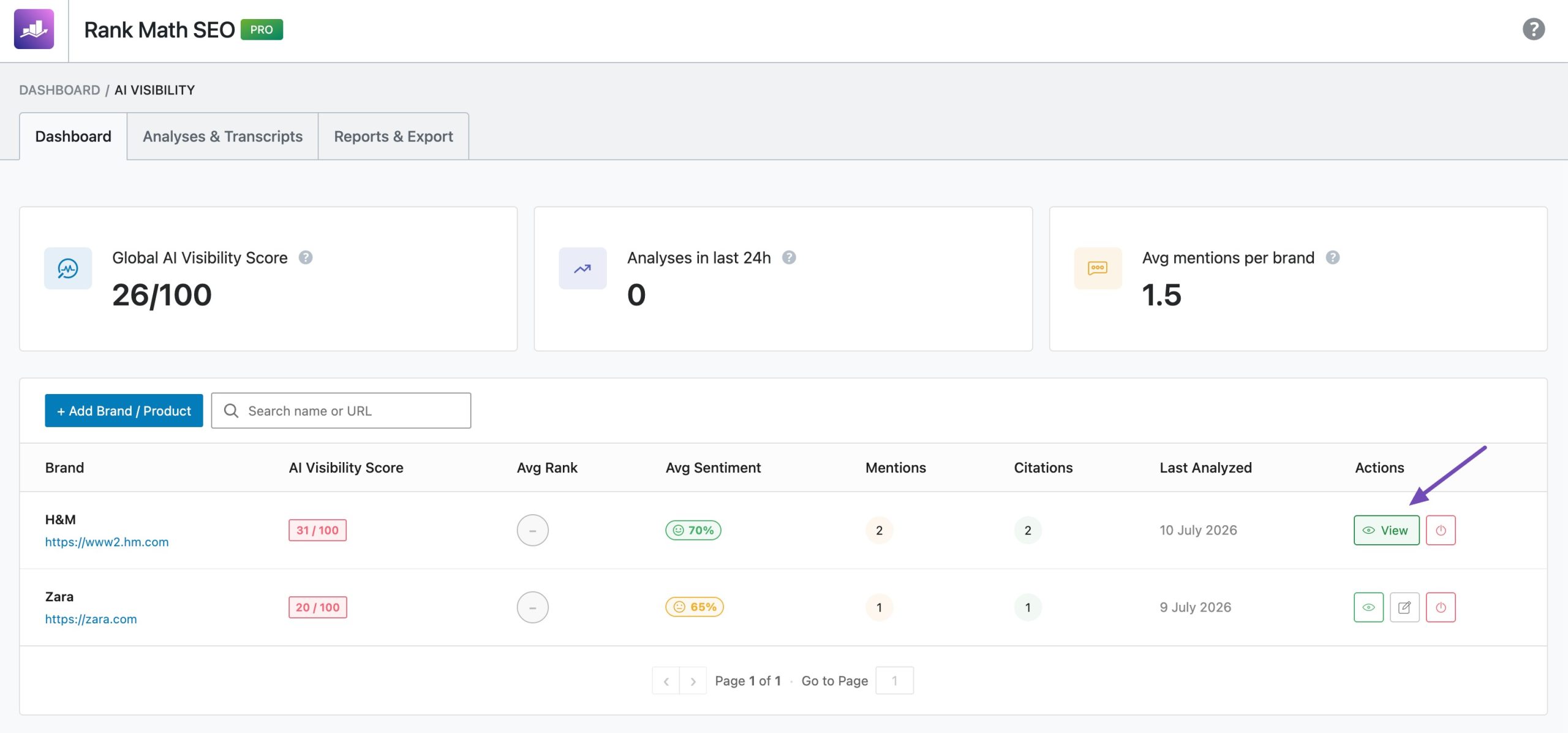
The dashboard provides several metrics that help you evaluate your AI visibility, as shown below:
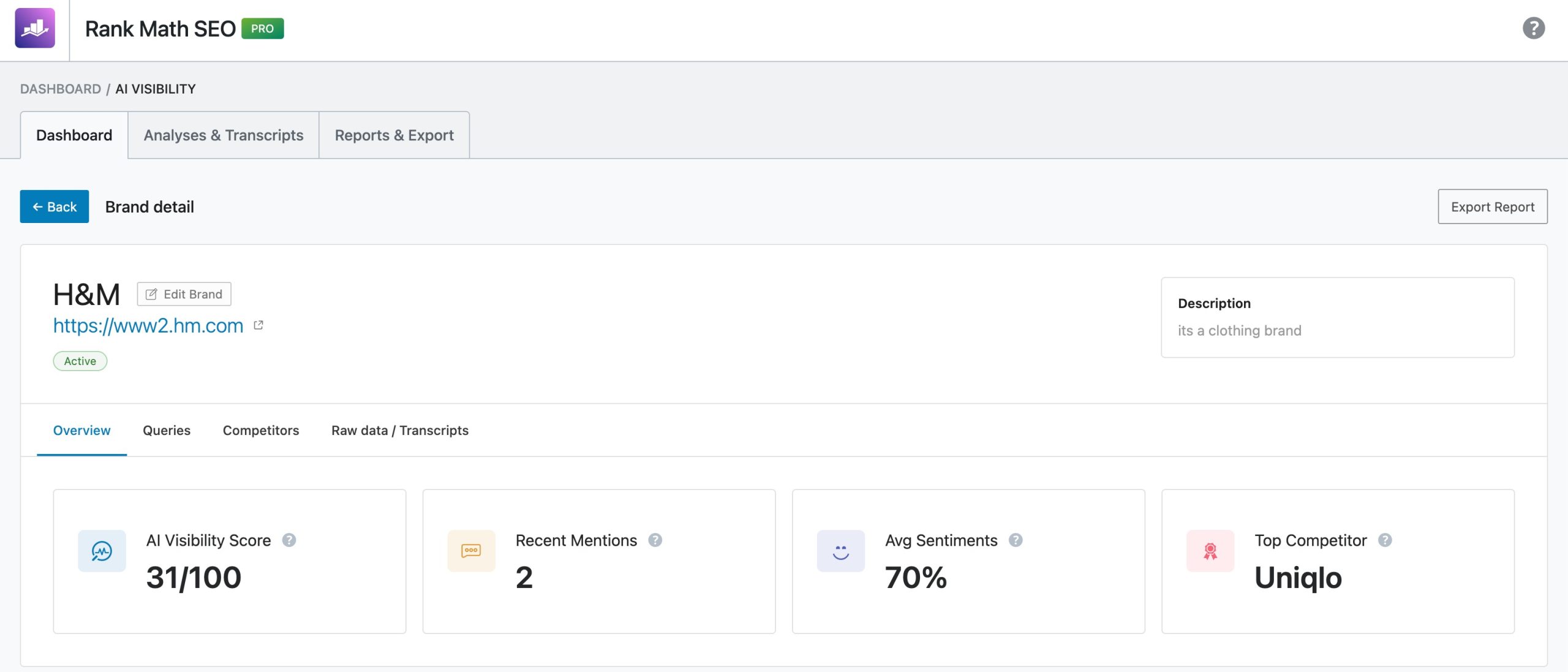
- AI Visibility Score – Your brand’s visibility across tracked AI platforms.
- Recent Mentions – The latest AI-generated responses referencing your brand.
- Average Sentiments – Your overall AI sentiment score.
- Top Competitor – The competitor receiving the strongest AI visibility for your tracked queries.
Reviewing these metrics regularly allows you to identify gradual reputation shifts, evaluate the impact of new content, and detect emerging issues before they significantly affect customer trust.
3.3 Find Negative Sentiment in Specific AI Queries
While your overall sentiment score provides valuable insight, it doesn’t explain why AI platforms describe your brand positively or negatively.
To understand the reasons behind your sentiment score, review the AI-generated responses for individual tracked queries.
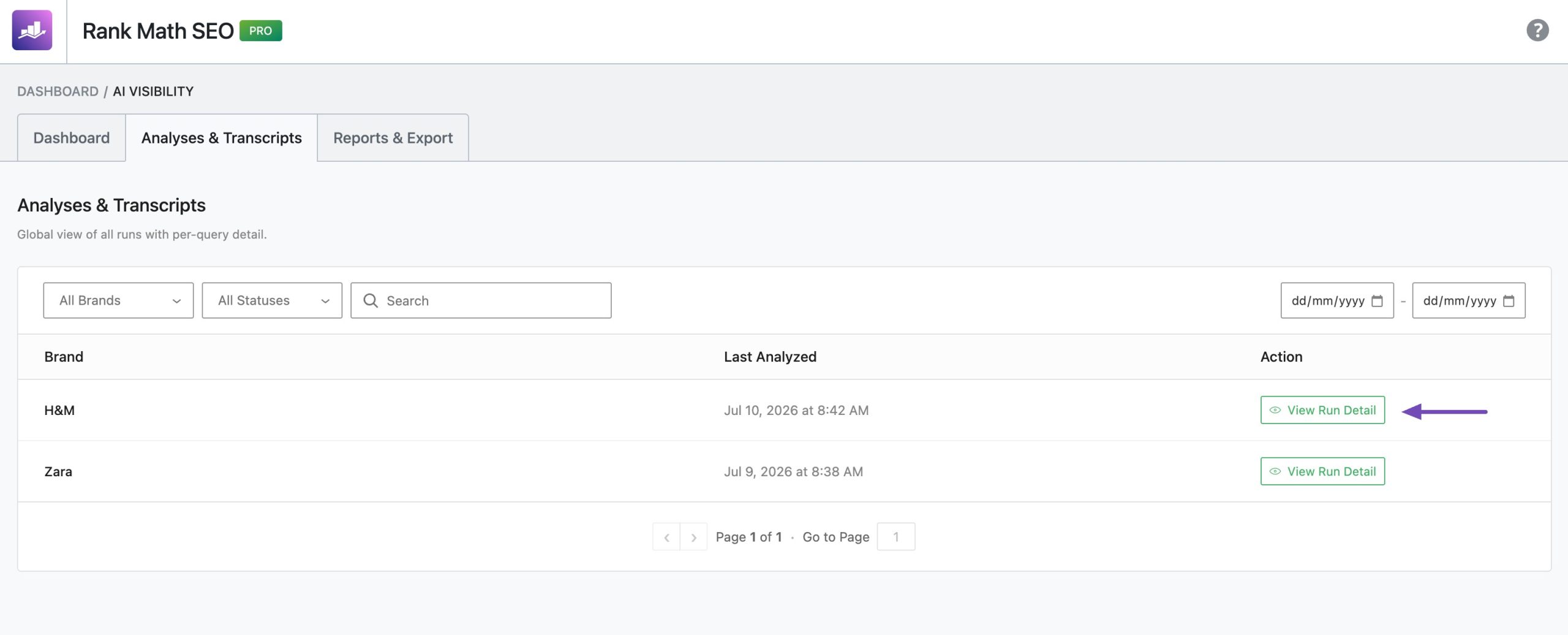
Rank Math’s Analyses & Transcripts report lets you examine the responses generated for each prompt and identify the topics associated with negative sentiment.
To review individual AI responses, click Analyzes & Transcripts from your AI Visibility dashboard. From the list of tracked queries, select the query you want to investigate and click View Run Detail.
The detailed report includes:
- The original tracked AI query.
- AI-generated responses from supported platforms.
- Brand mentions detected within those responses.
- Individual sentiment classifications for each mention.
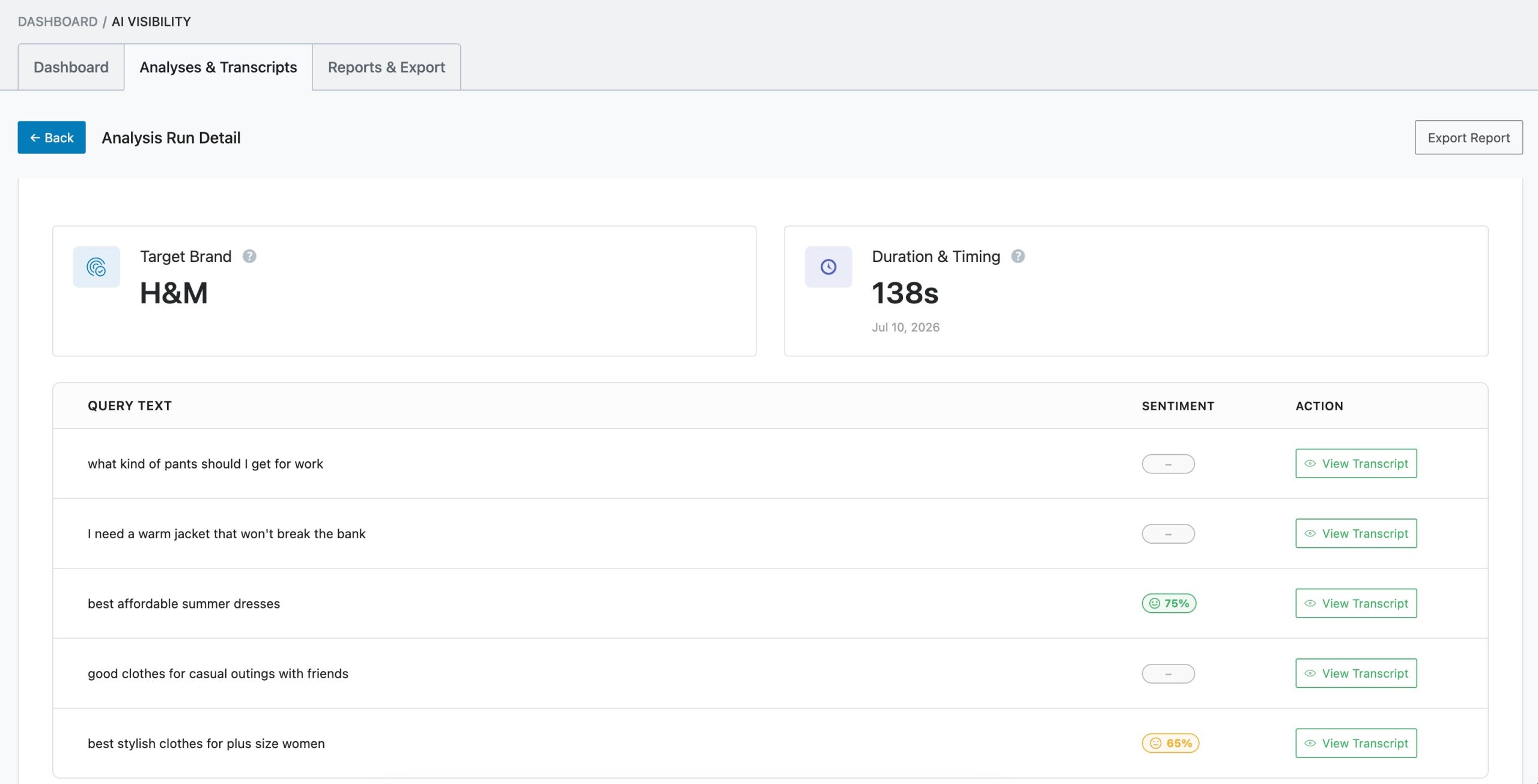
By reviewing this information, you can find which queries are generating negative sentiment, identify topics that are frequently associated with criticism, and spot recurring concerns being surfaced by AI platforms.
3.4 Compare Your Sentiment Against Competitors
Brand sentiment is most valuable when viewed alongside your competitors.
A positive sentiment score does not necessarily mean your brand is performing well if competing businesses receive stronger recommendations or are mentioned more frequently for the same queries.
Comparing competitor sentiment helps you understand your relative position in AI search and discover opportunities to strengthen your visibility.
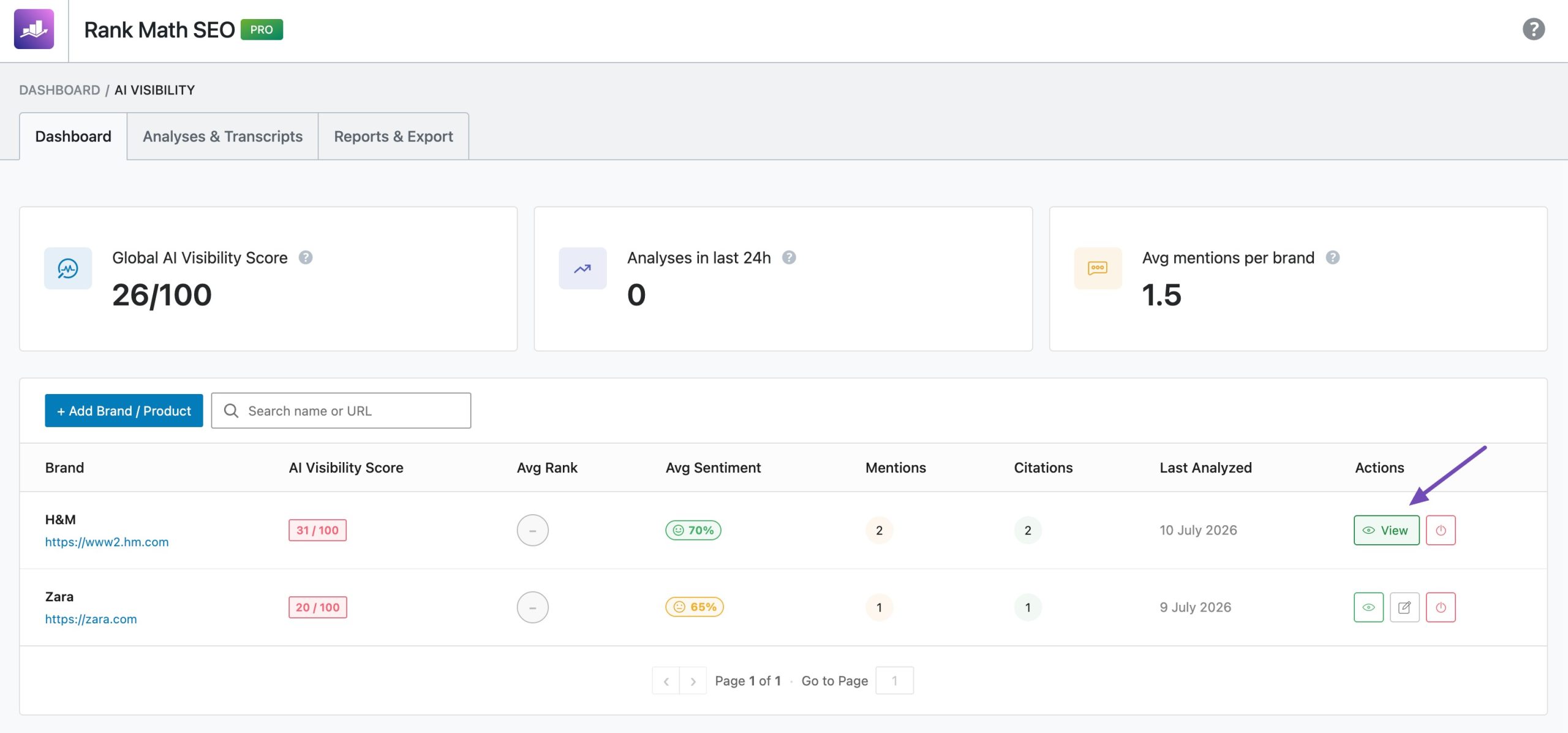
To compare competitor sentiment, click the View icon from the AI Visibility dashboard, as shown below.
Next, open the Competitors tab, as shown below.
The Competitors report displays important comparison metrics, including:
- Competitor names
- Total AI mentions
- Average Sentiment
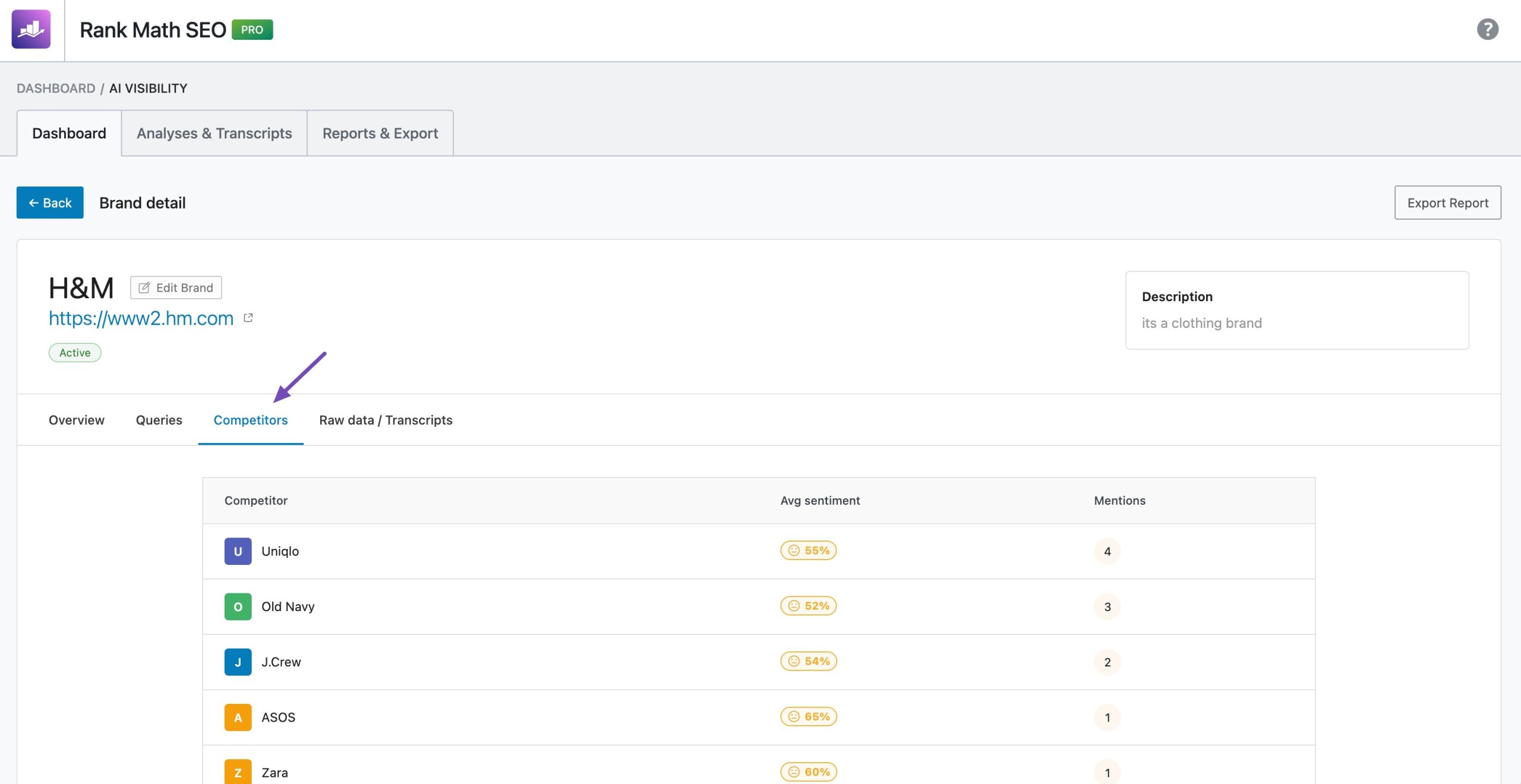
By reviewing these insights, you can identify which competitors receive more favourable AI recommendations and determine where your brand may be underrepresented.
If a competitor consistently appears in AI-generated responses while your brand is absent, investigate the factors contributing to their stronger visibility. They may publish more comprehensive content, earn more authoritative third-party mentions, receive stronger customer reviews, or be referenced more frequently by trusted industry sources.
Analyzing these differences helps you prioritize improvements that strengthen both your AI Visibility and your overall brand sentiment.
4 How to Improve Negative Brand Sentiment
Identifying negative brand sentiment is only the first step. The real value comes from understanding why AI platforms perceive your brand negatively and taking action to improve those perceptions.
AI systems generate responses by analyzing information from your website, trusted third-party sources, customer discussions, reviews, and other publicly available content.
By publishing authoritative content, strengthening your brand’s online reputation, and monitoring sentiment regularly, you can gradually improve how AI platforms represent your business.
4.1 Create Content That Addresses Common Concerns
One of the most effective ways to improve AI brand sentiment is by creating content that directly answers the questions and concerns surfaced in AI-generated responses.
For example, if AI platforms repeatedly associate your brand with limited features, high pricing, complicated onboarding, or weak customer support, consider publishing content that provides clear, factual information around those topics.
Helpful content formats include:
- Product comparison pages
- Frequently Asked Questions (FAQs)
- Customer success stories
- Case studies
- Feature-focused landing pages
- Troubleshooting guides
- Product documentation
- Knowledge base articles
Publishing comprehensive, accurate, and regularly updated content gives AI platforms more reliable information to reference when generating future responses.
Use Content AI to Build Helpful Content Faster
Rank Math’s Content AI can help you create this content faster and more effectively.
You can use it to generate content ideas, build detailed blog outlines, create FAQs, draft product comparisons, write customer-focused articles, and optimize your content around topics that matter to your audience.
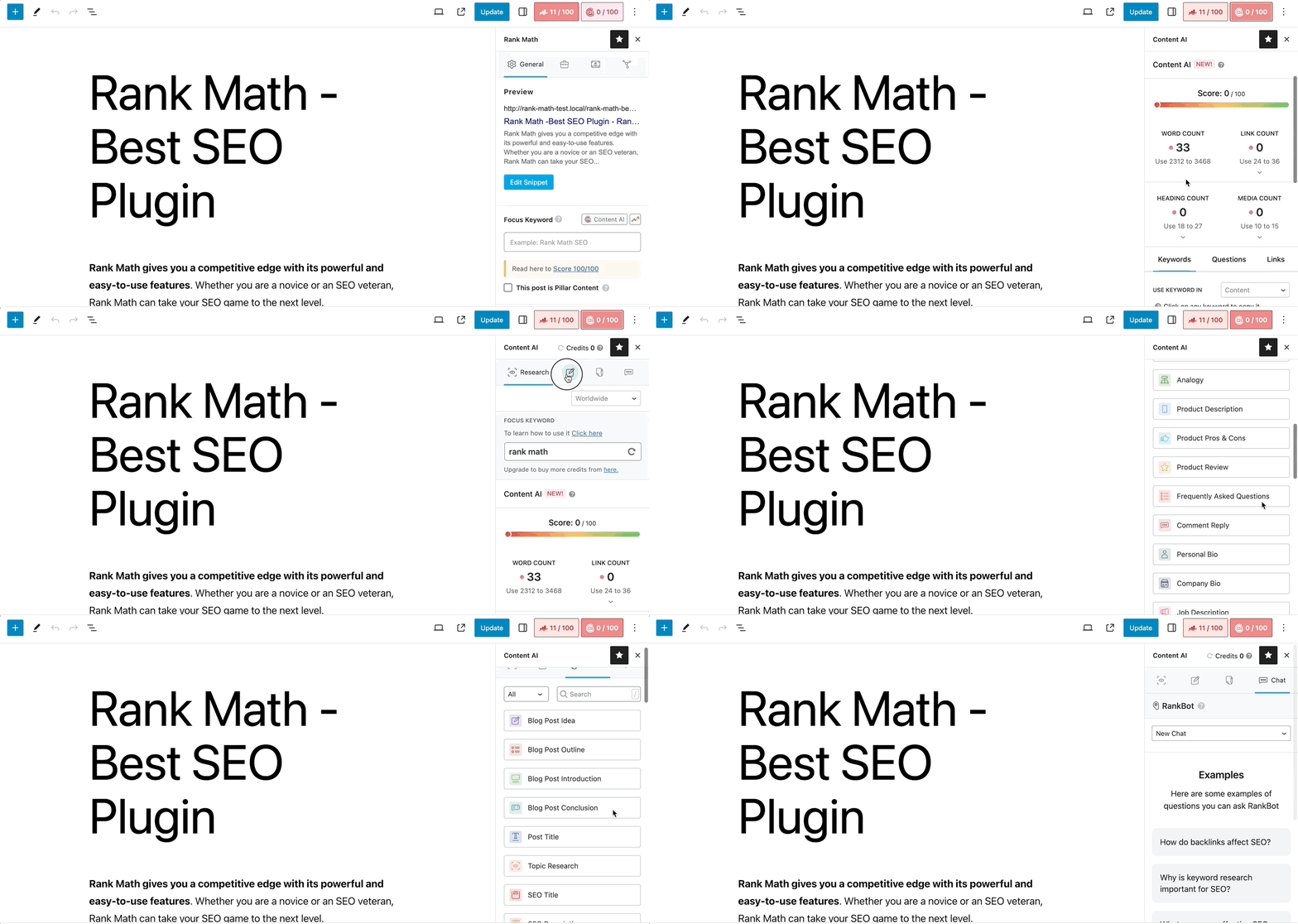
Content AI also provides keyword and topic recommendations to help ensure your content includes important aspects that AI platforms may look for when evaluating and mentioning your brand.
Strengthen Content With Schema Markup
Structured data improves content understanding and provides additional context that AI systems can use when interpreting your website.
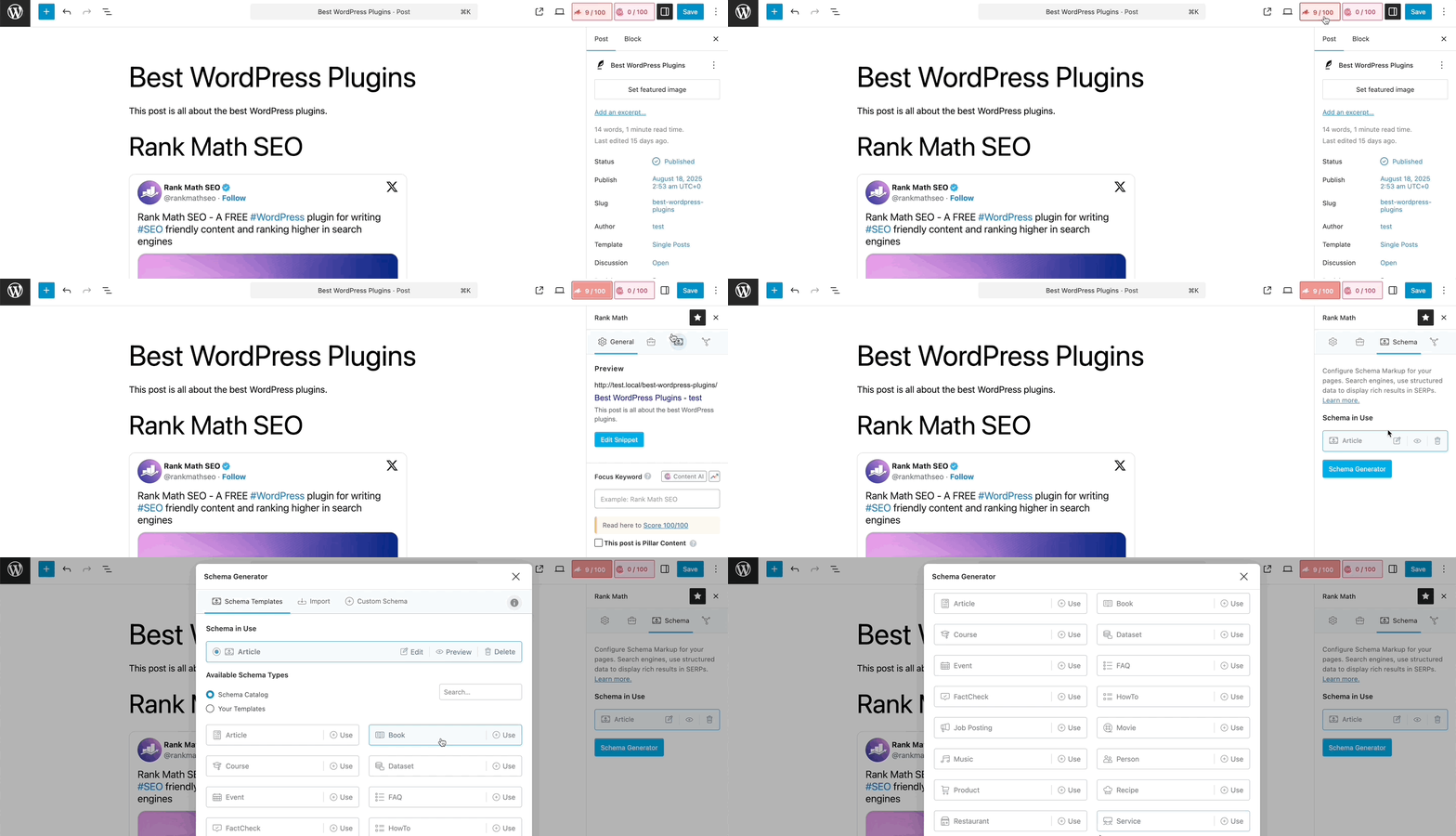
Once your content is published, use Rank Math’s Schema Generator to add structured data that helps search engines and AI systems better understand your pages.
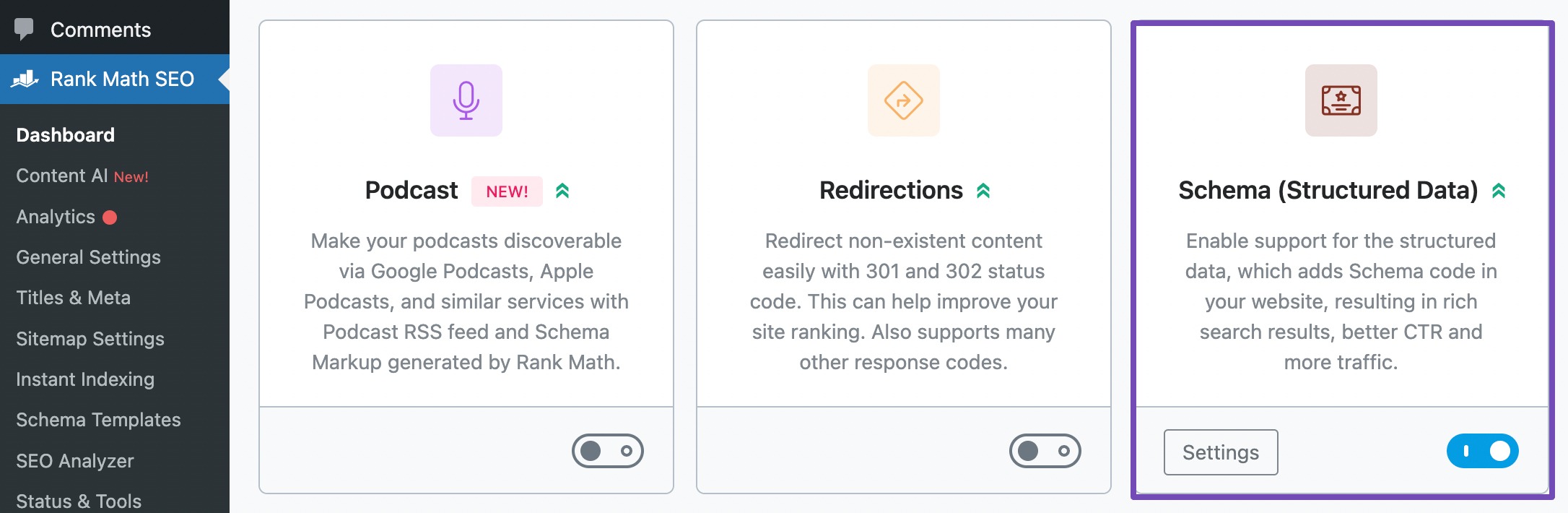
To use Schema Generator in Rank Math, enable the Schema module by heading to Rank Math SEO → Dashboard, as shown below.
Next, when you edit individual posts or pages in the WordPress Block (Gutenberg) editor, simply open the Schema options as shown below:
Depending on your content, consider implementing:
- FAQ Schema
- HowTo Schema
- Product Schema
- Article Schema
- Review Schema
Refer to our dedicated tutorial on using Schema markups in Rank Math.
4.2 Strengthen Third-Party Mentions
Your website is only one of the sources AI platforms evaluate.
Large language models frequently rely on trusted third-party websites to validate information, compare products, and assess a brand’s reputation. Positive mentions from authoritative sources can reinforce your expertise and improve how AI systems describe your business.
Consider strengthening your brand presence across:
- Industry publications
- Independent product reviews
- Customer testimonials
- Comparison websites
- Expert blogs
- Community forums
- Podcasts
- News websites
Encouraging satisfied customers to leave reviews, participating in industry discussions, publishing original research, and earning editorial coverage can all contribute to stronger third-party signals over time.
Because AI platforms regularly analyze these sources, improving your brand’s external reputation can positively influence future AI-generated responses.
4.3 Monitor Sentiment Regularly
Brand sentiment changes over time as AI platforms discover new content, evaluate updated information, and reference different sources.
Regular monitoring helps you identify reputation changes before they become larger issues and allows you to measure the impact of your optimization efforts.
Make sentiment tracking a regular part of your SEO and content strategy by reviewing:
- Overall Average Sentiment
- Sentiment trends over time
- Individual query sentiment
- Competitor sentiment
- New AI-generated brand mentions
Rather than treating sentiment as a one-time metric, use it as an ongoing performance indicator to understand how AI platforms perceive your brand and how that perception evolves over time.
5 Frequently Asked Questions
Why can my overall sentiment be positive while some queries are negative?
Average Sentiment represents all tracked AI responses. Although your overall score may be positive, individual topics, products, or services can still generate negative responses that require further investigation.
How often should I monitor brand sentiment?
For most businesses, reviewing brand sentiment weekly or monthly is sufficient. If your brand frequently launches new products, publishes content, or operates in a highly competitive industry, more frequent monitoring can help identify changes sooner.
Can improving my content improve AI brand sentiment?
Yes. Publishing accurate, comprehensive, and regularly updated content helps AI platforms access more reliable information about your business. Over time, this can contribute to more balanced and positive AI-generated recommendations.
6 Conclusion
Brand visibility in AI search is important, but sentiment reveals the quality of that visibility.
A brand that is frequently mentioned but negatively portrayed may struggle to earn trust and conversions. By tracking sentiment across your brand, individual queries, and competitors, Rank Math’s AI Visibility helps you understand exactly how AI platforms perceive your business.
Regular sentiment monitoring allows you to identify reputation risks, find improvement opportunities, and build a stronger presence across AI-powered search experiences.
If you found this post helpful, let us know by tweeting @rankmathseo or share it with others looking to improve their visibility in AI search.