

Your website is live, your pages are optimized, and you have started publishing content. But when someone asks ChatGPT, Google AI Mode, or Perplexity to recommend a business in your category, your brand is nowhere to be found.
It is tempting to respond by publishing more blog posts, building backlinks, or investing in digital PR. Those tactics can help, but they may not be the right starting point for a brand that people barely know yet.
The best AI visibility strategy depends on how established your brand already is.
This guide explains a 3-phase framework for building AI visibility. You’ll learn how to identify your current phase, which strategies to prioritize, and how to measure progress.

Table Of Contents
- What is AI Visibility
- The Three Phases of AI Visibility at a Glance
- Phase 1: Zero Presence – Build Brand Awareness
- Phase 2: Foundational – Turn Brand Recognition Into Consistent AI Visibility
- Phase 3: Established – Grow Your AI Share of Voice
- Frequently Asked Questions
- Conclusion
- Frequently Asked Questions
- Final Thoughts: Your Roadmap to Better AI Visibility
1 What is AI Visibility?
AI visibility is how often and how accurately your brand appears in AI-generated answers. It includes brand mentions, product recommendations, comparisons with competitors, and citations that link to your website or other sources.
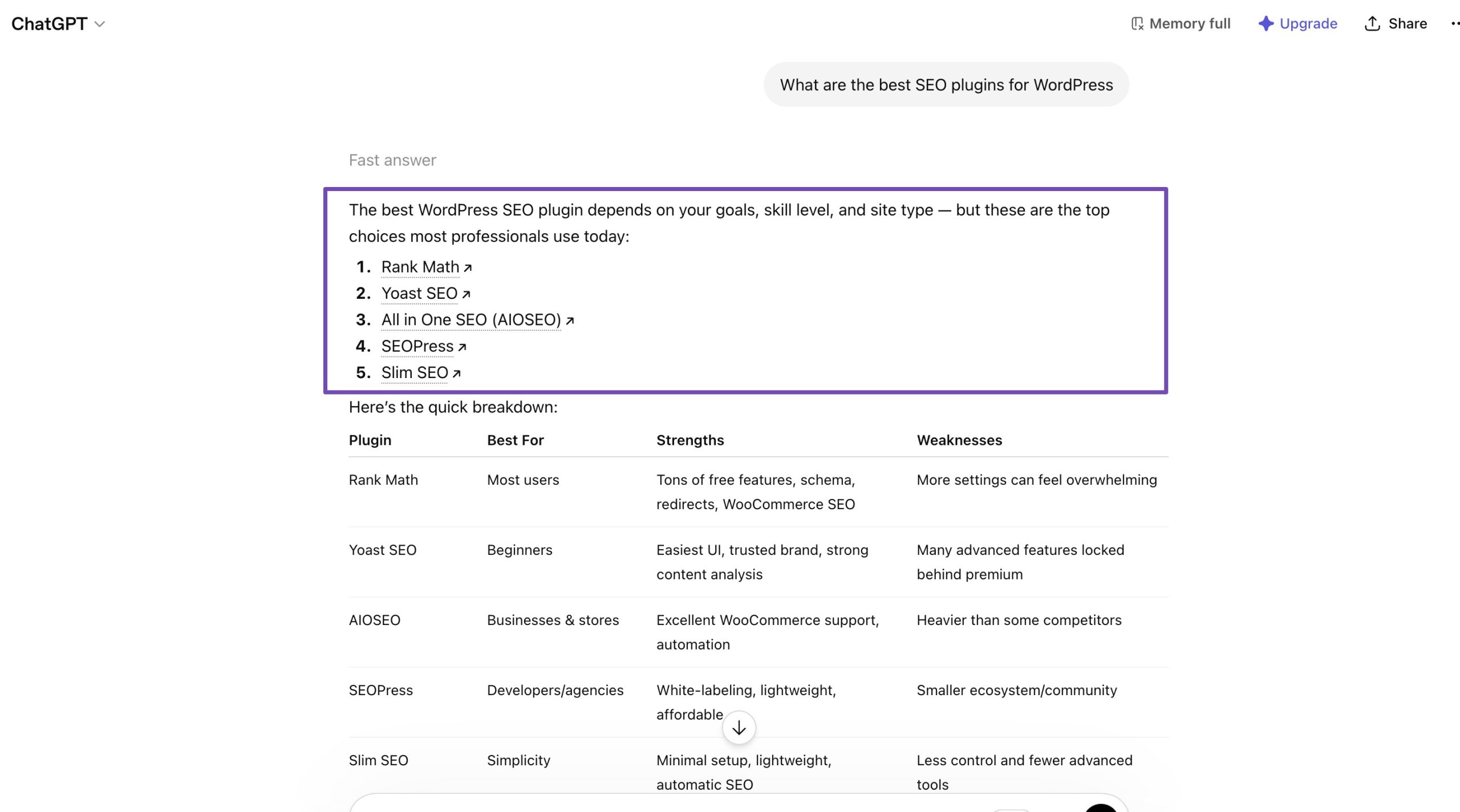
For example, imagine someone asks an AI tool, “What is the best SEO plugin for WordPress?” The answer may mention several products, explain what each one does, and cite supporting pages. If your product appears accurately in that answer, your brand has AI visibility for that query.
AI visibility is related to traditional SEO, but the two are not identical. A strong Google ranking does not guarantee that an AI tool will mention your brand. At the same time, being absent from one AI answer does not mean your entire SEO strategy is failing.
Google’s official guidance on AI features in Search says that familiar SEO fundamentals remain relevant. Pages must meet the usual technical requirements to be eligible for AI Overviews and AI Mode, and Google does not require special AI-specific Schema to appear in those features.
That makes a useful starting point: keep your website accessible and helpful, while building the wider reputation and evidence that help people understand your brand.
2 The Three Phases of AI Visibility at a Glance
The framework has three stages: Zero Presence, Foundational, and Established. Not every brand needs the same AI visibility strategy. A startup with little online recognition has different priorities from a company that already appears in AI recommendations.
Use these three phases to understand where your brand stands and what to focus on next.
| Phase | What it looks like | Main goal | Priority |
|---|---|---|---|
| Phase 1: Zero Presence | Little awareness, few mentions, and limited customer feedback | Build market presence | Community, creators, founder visibility, and basic website SEO |
| Phase 2: Foundational | Some recognition, website content, reviews, and occasional AI mentions | Strengthen credibility and consistency | Branded search demand, relevant third-party coverage, reviews, entity clarity, and useful content |
| Phase 3: Established | Regular mentions and recommendations across the category | Improve share of voice and protect authority | Competitor benchmarking, original research, digital PR, and reputation management |
The framework is useful because it helps you prioritize the work that matters most at your current stage.
3 Phase 1: Zero Presence – Build Brand Awareness
Goal: Help your target audience discover your brand, understand what it offers, and develop reasons to trust it.
A new brand can have a well-optimized website and still struggle to appear in AI-generated answers. Technical SEO makes your pages accessible, but it does not automatically establish brand recognition or a strong public reputation.
Start by building a clear website foundation, then invest in the channels and communities your potential customers already use.
3.1 Build a Clear Website and SEO Foundation
Your website should explain who you are, what you offer, and whom you serve. Clear information helps visitors understand your business and gives search engines reliable details about your products or services.
Start with the essentials:
- Create dedicated product or service pages.
- Explain your main features, benefits, and use cases.
- Publish accurate company information, including an About page and contact details.
- Make important pages accessible to search engines.
- Use descriptive page titles, headings, and internal links.
- Add relevant structured data where appropriate.
- Make sure your website works well on mobile devices.
Traditional SEO remains important for AI search. Google uses established SEO practices and technical requirements for its AI search features, and no special optimization guarantees inclusion in AI-generated answers.
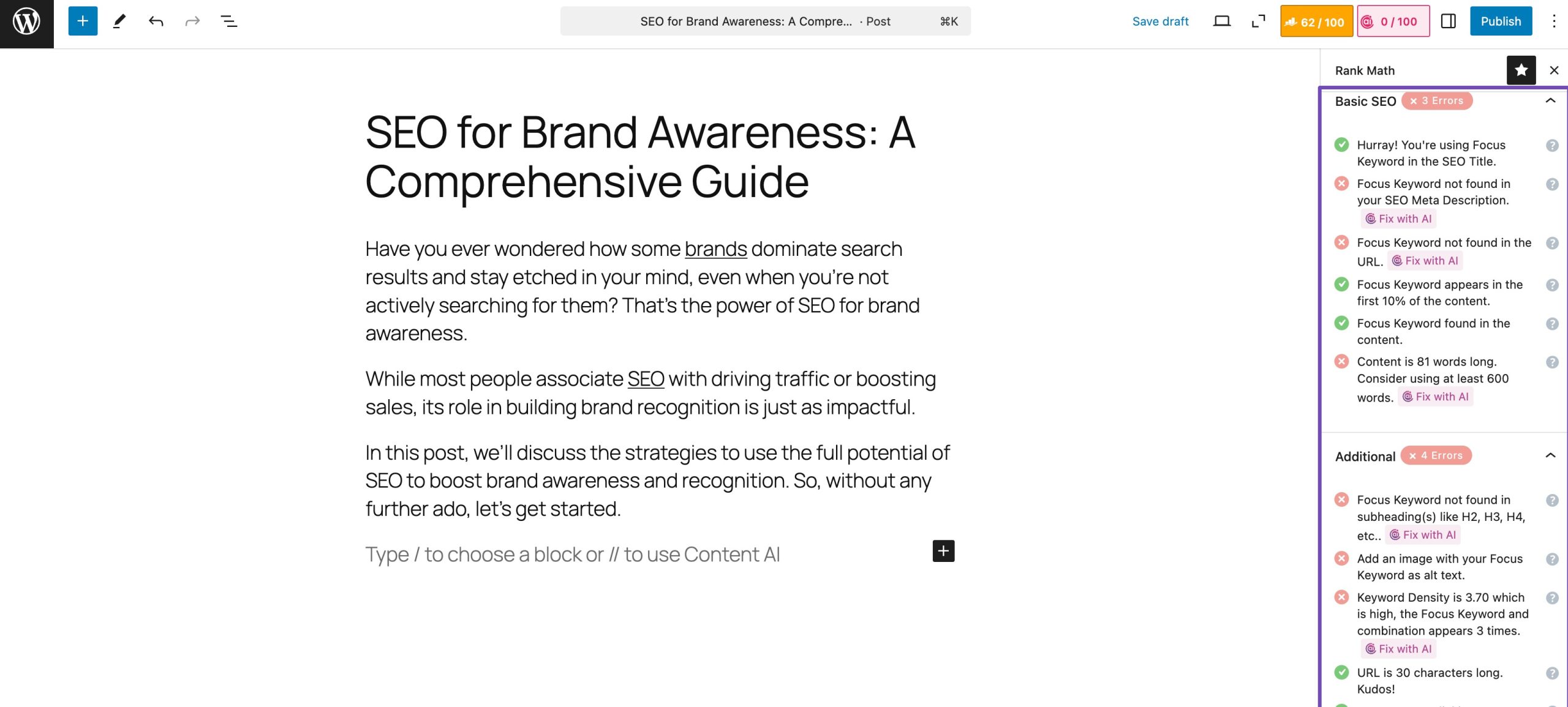
If your site is built with WordPress, Rank Math can help you manage on-page SEO, structured data, sitemaps, and other foundational tasks.
However, a technically sound website is only the starting point. People also need opportunities to discover your brand outside your own website.
3.2 Prioritize Awareness Over Low-Competition Keywords
Keyword research helps you understand what your audience searches for, but a new brand should not spend all its time targeting easy informational keywords while neglecting brand awareness.
Identify the channels where your potential customers discover products, compare solutions, ask questions, and share recommendations. Then choose activities that fit your business model.
For B2C Brands: Get Your Product in Front of Customers
Consumer brands can build awareness through creator recommendations, product demonstrations, customer experiences, and participation in relevant communities.
Work with relevant creators. Choose creators whose audiences match your target customers. A smaller creator with a highly relevant audience may be more useful than a large account with little connection to your product.
For example, Gymshark has built a strong fitness community involving athletes and fitness creators who showcase its products. This illustrates how creator partnerships can introduce a brand to people already interested in its category.

Encourage genuine user-generated content. Give customers opportunities to share their experiences, photographs, and product demonstrations. Disclose paid partnerships and incentives where required.
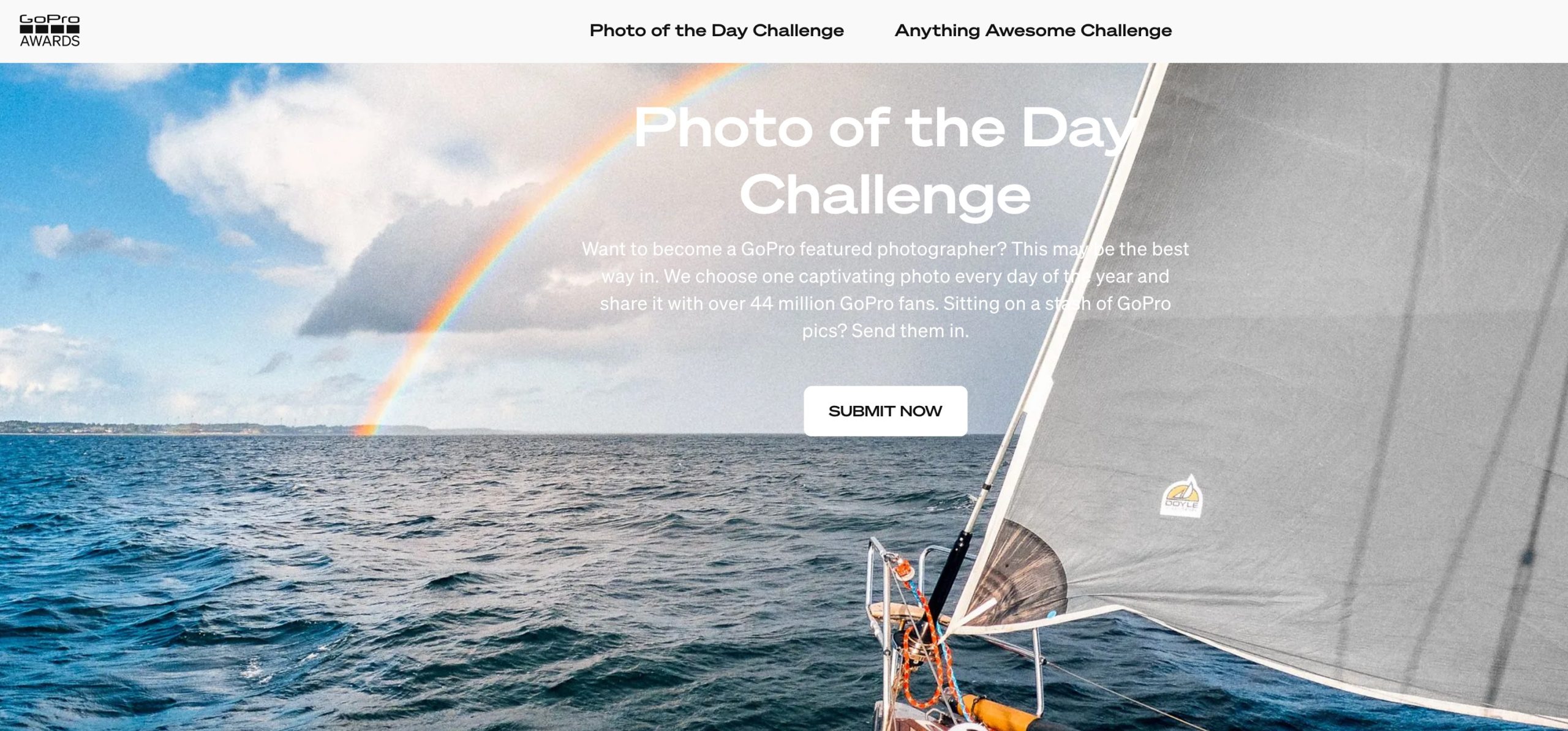
GoPro encourages customers to share footage captured with its cameras through initiatives such as GoPro Awards. Customer-created videos demonstrate product capabilities in real-world situations and give prospective buyers examples beyond traditional advertising.
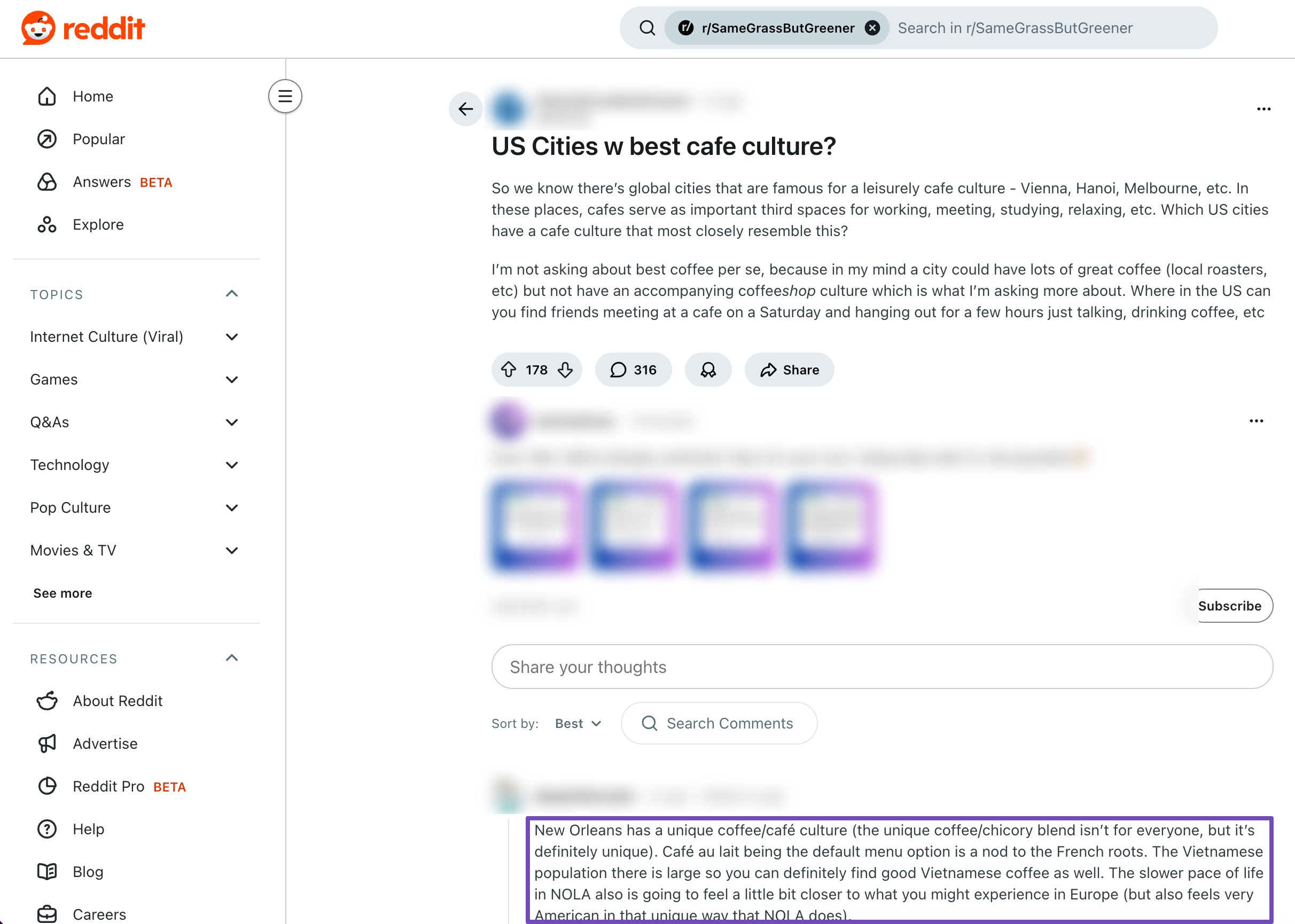
Participate in relevant communities. Answer questions in niche forums and Reddit communities when your experience genuinely helps. Follow community rules and avoid promotional comments that add little value.
Publish useful short-form content. Use Instagram Reels, TikTok, and YouTube Shorts to demonstrate products, answer common questions, and show how your product fits into everyday life.

At Rank Math, we also share short-form videos on our social media page to share SEO tips, tutorials, and useful insights.
Create in-depth demonstrations. Longer tutorials and product comparisons help potential customers understand how a product works, which problems it solves, and when it is a good fit.
For example, a new fitness clothing brand could collaborate with fitness creators, publish workout-related content, and encourage customers to share how the clothing performs during training.
The objective is not to manufacture online buzz. It is to create useful customer experiences that naturally lead to conversations, independent mentions, and recommendations.
For B2B Brands: Build Trust Through Expertise
B2B buyers often research products extensively before making a decision. They may compare vendors, consult colleagues, read industry publications, and look for evidence that a company understands their problems.
Founder-led content and subject-matter expertise can help establish that credibility.
Consider these approaches:
- Share practical insights on LinkedIn.
- Explain the problems your product solves through detailed articles.
- Contribute expert commentary to relevant industry publications.
- Appear on industry podcasts or participate in webinars.
- Attend relevant events and build relationships with practitioners.
- Publish case studies when you have meaningful customer results to share.
For instance, a new analytics SaaS company could share its founder’s insights on LinkedIn, publish guides explaining common measurement challenges, contribute expert commentary to marketing publications, and document customer results as it builds its customer base.
These activities can help people understand your expertise and give other websites and publications useful reasons to mention your brand.
3.3 Set Realistic Expectations for Growth
Brand awareness takes time. The timeline depends on your industry, competition, budget, product quality, distribution, and consistency.
Instead of promising a specific number of months, set measurable milestones that show whether your brand is becoming easier to discover.
Rather than promising a specific number of months, set milestones you can measure.
Early milestones may include:
- Your first independent brand mentions.
- Your first genuine customer reviews.
- Growth in branded search impressions.
- More referral traffic from relevant websites.
- Your first appearances in AI-generated answers for relevant prompts.
These indicators help you determine whether your brand is becoming easier to discover.
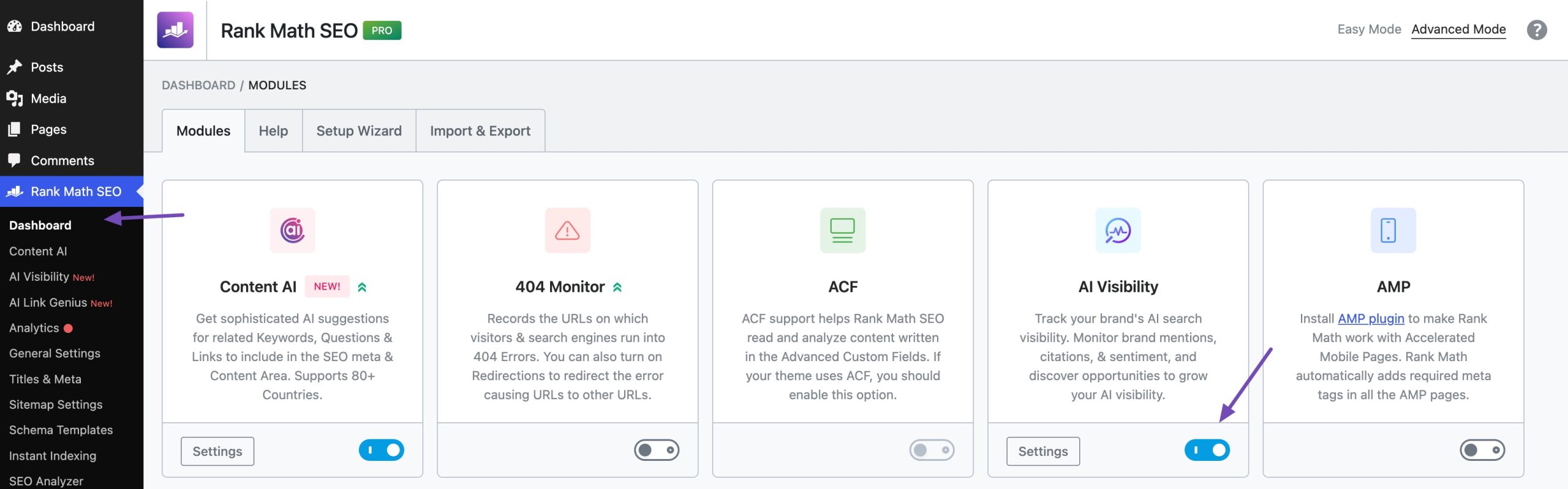
You can use Rank Math AI Visibility to monitor how your brand appears across supported AI platforms. The feature helps you track brand mentions, citations, sentiment, competitors, and visibility trends.
To do so, navigate to Rank Math SEO → AI Visibility from your WordPress dashboard. Make sure the module is enabled.
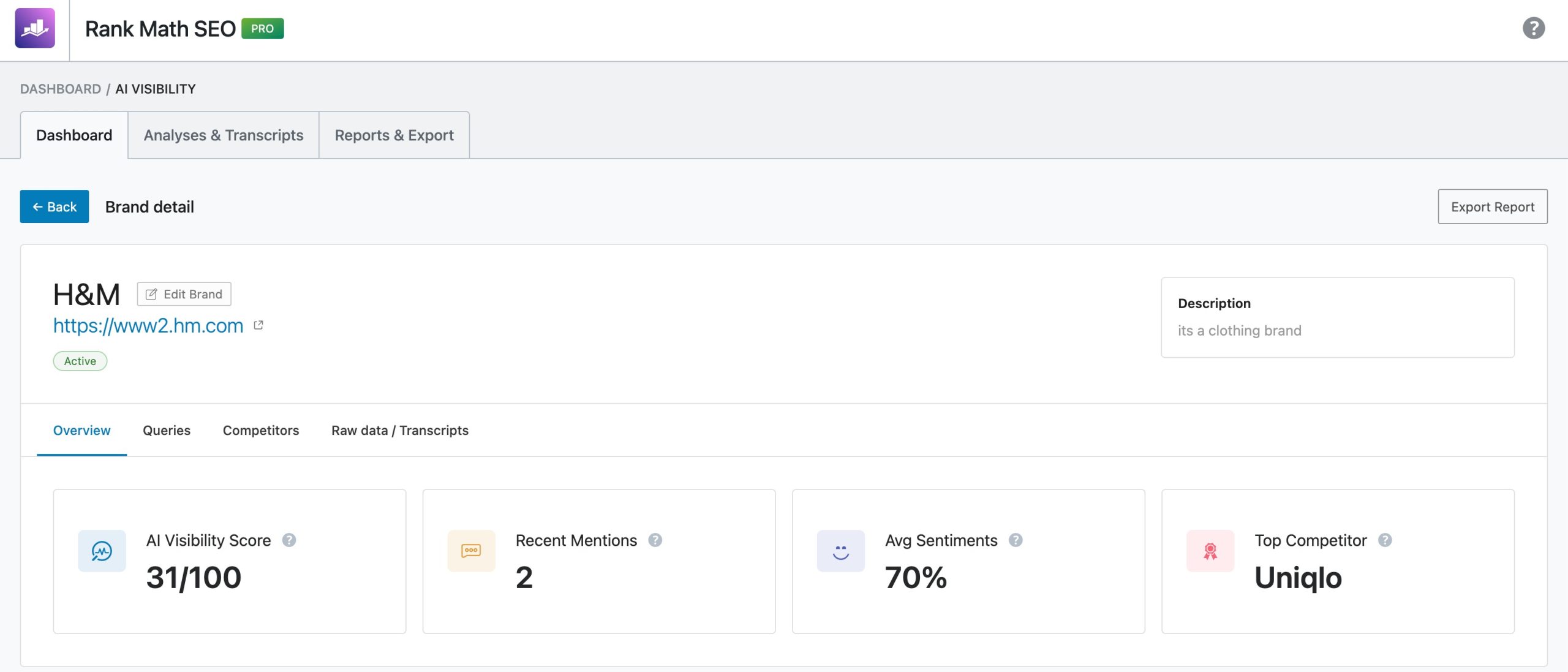
Open a tracked brand’s overview and analyze the dashboard showing the available metrics.
Move to Phase 2 when your brand has some recognition to build on, but AI mentions remain inconsistent or limited. You do not need to achieve every milestone before strengthening your foundation.
4 Phase 2: Foundational – Turn Brand Recognition Into Consistent AI Visibility
Goal: Make your brand easier to understand, verify, and recommend by strengthening its public information, content, and reputation.
At this stage, your business has a website, some useful content, and a degree of recognition. People may search for your brand, discuss your products, or leave customer reviews.
However, AI platforms may mention your brand for one query and omit it for another. The next step is to identify gaps in your visibility before deciding which tactics to prioritize.
4.1 Diagnose Your Current AI Visibility
A visibility audit helps you understand how AI platforms describe your brand, which sources appear in their answers, and where competitors receive attention.
Use the following five checks to establish a baseline.
Ask AI Platforms About Your Brand
Start with a few direct questions in ChatGPT, Gemini, and Perplexity.
Try prompts such as:
- What do you know about [Brand Name]?
- What does [Brand Name] offer?
- Who are the main alternatives to [Brand Name]?
Record the answers and check the sources cited, where available.
Look for missing or incorrect details, outdated descriptions, competitor mentions, and the websites AI tools use to support their answers.
Treat these tests as a starting point, not a definitive score. AI responses can vary by prompt, platform, location, and time. Repeat your tests using consistent prompts to identify patterns.
Check Branded Search Demand
Branded search queries include your company name, product names, and common variations that indicate people are searching specifically for your business.
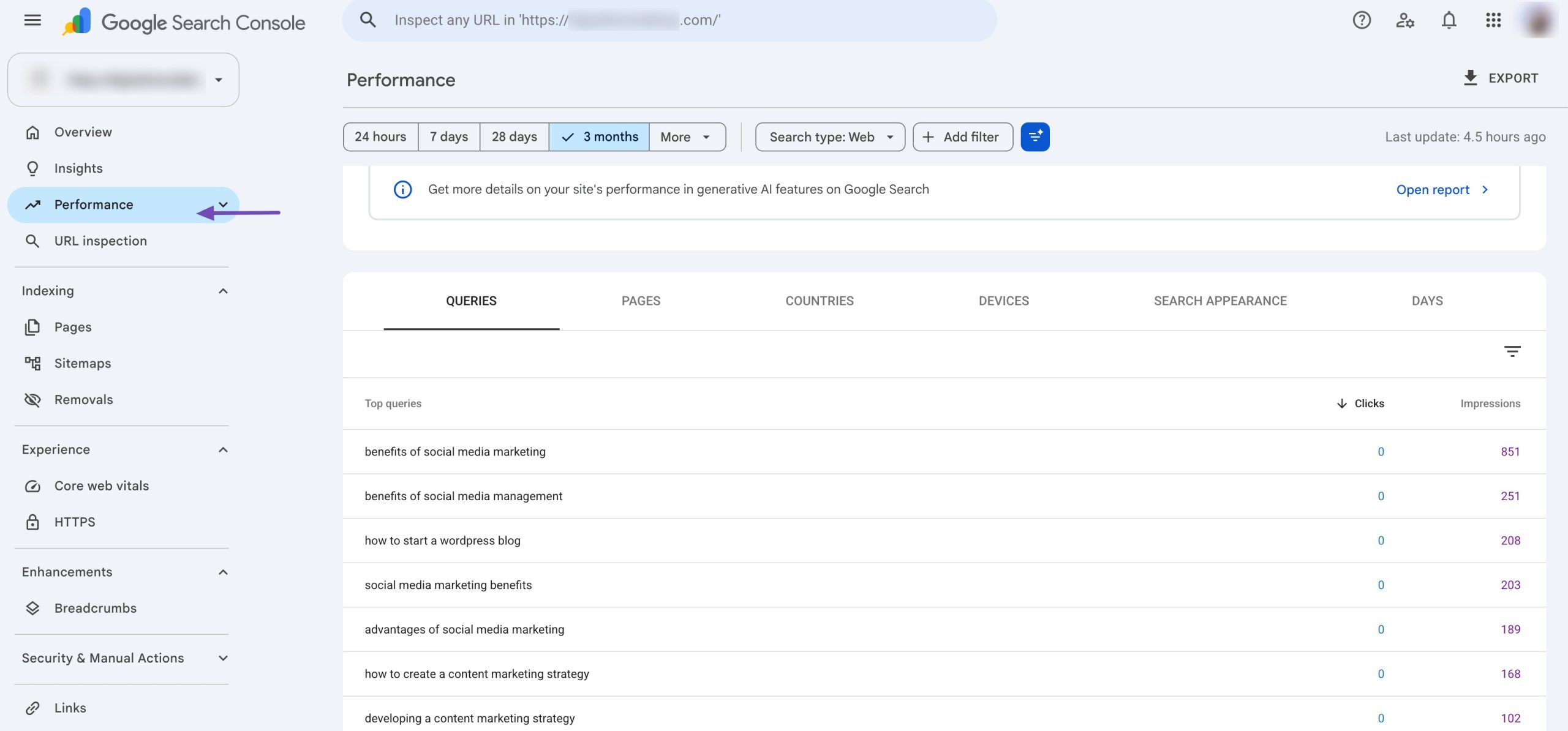
Open Google Search Console and go to the Performance report for Search results. Review clicks, impressions, and queries related to your brand.
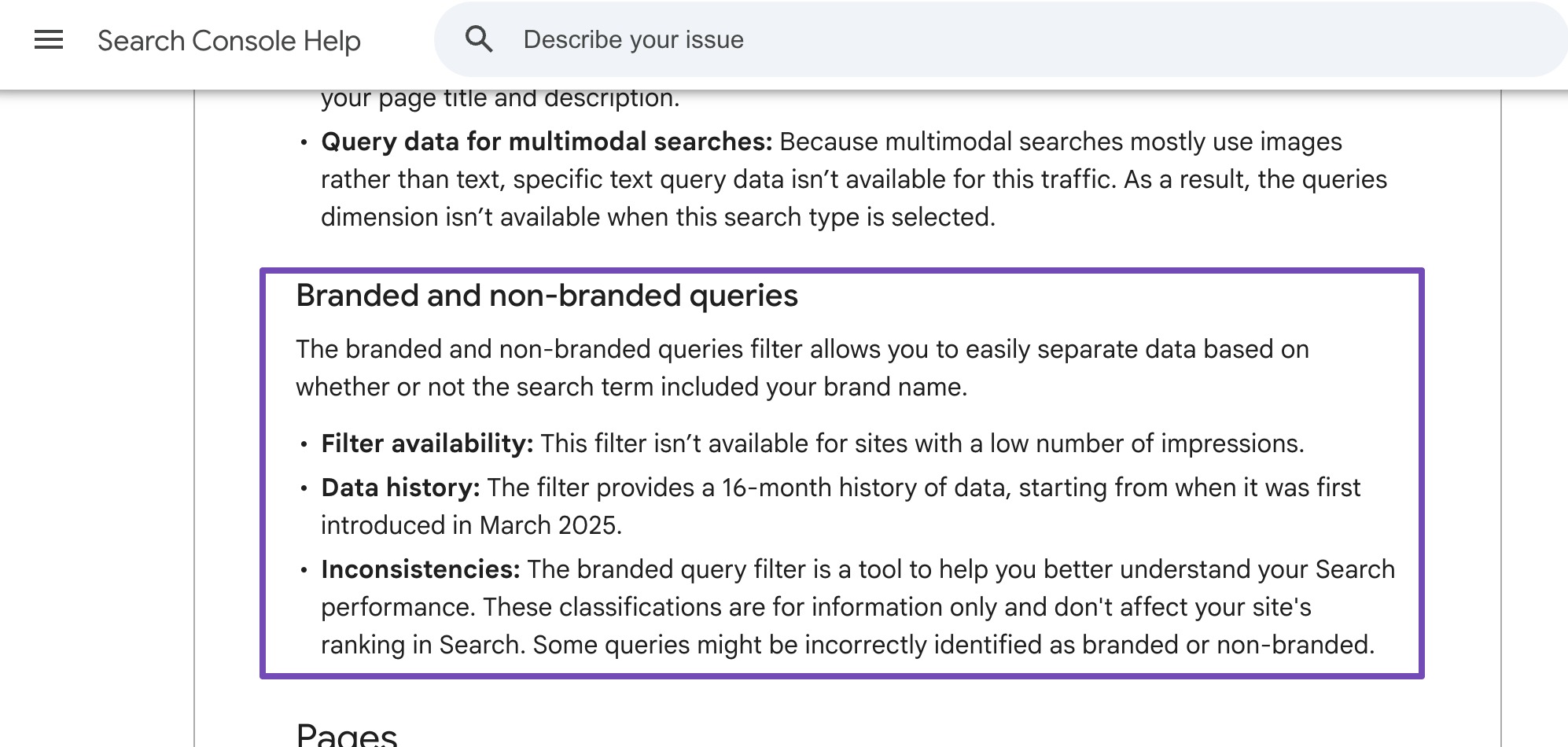
Eligible properties may also have access to Google’s branded and non-branded query filter. Availability depends on the property and its data volume. Google’s Search Console documentation.
Interpret branded search trends in context:
- Little or no branded demand: Your audience may have limited awareness of your brand, although low search volume alone does not prove this.
- Growing branded demand: More people may be discovering your business and searching for it directly.
- Strong, sustained branded demand: Your brand may have established recognition, creating an opportunity to investigate its position in AI recommendations.
Branded search is a useful awareness signal, but it does not measure AI visibility directly. People can discover a brand without searching for it on Google.
Audit Independent Brand Mentions
Search for your brand name outside your own website. For example, use this Google search operator:
"Brand Name" -site:yourdomain.com
Replace the example with your brand name and website domain.
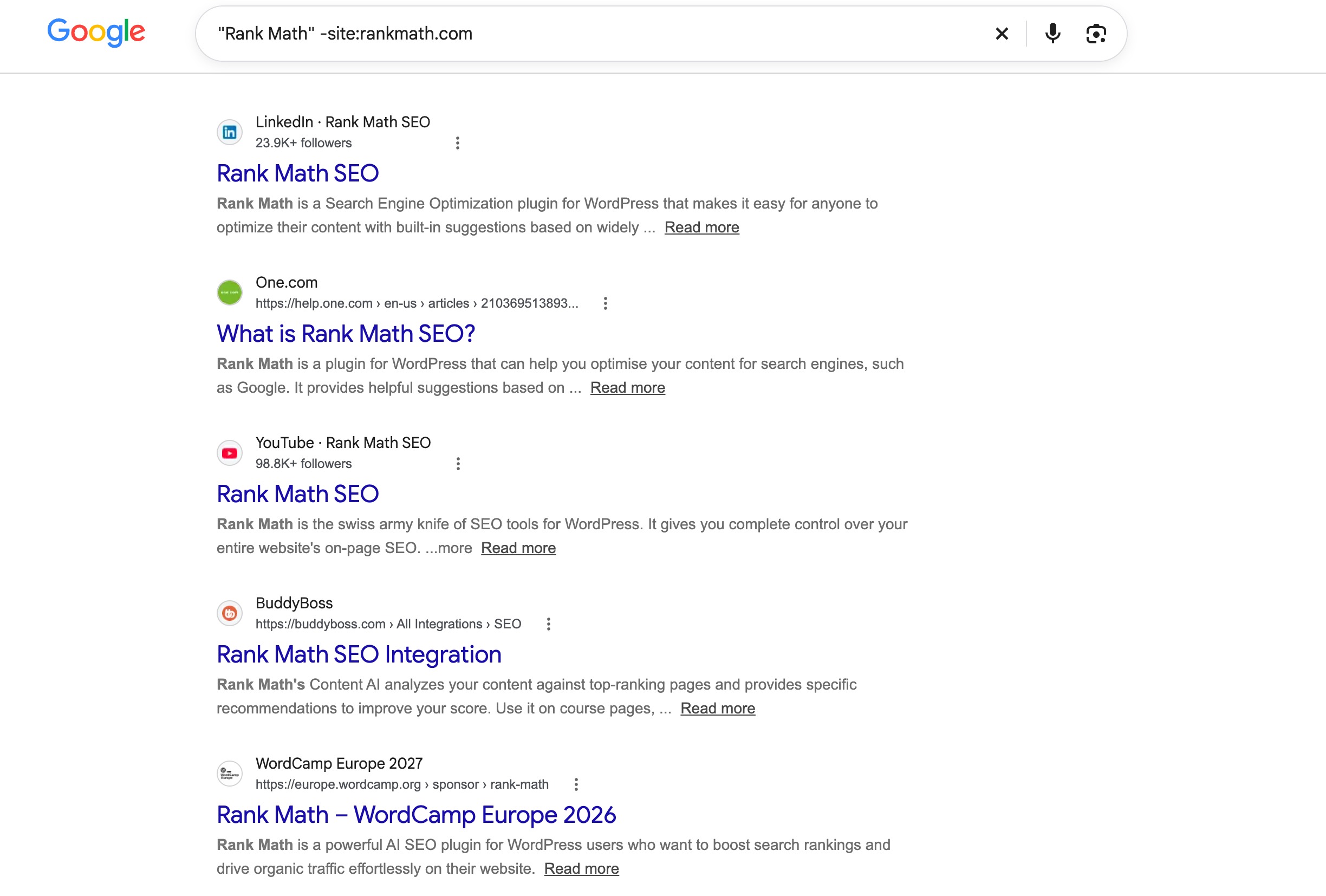
Review the results for:
- Industry publications and news websites.
- Product comparisons and buying guides.
- Relevant Reddit discussions and community forums.
- Customer reviews and business directories.
- Partner websites and expert articles.
- Social profiles and professional discussions.
Evaluate the context of each mention, not just the total number. A detailed, relevant mention on a respected industry website may provide more useful evidence of your expertise than numerous unrelated mentions.
Check whether third-party pages describe your business accurately. If an article contains outdated product details or incorrect pricing, contact the publisher politely and provide evidence to support the correction.
Review Your Reputation Across Relevant Platforms
Customer reviews help prospective buyers evaluate a business and provide public information about customer experiences.
Choose review platforms based on your industry and audience.
| Business type | Platforms to consider |
|---|---|
| Local businesses | Google Business Profile and relevant local directories |
| B2B software | G2, Capterra, and industry-specific software directories |
| Consumer products | Retailer reviews and relevant product-review platforms |
| Professional services | Relevant industry directories and trusted review websites |
Keep your profiles accurate and up to date. Ask customers for honest feedback at appropriate points in their experience, and respond professionally to positive and negative reviews.
Never buy fake reviews or pressure customers to leave only positive feedback.
For local businesses, Rank Math’s Local SEO module can help you provide accurate business information and relevant structured data.
Test Category Recommendation Prompts
Brand-specific prompts show what AI platforms know about your business. Category prompts help you assess whether those platforms associate your brand with the products, services, and problems you want to be known for.
Try prompts such as:
- What are the best [category] tools for small businesses?
- Compare the leading [category] providers for [target audience].
- What are some alternatives to [competitor]?
Run the same prompts across platforms and record which brands appear, where your brand appears, and what sources are cited.
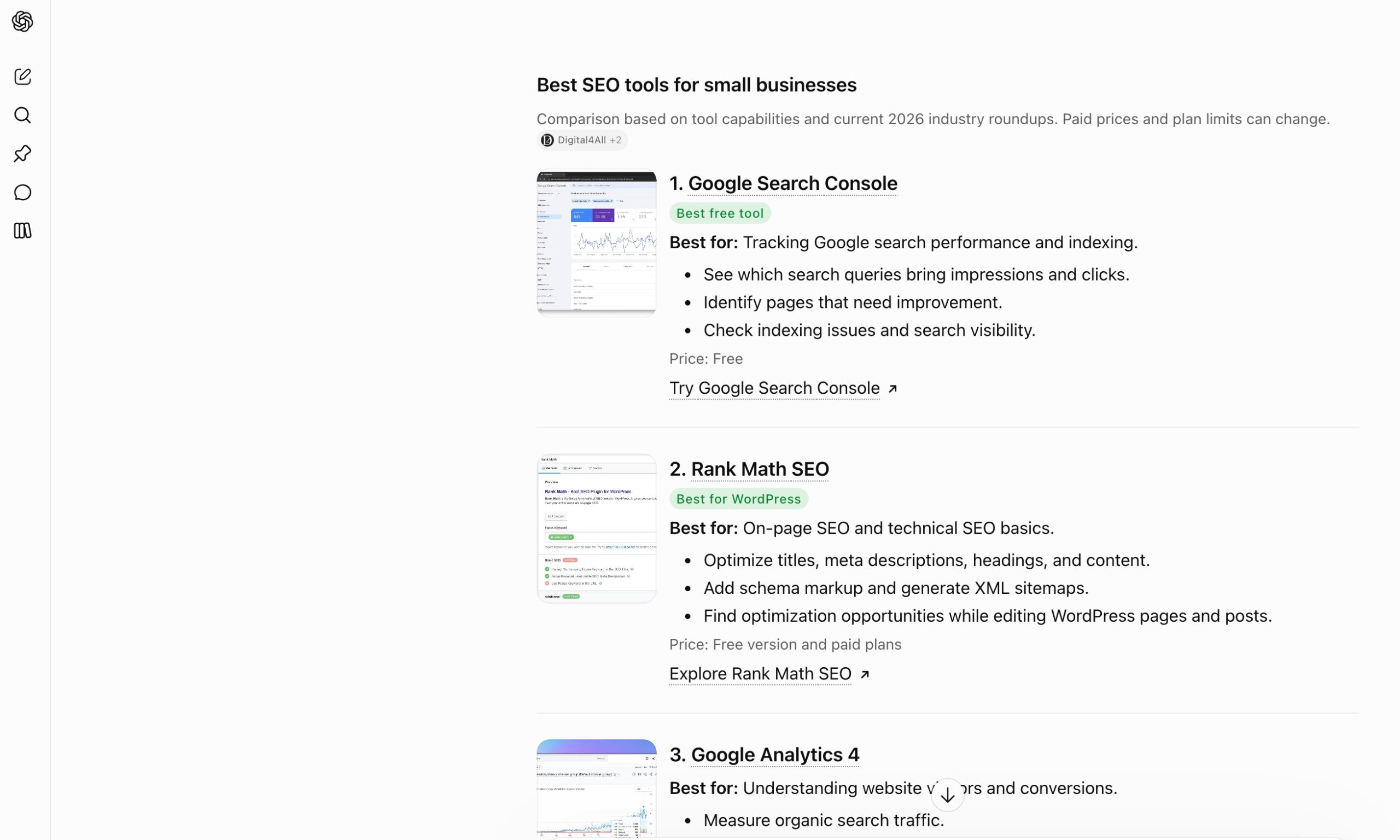
If your brand is missing, investigate possible gaps. Does your website explain the relevant use case? Do independent reviews cover your product? Are comparison articles overlooking your offering? Is your public product information accurate?
Repeated tests can reveal useful patterns, but a single answer does not prove that an AI platform consistently prefers a competitor.
4.2 Apply Six Strategies to Strengthen Your Foundation
Once you understand the gaps, focus on the following six areas.
Create Pages That Match Branded Search Intent
People searching for a brand often have specific questions. They may want to compare products, check features, find alternatives, understand pricing, or decide whether a product fits their needs.
Create useful pages that answer these questions when there is genuine audience demand.
Examples include:
- Product feature pages.
- Industry or use-case pages.
- Product comparisons.
- Alternative pages.
- Customer case studies.
- Pricing explanations and frequently asked questions.
Rank Math SEO can help you optimize these pages for relevant search queries. Content AI can also assist with topic research and content ideas.
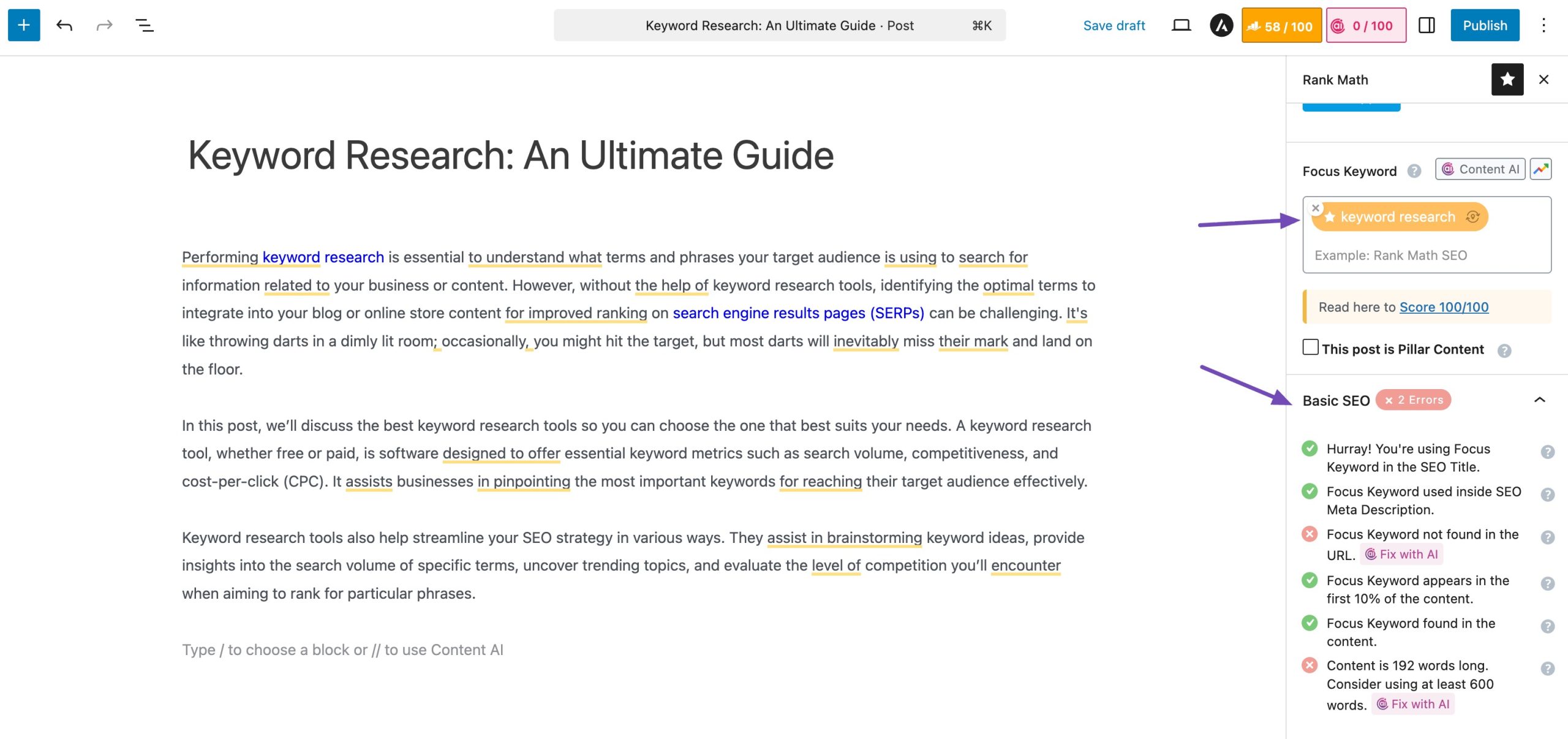
To optimize a page using Rank Math, open the page or post in your WordPress editor. Enter your primary focus keyword in the Rank Math SEO panel.
Review the SEO analysis suggestions and improve your title, headings, content, and internal links where relevant. Preview your search snippet and refine the SEO title and meta description.
Avoid creating dozens of nearly identical pages to target minor keyword variations. Do not publish misleading discount or comparison pages when you cannot substantiate the claims.
The objective is to answer questions about your brand, not to create pages solely for AI systems.
Identify the Sources AI Uses for Your Category
AI-generated recommendations may cite product documentation, customer reviews, industry publications, comparison pages, or community discussions.
Study the sources appearing for your important category prompts.
For example, if AI answers about accounting software frequently cite independent comparisons and industry publications, review those sources to understand what makes them useful.
Ask yourself:
- Which brands are included?
- What product details are compared?
- Which customer problems are discussed?
- What evidence supports the recommendations?
- Are there relevant publications or directories that consistently appear?
Then look for legitimate opportunities to contribute.
Rank Math AI Visibility helps you monitor brand mentions, citations, sentiment, competitors, and visibility opportunities in AI-generated responses. To do so, in your WordPress dashboard, navigate to Rank Math SEO → AI Visibility.
Add your brand or product details, select the relevant country, and select the AI platform. You can also choose the frequency of analyses, as shown below.
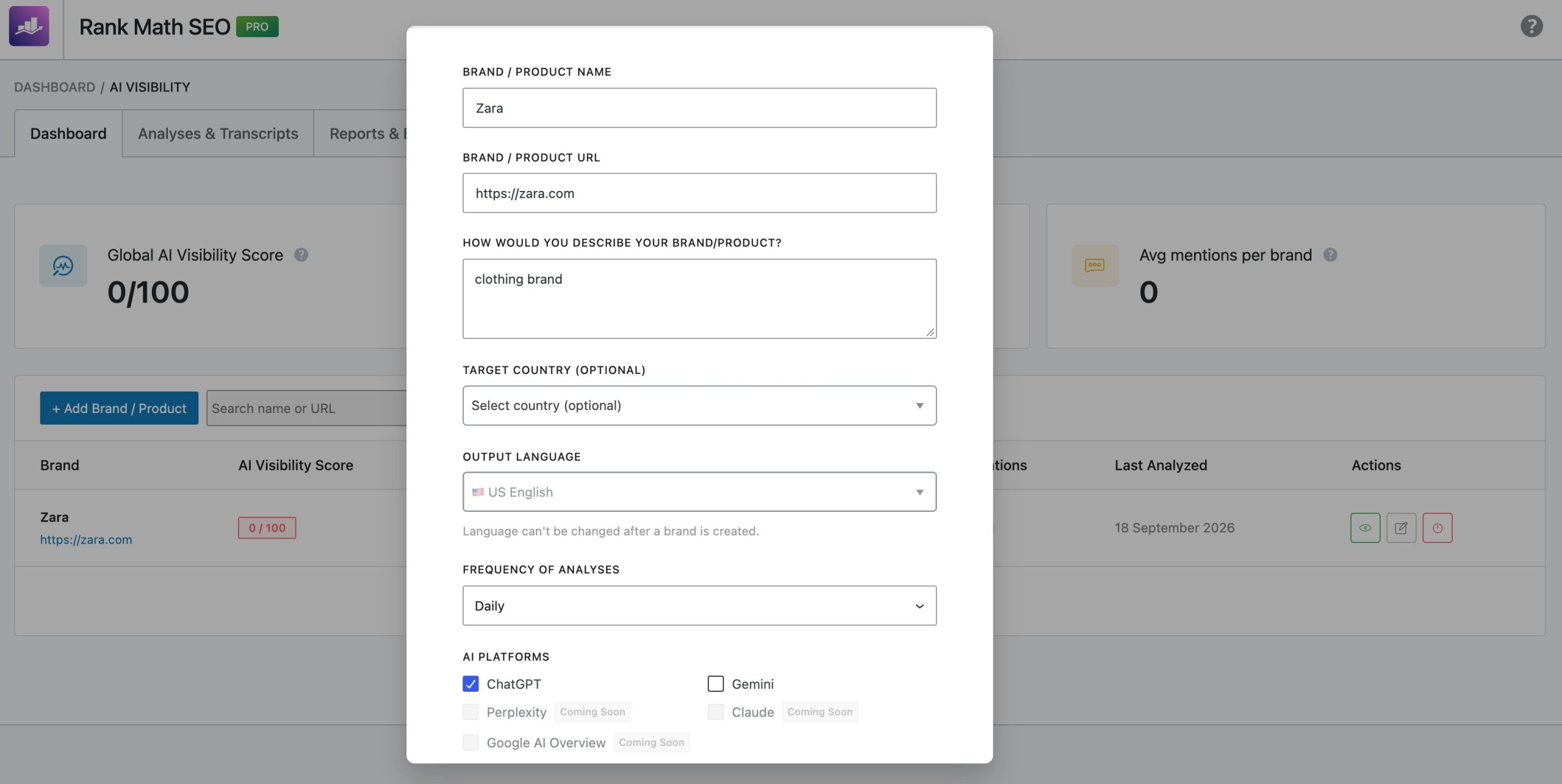
You can then review the generated responses, brand mentions, average sentiments, citations, and competitors to identify gaps.
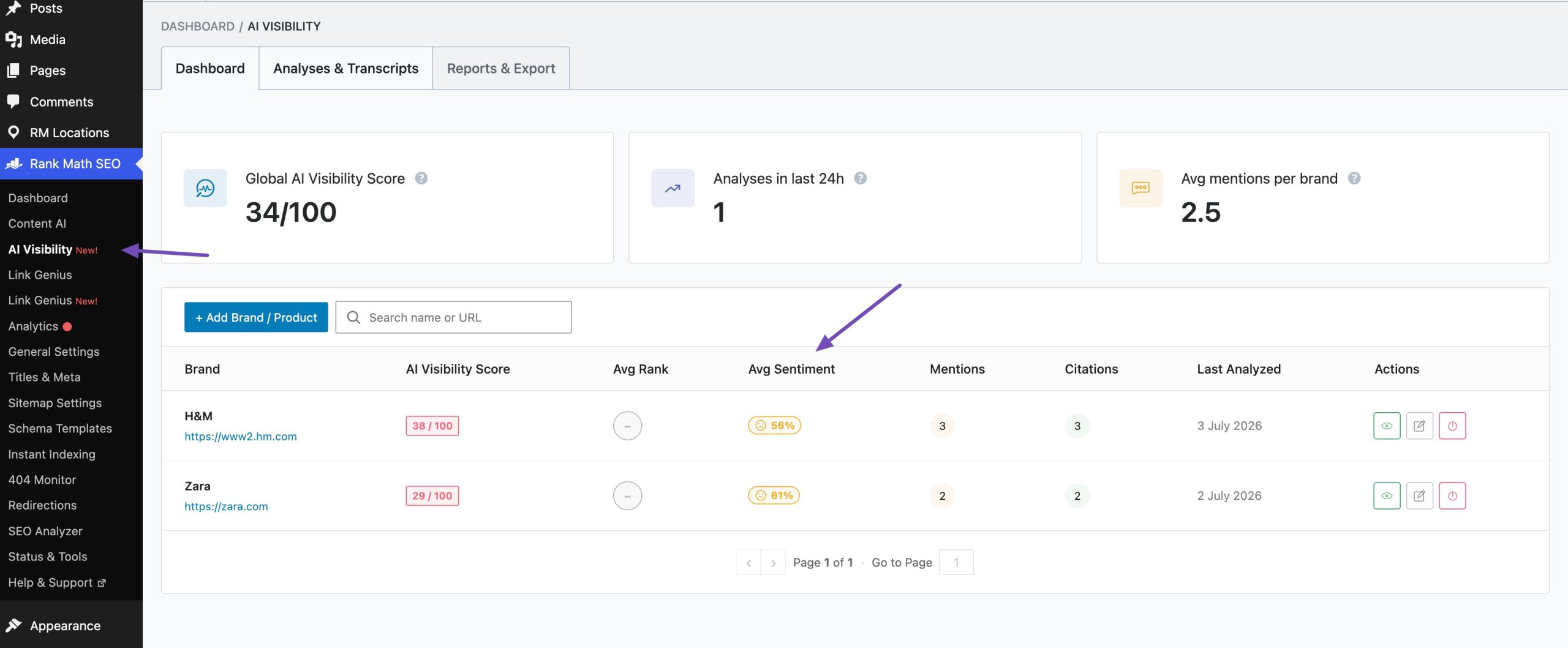
Use these findings to guide your research and content strategy.
Invest in the Content Formats Your Audience Uses
Your website is not the only place potential customers discover your brand. The most useful formats depend on your audience, product, and industry.
Consider these options:
- YouTube tutorials and product demonstrations.
- LinkedIn posts from subject-matter experts.
- Detailed customer case studies.
- Community discussions and practical answers.
- Webinars and expert interviews.
- Short-form demonstrations for consumer audiences.
Prioritize channels that already generate meaningful engagement, referral visits, enquiries, or conversions.
Repurpose successful ideas into other formats, but adapt each piece to the audience. Publishing the same generic message everywhere does not necessarily build recognition or trust.
Make Your Brand Information Consistent
AI systems need reliable information to distinguish your business from similarly named companies and understand what you offer.
Review your key online profiles and make sure the following details are consistent wherever applicable:
- Brand name and official website.
- Product or service descriptions.
- Company information and contact details.
- Founder or team information.
- Product features and supported use cases.
- Official social profiles.
Your website should serve as a reliable source for core company facts. Keep product pages, pricing information, and company details up to date.
You can also use appropriate structured data to clarify your organization. Google’s Organization structured data documentation recommends properties such as name, url, logo, and sameAs where relevant. The sameAs property can identify official profiles on other websites.
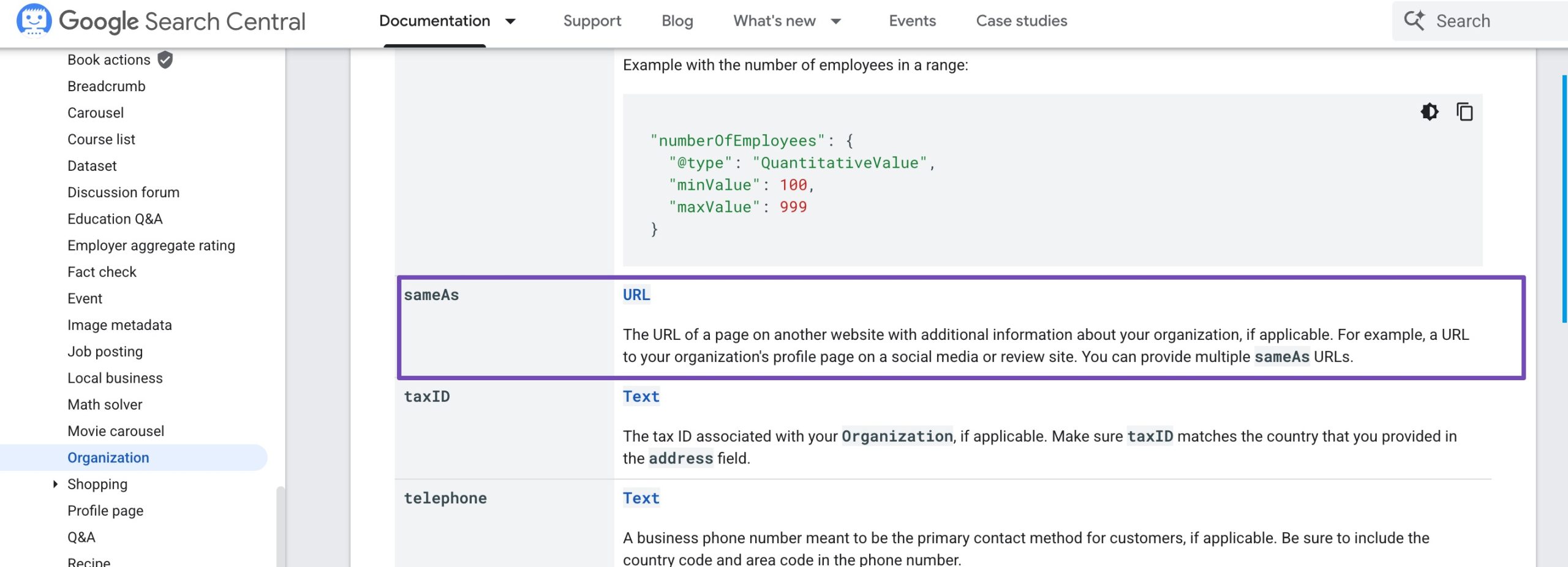
Structured data helps search engines interpret information about your organization. It does not guarantee a knowledge panel, AI mention, or recommendation.
You can use Rank Math’s Schema Generator to add appropriate schema types to individual pages.
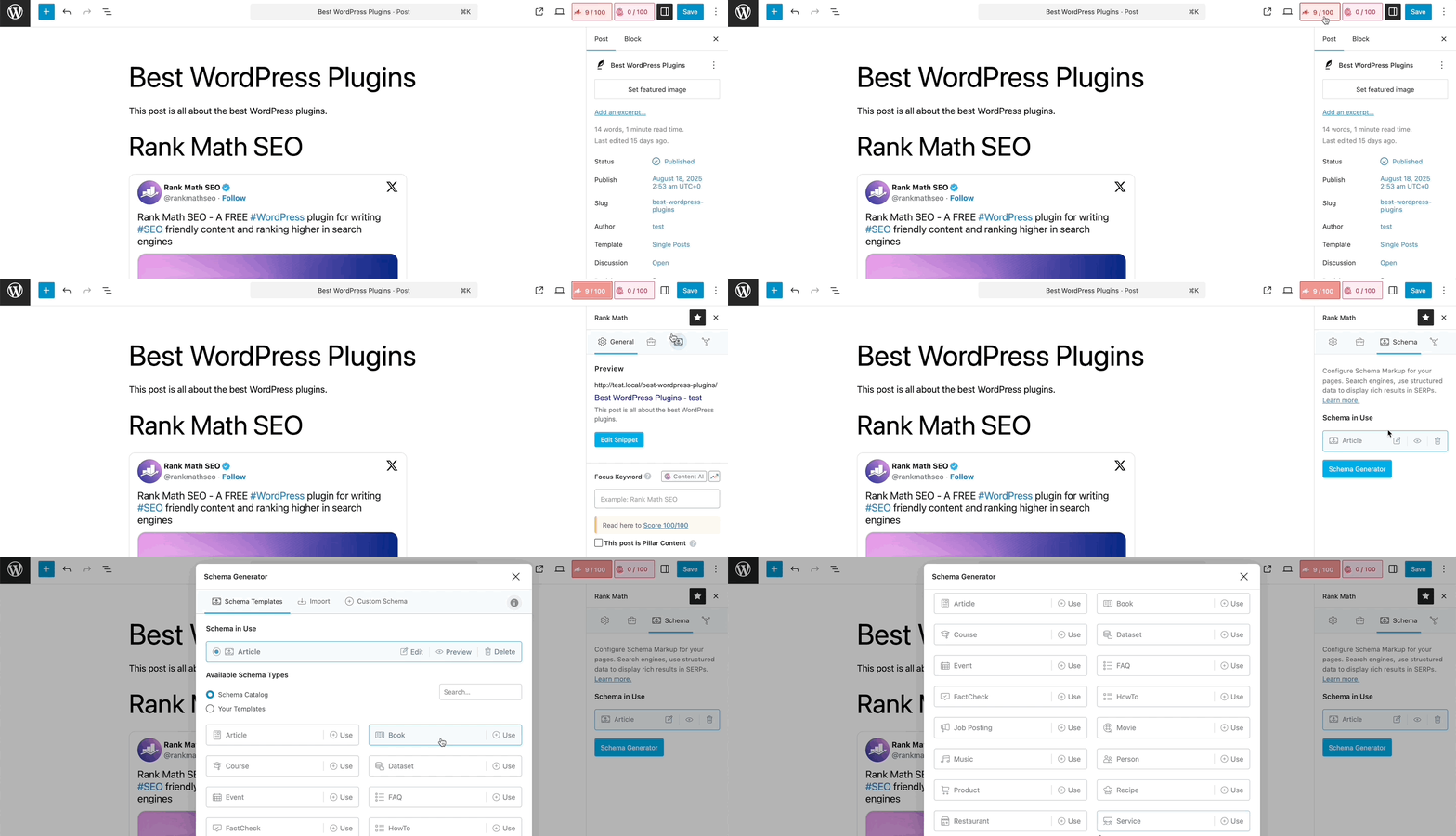
For local businesses, keep website details consistent with your business listings.
Build a Genuine Review Profile
A healthy review profile helps potential customers understand what it is like to use your product or work with your business.
Create a repeatable feedback process:
- Ask customers for an honest review after a meaningful interaction or completed purchase.
- Make the review process easy without pressuring customers.
- Monitor reviews on the platforms that matter to your industry.
- Respond to feedback professionally and specifically.
- Use recurring criticism to improve your product or service.
If several customers report the same problem, address it and update your product documentation or FAQs when appropriate.
Reviews contribute to your public reputation, but they do not guarantee AI visibility. Treat them as one part of a broader strategy that includes useful content, accurate business information, and independent coverage.
Structure Content So Readers Can Find Answers Easily
Clear content structure helps readers find relevant information and makes individual passages easier to interpret.
Use these practices when creating or updating content:
- Lead with the answer. Give readers a direct response near the beginning of the section.
- Use descriptive headings. Make the topic of each section clear.
- Explain specific details. Include examples, steps, limitations, and supporting evidence where useful.
- Keep facts current. Update product information, statistics, and references when they change.
- Link to relevant pages. Help readers move from an overview to detailed documentation or related topics.
- Use tables for meaningful comparisons. Present differences in a format readers can scan.
- Add useful FAQs. Address genuine questions without repeating information already covered in the article.
This approach makes content easier to use and can help systems identify relevant passages. It does not guarantee citations or mean that every article must follow an identical structure.
Move to Phase 3 when your brand appears regularly in relevant AI answers and has a foundation of independent mentions, useful content, and customer feedback. You can begin competitive benchmarking earlier, but an established presence gives you more evidence to analyze.
5 Phase 3: Established – Grow Your AI Share of Voice
Goal: Understand how your brand compares with competitors, identify visibility gaps, and strengthen the evidence supporting your position in the market.
Established brands generally have some market recognition, a substantial content library, customer reviews, and independent coverage. AI platforms may already mention them in relevant answers.
The challenge is no longer simply getting mentioned. It is understanding where your brand appears, where competitors receive recommendations instead, and which audience needs your current content does not address.
5.1 Benchmark Competitors Across AI Platforms
Start by creating a consistent set of prompts that reflect how your audience evaluates products and services.
For example:
- What are the best [category] products for [audience]?
- Compare [Brand A] and [Brand B].
- What are the main alternatives to [Brand]?
- Which tools are best for [specific problem]?
- What are the advantages and limitations of [Brand]?
Run the prompts across ChatGPT, Gemini, and Perplexity. Repeat them over time, using the same wording where possible.
Track the results in a spreadsheet or reporting tool.
| Metric | What to record |
|---|---|
| Mention frequency | How often your brand appears in the tested answers |
| Recommendation position | Where your brand appears in a list, when a clear order exists |
| Sentiment | Whether the description is positive, neutral, negative, or mixed |
| Brand accuracy | Whether product details and descriptions are correct |
| Citations | Which sources are linked or cited |
| Competitor presence | Which competing brands appear alongside or instead of yours |
| Use-case coverage | Which audiences, industries, and problems trigger mentions |
Do not treat the first position in one answer as a universal ranking. AI responses can change between runs, and different prompts can produce different recommendations.
Look for recurring patterns instead. For example, your brand may appear frequently in responses about small-business use cases but rarely in answers about enterprise requirements. That difference could point to a content gap, a product-positioning issue, or insufficient evidence of your enterprise capabilities.
Investigate the cause before deciding what to change.
5.2 Publish Original Research and Useful Data
Original research gives your brand something concrete to contribute to industry conversations. It can help demonstrate expertise, inform your audience, and create opportunities for relevant media coverage.
Rather than repeating widely available advice, investigate a question your audience genuinely cares about. A credible research report should explain:
- The question the research addresses.
- How the data was collected.
- Who or what the sample represents.
- How the findings were calculated.
- What the results establish and what they do not establish.
Original research can support brand authority and earn relevant coverage, but it does not guarantee AI citations. The findings must be useful, credible, and relevant to the questions people ask.
5.3 Use Digital PR to Earn Relevant Coverage
Digital PR helps brands build relationships with publications and earn coverage based on useful information, expertise, and newsworthy work.
Start by identifying the topics where your business has genuine expertise. Then look for opportunities to contribute:
- Provide expert commentary on relevant industry developments.
- Share original data with journalists.
- Offer a clear explanation of a complicated topic.
- Respond to requests for subject-matter experts.
- Pitch research findings to relevant publications.
- Contribute useful case studies or analysis.
Create a media kit with accurate company information, expert biographies, contact details, and supporting research. Make it easy for journalists to verify your claims and reach the right person.
5.4 Treat Wikipedia Carefully
Wikipedia articles may appear in search results and can be useful references for people researching established organizations. However, a Wikipedia page is not a requirement for AI visibility and does not guarantee AI recommendations.
Wikipedia has its own standards for notability, reliable sourcing, neutrality, and conflicts of interest. Before considering an article about your organization, ask:
- Is the organization independently notable under Wikipedia’s standards?
- Have reliable, independent publications covered it in meaningful detail?
- Are the available sources more substantial than company announcements or routine mentions?
- Can the topic be covered neutrally, including relevant criticism and limitations?
If you have a conflict of interest, avoid promotional editing. Wikipedia’s conflict-of-interest editing guidance explains the concerns around editing articles about yourself, your employer, or your clients.
If your business isn’t notable enough for a standalone article, focus on earning independent coverage, publishing original research, and maintaining accurate information on your own website and legitimate profiles.
6 Frequently Asked Questions
What are the three phases of AI visibility?
The framework consists of Zero Presence, Foundational, and Established. These represent a progression from building initial brand awareness to capturing demand and eventually strengthening visibility relative to competitors.
How do I know which AI visibility phase my brand is in?
Use five signals: AI audit prompts, branded search demand, third-party mentions, reviews, and category recommendation tests. Assess them together rather than relying on one result.
How can I find out which sources influence AI recommendations?
Run relevant category prompts across multiple AI platforms, inspect their cited sources, and review which publications, comparisons, reviews, and websites repeatedly appear. Treat the results as a sample of current responses rather than a complete picture of how an AI system works.
7 Final Thoughts: Your Roadmap to Better AI Visibility
Building AI visibility is an ongoing process. It requires a clear website, useful content, accurate public information, and consistent work to earn customer trust and relevant independent mentions.
The best place to start depends on your brand’s current position.
If your brand is new, focus on awareness and credibility. If people already know your business but AI mentions remain inconsistent, strengthen your website, reviews, and independent coverage. If your brand is established, benchmark competitors, publish original research, and build meaningful relationships with industry publications.
Keep measuring the results and use the gaps you find to guide your next steps.
Start with the phase that best describes your brand today, and build from there.
Stay Connected With Rank Math
Want more practical SEO advice, WordPress tutorials, and AI search updates? Follow Rank Math and explore the resources available on our website.
You can also visit the Rank Math blog for more SEO tutorials and practical guides.