

Ranking #1 on Google feels like a win, and it is, but does AI actually recommend your brand?
The way audience search is changing. Instead of clicking through multiple websites, many now ask AI tools direct questions and trust the answers they get. AI platforms don’t just show links; they summarize information, recommend brands, and shape buying decisions.
That means strong Google rankings alone may no longer be enough. Your brand can rank well in search but still be missing from AI-generated answers, while competitors gain visibility without you realizing it.
That’s where Rank Math’s AI Visibility comes in. It helps you monitor your brand’s AI visibility, track sentiment, and see the citations influencing those recommendations, so you can understand and improve how AI sees your brand.
Without any further ado, let’s get started.
Table Of Contents
- What is AI Visibility?
- Signs Your Brand Has an AI Visibility Problem
- Ways to Track Your Brand’s AI Visibility With Rank Math
- Monitor Your Brand Mentions in AI Responses
- Analyze How AI Describes Your Brand
- See Which Sources AI Trusts (Citations Tracking)
- Compare Your AI Visibility With Competitors
- How to Improve Your AI Brand Visibility (After Tracking It)
- Create Content That Answers Brand Questions
- Strengthen Your Brand Signals
- Build Trust Through Third-Party Mentions
- Use Structured Data to Help AI Understand Your Content
- Keep an Eye on Your AI Visibility Growth
- Final Thoughts: The Future of SEO is AI Visibility
1 What is AI Visibility?
AI visibility simply means how often your brand appears in AI-generated answers.
Think about how audiences search today. Instead of only using Google, many now ask AI tools questions like:
- “What are the best SEO plugins for WordPress?”
- “What’s the best CRM for small businesses?”
- “Is [Brand] worth it?”
Instead of showing a page of links, AI tools give direct answers and often recommend brands.
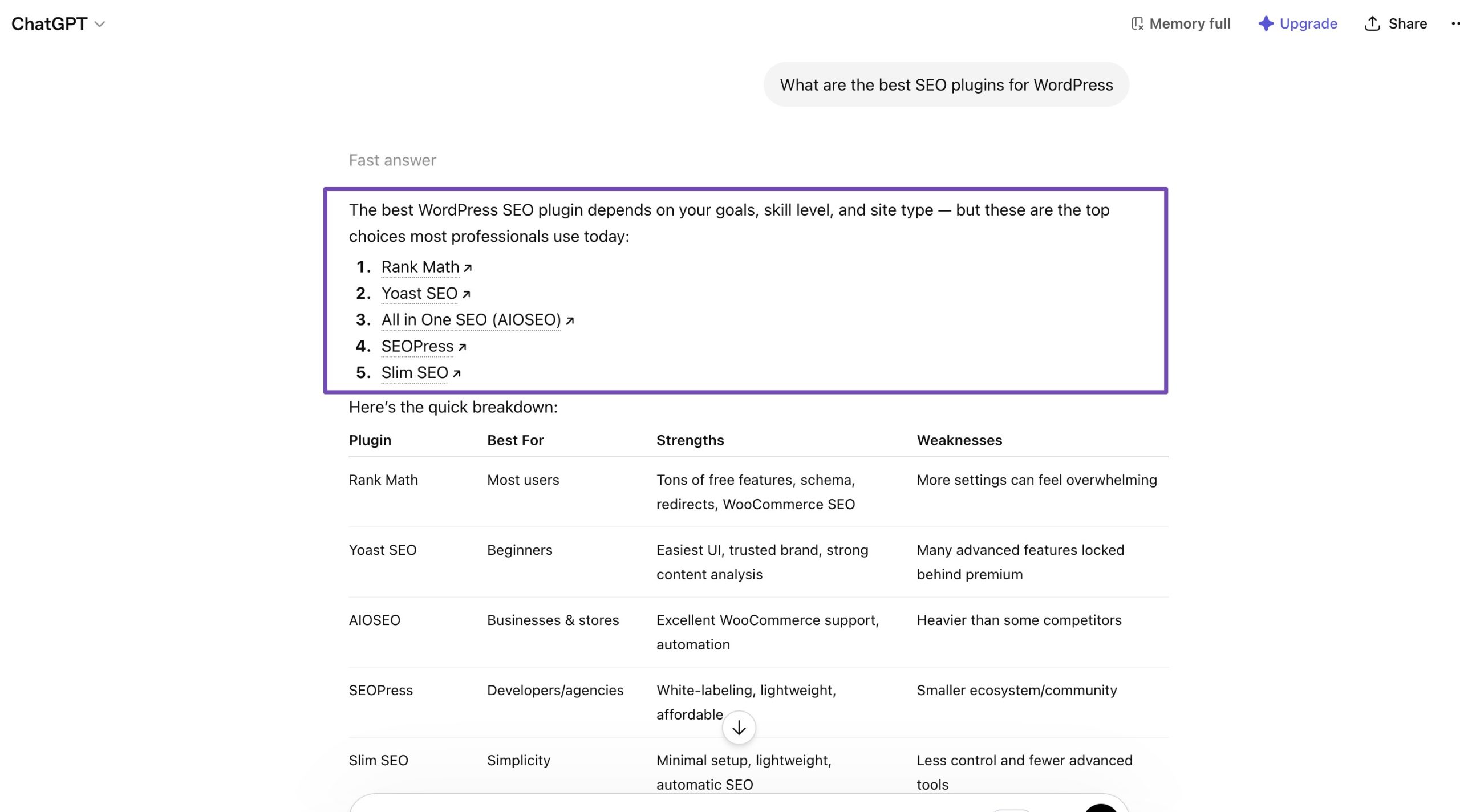
For example, if someone asks “What are the best SEO plugins for WordPress?”, an AI tool might mention a few names in its answer. If your brand appears there, you have AI visibility. If it doesn’t, you’re missing an opportunity to get noticed.
But how do AI tools decide what to recommend?
AI models (also called Large Language Models or LLMs) pull information from different places across the web. They look at websites, reviews, comparisons, trusted sources, discussions, and other online signals to generate an answer. Then, they combine that information into a summarized response for users.
Why Traditional SEO Metrics Are No Longer Enough
Traditional SEO metrics like rankings, clicks, and impressions are still important, but they don’t tell the full story anymore.
For example, ranking high on Google doesn’t automatically mean AI tools will mention your brand. Traditional SEO tools also can’t show:
- Whether AI mentions your brand in answers
- How AI describes your brand
- Which competitors are getting recommended more often
This is where AI Search Optimization, also known as Generative Engine Optimization (GEO), comes in. It focuses on improving how your brand appears in AI-generated responses, not just search engine rankings.
In simple words, SEO helps visitors find you in search engines, while GEO helps AI recommend you in answers.
2 Signs Your Brand Has an AI Visibility Problem
So, how do you know if your brand has an AI visibility problem?
Here are some common signs to look for.
2.1 Your Competitors Show Up in AI Answers, But You Don’t
Try asking AI tools questions related to your industry. If competitors keep appearing while your brand is missing, that may be a sign that your AI visibility is low.
For instance, someone searching for “Best SEO plugin for WordPress” might see names like Rank Math, Yoast SEO, or All in One SEO mentioned in AI responses.
Or for “Best CRM tools for small businesses”, AI may recommend HubSpot, Zoho CRM, or Salesforce.
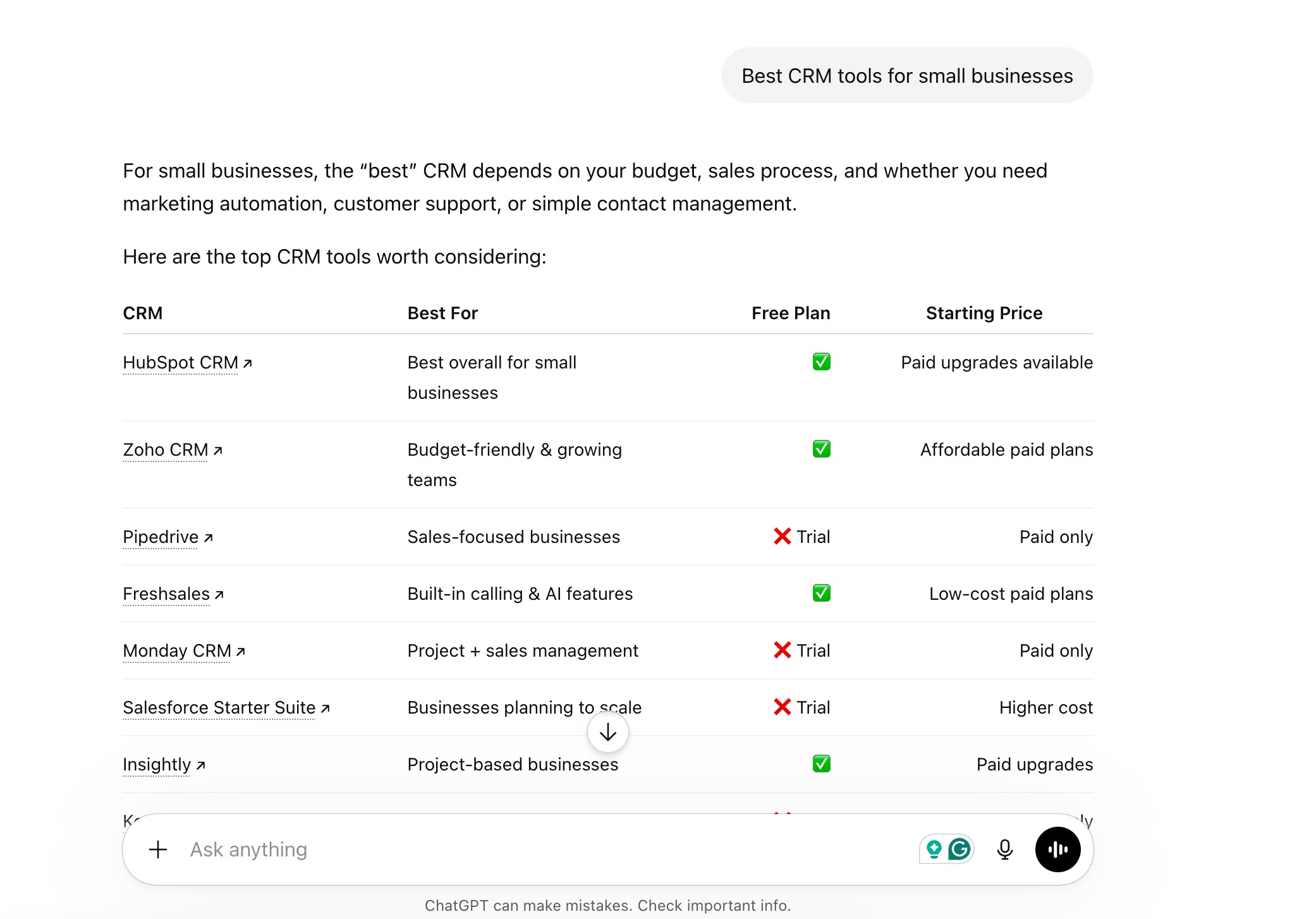
If similar brands in your niche keep showing up and yours doesn’t, you may be losing visibility without realizing it.
2.2 AI Mentions Your Brand Incorrectly
Sometimes AI mentions your brand, but the information may be incomplete, outdated, or inaccurate.
For instance, someone asking “Is Rank Math better than Yoast?” may get an answer that focuses on older features while missing newer additions like AI-powered capabilities or advanced analytics.
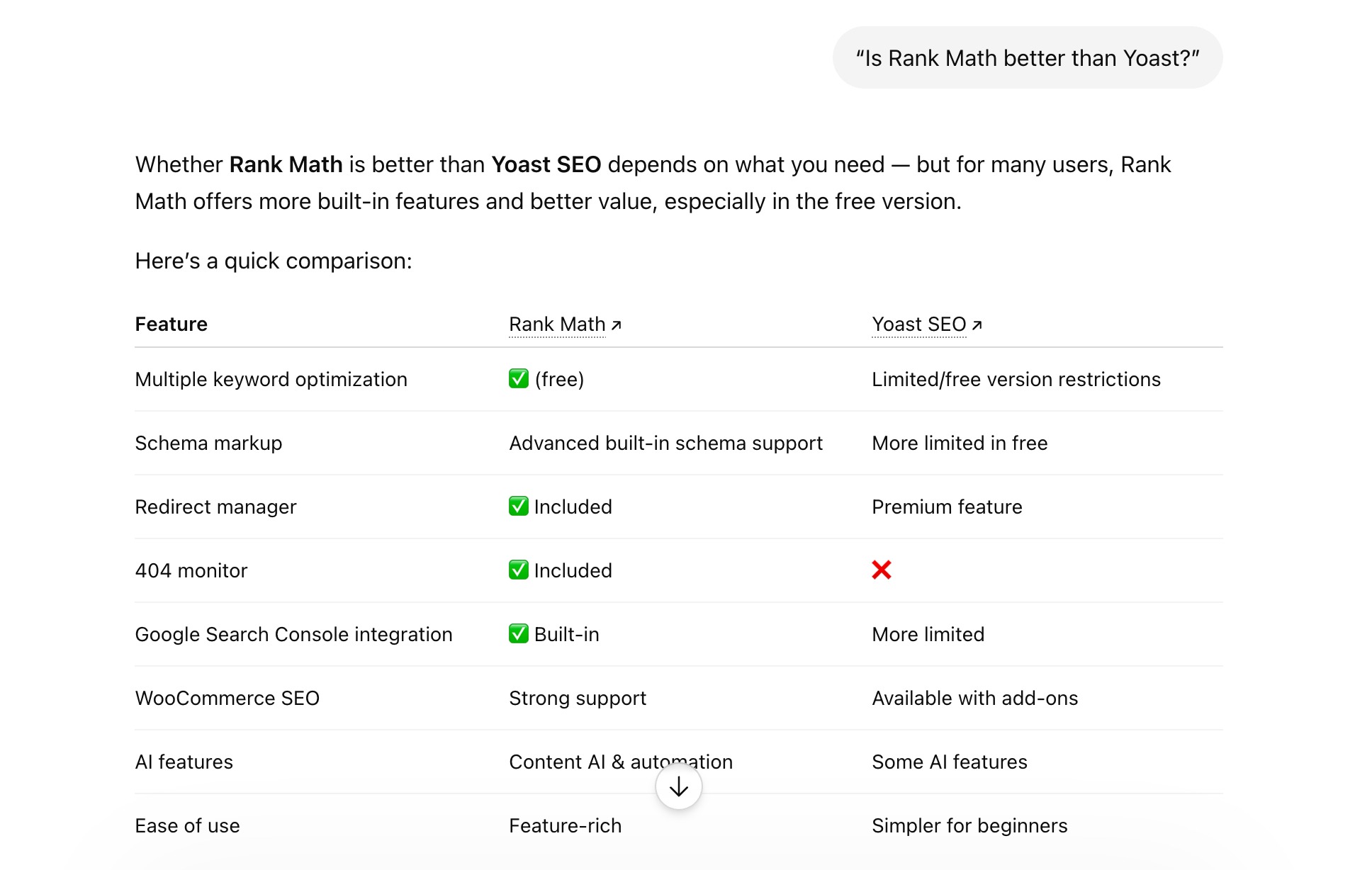
This can shape the wrong perception of your brand.
2.3 AI Describes Your Brand in a Way That Feels Outdated
AI doesn’t just mention brands; it also forms opinions based on information available online.
For example, when people ask “Is Facebook good for privacy?” or “Is Uber safe?”, AI responses may reflect older news, reviews, or public discussions.
The same can happen to your brand. Even if your product has improved, AI may still describe it based on an outdated information.
2.4 Your Content Ranks Well, But AI Rarely References You
You might already rank for important keywords and get good organic traffic. But that doesn’t always mean AI tools will recommend you.
For example, a website ranking for “Best project management software” may still not appear when AI tools recommend brands like Asana, Trello, or Monday.com.
Strong SEO rankings don’t automatically guarantee AI visibility.
2.5 You’re Missing High-Intent Buying Searches
Many people now ask AI tools questions right before making a purchase or choosing a product.
For instance:
- “Is Shopify good for beginners?”
- “Is Rank Math worth it?”
- “What’s the best SEO plugin for WordPress?”
- “Which email marketing tool is easiest to use?”
These are high-intent questions because users are actively evaluating options. If your brand isn’t showing up in these conversations, potential customers may be choosing competitors instead.
3 Ways to Track Your Brand’s AI Visibility With Rank Math
As AI tools become a go-to source for recommendations, it’s important to understand whether your brand is being mentioned in those conversations. Tracking brand mentions helps you see how often your brand appears in AI-generated responses and identify gaps where competitors may be getting more visibility.
We’ll now show you how to track your brand’s AI visibility with the help of Rank Math.
Note: AI Visibility is a Content AI feature and requires an active Content AI subscription. You can view the available plans here.
3.1 Monitor Your Brand Mentions in AI Responses
With Rank Math’s AI Visibility, you can easily monitor how often your brand appears in AI-generated responses across supported AI platforms.
Ensure that you’ve enabled the AI Visibility module from your WordPress dashboard.
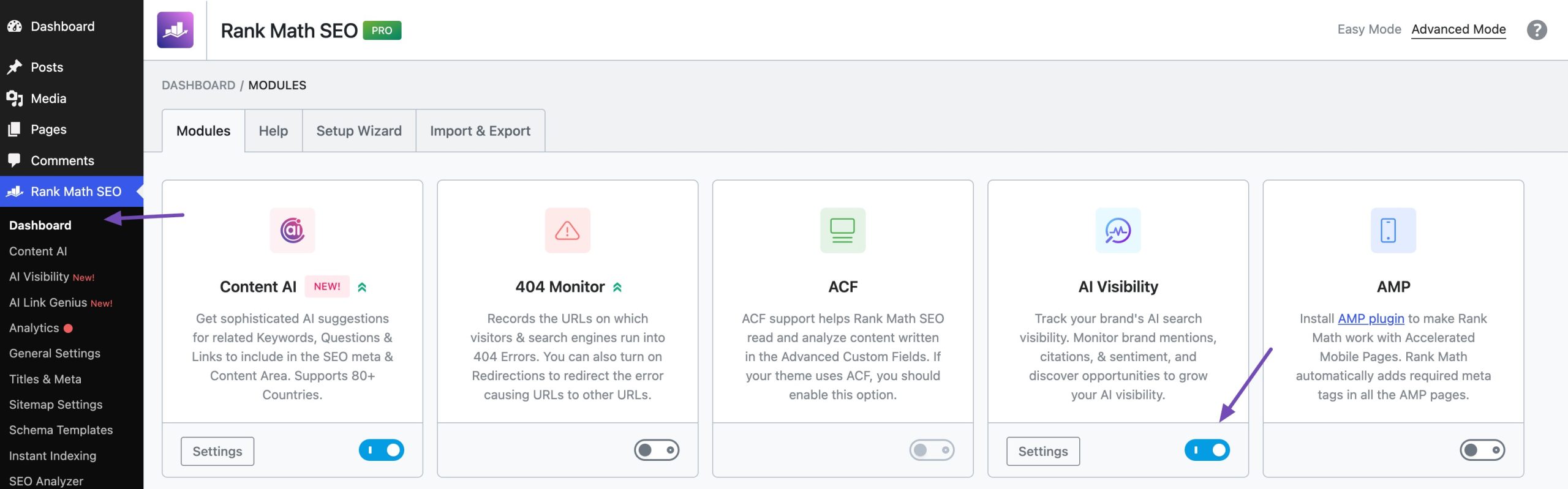
Once done, you can:
- Track the prompts that mention your brand
- See how frequently your brand or product appears in AI responses
- Compare visibility across different queries
- Monitor changes in visibility over time
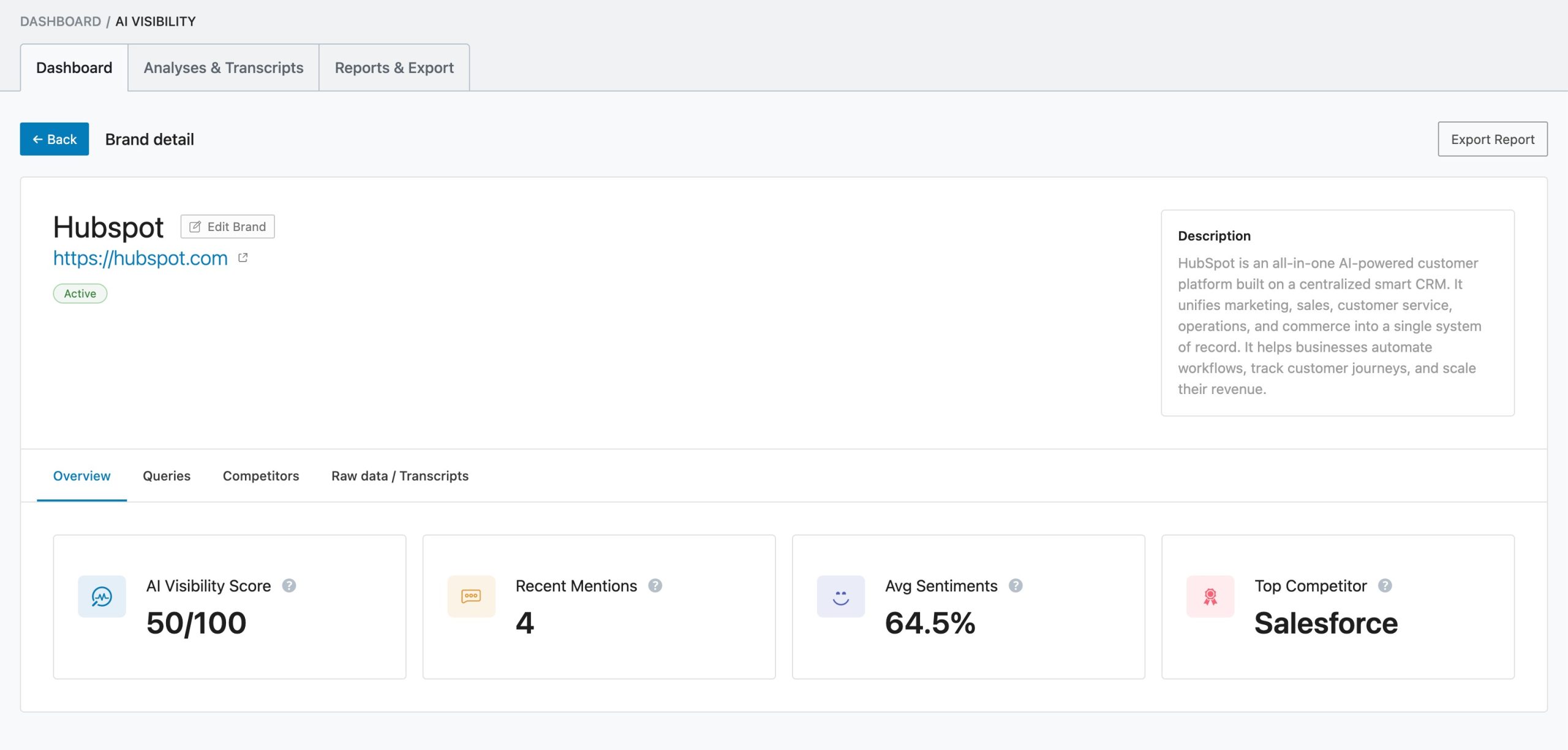
This makes it easier to spot patterns, identify missed opportunities, and understand how AI platforms see your brand.
3.2 Analyze How AI Describes Your Brand
AI doesn’t just mention your brand, it also describes it. The words AI uses can influence how audiences see your business and whether they trust your brand.
For example, AI may describe a brand using positive terms like “trusted,” “best,” or “reliable.” On the other hand, it may use less favorable descriptions such as “expensive,” “limited,” or “outdated.”
With Rank Math’s AI Visibility, you can monitor sentiment across different prompts to understand how AI positions your brand. This helps you spot reputation issues early and understand whether AI is reflecting your brand the way you want.
To do so, navigate to Rank Math SEO → AI Visibility from your WordPress dashboard. Once done, navigate to the brand you wish to review. You can then view the average sentiment of your brand.
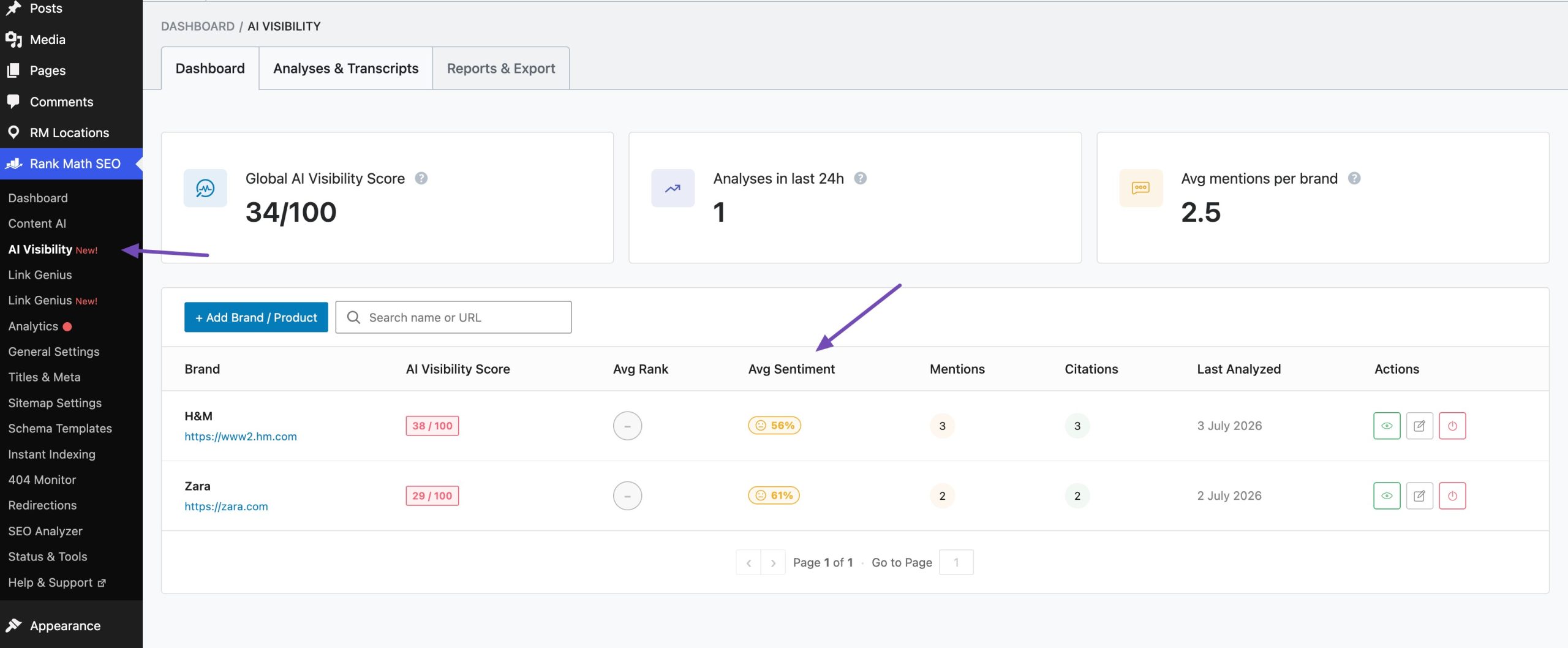
For additional insights, click the View icon of the specific brand you want to inspect.
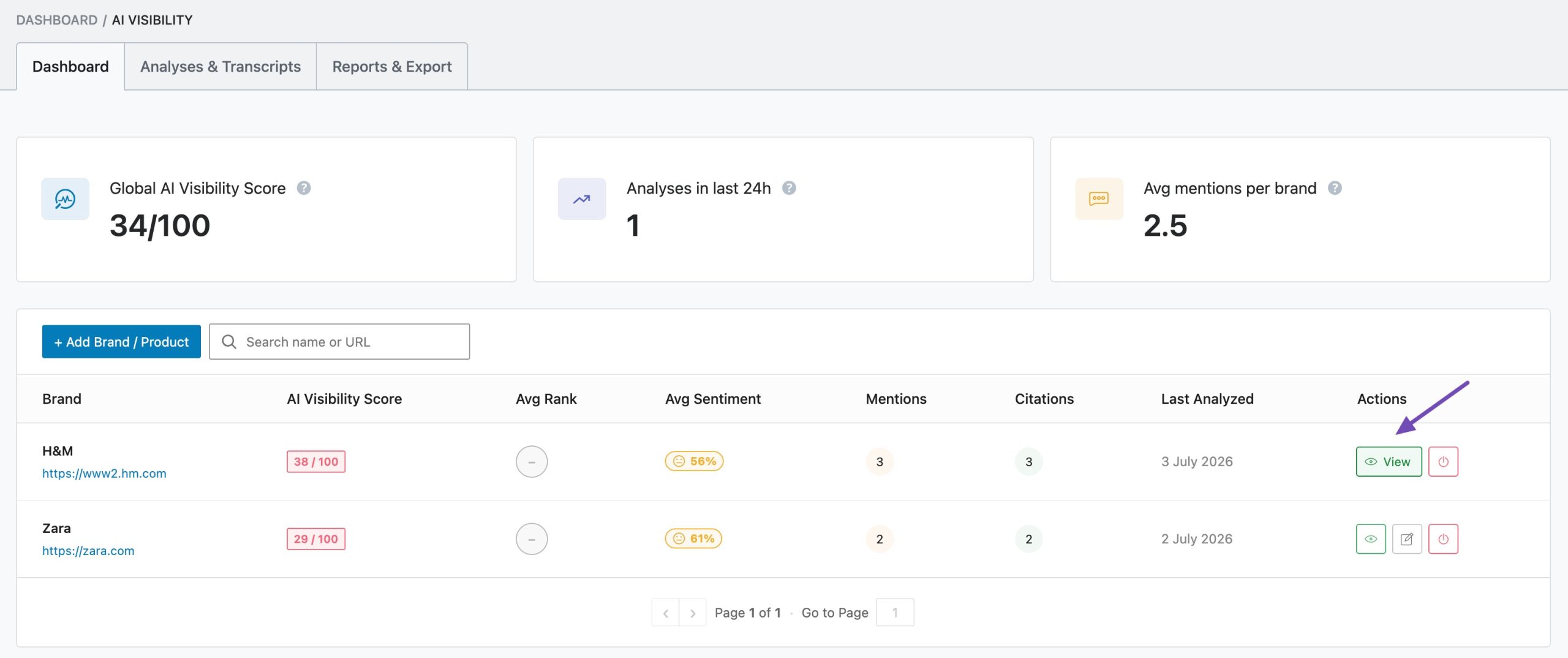
You can then view the average sentiment, as shown below.
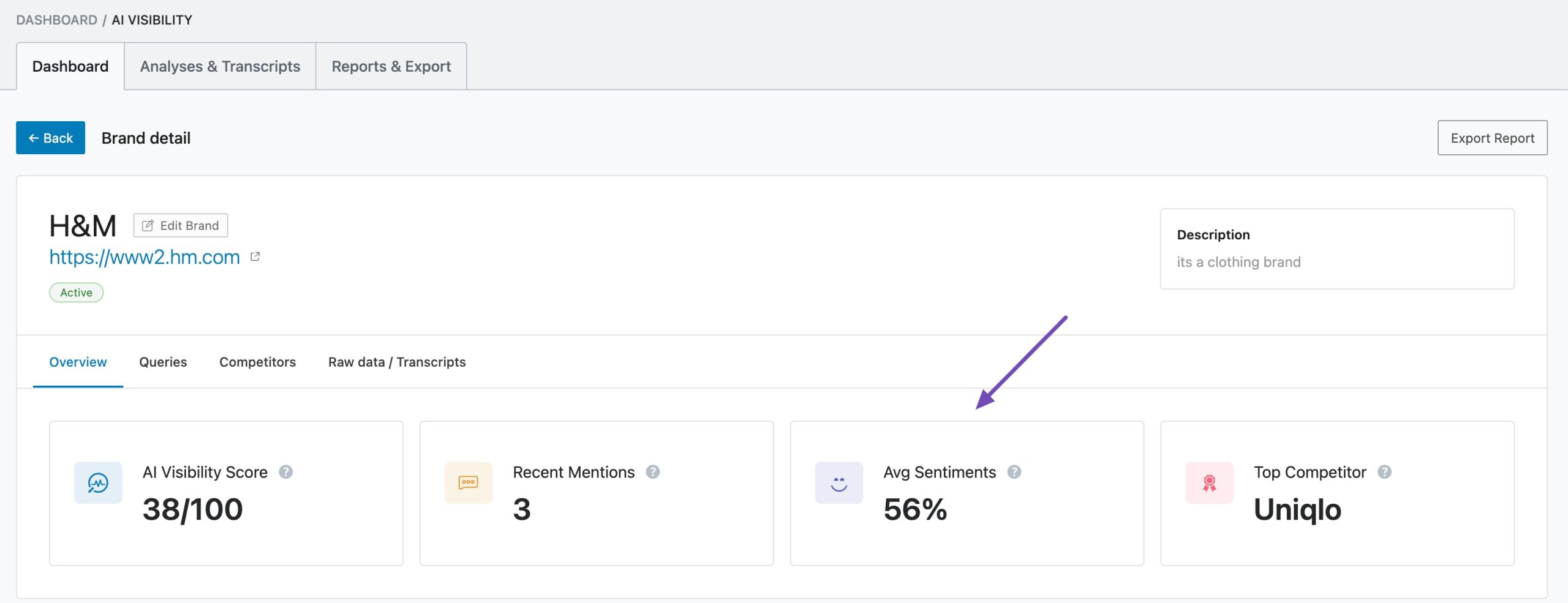
Not only this, but you can also track the sentiment for a specific query and keep a check on the average sentiment of your competing brands.
Refer to our dedicated tutorial to track your brand sentiment in AI search.
3.3 See Which Sources AI Trusts (Citations Tracking)
When AI tools recommend a brand, they often rely on information from other sources across the web.
For example, AI may pull information from:
- Product reviews
- “Best tools” roundups
- Trusted publications and blogs
- Reddit discussions and community recommendations
- Industry websites and expert mentions
This matters because AI is more likely to recommend brands that are mentioned by trusted third-party sources. If your brand is being talked about positively on reputable websites, AI may see it as more trustworthy and include it more often in recommendations.
With Rank Math’s AI Visibility, you can see which sources are influencing AI-generated answers about your brand.
To do so, navigate to Rank Math SEO → AI Visibility from your WordPress dashboard. You can then view the citations, as shown below.
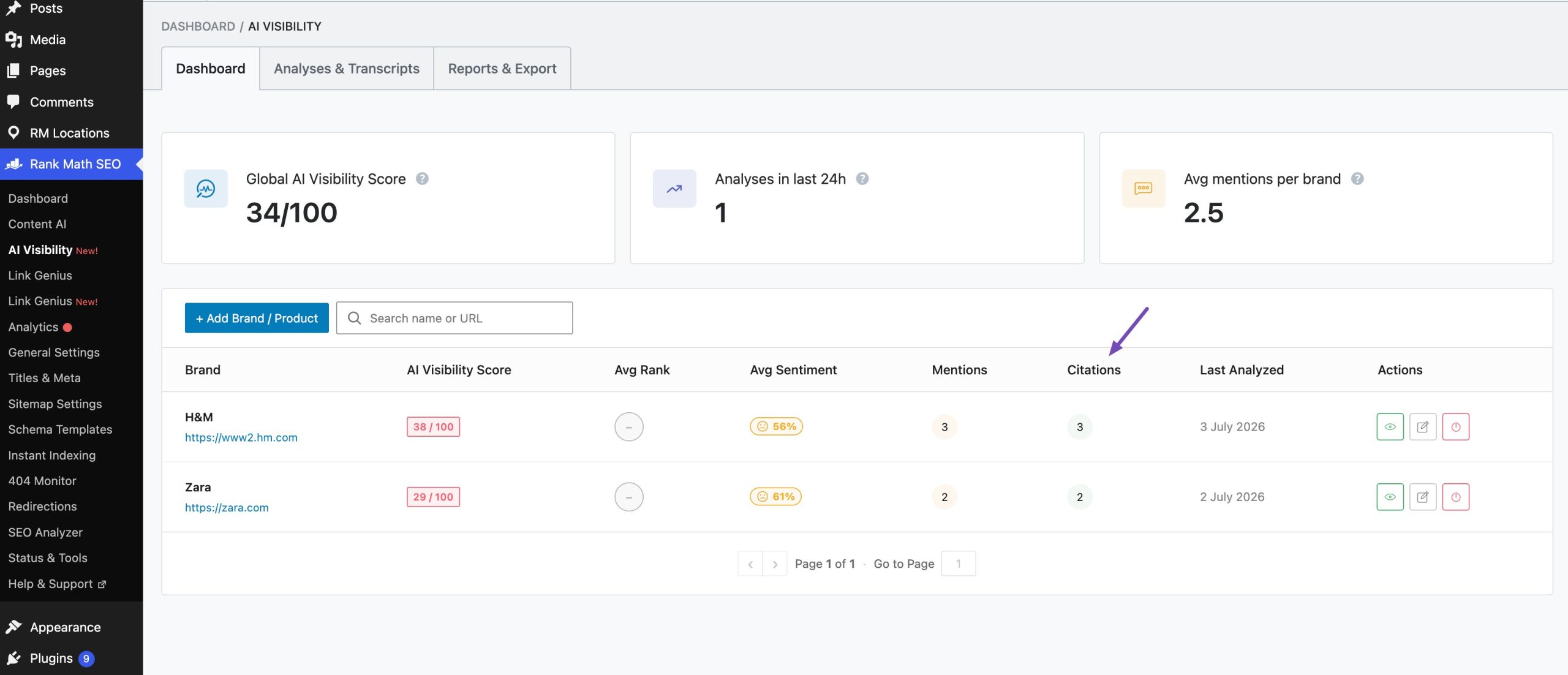
This helps you identify if your brand is being mentioned, spot missing authority signals, and find opportunities for guest posts, PR mentions, reviews, and industry coverage to strengthen your AI visibility.
3.4 Compare Your AI Visibility With Competitors
AI visibility isn’t just about whether your brand appears in answers, it’s also about how you compare to competitors. If AI tools recommend similar brands more often than yours, it may be a sign they have stronger visibility in your niche.
Questions like these can help you understand your position:
- Who gets mentioned more in AI responses?
- Which brands are described more positively?
- Who shows up most often for important industry-related searches?
With Rank Math’s AI Visibility, you can compare your brand’s visibility against competitors and see who is dominating AI recommendations in your space.
To do so, click the View icon from the AI Visibility dashboard, as shown below.
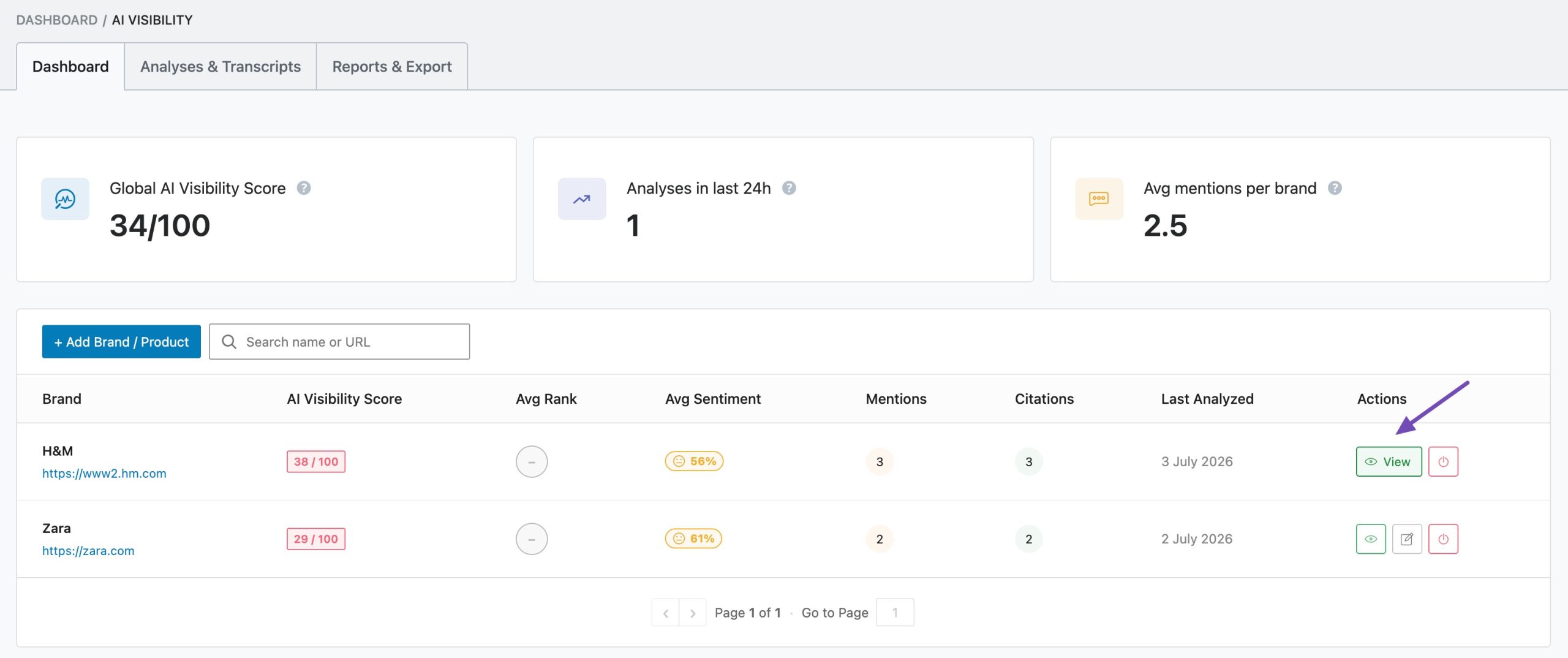
Next, navigate to the Competitors tab, as shown below. This tab displays your top competitors along with their mentions and average sentiment.
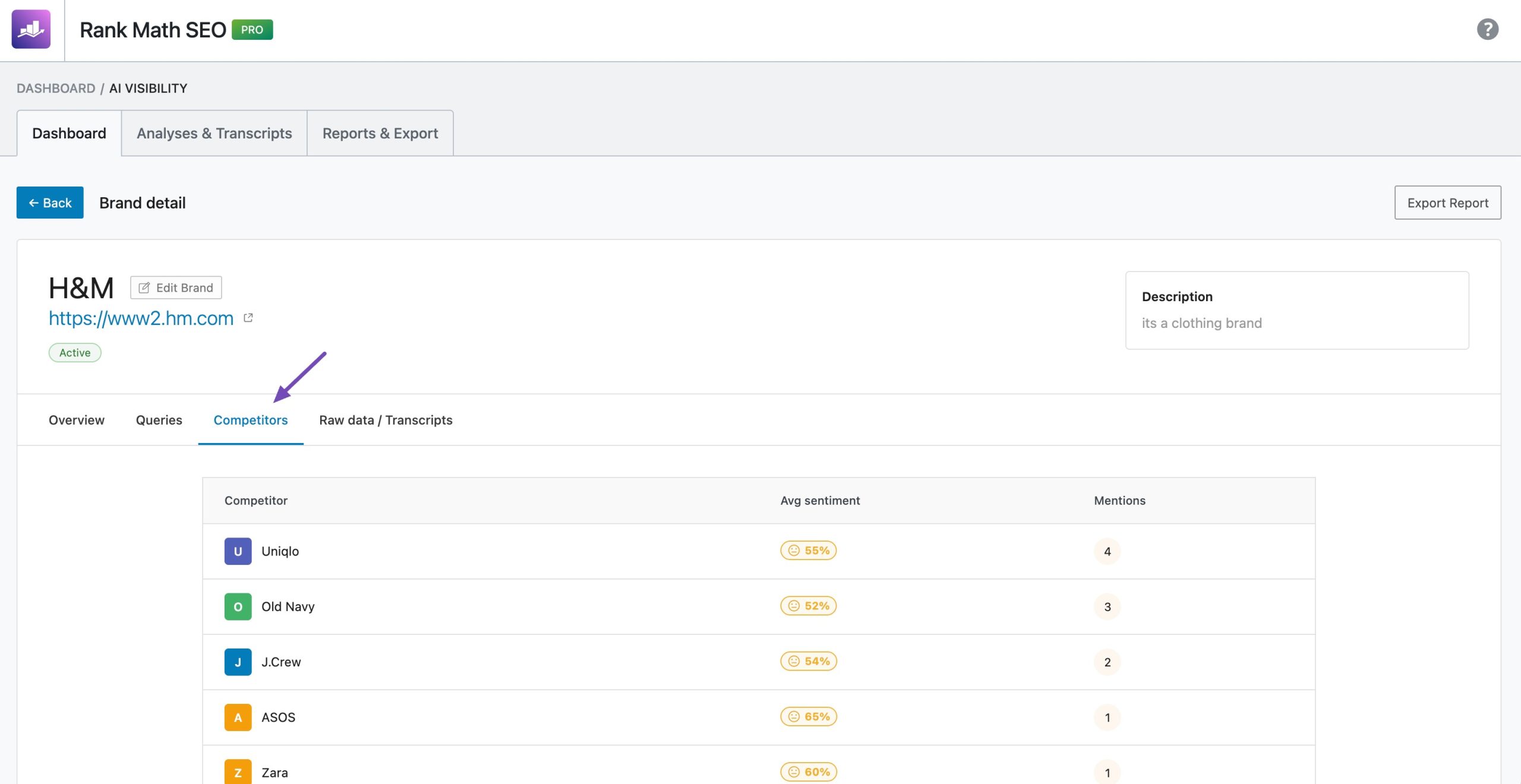
If a competitor consistently appears for searches related to your category while your brand doesn’t, it may be worth looking at what they’re doing differently, whether it’s stronger brand mentions, better content, or more trusted citations.
4 How to Improve Your AI Brand Visibility (After Tracking It)
Tracking your AI visibility is only the first step. Once you understand how AI sees your brand, the next step is improving it.
Here are a few practical ways to increase your chances of getting recommended in AI-generated answers.
4.1 Create Content That Answers Brand Questions
AI tools often recommend brands based on the questions people ask. That’s why it’s important to create content that directly answers common questions about your brand, products, and industry.
The clearer and more helpful your content is, the easier it becomes for AI tools to understand and reference your brand.
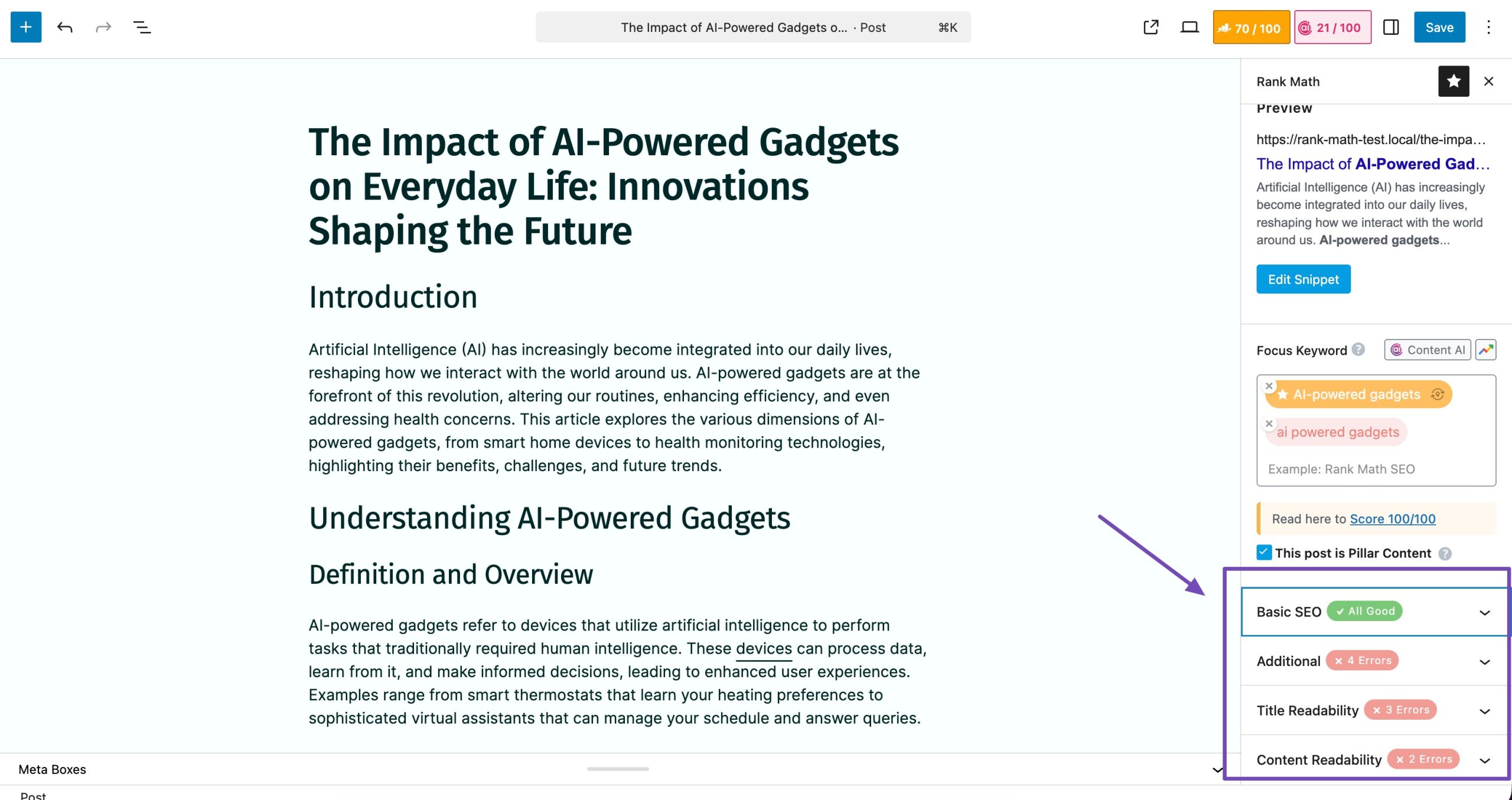
You can use Rank Math Content AI, which helps you improve your content as you write. It offers 40+ AI tools designed for specific use cases, allowing you to efficiently accomplish your tasks. These tools are designed to enhance your workflow and maximize productivity.
You can research, refine, and optimize the keywords in one place, saving time while making sure your content checks all the right SEO boxes.
4.2 Strengthen Your Brand Signals
AI tools rely on clear and consistent information to understand businesses.
Make sure your website clearly explains:
- Who you are
- What your product does
- Who it’s for
Having a strong About page, detailed product pages, and consistent brand messaging across your website can help AI better understand your business.
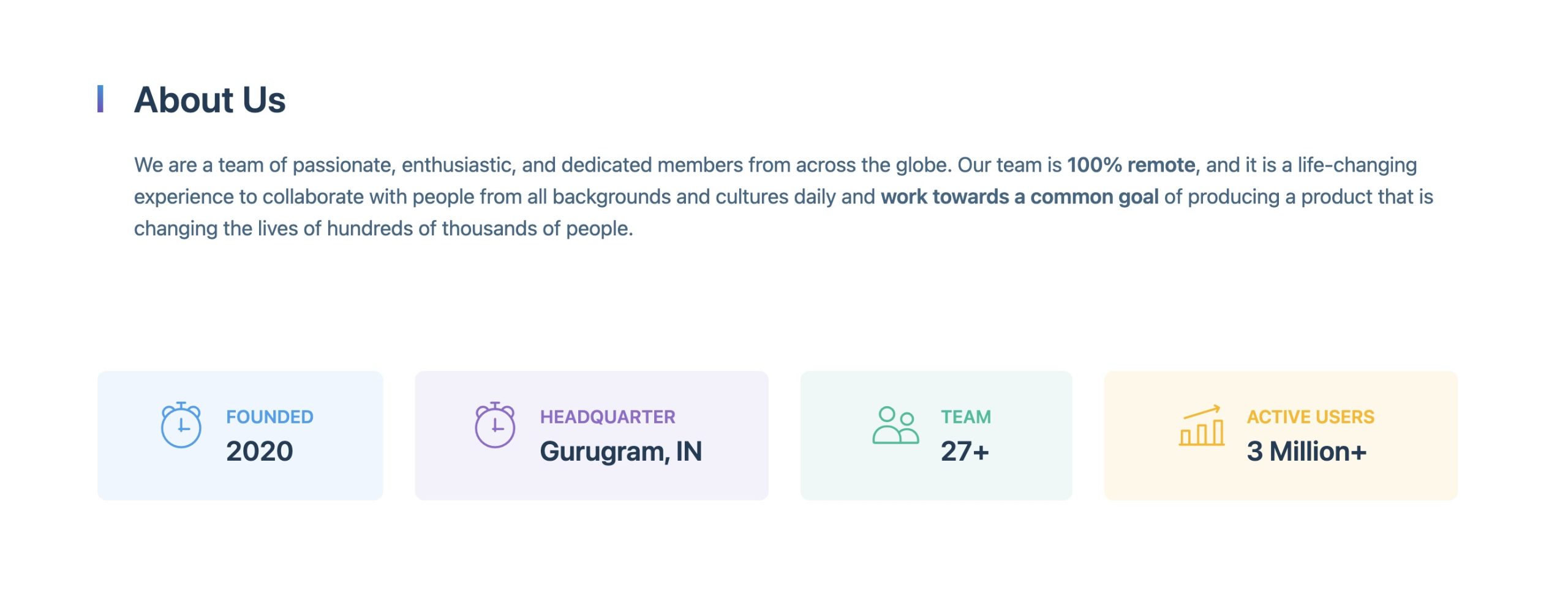
With Rank Math, you can also strengthen these signals using SEO settings and structured information that make your website easier for search engines and AI systems to understand.
4.3 Build Trust Through Third-Party Mentions
AI tools often trust brands that are talked about by reputable sources.
That’s why mentions from:
- Guest posts
- Review websites
- Expert roundups
- Industry blogs
- Podcasts and interviews
can help improve your visibility.
For example, if trusted websites mention your brand or compare your product positively, AI may be more likely to recommend it in answers.
4.4 Use Structured Data to Help AI Understand Your Content
Structured data (Schema markup) helps search engines and AI systems better understand your website.
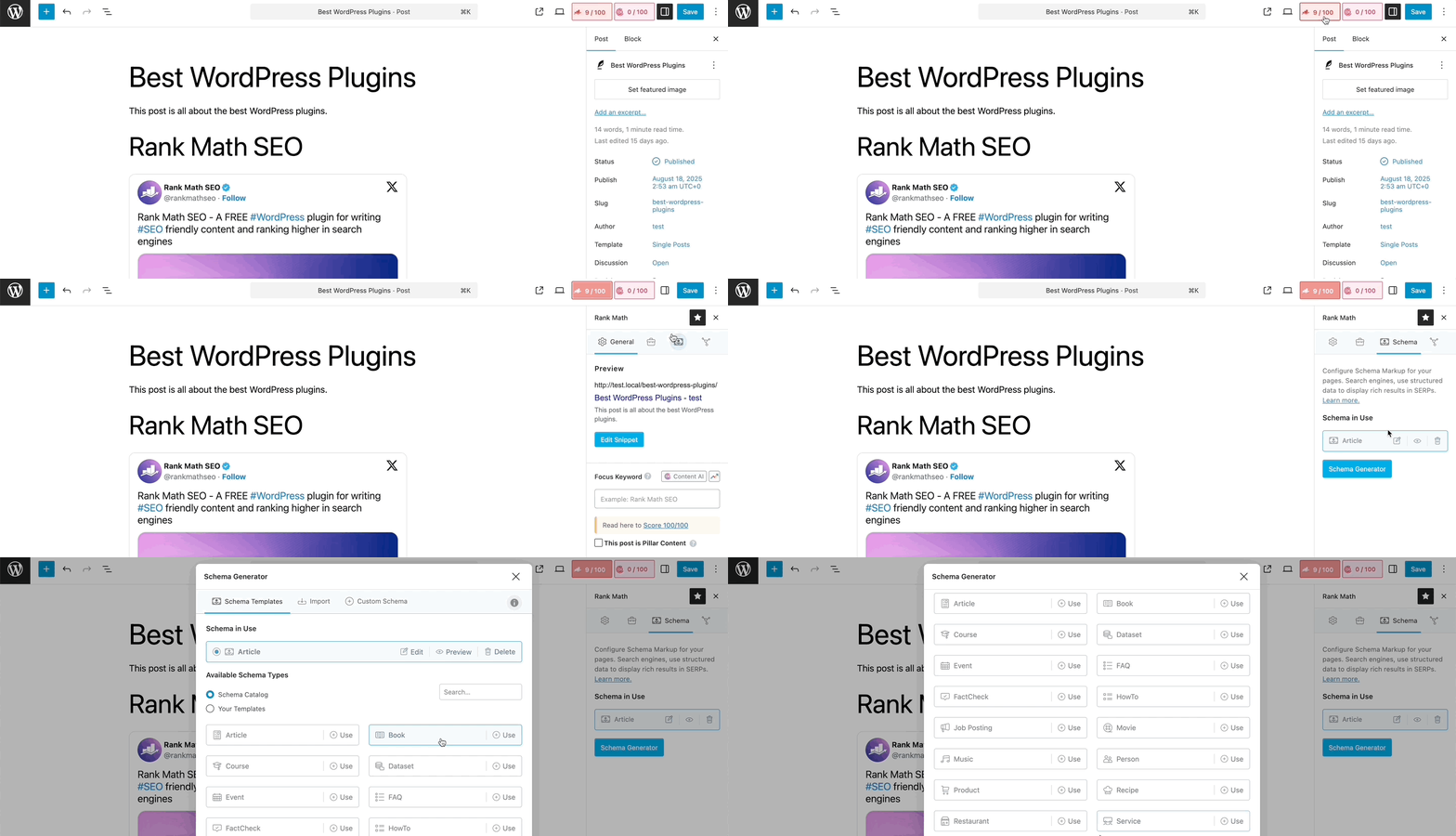
You can add:
- FAQ Schema for common questions
- Organization Schema for business information
- Product Schema for product details
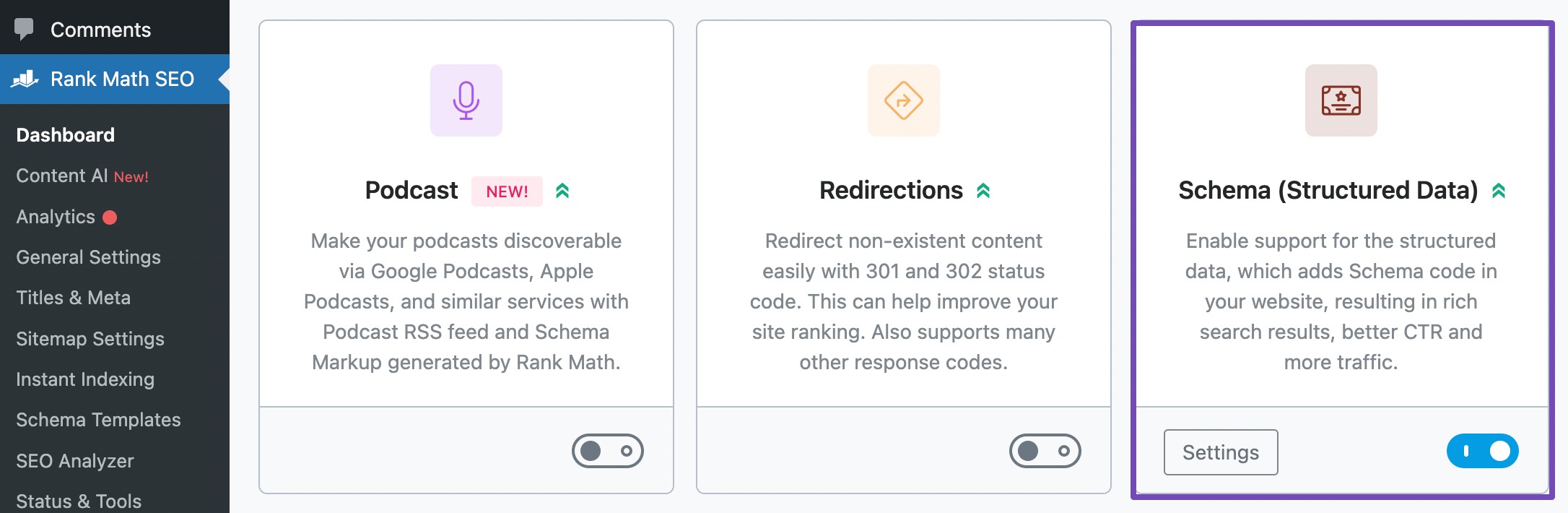
The good news? Rank Math makes this easy with built-in Schema support, so you can add structured data without touching code.
To do so, enable the Schema module by heading to Rank Math SEO → Dashboard, as shown below.
You can then add the Schema of your choice, as shown below:
4.5 Keep an Eye on Your AI Visibility Growth
As new content gets published, competitors grow, and AI tools change, how often your brand appears in AI responses can also change.
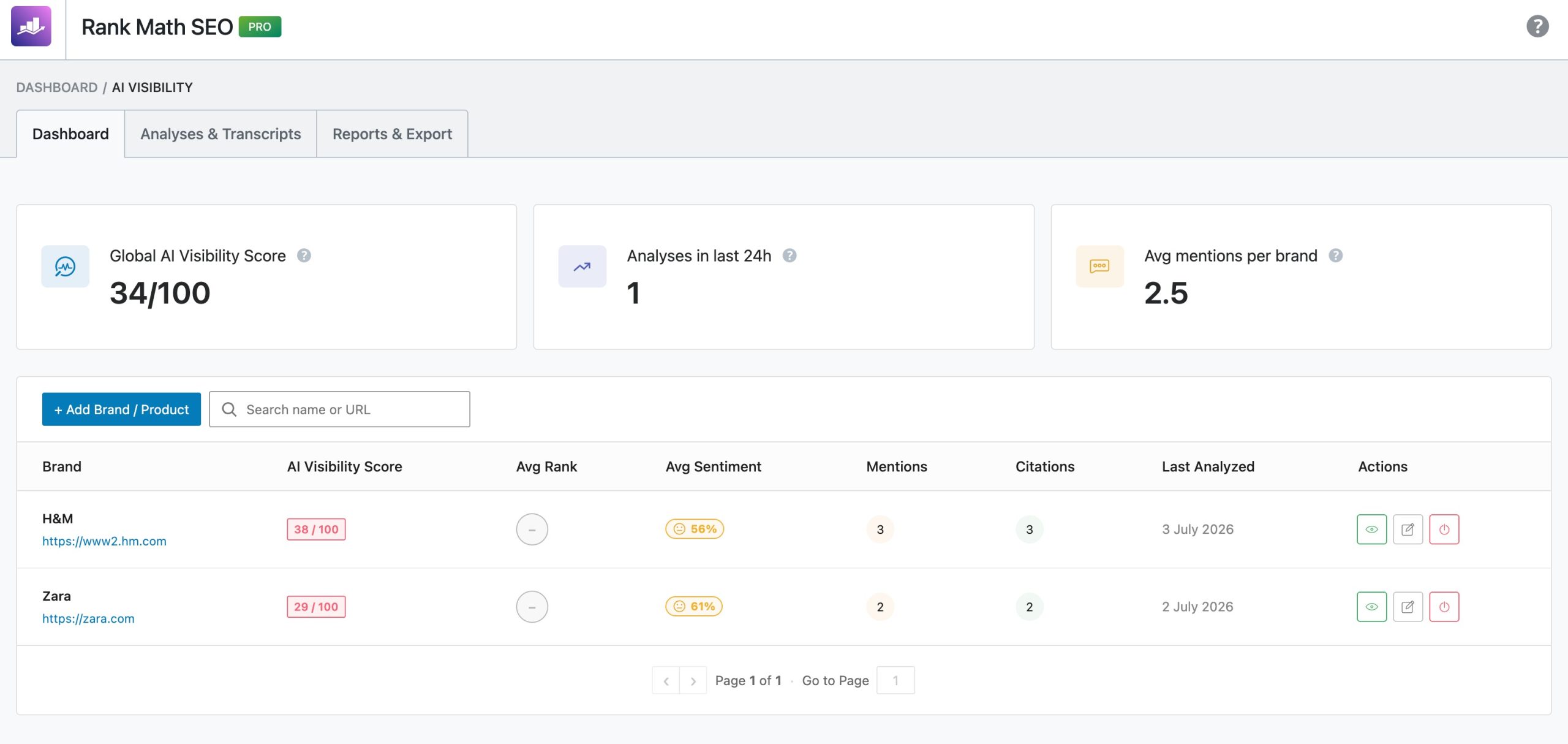
That’s why it’s important to regularly track your performance with Rank Math’s AI Visibility. By monitoring mentions, sentiment, citations, and visibility trends over time, you can understand what’s helping your brand grow and where improvements are needed.
5 Final Thoughts: The Future of SEO is AI Visibility
Traditional SEO and Google rankings still matter, but the way audience search is changing. More users are now asking AI tools for recommendations, comparisons, and advice before making decisions.
This means being visible on Google alone may no longer be enough. If AI tools aren’t mentioning your brand, you could be missing opportunities to reach potential customers where they’re actively looking for answers.
That’s why AI visibility is becoming an important part of SEO. Brands need to understand how AI sees them, how often they are mentioned, and whether competitors are getting more attention.
So, use Rank Math’s AI Visibility Tracker to monitor mentions, sentiment, and citations, and improve how your brand appears in AI-generated responses.
If you like this post, let us know by tweeting @rankmathseo.