
![How to Get Mentioned in AI Search [7 Core Strategies]](https://rankmath.com/wp-content/uploads/2026/01/How-to-Get-Mentioned-in-AI-Search.png)

AI search is already deciding who gets recommended and who gets ignored, and whether you realize it or not, those decisions are being made right now.
Instead of typing short keywords into Google, audiences increasingly ask AI direct decision-making questions, such as who to hire or which tool to choose. AI responds by recommending brands it already trusts, rather than displaying multiple options.
In AI search, visibility isn’t something you optimize later. It’s something you train now. In this post, I’ll discuss the seven best strategies for getting mentioned in AI search.
Key Takeaways
- AI search tools recommend brands based on trust, reputation, and real-world validation, not keyword rankings alone.
- Reviews, brand mentions, and consistent public discussion strongly influence AI recommendations.
- Middle- and bottom-of-the-funnel content is more likely to earn AI mentions than basic informational content.
- Each AI platform (ChatGPT, Google AI Overviews, Perplexity, Gemini) relies on different data sources and trust signals.
- Track your brand mentions on AI platforms such as ChatGPT to understand how well your AI strategy is working, identify areas for improvement, and learn how users perceive your brand
So, without any further ado, let’s get started.
Table Of Contents
- How AI Search Actually Works (And Why SEO Alone Isn’t Enough)
- The Core Strategies to Get Your Brand Mentioned in AI Search
- Master Your Online Reputation (This is Non-Negotiable)
- Respond to Reviews Like a Brand AI Can Trust
- Brand Mentions Are the New Backlinks
- Own the Category, Not Just Keywords
- Stop Chasing TOFU Traffic, Dominate MOFU & BOFU Instead
- Scale Content Without Sacrificing Quality
- Optimize for Each AI Platform Separately
- How to Monitor Your AI Brand Mentions
- Final Thoughts: AI Visibility is Earned, Not Optimized
1 How AI Search Actually Works (And Why SEO Alone Isn’t Enough)
To understand why traditional SEO is no longer sufficient, you first need to understand a hard truth.
AI search tools value context and sentiment over traditional link-based authority. They don’t crawl the web in real time or rank pages based on keywords and backlinks.
Instead, they predict answers by synthesizing what they’ve learned from millions of online sources, websites, reviews, forums, social media, and business listings.
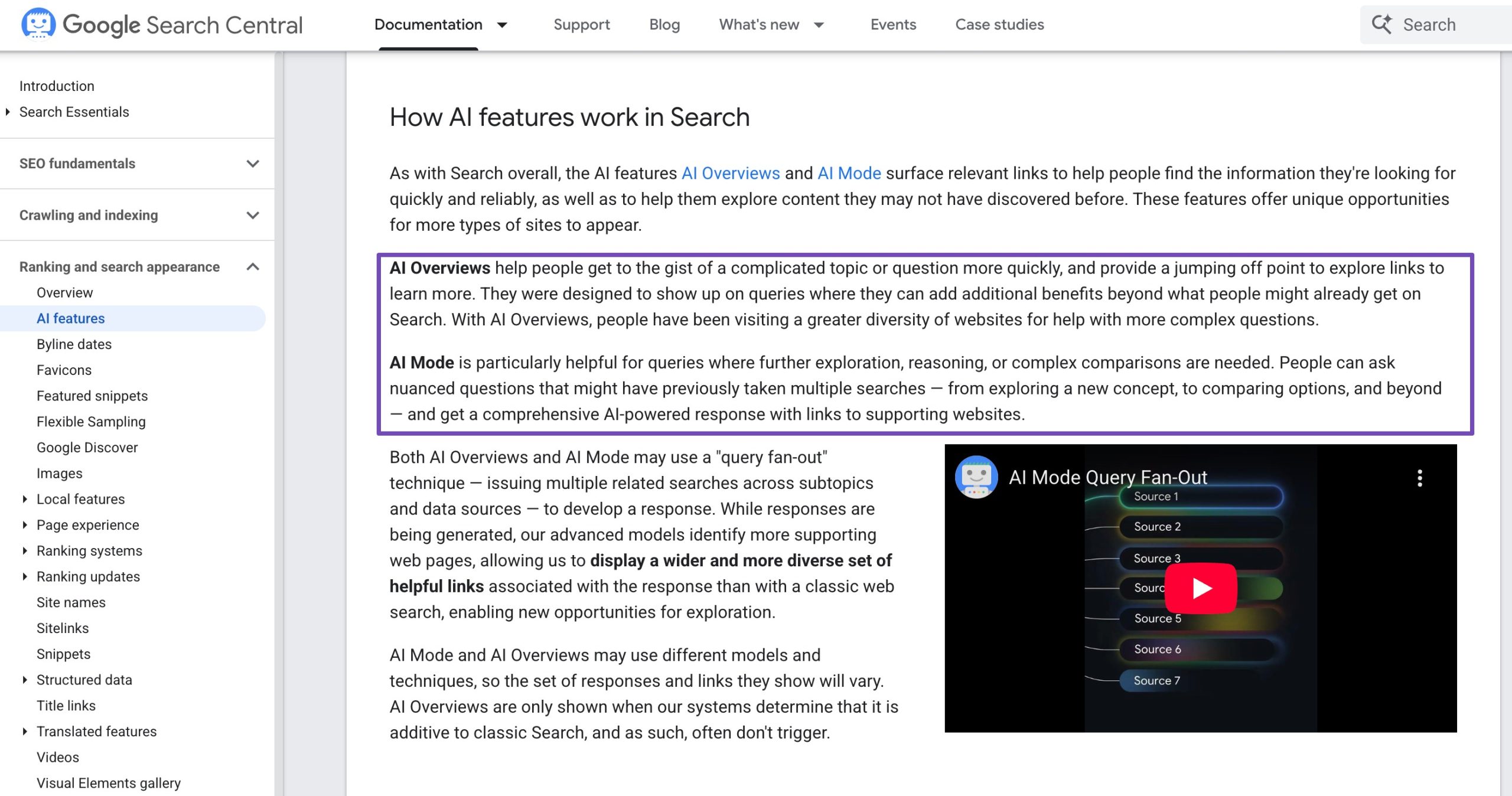
That’s because AI values context and sentiment, how audiences talk about a brand, over simple link-based authority.
The result is a major shift in visibility. While traditional SEO helps you get indexed, AI search rewards credibility, reputation, and human validation.
You can have a perfectly optimized website and still be invisible in AI search if your brand lacks reviews, mentions, and positive discussion.
2 The Core Strategies to Get Your Brand Mentioned in AI Search
The following strategies directly influence how AI systems evaluate, trust, and recommend brands.
2.1 Master Your Online Reputation (This is Non-Negotiable)
If there’s one thing you must get right to show up in AI search, it’s your online reputation.
AI systems place enormous weight on reviews, sentiment, and customer interactions. Unlike traditional SEO signals, these are not things you can fake or optimize overnight. They reflect how visitors experience your brand, and AI pays close attention to that.
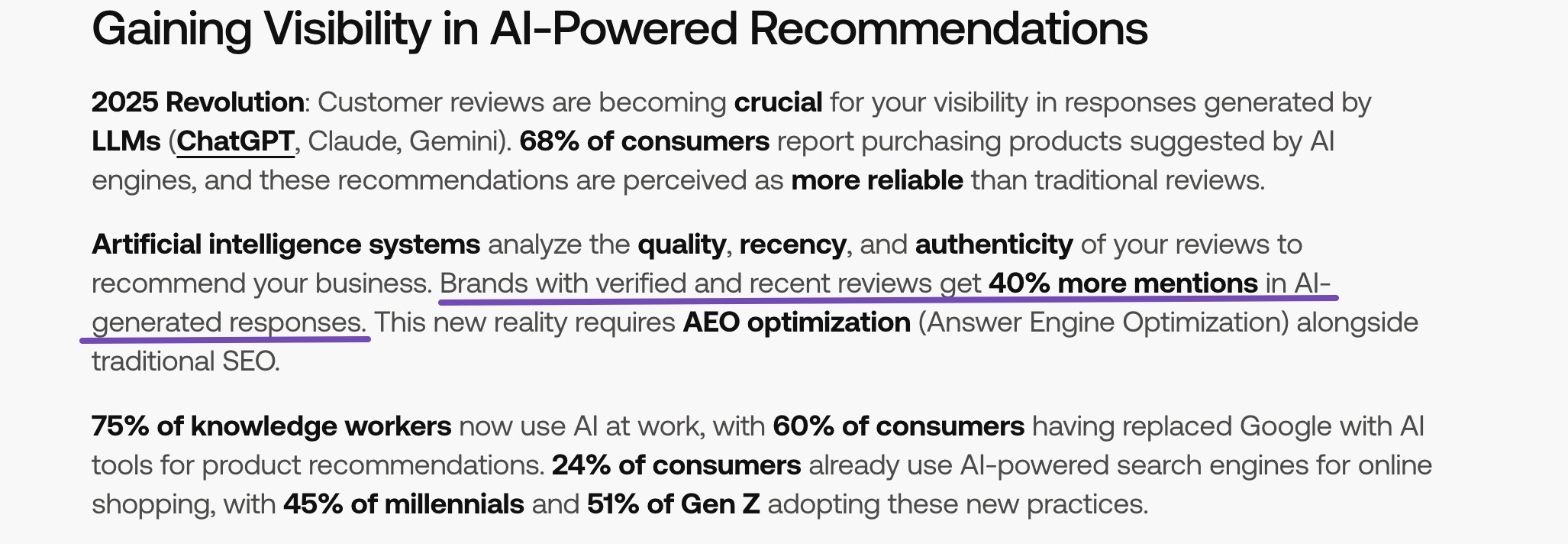
In fact, a study by Digidop found that brands with verified and recent reviews receive 40% more AI mentions because AI systems prioritize fresh, human-validated trust signals when generating recommendations.
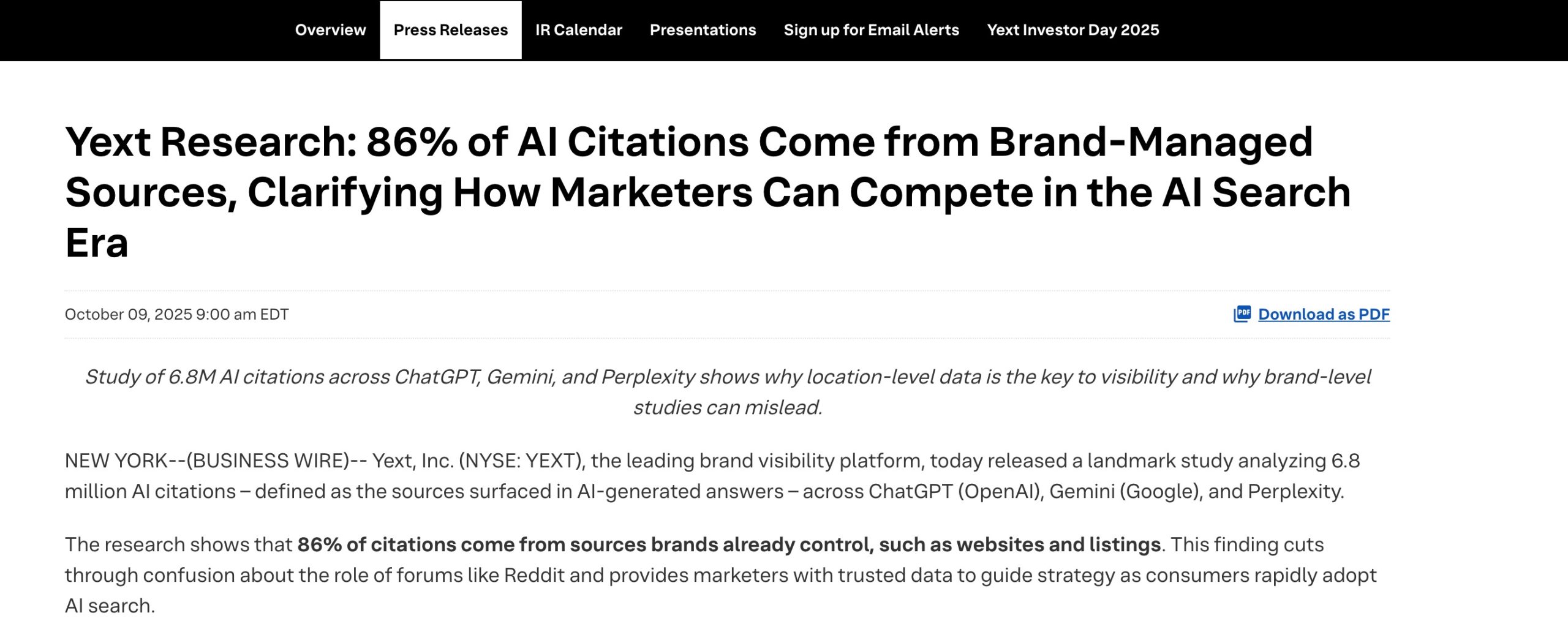
At the same time, research from Yext shows that 86% of AI citations come from sources brands already control, such as their websites, local listings, and review profiles.
In other words, the way you manage your reputation directly influences whether AI feels confident recommending you.
Why Reviews Matter to AI
Reviews are one of the strongest trust signals available online. They give AI something marketing copy can never have: collective human judgment.
From an AI’s perspective, reviews provide:
- Social proof: Evidence of widespread usage and recommendation
- Sentiment signals: Overall customer satisfaction trends
- Recency indicators: Proof that the business is currently active
- Real-world validation: Alignment between marketing claims and customer outcomes
AI models treat reviews as lived experience, not promotional messaging. That’s why a brand with average SEO but strong, consistent reviews often appears in AI recommendations ahead of better-optimized competitors.
Why Recency Beats Perfection
Let’s look at a simple example:
| Business | Rating | Last Review |
| Handyman A | 4.6 ⭐ | 2 weeks ago |
| Handyman B | 4.8 ⭐ | 2 years ago |
Most audiences and AI will trust Handyman A, even though the rating is slightly lower.
Why? Because recent reviews signal:
- The business is active and operating today
- Service quality is current and verifiable
- Customer experiences are still relevant
On the other hand, outdated reviews create uncertainty. A lot can change in two years: staff, service quality, pricing, or even whether the business still exists. From both a human and AI perspective, that uncertainty is risk.
What You Should Be Doing Right Now
If you want AI to consistently mention your brand, you need to treat reviews as an ongoing process, not a one-time task.
Here’s what that looks like in practice:
- Build review requests into your daily operations
- Use QR codes, post-purchase follow-ups, and onboarding emails to ask for feedback
- Encourage honest reviews, not just positive ones; authenticity matters
- Monitor and manage reviews across all platforms, not just Google
Review Schema provides structured data that helps AI systems explicitly identify customer feedback, ratings, and business credibility, increasing confidence when recommending the brand.
With Rank Math, you can easily add Review Schema, which helps AI clearly understand who you are, what you offer, and how trustworthy your brand is.
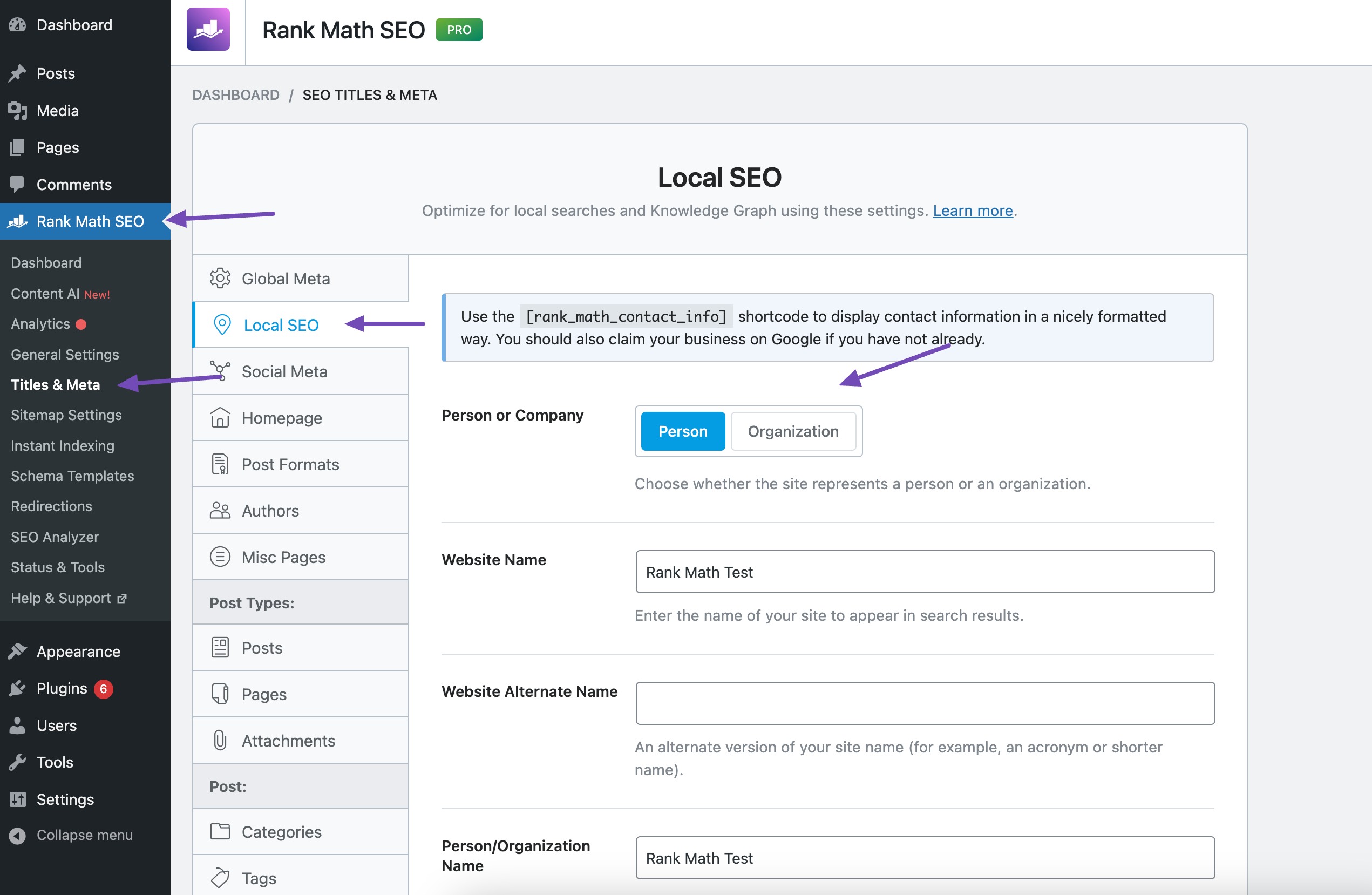
If you’re a local business, Rank Math’s local SEO features further help by optimizing your business information for maps and local listings, sources AI frequently relies on when recommending nearby services or businesses.
You can find these settings by navigating to Rank Math SEO →Titles & Meta → Local SEO from your WordPress dashboard, as shown below.
2.2 Respond to Reviews Like a Brand AI Can Trust
Responding to customer reviews directly influences how AI evaluates brand accountability, responsiveness, and risk.
Today, replying to reviews is no longer just a customer support task; it’s reputation engineering. Every response you write sends a public signal not only to future customers, but also to AI systems deciding whether your brand is safe to recommend.
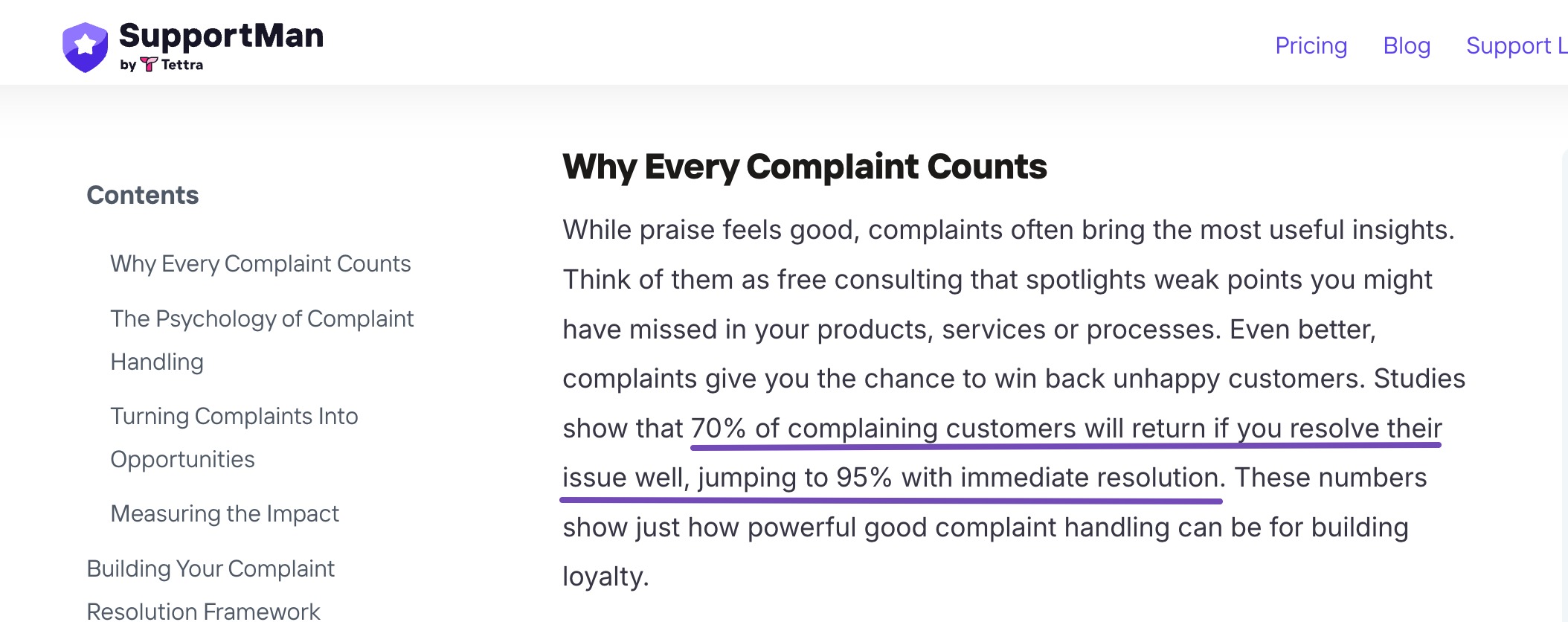
The data make this impossible to ignore. A study by Glance shows that 70% of unhappy customers are willing to return if their issue is resolved. When that response is fast, the number jumps to 95%.
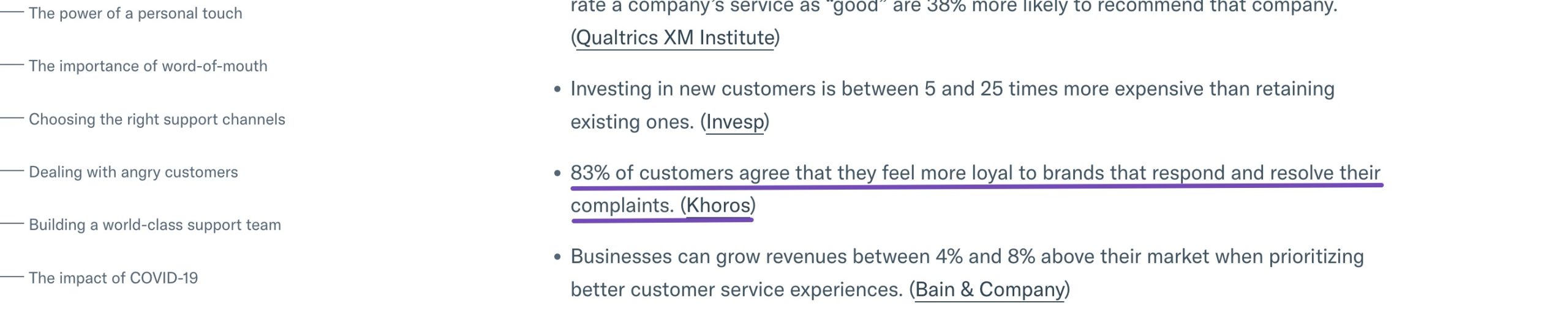
On top of that, 83% of customers say they feel more loyal to brands that respond publicly to complaints.
So when you reply to reviews, you’re not just fixing individual issues, you’re building long-term trust at scale.
Why AI Cares So Much About Review Responses
AI models don’t stop at reading reviews. They also analyze how you respond to them.
When AI evaluates your brand, it looks closely at:
- the tone you use when engaging with customers
- whether you take accountability or deflect blame
- how quickly and consistently you respond
- how professional and human your replies feel
A brand that openly acknowledges mistakes, explains what went wrong, and offers solutions signals something extremely important to AI: low risk. It tells the model that even if something goes wrong, the business behaves responsibly and values customers.
On the flip side, ignored reviews, defensive replies, or robotic responses suggest uncertainty, and AI avoids recommending brands that feel unpredictable.
How You Should Be Responding to Reviews
If you want AI to trust your brand, your review responses need to feel human, timely, and intentional.
Start by responding to positive reviews within three days. A simple, thoughtful thank-you builds goodwill and shows consistency.
For negative reviews, speed matters far more. Aim to respond within 24 to 48 hours, acknowledge the issue, and clearly state how you plan to resolve it.
Always be specific. Reference the customer’s experience so they know you actually read their feedback. Speak like a person, not a brand template. Most importantly, avoid copying and pasting generic replies. AI can detect patterns, and repeated boilerplate responses weaken trust signals.
Remember, AI doesn’t just learn from what audiences say about you; it learns from how you react when it matters most.
2.3 Brand Mentions Are the New Backlinks
For years, backlinks were treated as the ultimate signal of authority. If enough websites linked to you, search engines assumed you were trustworthy.
AI search has changed this completely. According to Ahrefs, brand mentions are 3× more influential than backlinks, and brands with strong mention profiles earn up to 10× more visibility in AI-generated answers.
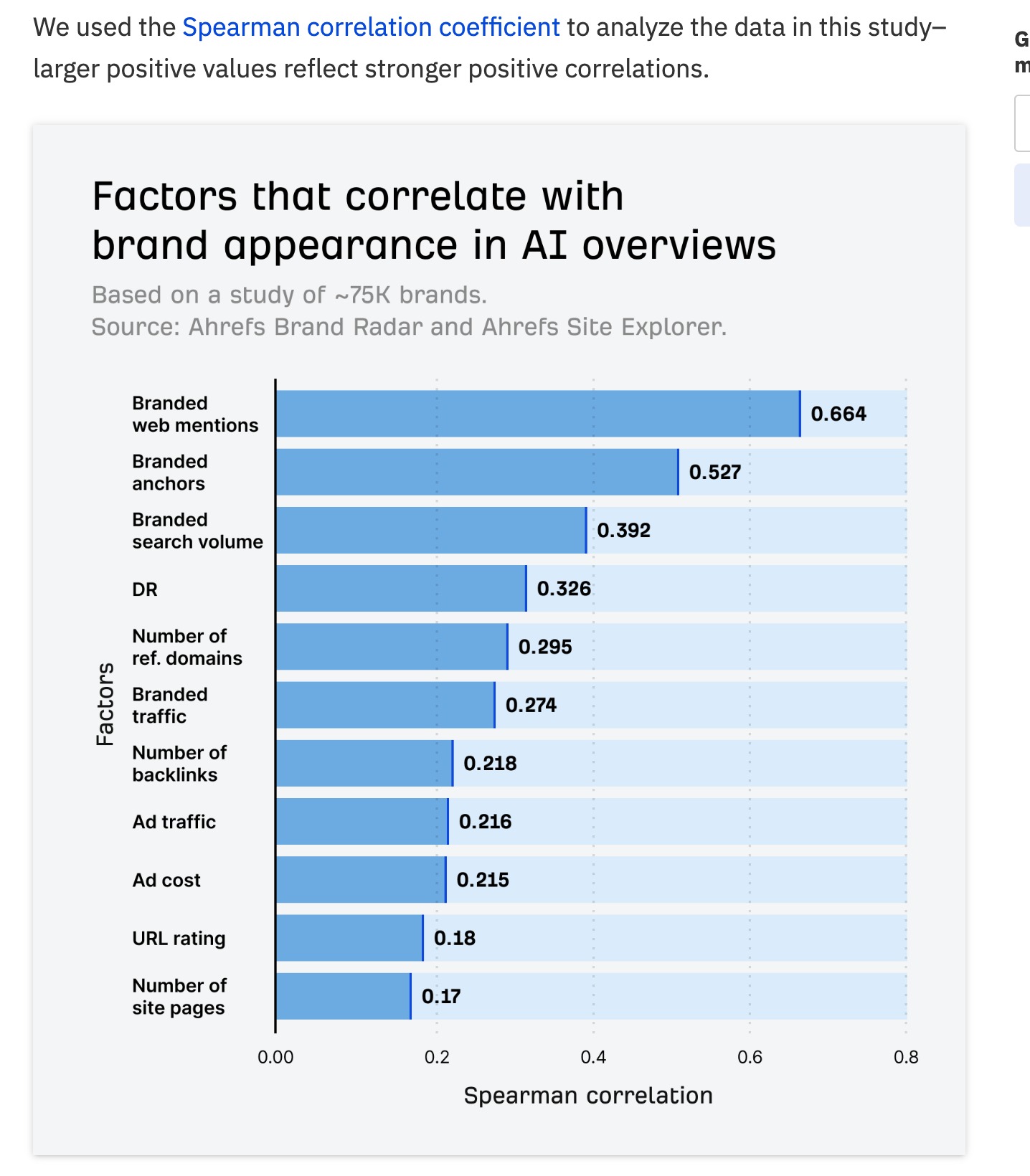
This shift explains why brands with strong mention profiles frequently appear in AI-generated recommendations.
A backlink is just a vote. It tells AI that one page referenced another. A brand mention, on the other hand, comes wrapped in context. When someone mentions your brand in a blog post, a Reddit thread, a review, or a comparison article, AI learns far more than this site exists.
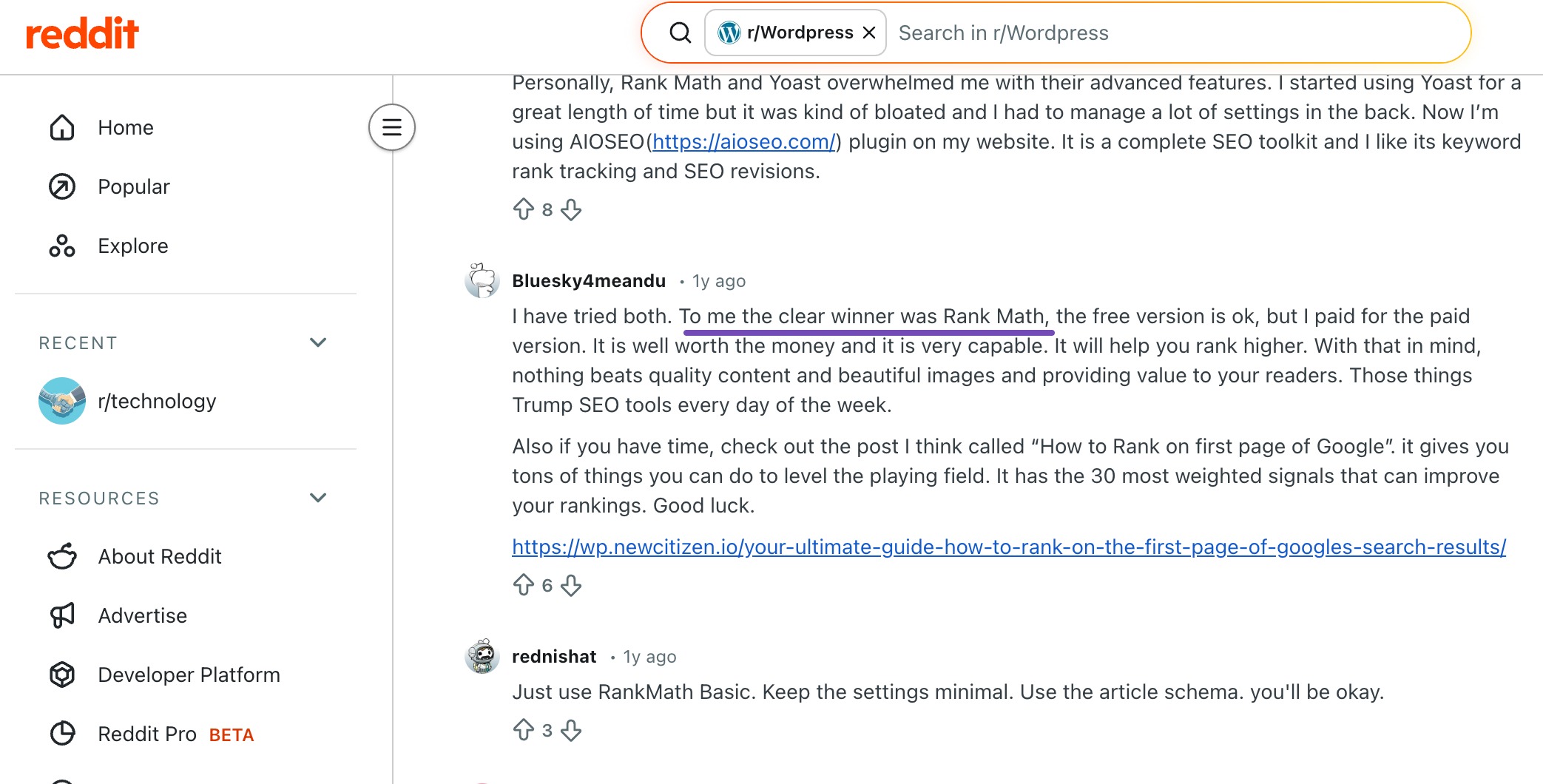
From AI’s perspective, a brand that repeatedly appears in meaningful discussions looks real, established, and safe to recommend. If you want AI to talk about your brand, you need visitors to talk about it first.
2.4 Own the Category, Not Just Keywords
If you ask any AI tool, What’s the best CRM? there’s a very high chance Salesforce appears in the answer. Not because Salesforce has the most backlinks, and not because it ranks #1 for every CRM-related keyword, but because it has dominated the CRM conversation for decades.
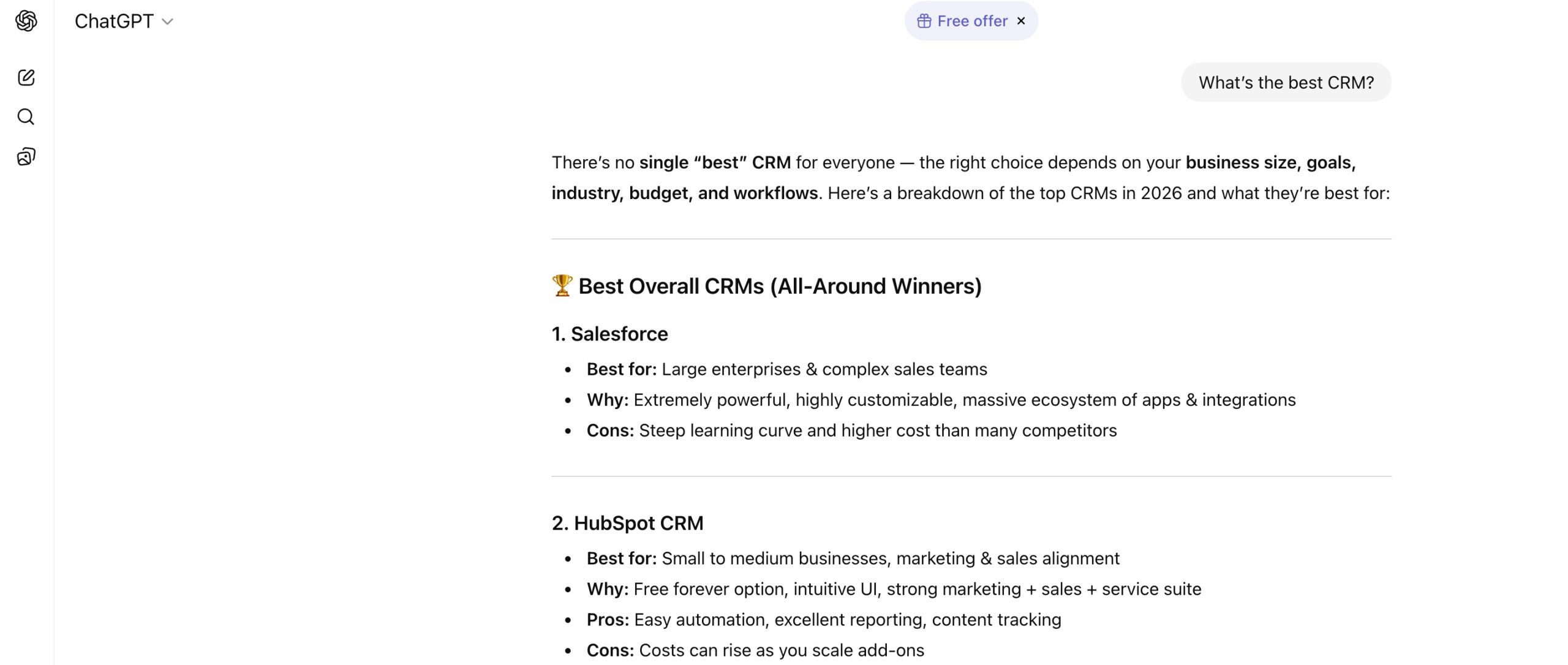
Salesforce didn’t just optimize for CRM keywords. They became synonymous with the category.
They achieved this by:
- consistently dominating industry discussions
- investing heavily in digital PR and media coverage
- building massive events, communities, and ecosystems around their product
As a result, when AI thinks about CRM, Salesforce is already part of its mental model.
The lesson here is: AI learns from conversations, not keyword targeting.
If you want AI to associate your brand with a category, your goal shouldn’t be to rank for a term; it should be to become unavoidable whenever that topic is discussed.
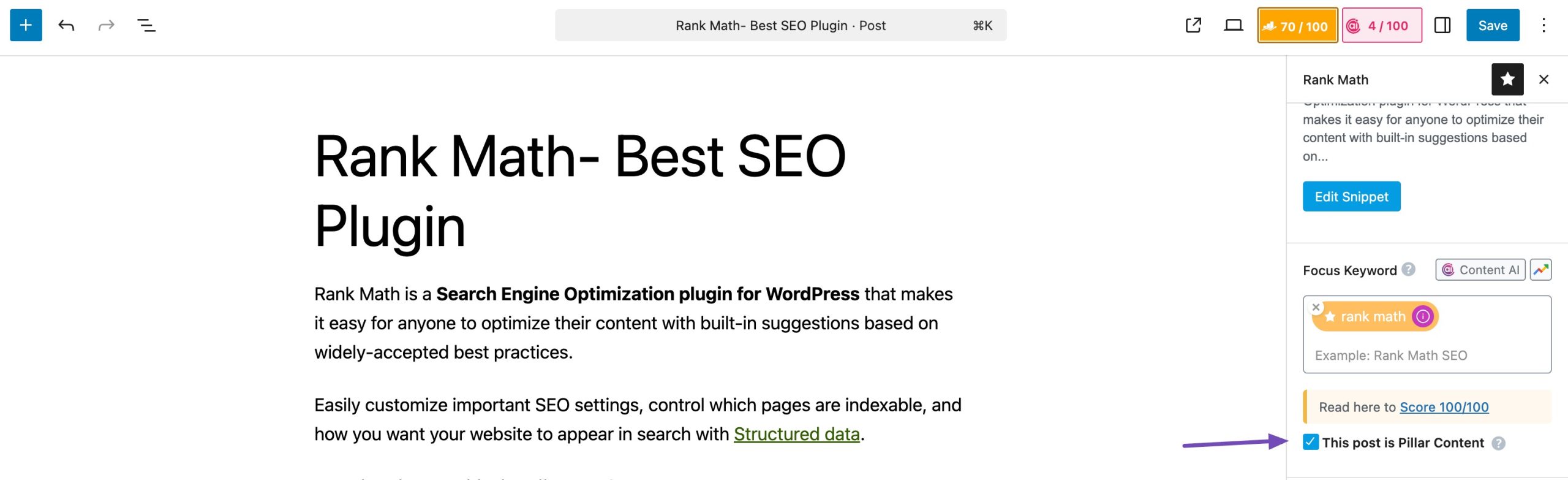
With Rank Math, you can build strong pillar pages and well-structured topical clusters through strategic internal linking, helping AI understand how your content is connected and which topics your brand truly owns.
You just need to mark any post that you want to build links to as a pillar post in the SEO meta box. To do so, edit your post, navigate to the General tab of Rank Math SEO, and click on This post is Pillar Content, as shown below.
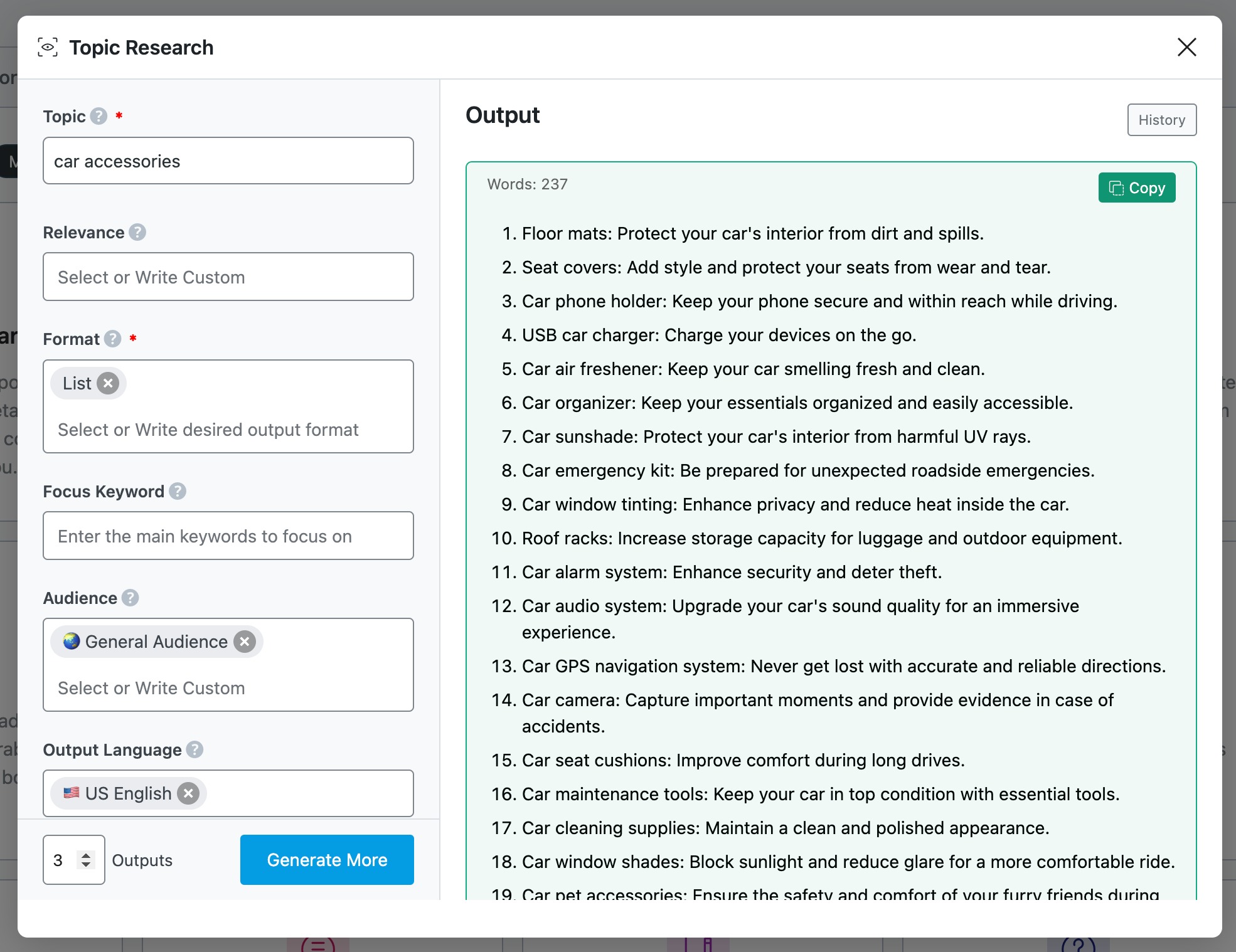
To streamline this process, you can use Rank Math’s Content AI.
Our Topic Research AI tool helps identify trending topics and related topics, making it easier to choose pillar pages with strong ranking potential.
In addition, optimizing author profiles with clear E-E-A-T signals, such as experience, expertise, and credibility, builds trust and authority at both the content and brand level.
Together, these elements help AI understand not just what you rank for, but what your brand is genuinely known for.
2.5 Stop Chasing TOFU Traffic, Dominate MOFU & BOFU Instead
For a long time, top-of-the-funnel (TOFU) content was the backbone of SEO.
You wrote ‘what is’ articles, definitions, and beginner guides to attract awareness-stage users. That approach worked until AI Overviews started answering those questions instantly.
Today, AI can satisfy informational intent without sending users to your website. The impact is already visible in the data:
- According to a study by Ahrefs, there is a 34.5% drop in click-through rates for many informational queries
- And Gartner’s study estimates up to 64% decline for simple “what is” searches
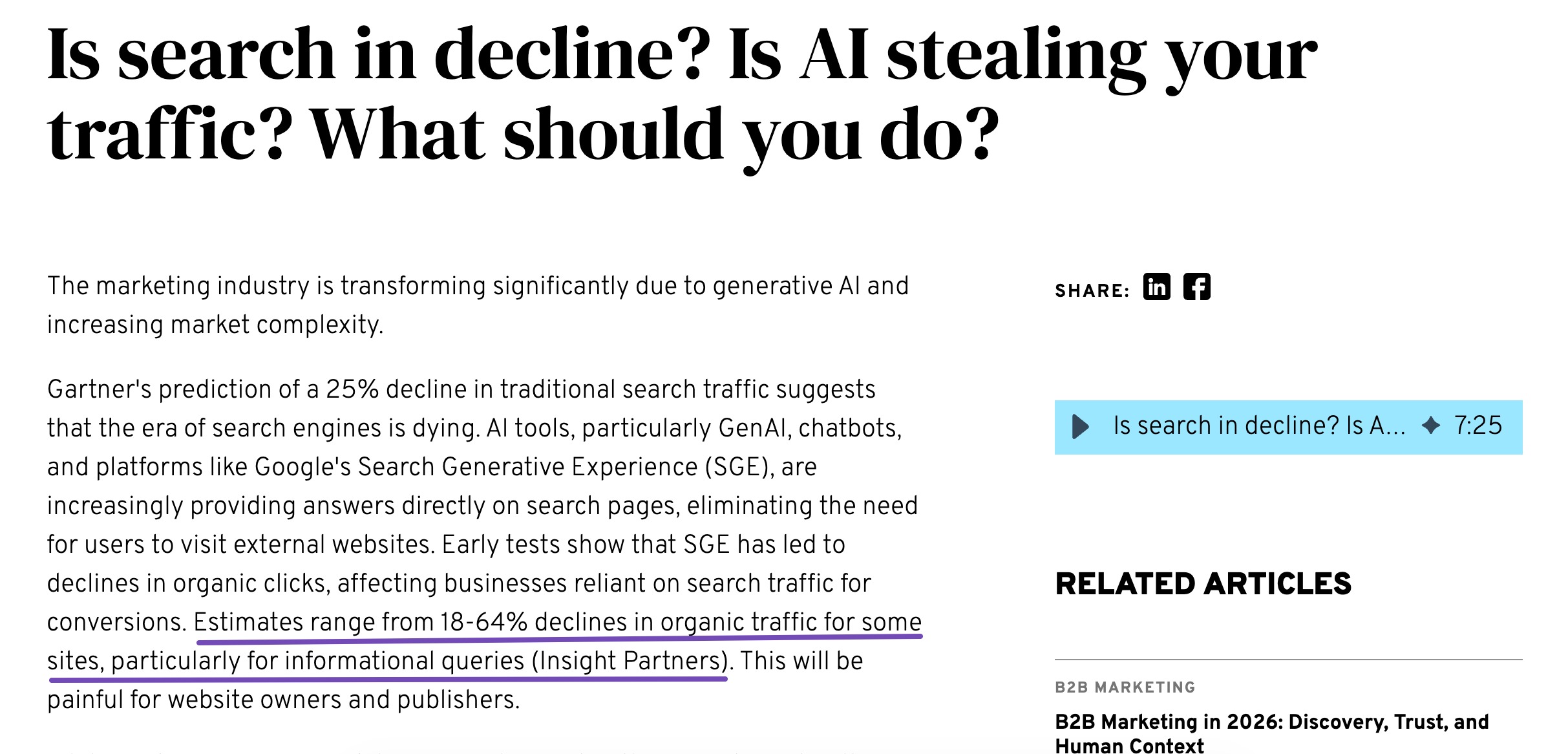
This happens because AI is extremely good at summarizing:
- definitions
- basic guides
- surface-level explanations
Trying to compete for these queries now means competing directly with AI, and that’s not a sustainable strategy.
Where AI still struggles is where you should shift your focus. AI has difficulty with:
- nuanced comparisons
- real-world case studies
- industry-specific decision contexts
This is why your content strategy needs to move beyond helping visitors learn and start helping them decide. Instead of chasing TOFU traffic, invest in middle- and bottom-of-the-funnel content, such as:
- in-depth case studies
- step-by-step implementation guides
- industry-specific use cases
- clear problem-solution narratives
These are the moments when visitors are actively evaluating options, and they’re also the moments when AI is most likely to recommend brands, not just explain concepts.
2.6 Scale Content Without Sacrificing Quality
In the AI world, quality over quantity is no longer enough. The new rule is quality and quantity.
AI models consume massive volumes of information to determine which brands are credible authorities. If you only publish a handful of high-quality pieces, your brand remains a small signal in a very large dataset.
That doesn’t mean you should publish low-value content. It means you need a smarter system for scaling.
One strong content asset can be repurposed into:
- multiple blog posts
- deep-dive articles
- FAQ sections
- short-form videos
- infographics
- social media posts
This approach does two important things:
- expands your citation footprint across platforms
- builds your expertise through consistent messaging
You can use Rank Math to maintain on-page quality standards as you publish more content.
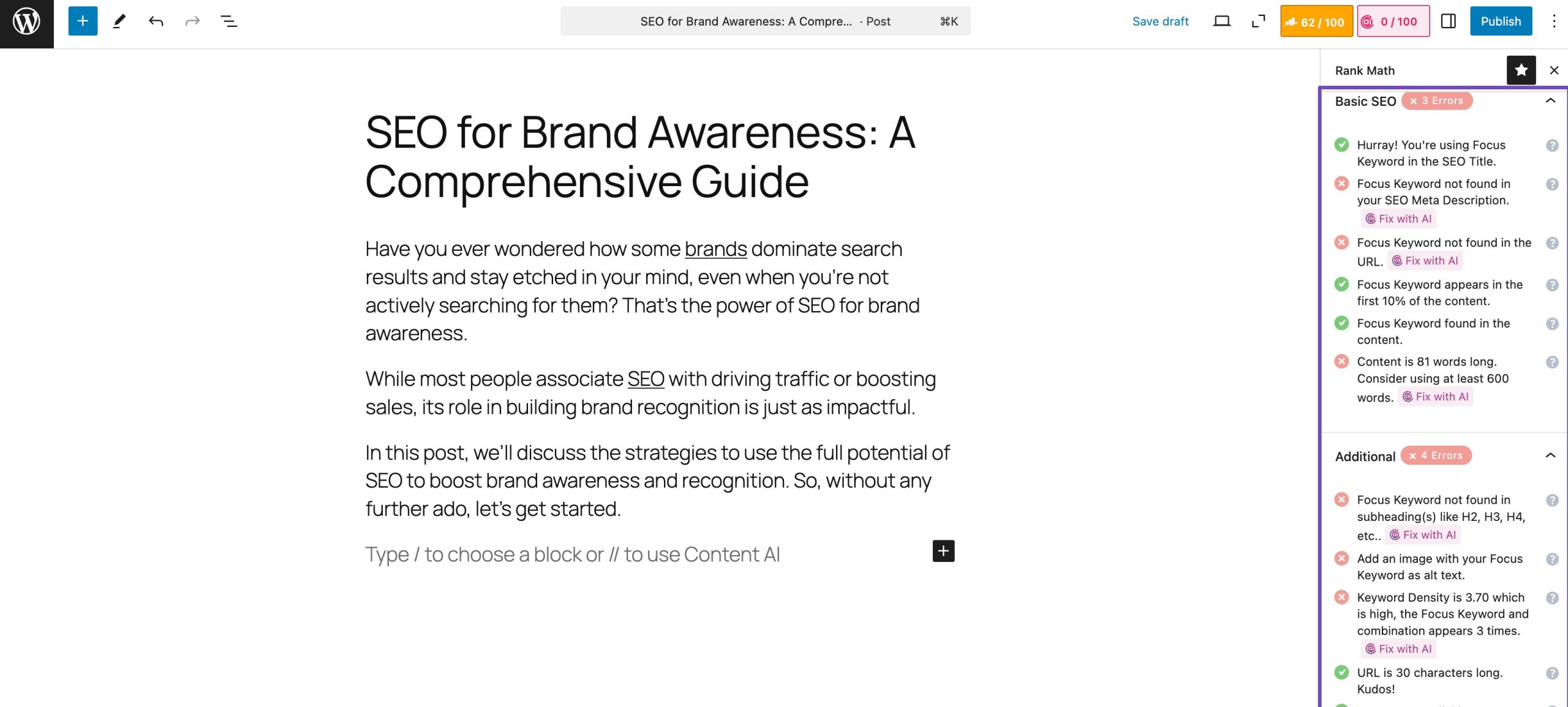
Ensure every piece follows best practices for:
- headings
- internal linking
- Schema
- metadata
Refer to our dedicated tutorial on repurposing content to scale your content without compromising on quality.
2.7 Optimize for Each AI Platform Separately
One of the biggest mistakes you can make in the AI era is treating all AI tools the same.
They’re not.
Each AI platform pulls information from different sources, weighs trust signals differently, and favours content from specific ecosystems. If your brand only focuses on ranking on Google, you’re leaving a massive amount of AI visibility on the table.
According to Semrush, citation patterns vary significantly across platforms:
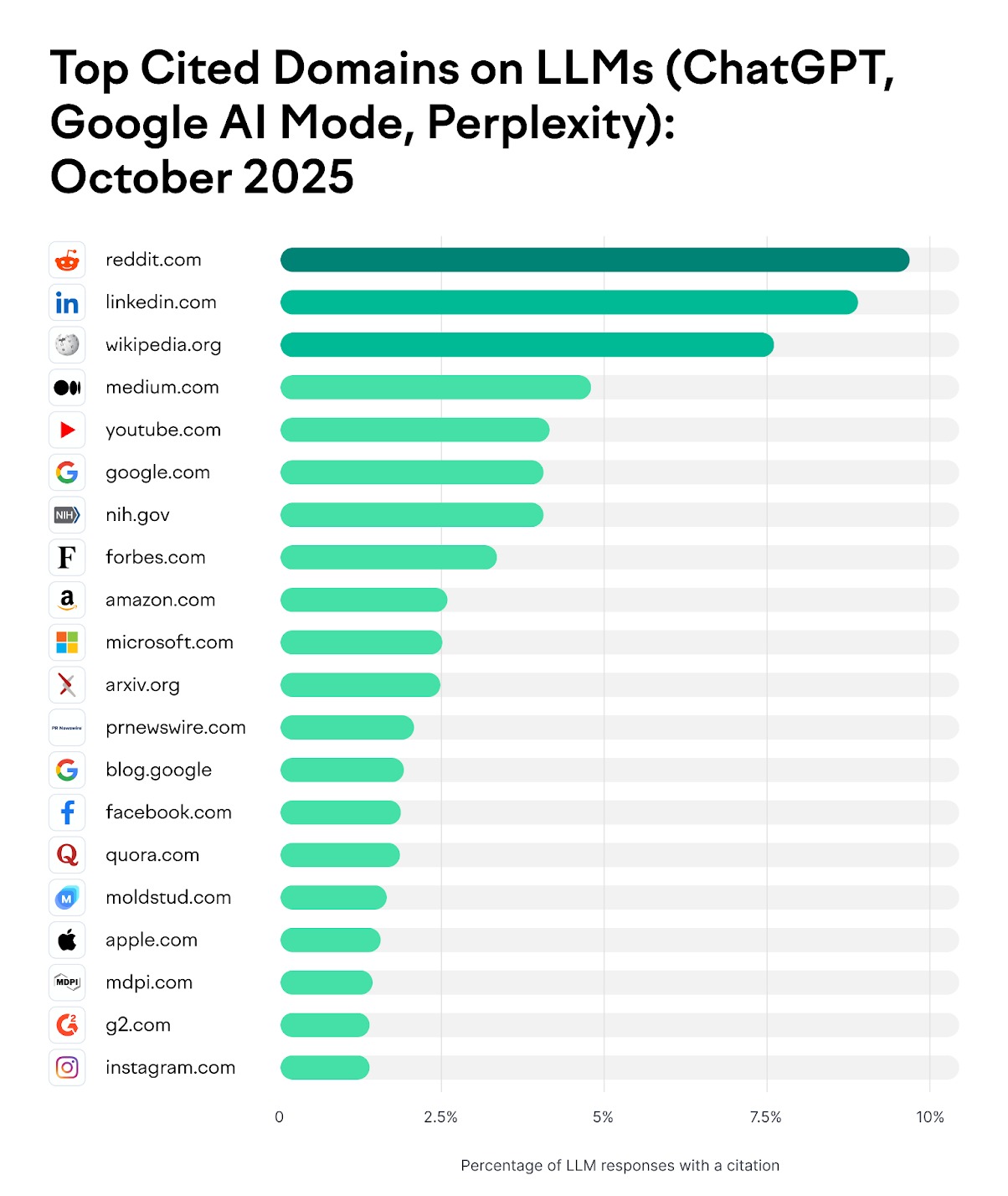
- ChatGPT frequently cites sources like Wikipedia, Reddit, and Medium
- Perplexity relies heavily on Reddit and LinkedIn
- Google AI Mode pulls prominently from LinkedIn, YouTube, and Reddit
The key takeaway is simple: ranking on Google does not guarantee AI mentions.
For instance, imagine you run a SaaS tool in the project management space. You rank well on Google for ‘best project management software’, but:
- Your brand has no Wikipedia page
- You’re rarely mentioned in Reddit discussions
- Your LinkedIn presence is minimal
- You don’t publish video content on YouTube
Now a visitor asks: What’s the best project management tool for remote teams?
Perplexity scans Reddit threads and LinkedIn posts. ChatGPT leans on Wikipedia-style authority and long-form discussions. Google AI Mode references YouTube explainers and LinkedIn thought leadership.
If your competitor:
- is frequently discussed on Reddit by users
- publishes opinionated LinkedIn posts about remote work
- has YouTube demos explaining real use cases
AI will confidently recommend them, even if your Google rankings are better.
That’s how AI visibility works today.
To earn mentions across AI platforms, you need to be visible where each model looks for trust signals:
- Build a credible Wikipedia presence (where appropriate and policy-compliant)
- Participate actively in community platforms like Reddit and Quora
- Publish thought leadership on platforms AI trusts, such as:
- LinkedIn (expert insights, experience)
- YouTube (explainers, demos, case studies)
AI visibility isn’t about winning one platform anymore. It’s about building distributed trust, so no matter where a question begins, your brand is already part of the answer.
3 How to Monitor Your AI Brand Mentions
After optimizing your site and content for mentions on AI platforms, the next step is to ensure your strategy is paying off and that your brand is actually being mentioned. That’s where AI Visibility comes in.
AI Visibility is a brand monitoring tool that lets you track your brand mentions and competitor mentions across AI platforms.
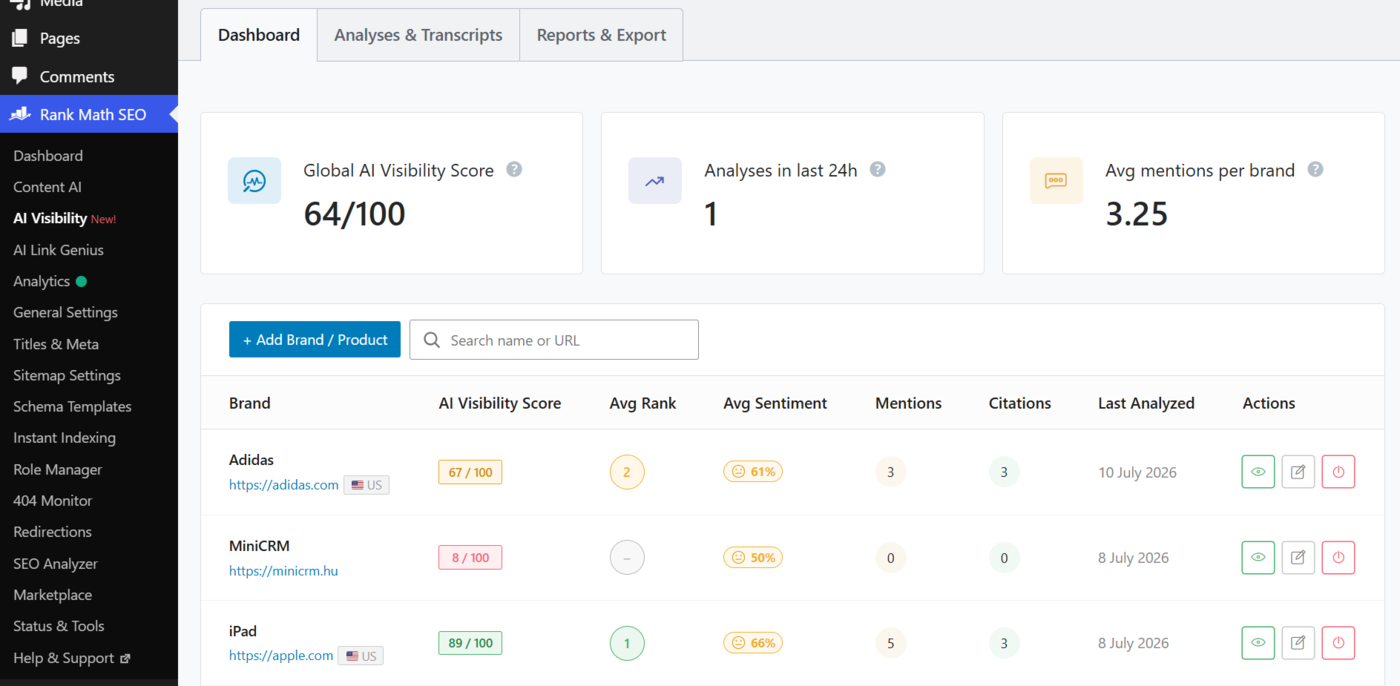
In addition to tracking mentions, AI Visibility also measures the sentiment of those mentions. This helps you understand where your brand appears on AI platforms, where your competitors appear, and how your target audience perceives your brand and competing brands.
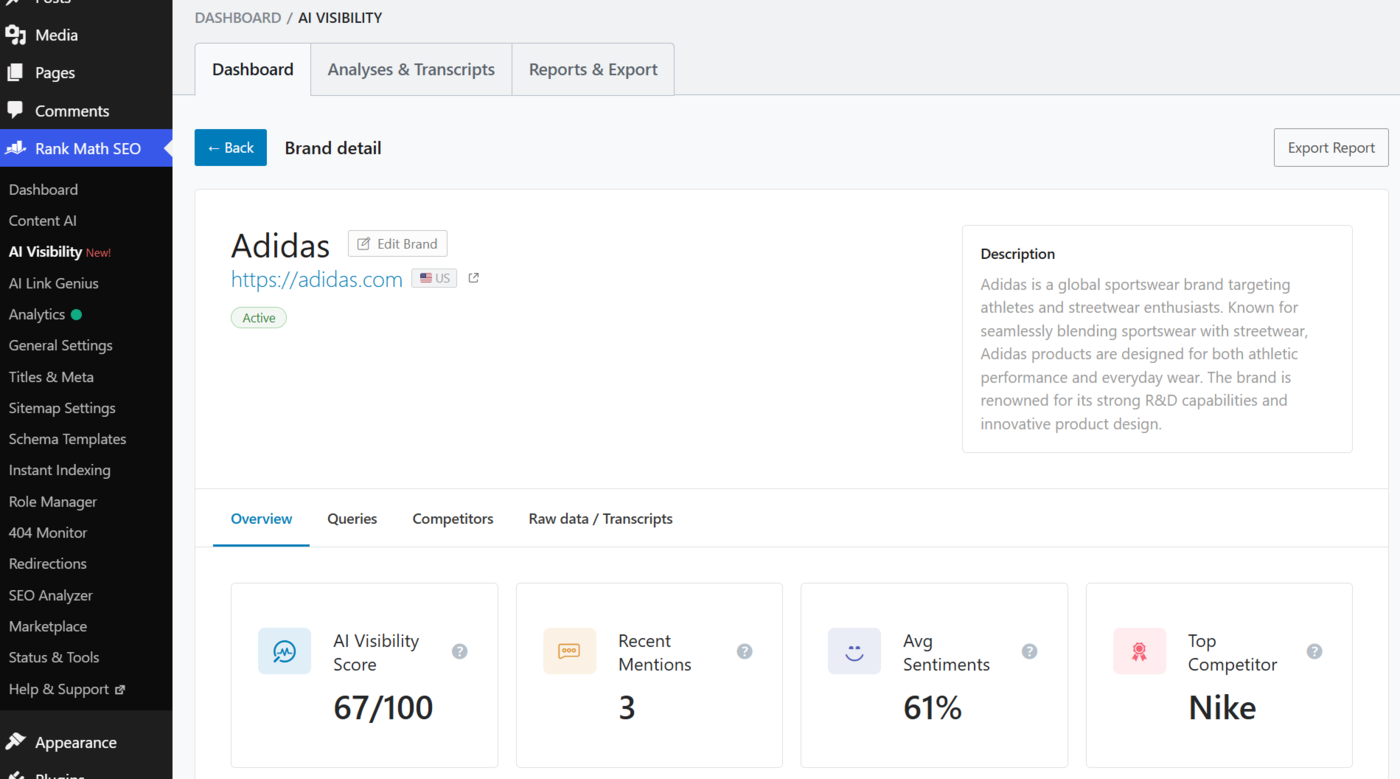
Even better, AI Visibility is built into Rank Math, which means you can monitor your brands right from your WordPress dashboard without having to juggle multiple platforms. You can refer to this guide to get started and begin tracking your brands with AI Visibility.
4 Final Thoughts: AI Visibility is Earned, Not Optimized
AI search is pushing marketing back to the basics: trust, credibility, consistency, and customer validation. Unlike traditional SEO, AI search doesn’t reward clever optimization alone; it rewards brands that visitors genuinely trust and talk about.
When customers talk about your brand with confidence, AI reflects that confidence in its recommendations.
The brands that succeed in AI search are not the loudest or the most optimized, they are the most trusted.
If you like this post, let us know by tweeting @rankmathseo.