

AI search is quietly changing how audiences discover brands, tools, and experts. Instead of scrolling through pages of blue links, users now ask AI direct questions and get just one or two recommended answers.
This shift means visibility is no longer about ranking a page; it’s about becoming the source AI trusts enough to mention.
Now, not all content is equal. AI systems learn from patterns, repetition, and clear signals of authority across the web.
Some content formats help train AI models to understand who you are and what you’re known for, while others are largely ignored.
In this post, I’ll break down the 11 content formats that consistently dominate AI search. So, without any further ado, let’s get started.
Table Of Contents
- What is AI Search Visibility?
- The 11 Content Formats for AI Search
- Q&A Formatted Content
- Data-Backed Content & Original Research
- Glossary & Terminology Pages
- High-Authority Expert Blog Posts
- YouTube & Short Social Videos
- Press Releases with Media Coverage
- Comprehensive Buyer’s Guide
- Commercial Intent Content
- Case Studies
- Thought Leadership on External Platforms
- Expert Bylines & Personal Branding Content
- Conclusion
1 What is AI Search Visibility?
AI search visibility means being mentioned or recommended by AI tools when audiences ask questions. Instead of ranking pages like traditional SEO, AI focuses on who has the most trusted, clear, and consistent information to answer a question.
With traditional SEO, you optimize for keywords and clicks. With AI search, you’re competing to be the answer itself. AI doesn’t search the web like a human; it predicts responses based on what it has already learned from articles, videos, reviews, and expert content.
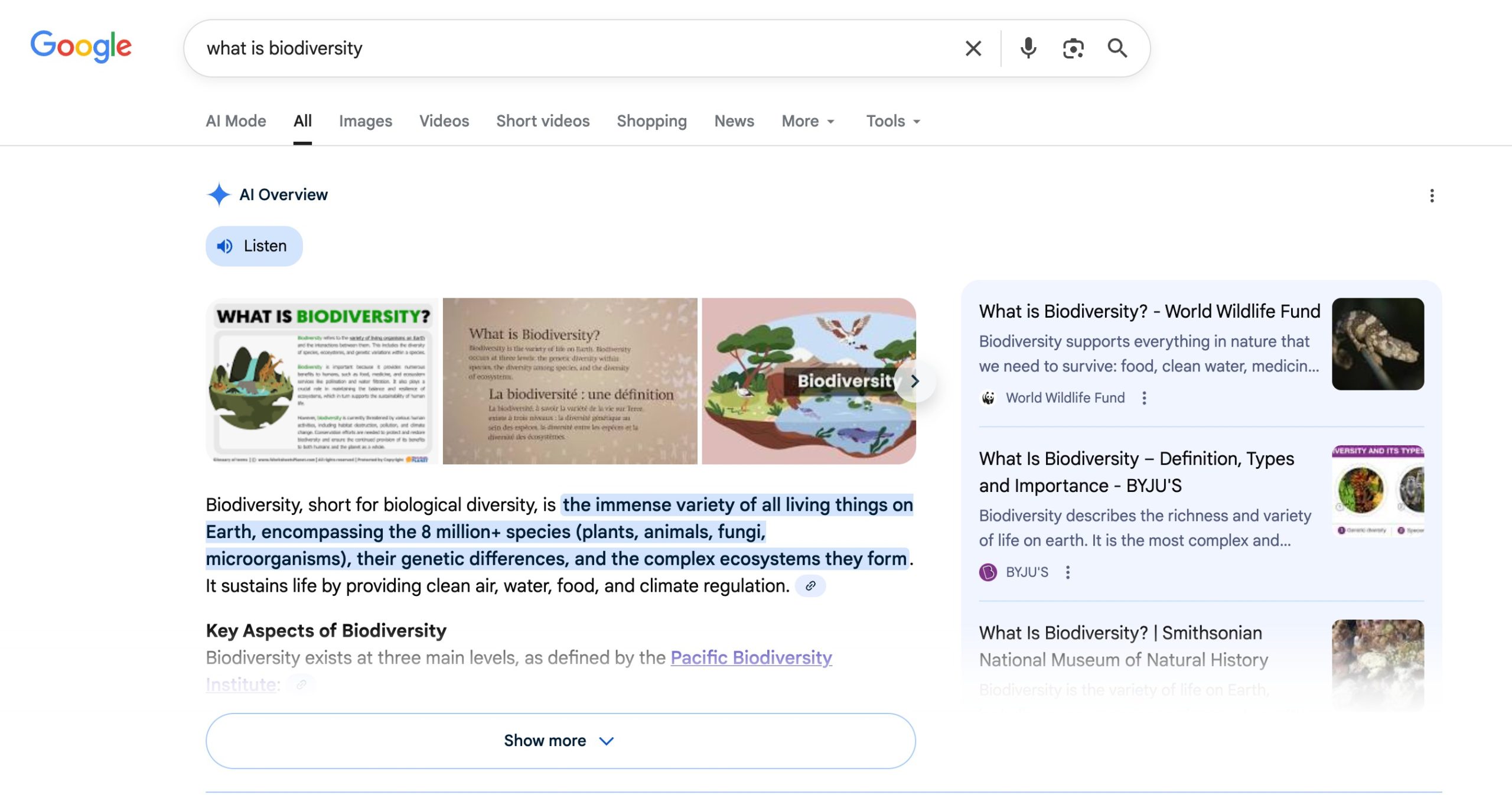
AI pulls from content it has seen repeatedly and understands well. If your brand is clearly associated with that topic, AI includes you. If not, it fills the gap with someone else.
Not all content benefits equally. Generic or shallow content doesn’t help AI learn. Clear, useful, expert-led content, like FAQs, guides, case studies, and videos, gives AI strong signals about who you are and when to recommend you.
2 The 11 Content Formats for AI Search
AI doesn’t treat all content the same. Some formats are easier for AI to read, understand, and reuse in answers.
In this section, I’ll break down the content types that AI consistently prefers, starting with the most important one.
2.1 Q&A Formatted Content
Q&A content is exactly what it sounds like, clear questions followed by clear answers. This includes:
- FAQ pages
- Blog sections written as questions
- “What is…”, “How does…”, “Why should you…” style headings
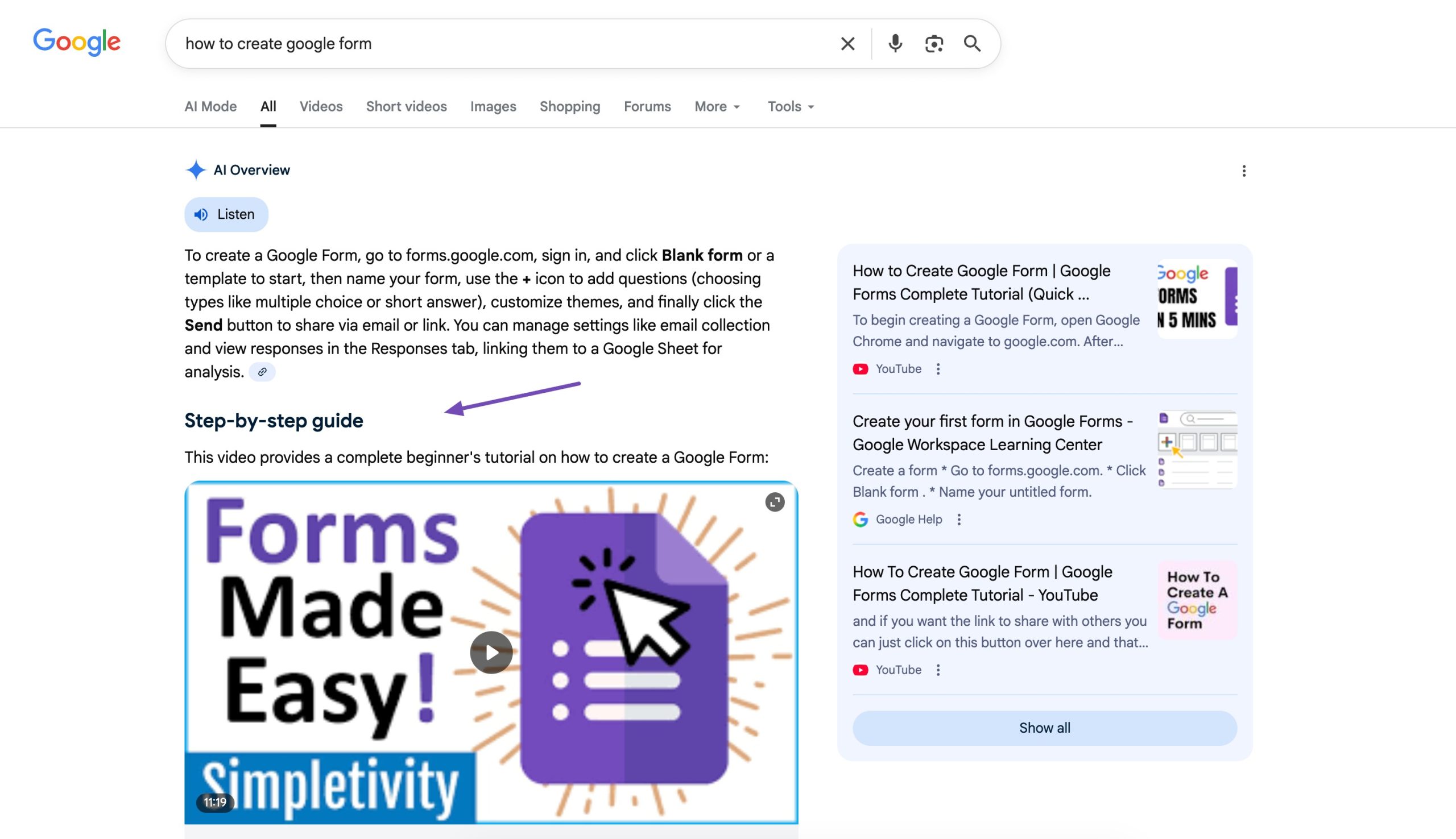
You’re writing the way visitors actually ask questions. If your audience asks it, you answer it, directly and simply.
Why AI loves it
AI is built to answer questions. So when you structure your content the same way, you make AI’s job easy.
When you ask a clear question and immediately answer it:
- AI can quickly understand the topic
- AI can pull your answer as a ready-made response
- AI knows exactly when to use your content
In short, you’re speaking AI’s language. The clearer your question and answer, the more likely AI is to use you when someone asks that same question.
2.2 Data-Backed Content & Original Research
When an AI looks for a credible source, what do you think it chooses?
A generic blog post that repeats the same information already found everywhere, or a detailed report backed by original data and unique insights?
The answer is obvious, and the data supports it.
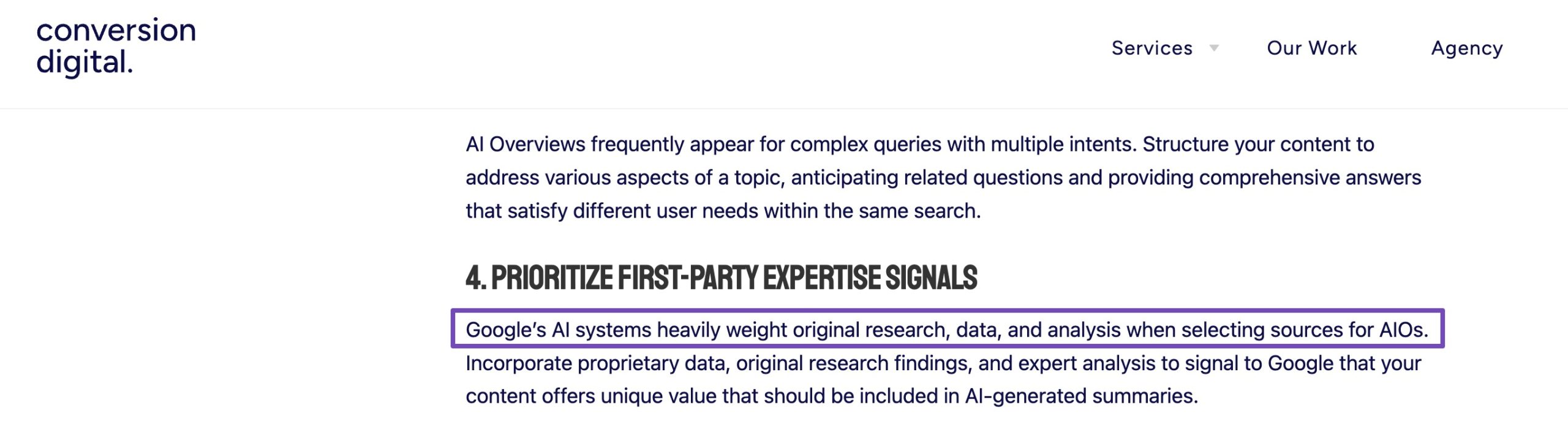
According to a study by Conversion Digital, Google’s AI systems strongly favour content that includes original research, proprietary data, and in-depth analysis when selecting sources to cite.
When you publish original research:
- AI sees you as a source, not just a writer
- Your data gets reused in AI answers and summaries
- Your brand becomes associated with authority
If you want to create content that AI will reference and recommend, stop focusing solely on long, generic “what is” or “how-to” articles.
A great example of this approach is Ahrefs. When you click on an AI-cited Ahrefs source, you’ll notice that the information is often pulled directly from their Key findings section.
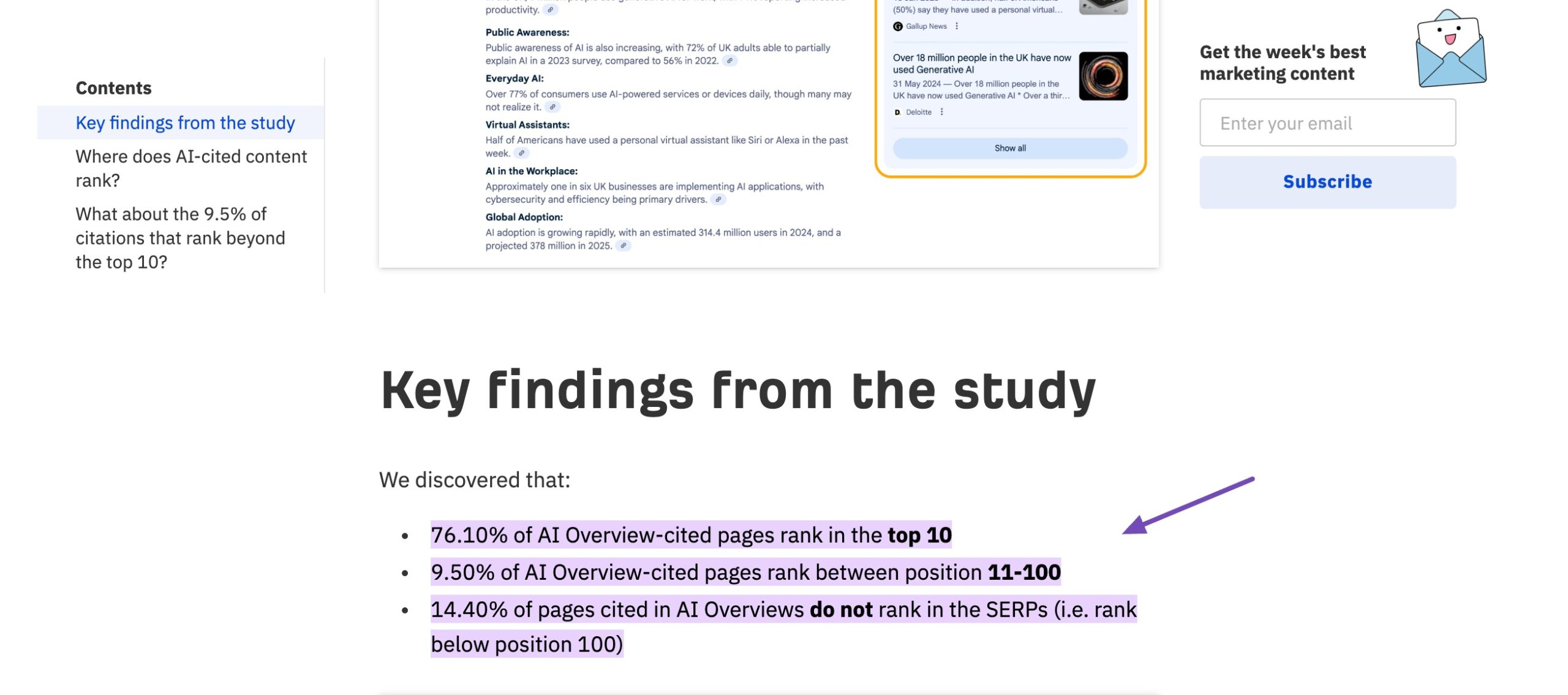
The data is presented in clear bullet points, supported by visuals like charts, tables, and infographics, with minimal unnecessary text.
This is exactly what AI systems prefer: information that is easy to scan, easy to understand, and clearly structured.
2.3 Glossary & Terminology Pages
Glossary pages help AI understand what a term means and who explains it best. These pages are designed to define concepts clearly, which is exactly what AI needs.
When someone asks AI, “What is topical authority?” or “What does crawl budget mean?”, AI often pulls answers from glossary-style pages.
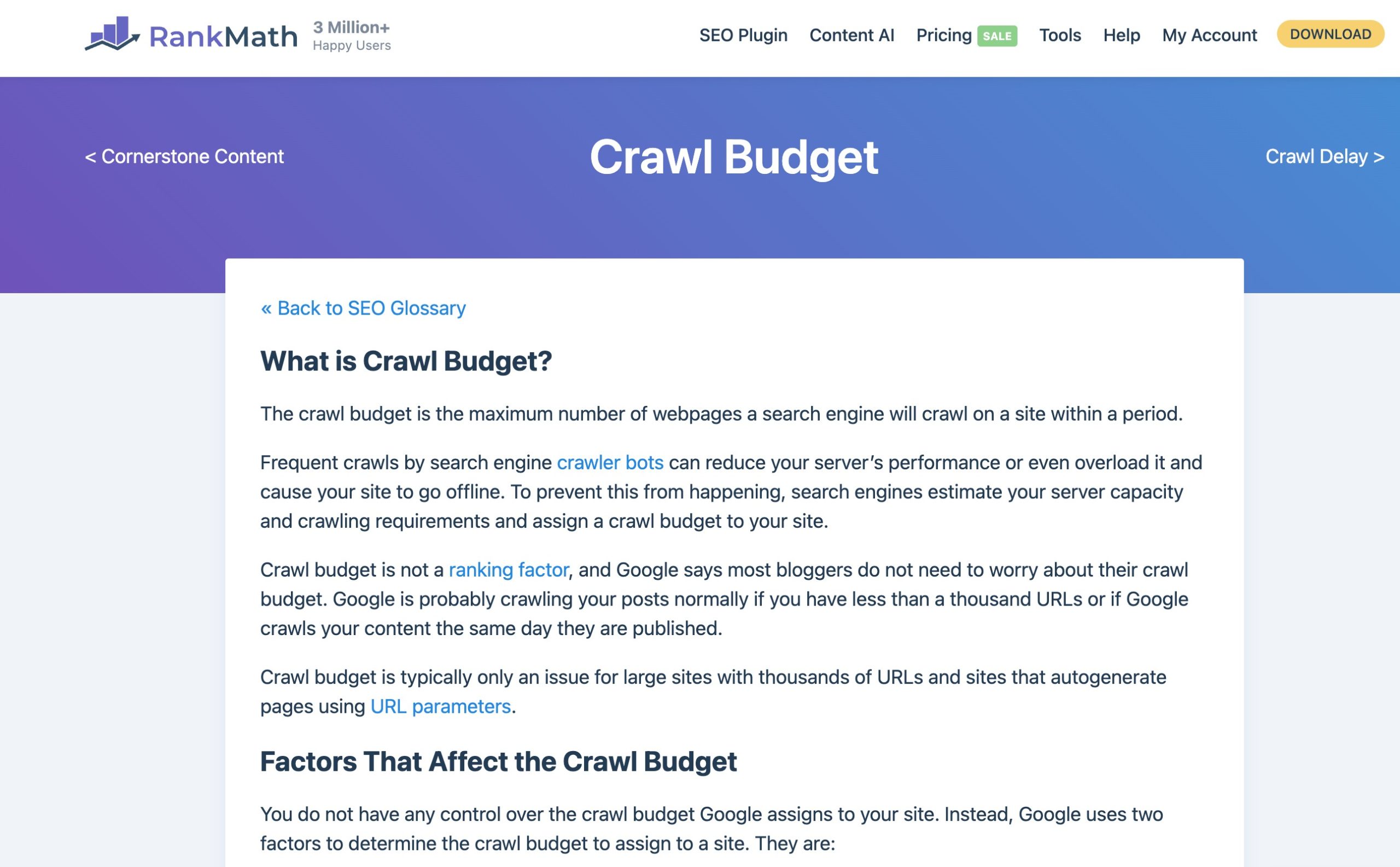
To make glossary pages AI-friendly:
- Start with a one-sentence, clear definition
- Explain the term in simple words
- Add an example or use case
- Avoid fluff and long introductions
- Use the same structure for every term
When you define terms clearly and consistently, you help AI learn faster. Over time, AI starts associating those definitions with your brand, making you the go-to source for that topic.
2.4 High-Authority Expert Blog Posts
When AI systems look for credible sources to cite, they aren’t choosing flimsy 500-word blog posts written just to fill a content calendar.
They look for in-depth, well-researched content from trusted sources, and the data confirms this shift.
What does this mean for your content strategy?
A blog post written by a recognized expert within your company will carry far more weight than a generic article published under a marketing team’s byline.
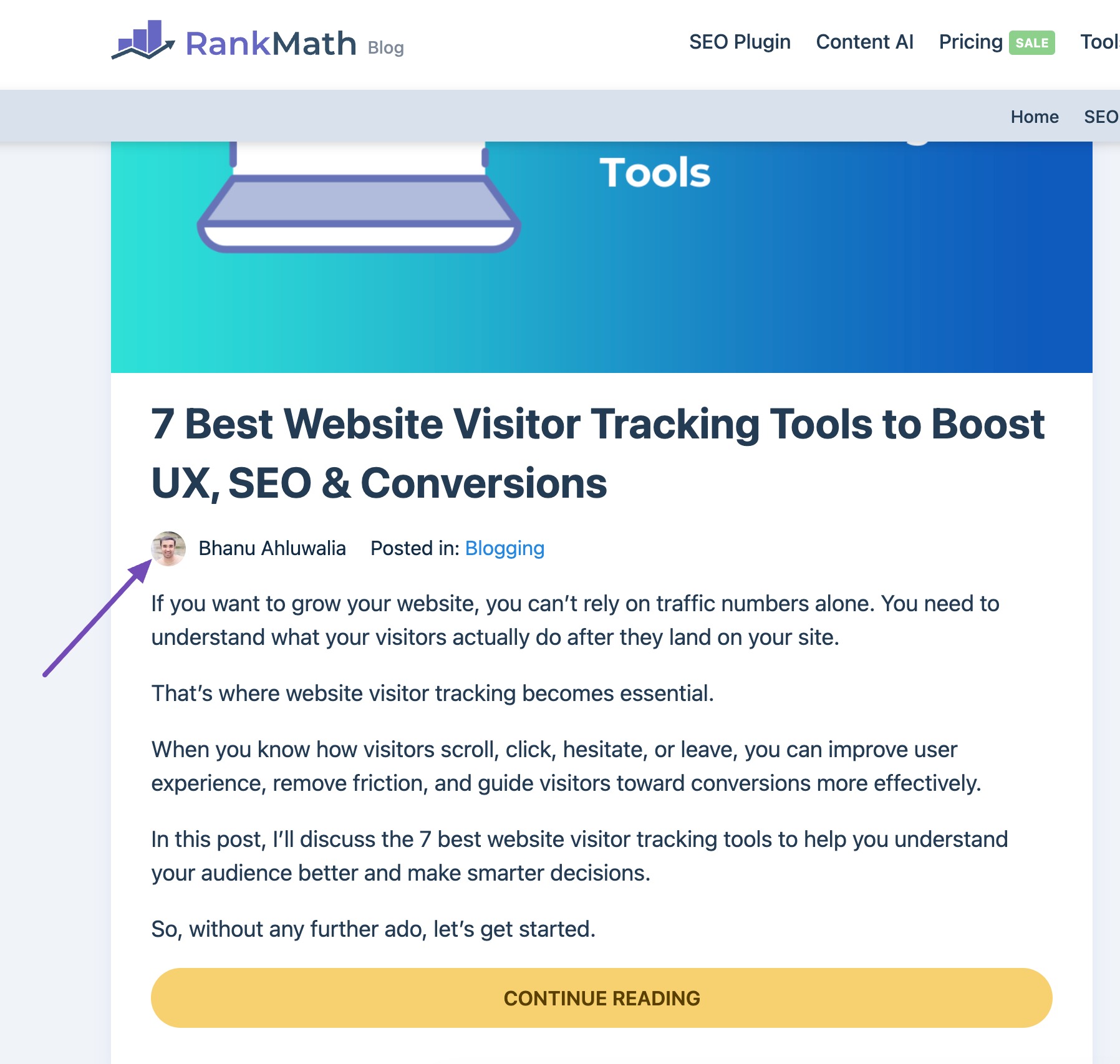
For instance, Rank Math publishes its blog content under Bhanu, building a consistent author identity over time.
Why AI cites this content
AI looks for depth and confidence. When you:
- Explain topics clearly
- Share experience or insights
- Cover a subject thoroughly
AI systems can evaluate the author’s expertise, the depth of the content, and how users engage with it. Together, these signals create a level of authority that is extremely difficult to fake.
In the age of AI search, who writes your content matters just as much as what you publish.
2.5 YouTube & Short Social Videos
AI doesn’t just read blogs, it also learns from videos, especially YouTube. But AI doesn’t “watch” videos. It reads:
- Transcripts
- Titles
- Descriptions
- Captions
According to a study by Superlines, AI engines now treat every YouTube video as a structured text asset, something they can directly cite in AI-generated answers.
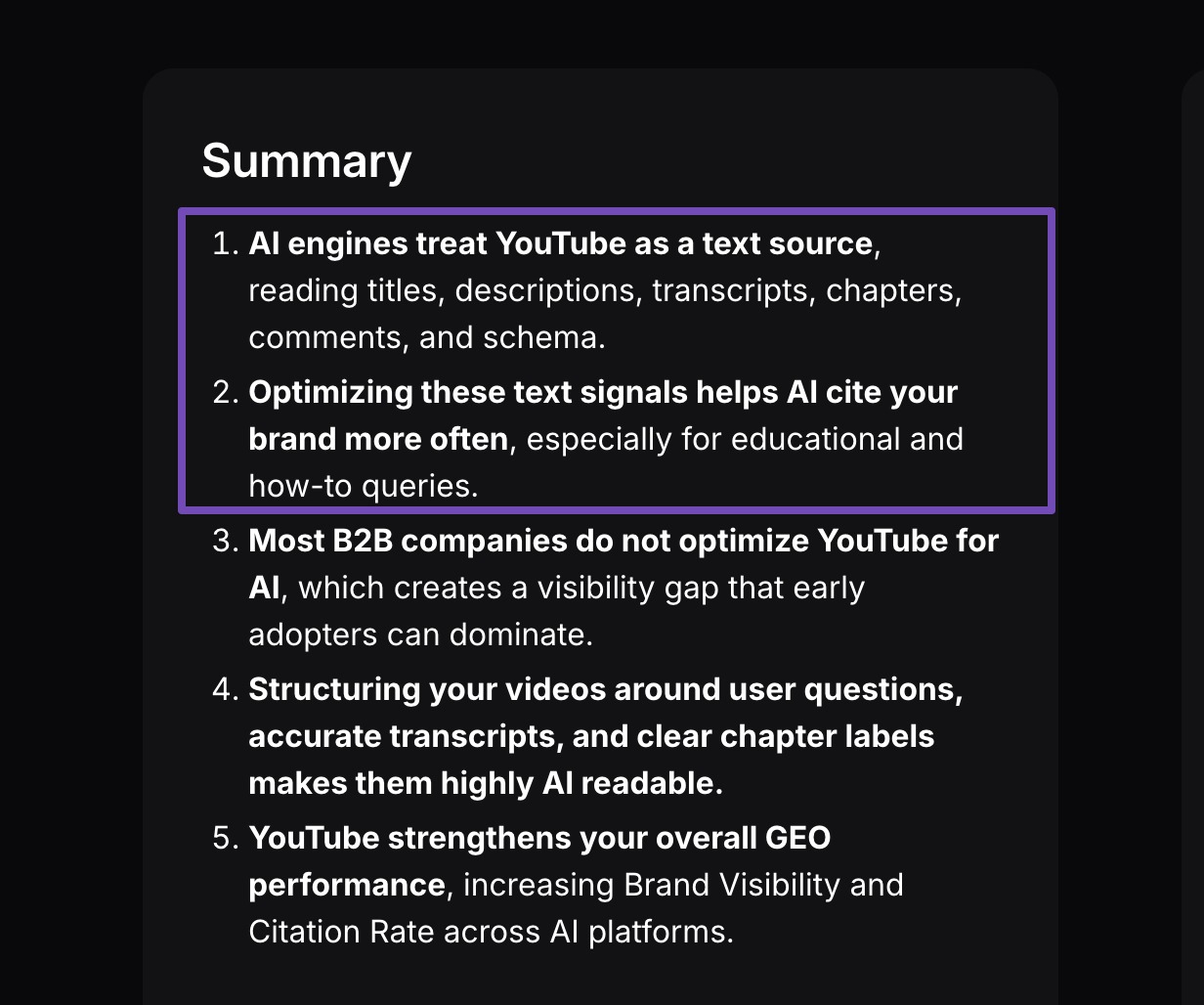
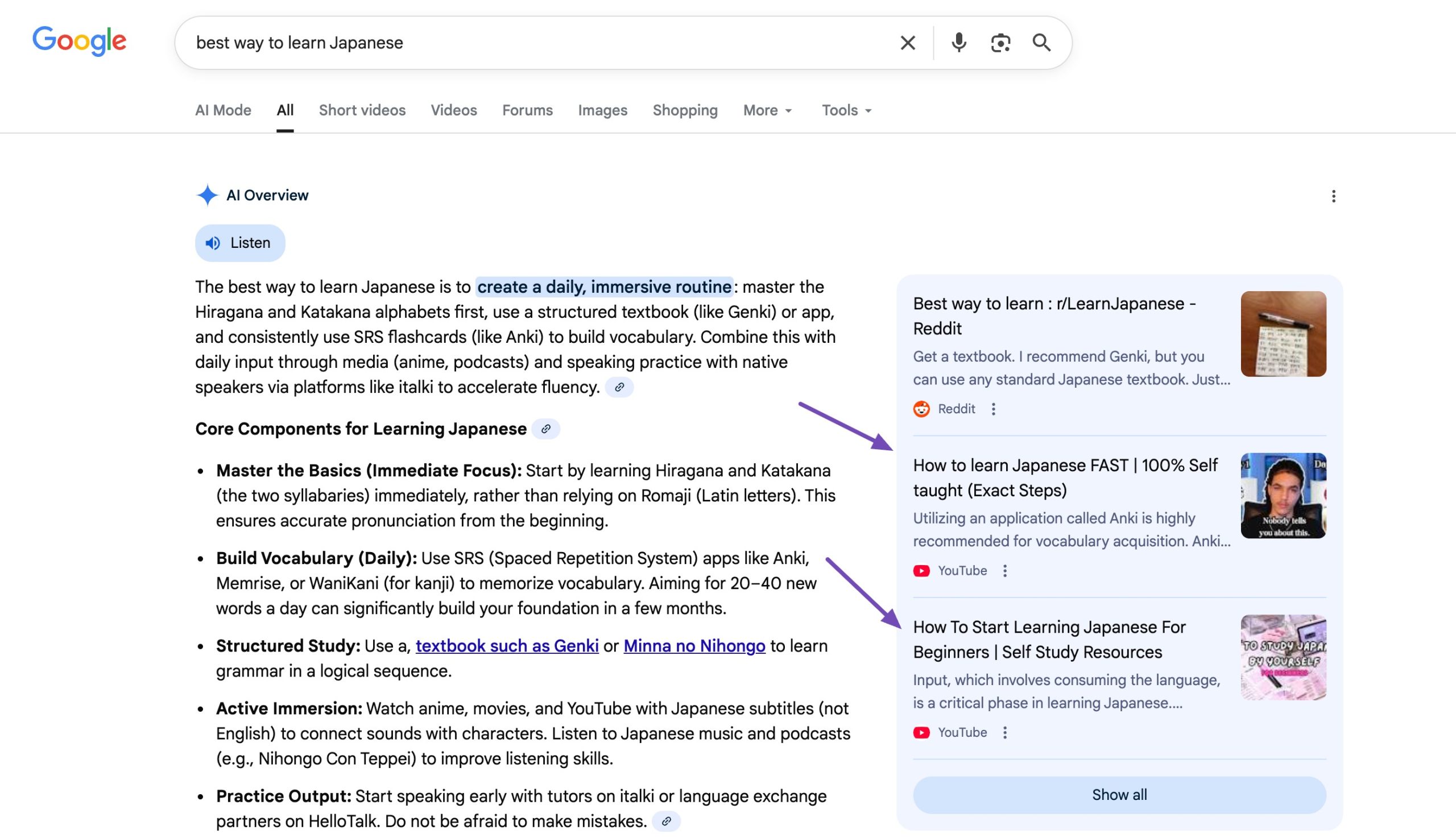
Every video you publish becomes another piece of content AI can reference. In fact, AI Overviews frequently cite YouTube videos as sources. For instance, Search “best ways to learn Japanese” and AI Overviews reference multiple YouTube videos.
How to optimize your videos for AI
To help AI understand your videos:
- Add clear titles that match user questions
- Write detailed descriptions explaining what the video covers
- Use accurate transcripts (not auto-generated junk)
- Speak clearly and stay on topic
And this is exactly what we do on our YouTube channel.
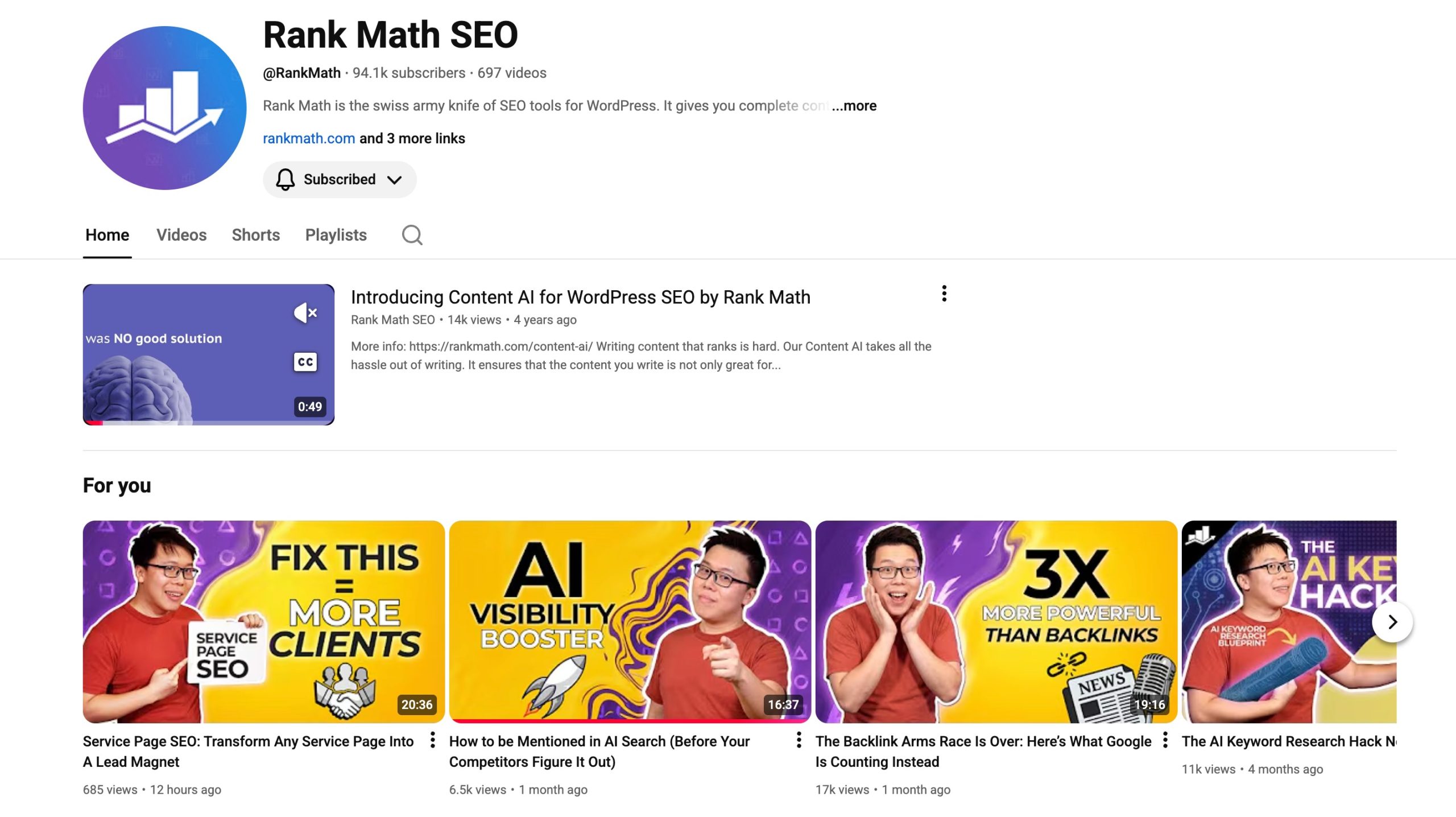
Short videos on Instagram, LinkedIn, and YouTube Shorts also help. When the same ideas appear across formats, AI learns your expertise faster.
If your brand or business hasn’t started a YouTube channel yet, now is the time to invest. Video is no longer just for views; it’s becoming a key asset for AI visibility.
2.6 Press Releases with Media Coverage
Press releases are a content format that carries official, verifiable information. When they’re picked up by trusted media sites, AI treats them as strong credibility signals.
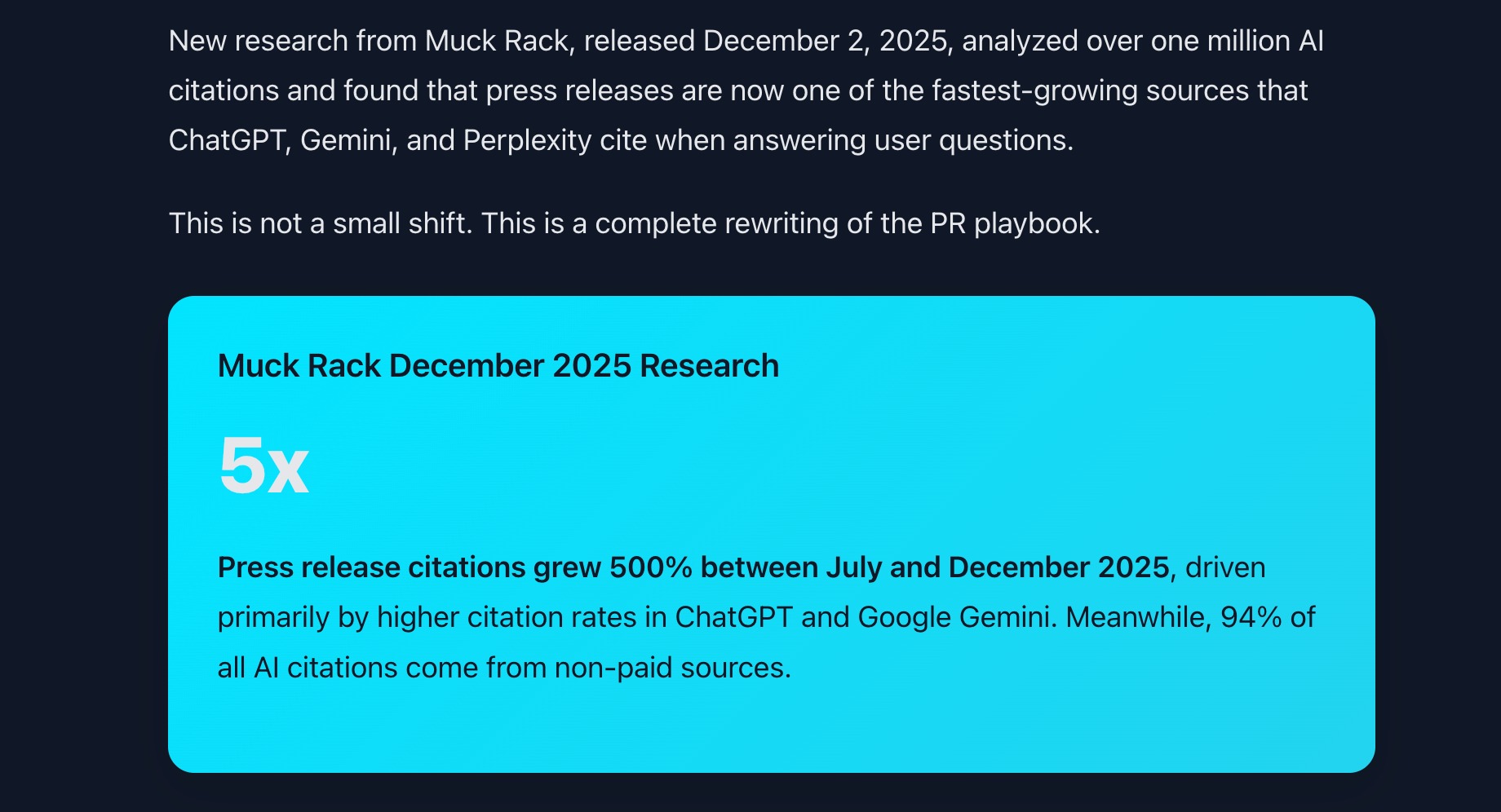
Recent data makes this shift very clear. A Muck Rack report found that press release citations in AI have grown by 500% in just five months.
So how do you make this work for you?
It’s a two-step process. First, you need to write press releases optimized for AI. That means they must be:
- Focused on answering questions
- Clearly structured
- Data-rich
One important change: every press release must end with an FAQ section. This is no longer optional. FAQs give AI the exact language your customers, analysts, and journalists are likely to use when asking questions.
Second, understand that press releases don’t work in isolation. You need to identify the journalists and publications that AI already cites in your niche, and focus your outreach there.
2.7 Comprehensive Buyer’s Guide
Comprehensive buyer’s guides are deep, decision-focused resources that help audiences choose the right product or service. You’re not just listing options, you’re guiding the reader step by step, just like you would if they asked you for advice directly.
What makes a buyer’s guide “comprehensive”
A buyer’s guide becomes comprehensive when you cover the entire decision journey, not just the final choice. This usually includes:
- Clear problem definition: You start by explaining why someone needs the product and who it’s for. This helps both users and AI understand the context.
- Key features and criteria: You explain what actually matters when choosing: pricing, performance, use cases, pros and cons, and limitations.
- Comparisons and alternatives: You compare multiple options honestly instead of pushing just one. AI trusts this balanced approach more.
- Who each option is best for: You clearly state, ‘This is best for beginners, This is better for large teams, or This works if you’re on a budget.’
- FAQs and objections: You answer common buying questions like ‘Is it worth the cost?’ or ‘What are the downsides?’
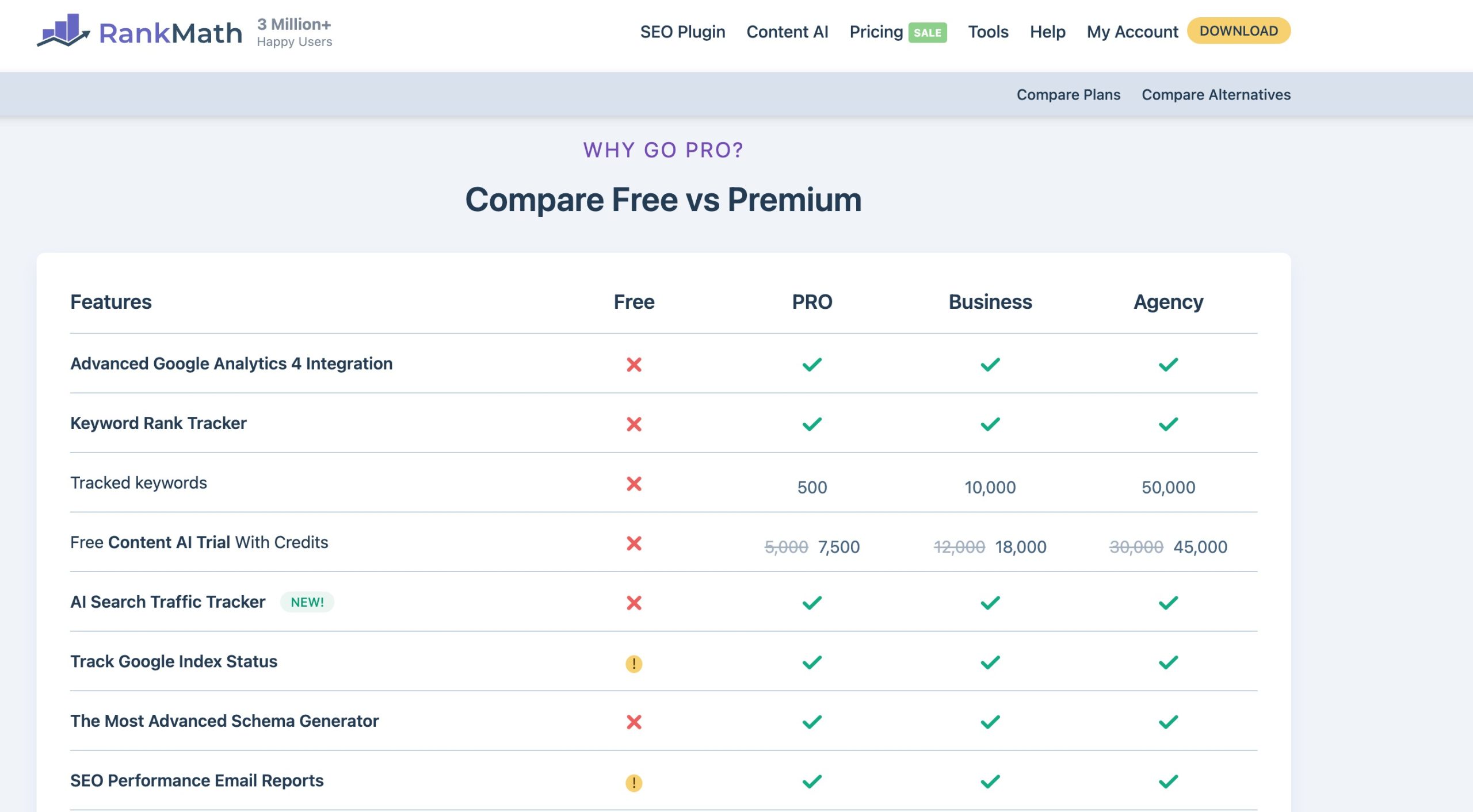
For instance, Rank Math’s plugin comparison guides are a great example of how to do buyer-focused content the right way, for both users and AI.
Instead of saying ‘our plugin is the best for everyone,’ we break our plans down clearly and explain who each plan is actually meant for. This makes the decision easy for readers and very clear for AI.
So when someone asks AI:
- Which Rank Math plan should I use?
- Is Rank Math PRO worth it?
- Best SEO plugin for agencies?
AI can confidently pull answers from these comparison guides because the information is structured, clear, and decision-focused.
2.8 Commercial Intent Content
Commercial intent content format is content created for audiences who are close to making a decision. At this stage, you’re not educating them from scratch; they already know the problem. They’re now trying to decide which option to choose.
When you create this type of content, you’re speaking directly to users who are asking, ‘Which one should I go with?’
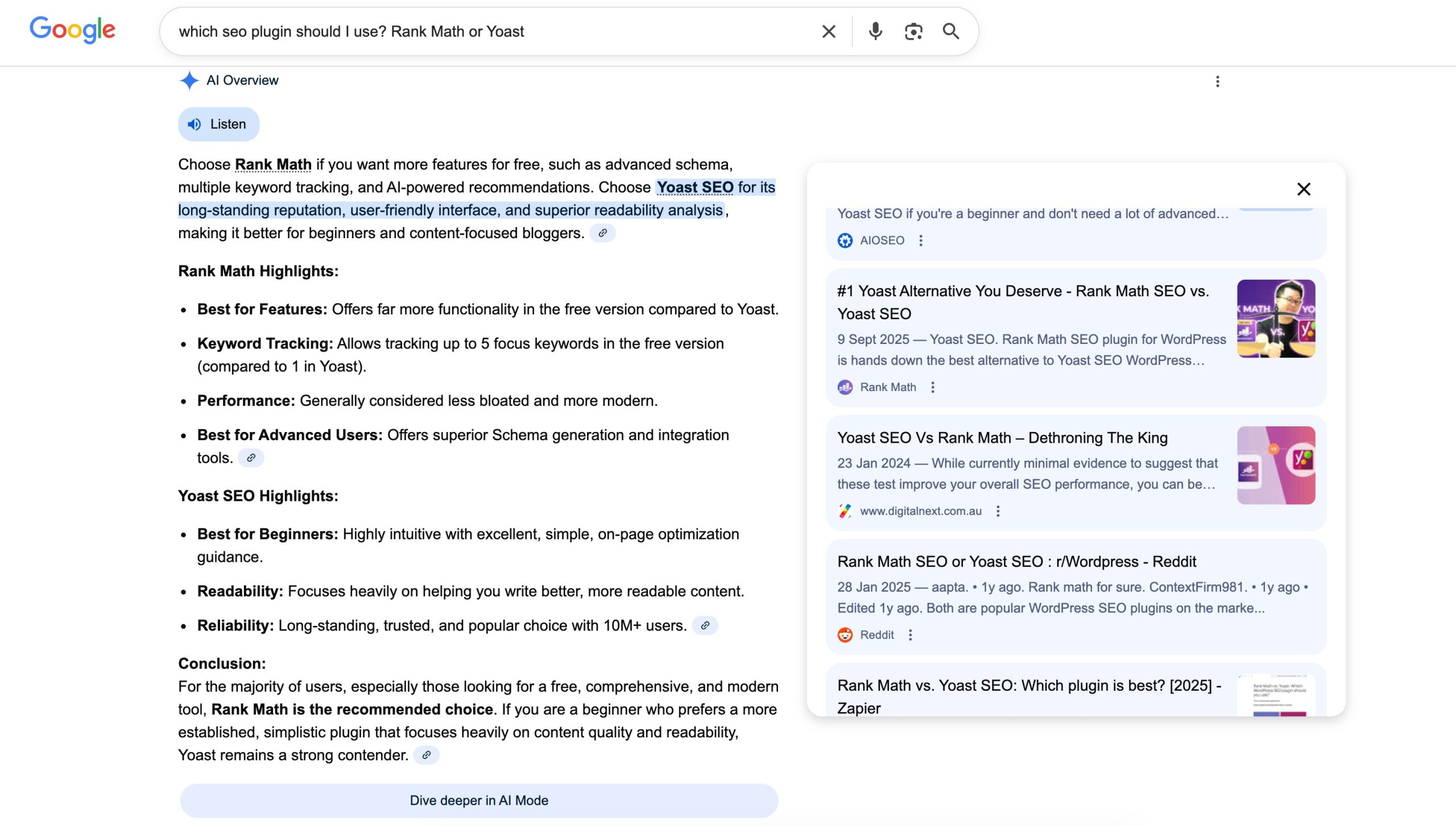
Types of commercial intent content
Let us now discuss the different types of content formats that fall into commercial intent.
Reviews content format
Reviews focus on a single product or service and answer questions like:
- Is it worth it?
- What are the pros and cons?
- Who is it best for?
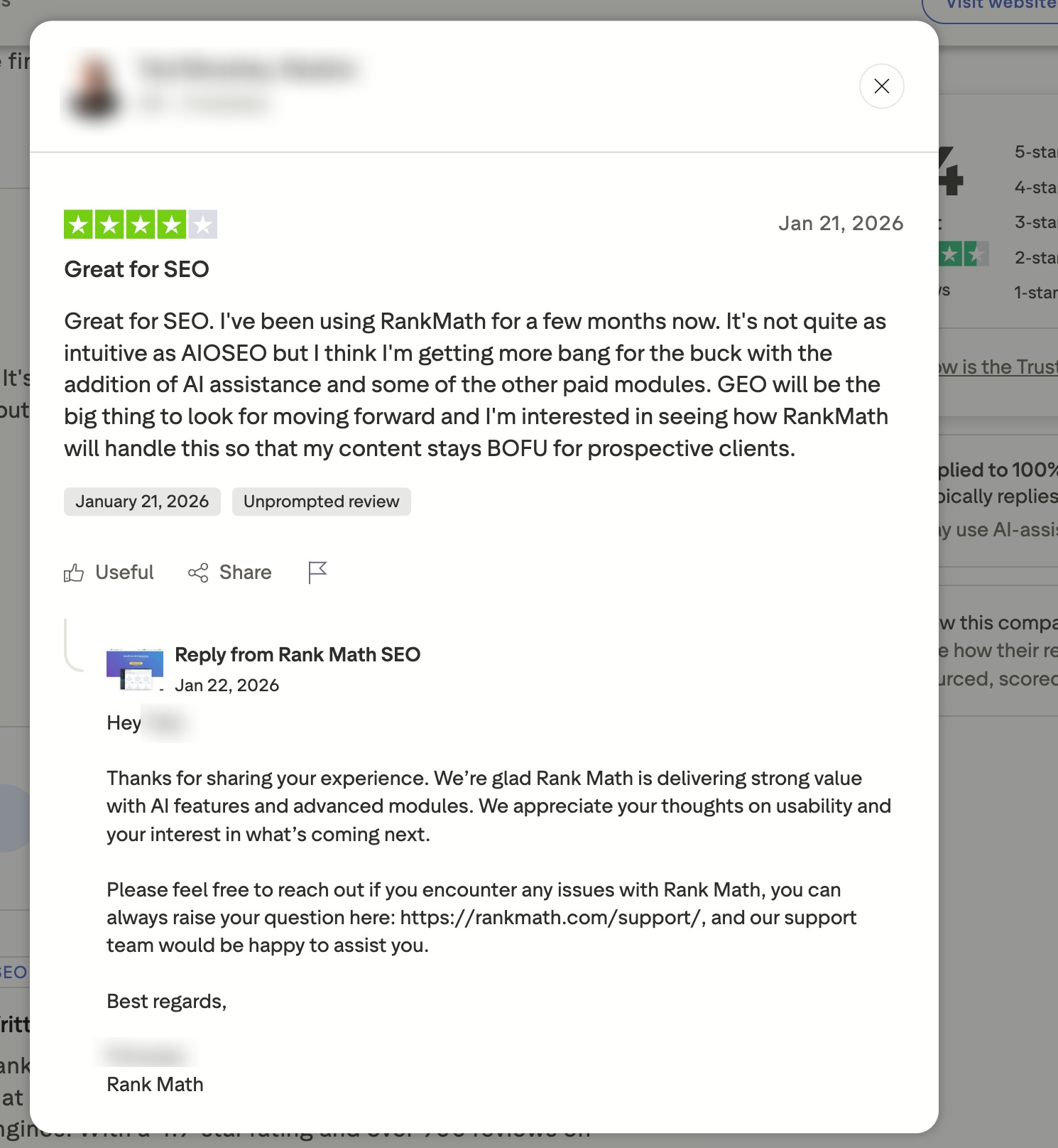
In a good review, you:
- Share real usage experience
- Highlight strengths and limitations
- Explain who should and shouldn’t use it
Comparisons content format
Comparison content helps users choose between two or more options. For instance, Rank Math vs Yoast.
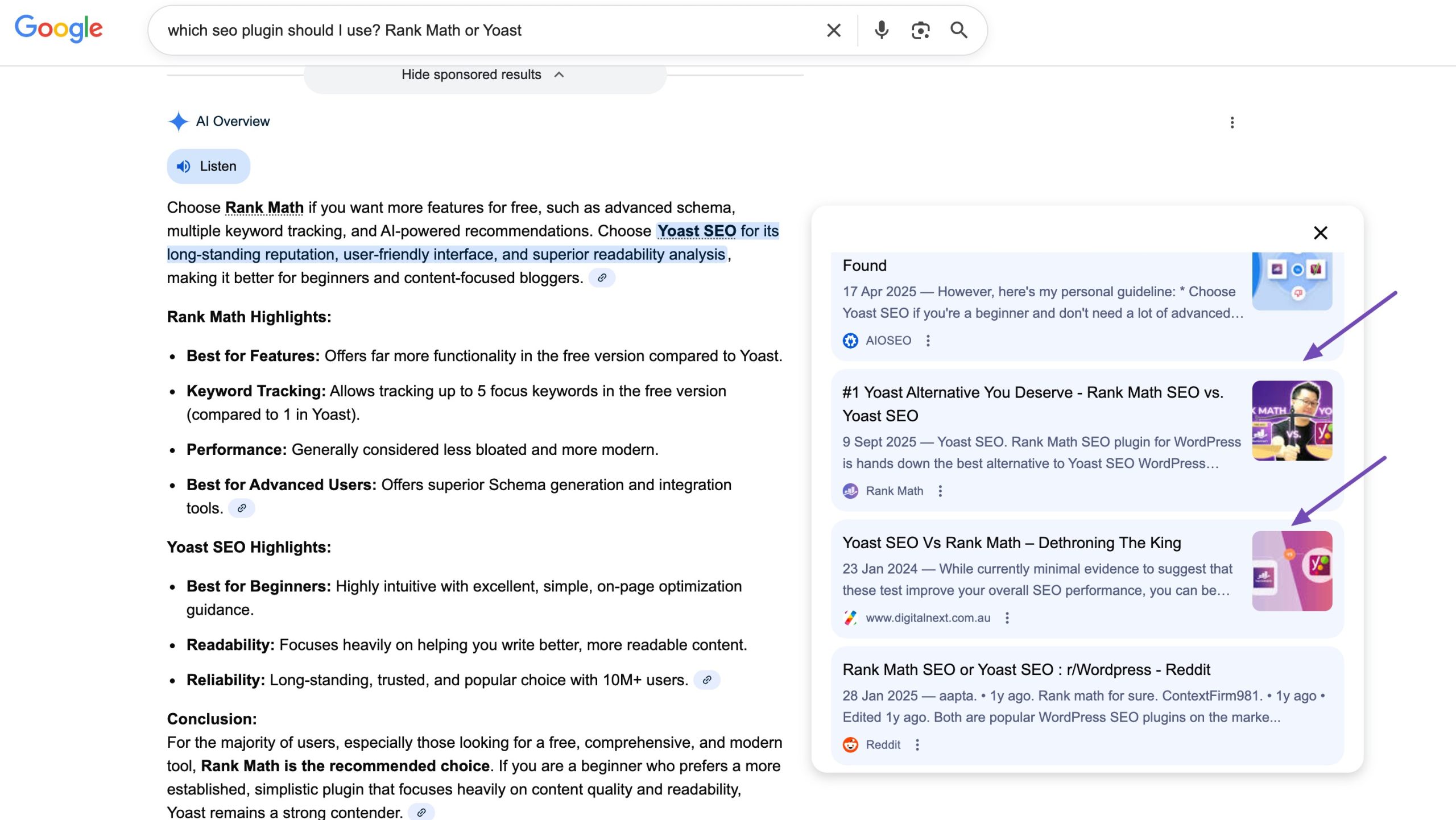
Here, you:
- Compare features, pricing, and use cases
- Explain which tool works better for different needs
- Avoid declaring a single “winner” for everyone
This balanced structure makes it easy for AI to pull clear recommendations depending on the user’s situation.
Alternative content format
Alternative content is for users who already know what they don’t want or want to explore better options. For instance, Yoast alternatives, or Ahrefs alternatives for small businesses.
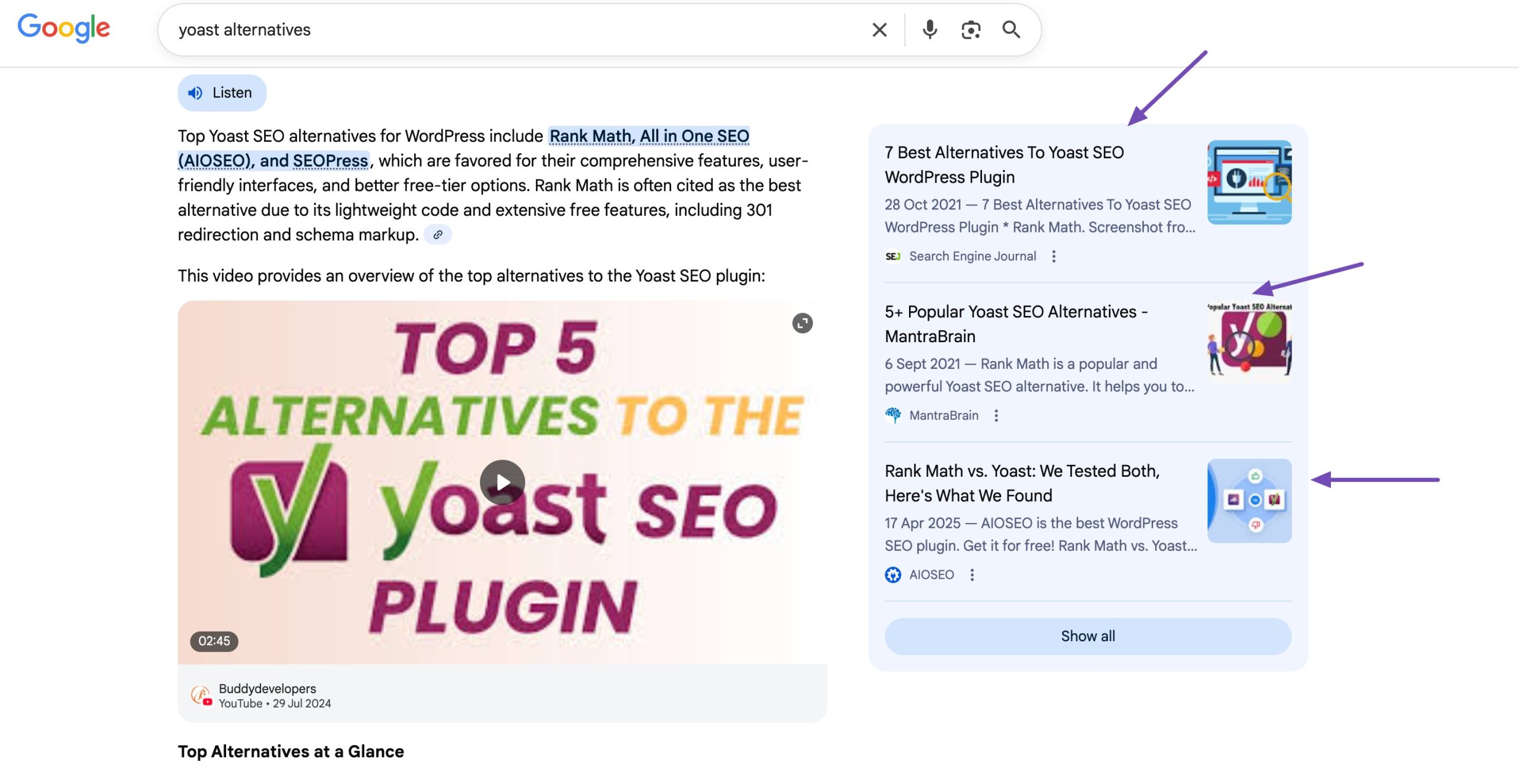
In this content, you:
- Explain why someone might look for alternatives
- Suggest options based on budget, features, or experience level
- Match each alternative to a specific type of user
This is especially powerful because it captures users who are actively re-evaluating their choice.
Why this content format signals strong decision intent
Commercial intent content tells AI one very important thing: the user is ready to choose.
They’re not researching casually. They’re comparing options and preparing to act. AI relies heavily on reviews, comparisons, and alternatives because:
- They explain trade-offs clearly
- They map products to user needs
- They reduce uncertainty
If your content clearly answers Which option is right for this person?, AI treats it as high-value.
In simple terms, when you create strong commercial intent content, you help AI make recommendations. And when AI learns that your content helps audiences decide, it’s far more likely to cite and surface you during high-value, purchase-driven searches.
2.9 Case Studies
Case studies show real results from situations. Instead of saying “this works,” you prove it by showing what you did, how you did it, and what happened next.
AI looks for evidence, not claims. When you include real outcomes, AI can clearly see cause and effect.
For instance:
- Organic traffic increased by 652% in 7 months (a case study by Backlinko)
- Leads grew from 120 to 410 per month
- Page 1 rankings achieved for 27 keywords
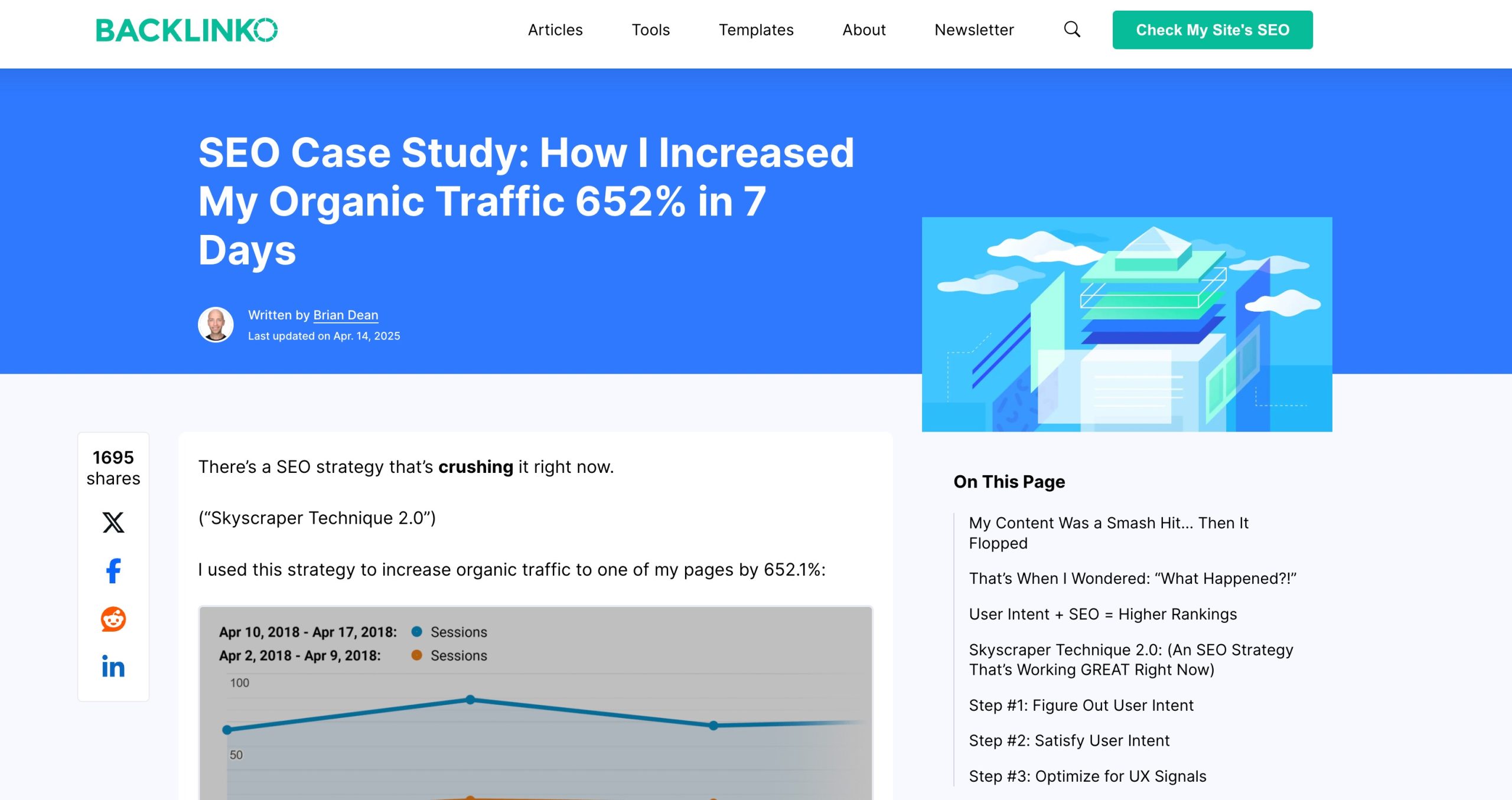
These numbers help AI understand:
- What problem was solved
- What actions were taken
- What results were achieved
When AI sees clear metrics and timelines, it treats your content as verifiable and credible, which increases the chances of being cited.
What to include in a strong case study
To make your case studies AI-friendly, you should include:
- The problem (what wasn’t working)
- The solution (what you implemented)
- The process (steps taken)
- Metrics and results (before vs after)
- A timeframe
- A clear use case (who this works for)
For instance, SEO case studies from Ahrefs and Backlinko offer a clear strucutre and it is easier for AI to understand and reuse the insights.
2.10 Thought Leadership on External Platforms
Thought leadership isn’t limited to your own website. When you publish insights on platforms like LinkedIn, Medium, or industry publications, you expand your digital footprint.
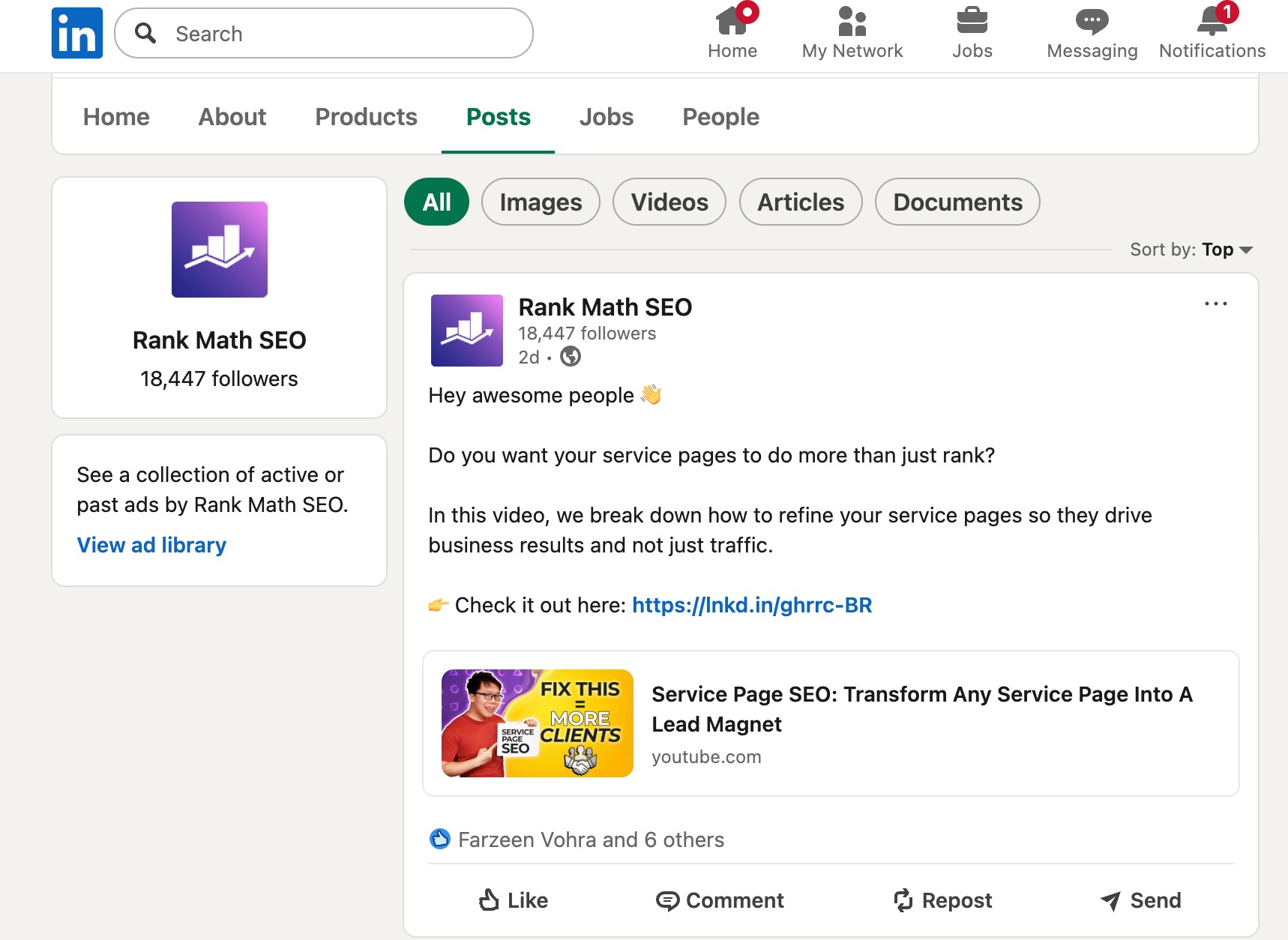
You’re showing up where conversations already happen.
AI looks for signals across the web, not just on your domain. When your ideas appear on multiple trusted platforms:
- AI sees consistency in your expertise
- Your brand becomes harder to ignore
- Your authority looks earned, not self-declared
The more often your name and ideas appear in relevant places, the stronger your trust signals become.
2.11 Expert Bylines & Personal Branding Content
AI doesn’t just evaluate content, it evaluates who created it. Content tied to a person with a clear expertise performs better than anonymous or brand-only content.
When you attach your name, experience, and role to your content, you give AI a clear entity to trust.
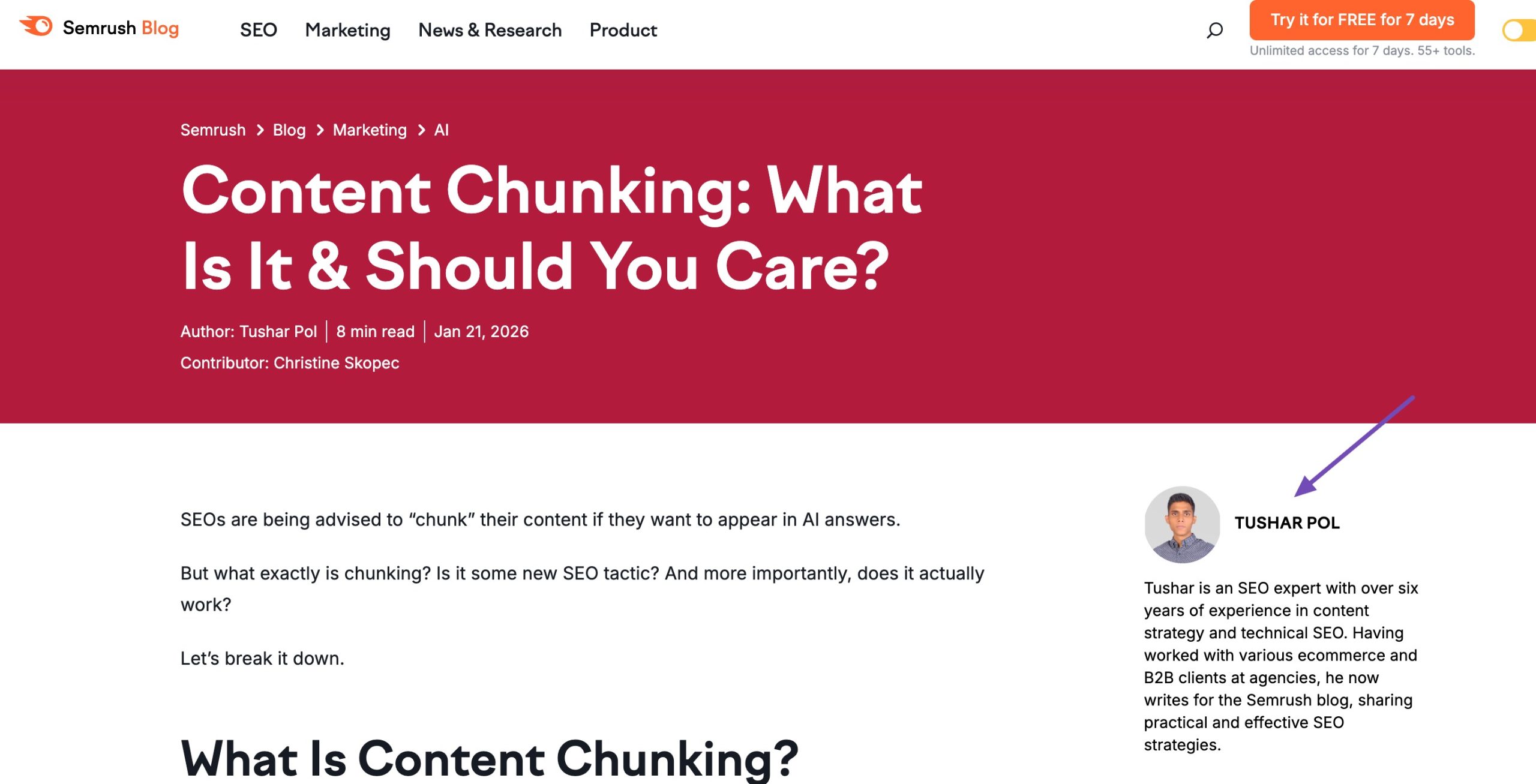
To build strong personal authority:
- Use a consistent author bio
- Mention experience and credentials
- Publish regularly on your core topics
- Appear across platforms under the same name
Over time, AI learns: This person knows this topic. And when someone asks a related question, AI is more likely to surface content tied to that expert.
3 Conclusion
AI search is not rewarding more content; it’s rewarding the right content format. What gets mentioned, cited, and recommended is determined by how clearly your content teaches AI who you are, what you’re good at, and when you should be surfaced.
The 11 content types covered in this post all work because they use a content format AI can easily read, understand, and trust.
If you want AI visibility, stop publishing content just to fill a blog. Start choosing a content format that matches user intent, shows expertise, and provides clear signals AI can learn from.
The brands that win in AI search won’t be the loudest. They’ll be the ones that consistently use the right content format to earn trust, relevance, and long-term visibility.