

WordPress plugins make it easy to add new features to your website without writing everything from scratch. Whether you want to improve SEO, speed up your site, create forms, protect your website, or build an online store, there’s probably a plugin for it.
But when you search for a plugin, you’ll often find two options: a free version and a paid version.
That raises a few questions: Is the free version enough? What do you get by paying? Are premium plugins actually better? And when is upgrading worth the cost?
The answer depends on what your website needs. A free plugin can be more than enough for a small website, while a growing business may benefit from the advanced features and support offered by a paid plugin.
In this post, we’ll compare free vs paid WordPress plugins, look at their differences, and help you choose the right one for your site.
Table Of Contents
1 Free vs Paid WordPress Plugins: What’s the Difference?
The main differences usually come down to features, support, updates, integrations, and licensing.
| Feature | Free Plugin | Paid Plugin |
|---|---|---|
| Cost | Free | Requires payment |
| Core features | Usually included | Included |
| Advanced features | May be limited | Usually more extensive |
| Support | Community or limited support | Dedicated support often available |
| Integrations | Varies | Often more extensive |
| Automation | May be limited | Often more advanced |
| Usage limits | May apply | Often higher |
| Updates | Depends on the developer | Usually included with an active license |
| Best for | Basic requirements | Advanced or business requirements |
These are general differences, not strict rules. Some free plugins provide excellent functionality and support, while some paid plugins may not offer enough value for your particular website.
2 Free vs Paid WordPress Plugins
Looking at how different plugins approach their free and paid versions can make the difference easier to understand. Some plugins provide a generous free version and reserve advanced features for paid plans, while others are premium-only products.
Here are some popular examples across different WordPress categories.
2.1 Rank Math SEO: Free vs. PRO
Rank Math is an SEO plugin that helps WordPress users optimize their websites for search engines. It brings a range of SEO tools into the WordPress dashboard, including on-page SEO analysis, XML sitemaps, Schema markup, redirects, and content optimization.
The free version provides a broad set of SEO features that can be enough for many blogs, small businesses, and other websites.
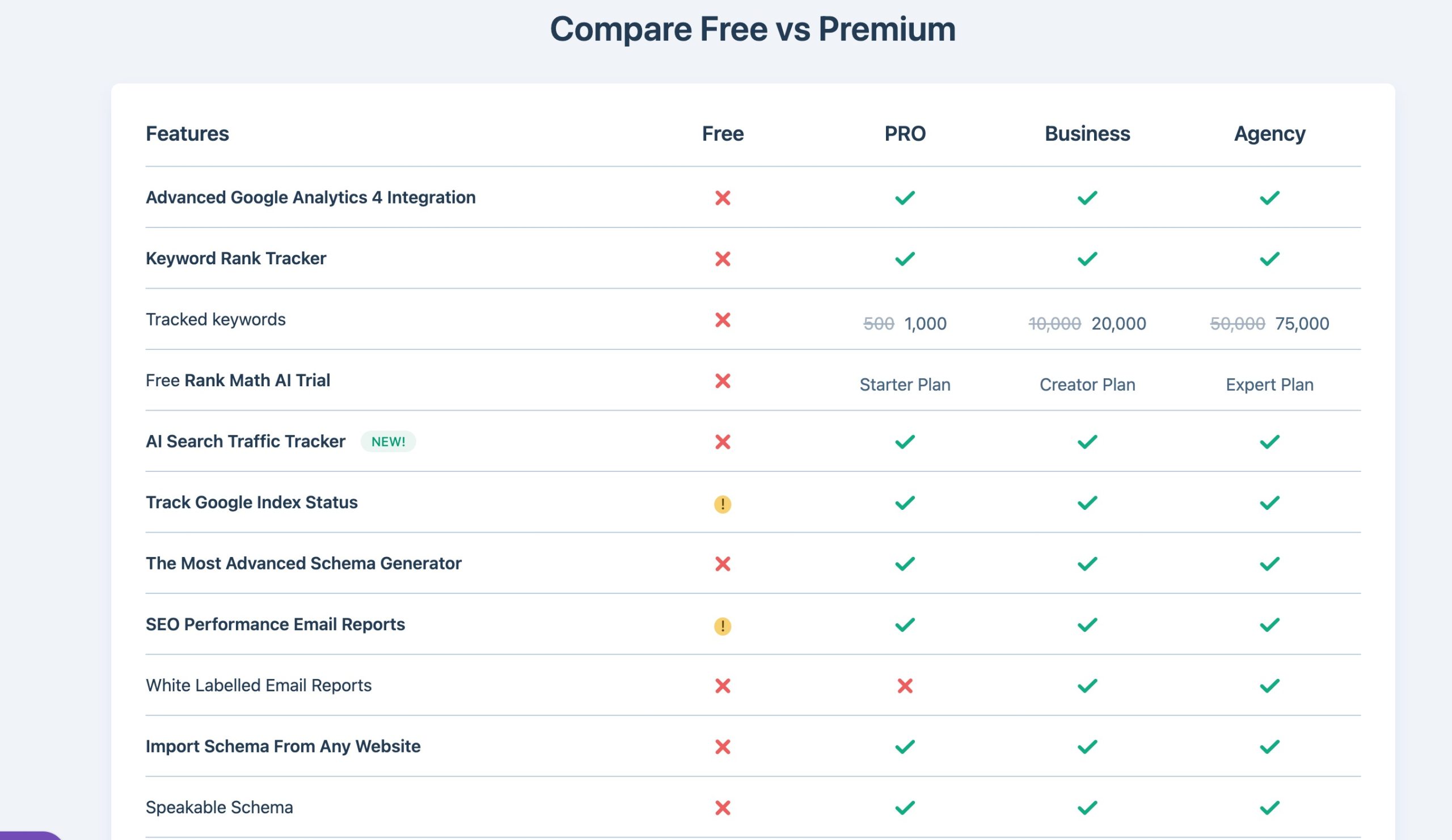
With Rank Math Free, you can:
- Optimize posts and pages for SEO
- Add SEO titles and meta descriptions
- Generate XML sitemaps
- Add Schema markup
- Manage redirects
- Perform SEO analysis
- Optimize WooCommerce pages
- Connect your website with Google Search Console and Analytics
- Use various built-in SEO modules
This makes the free version a practical starting point for website owners who want to improve their site’s SEO without immediately paying for a premium plugin.
Rank Math PRO is designed for users who need more advanced SEO tools and reporting.
Depending on the plan and features available, PRO adds capabilities such as:
- Keyword rank tracking
- Advanced Schema features
- Advanced local SEO functionality
- Advanced WooCommerce SEO
- SEO performance reporting
- AI Link Genius
- Automated internal linking capabilities
- Additional advanced SEO tools
For instance, a blogger who only needs basic on-page SEO may be comfortable with the free version. An SEO professional, agency, or growing business that needs rank tracking, advanced reporting, or more automation may have more reason to consider PRO.
2.2 WP Rocket: Premium Performance Optimization
WP Rocket is a WordPress performance plugin focused on improving website loading times and Core Web Vitals. It uses caching and a range of optimization techniques to reduce the amount of work browsers and servers need to perform when loading pages.
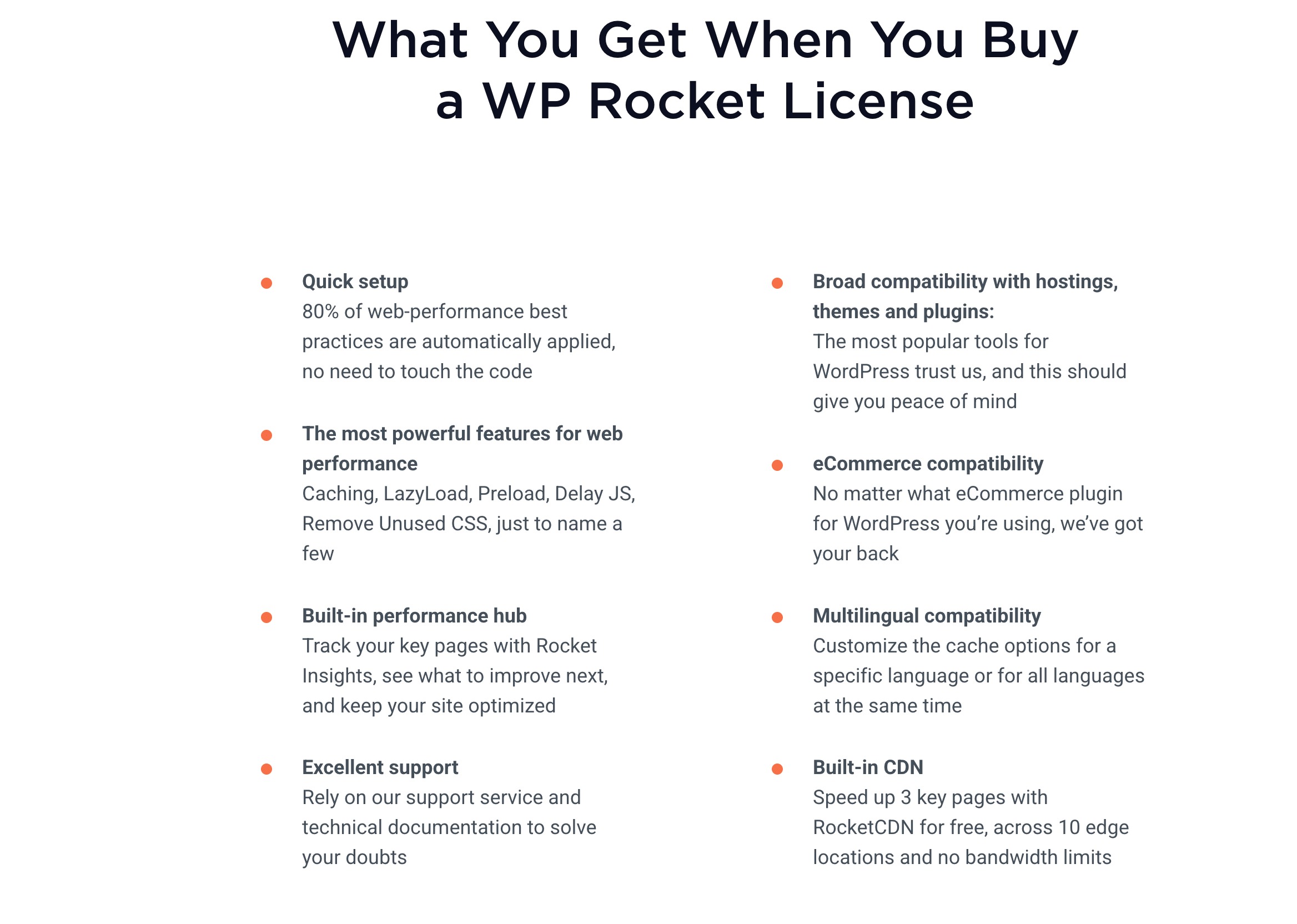
Unlike freemium plugins that offer a free version and a paid upgrade, WP Rocket is a premium plugin.
It includes features designed to help with areas such as:
- Page caching
- Browser caching
- Cache preloading
- File optimization
- CSS optimization
- JavaScript optimization
- Lazy loading
- Database optimization
- Content delivery network integration
WP Rocket is an example of a plugin where users pay for a dedicated performance optimization solution rather than starting with a free version and upgrading later.
2.3 Wordfence: Free vs Premium Security
Wordfence is a WordPress security plugin designed to help protect websites against malware, malicious traffic, login attacks, and other security threats.
It is available as a free plugin with additional features offered through its premium plans.
The free version includes several important security tools, including:
- Web application firewall
- Malware scanning
- Login security
- Brute-force protection
- Security monitoring
- Two-factor authentication
- Protection against suspicious traffic
This can provide a useful security layer for blogs, business websites, and other WordPress sites.
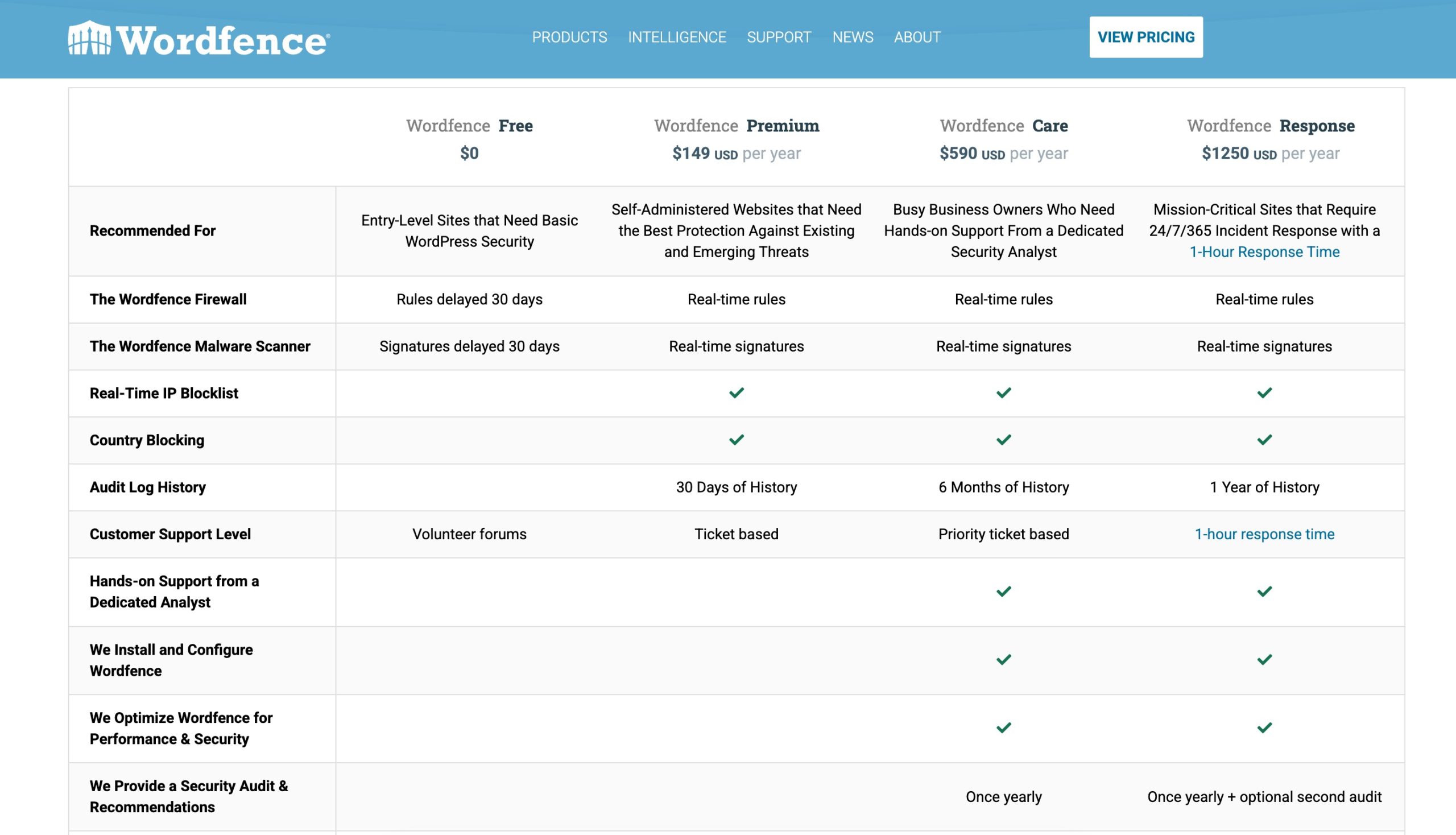
The premium version adds additional security capabilities and access to features such as real-time firewall and malware protection updates, IP blocklisting, and other advanced security functionality.
A small website with straightforward security requirements may find the free version sufficient. Websites that need more advanced protection or faster access to certain security updates may consider the premium version.
2.4 UpdraftPlus: Free vs Premium Backups
UpdraftPlus is a WordPress backup and restoration plugin. It allows website owners to create backups of their WordPress files and database and store them remotely.
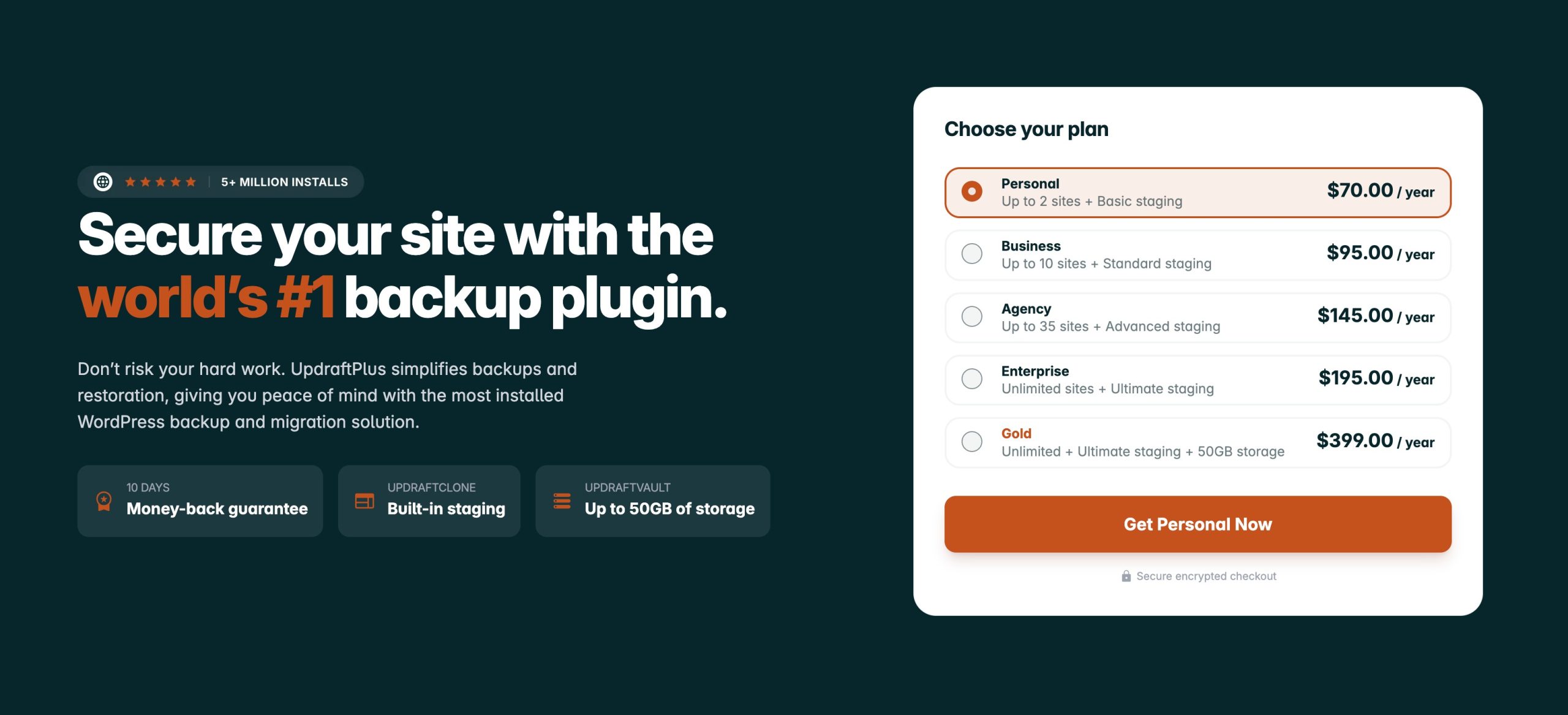
Backups are particularly important because they give you a way to restore your website if something goes wrong during an update, migration, plugin installation, or other change.
The free version provides core backup functionality, including:
- Manual backups
- Scheduled backups
- Website restoration
- Database backups
- File backups
- Remote storage options
For a small website that needs regular backups, these features may be enough.
The premium version adds more advanced functionality, which can include:
- Incremental backups
- Automatic backups before updates
- Additional remote storage options
- Advanced migration and cloning tools
- More control over backup processes
- Premium support
This makes the difference between the two versions particularly relevant for larger websites or users who frequently manage migrations, updates, or multiple sites.
For a personal blog, the free version may provide everything you need. For an agency or business managing more complex websites, the additional automation and migration tools may be useful.
2.5 Elementor: Free vs PRO
Elementor is a visual page builder that lets users create and customize WordPress pages using a drag-and-drop interface.
Instead of designing pages entirely with code, you can use Elementor’s visual editor to arrange content, images, buttons, columns, and other elements.
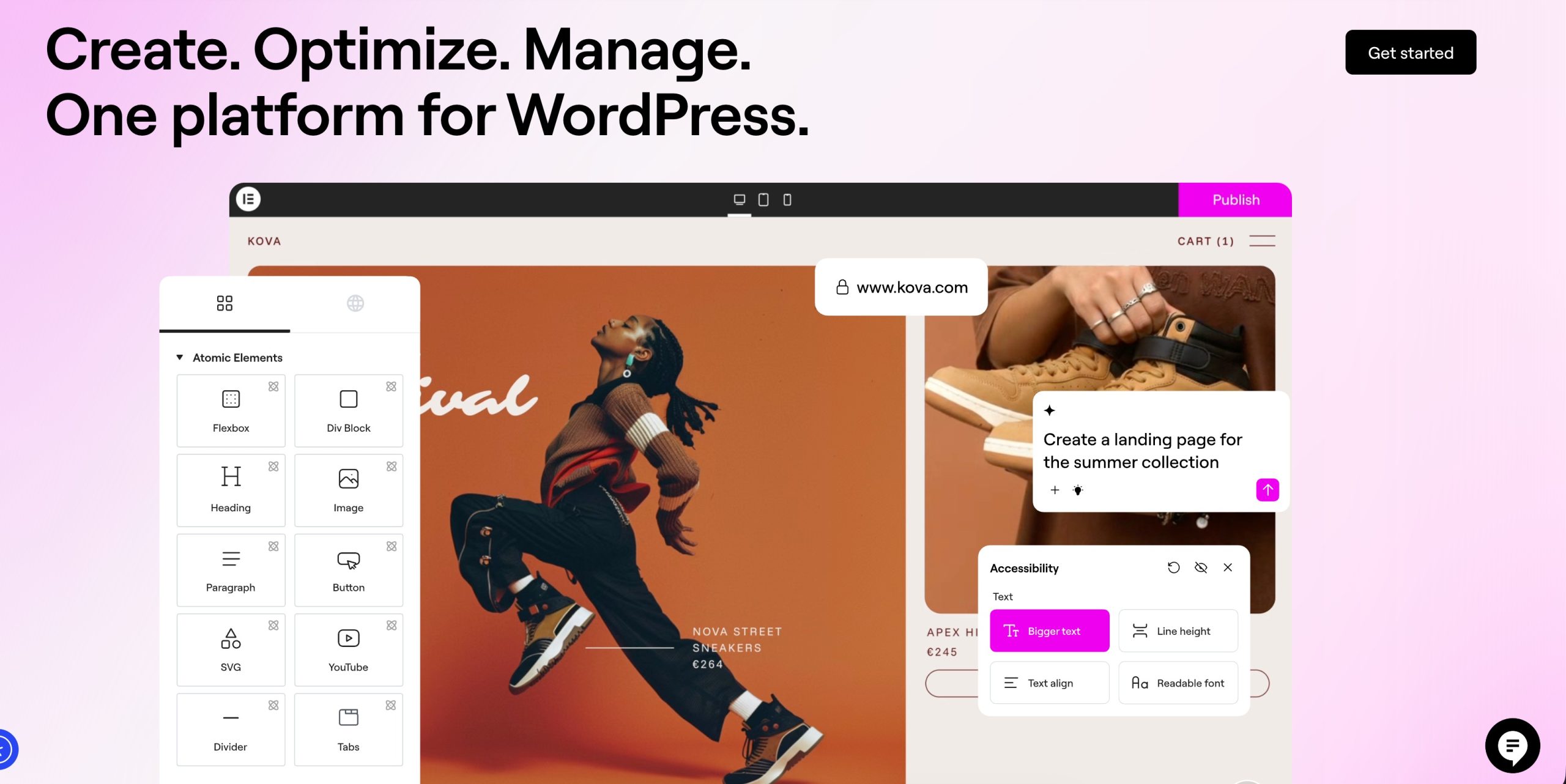
The free version provides the core page-building experience.
You can use it to:
- Create custom page layouts
- Add content elements
- Design pages visually
- Customize layouts
- Build landing pages
- Add responsive design adjustments
For users who want more control over individual page layouts, this may be enough.
Elementor Pro expands the page builder with additional design and site-building capabilities.
Depending on the plan, users can access features such as:
- Additional widgets
- Theme Builder
- Dynamic content
- Popup Builder
- Form Builder
- WooCommerce Builder
- Additional templates
- More advanced design controls
For a simple website where you only need to create a few custom pages, Elementor free may be sufficient. For a website that requires custom headers, footers, templates, popups, dynamic content, or more advanced WooCommerce designs, Elementor Pro provides additional tools.
3 Frequently Asked Questions
Are free WordPress plugins safe to use?
Yes, free WordPress plugins can be safe to use, but you should evaluate them before installing them. Check the plugin’s update history, active installations, reviews, developer reputation, compatibility with your WordPress version, and whether security issues are addressed promptly.
Are paid WordPress plugins better than free plugins?
Not necessarily. Paid plugins generally offer additional features, support, integrations, or other benefits, but that doesn’t mean you need to pay for them.
Do free WordPress plugins slow down websites?
Not necessarily. A plugin’s performance depends on how it is developed and what functionality it provides, rather than whether it is free or paid. Installing too many plugins or using several plugins that perform similar tasks can create unnecessary overhead.
Should I install a free plugin before buying the premium version?
If a free version is available, testing it first can be a good approach. It lets you see whether the plugin works with your theme, other plugins, and website setup.
You can then decide whether the premium features are useful enough to justify the cost.
4 The Bottom Line
Free and paid WordPress plugins both have their place.
A free plugin can provide everything you need, especially when you’re starting out or building a simple website.
Paid plugins can become more useful as your requirements grow. Advanced features, integrations, automation, reporting, and dedicated support can make a premium plugin worth considering for business and more complex websites.
So, instead of asking “Should I use a free or paid plugin?”, ask:
“Does this plugin give me everything I need at a cost that makes sense for my website?”
If the answer is yes, you’ve found the right option, whether it’s free, paid, or somewhere in between.
If you like this post, let us know by tweeting @rankmathseo.