
Broken links can negatively impact your website’s SEO performance and user experience. They prevent search engines from properly crawling your site and frustrate visitors when they encounter the error pages.
This makes it crucial to create a broken link report. It allows you to identify issues quickly so you can fix them and maintain a healthy website. In this guide, we will show you how to create a broken link report step by step using Rank Math.
Table of Contents:
1 Enable the AI Link Genius Module
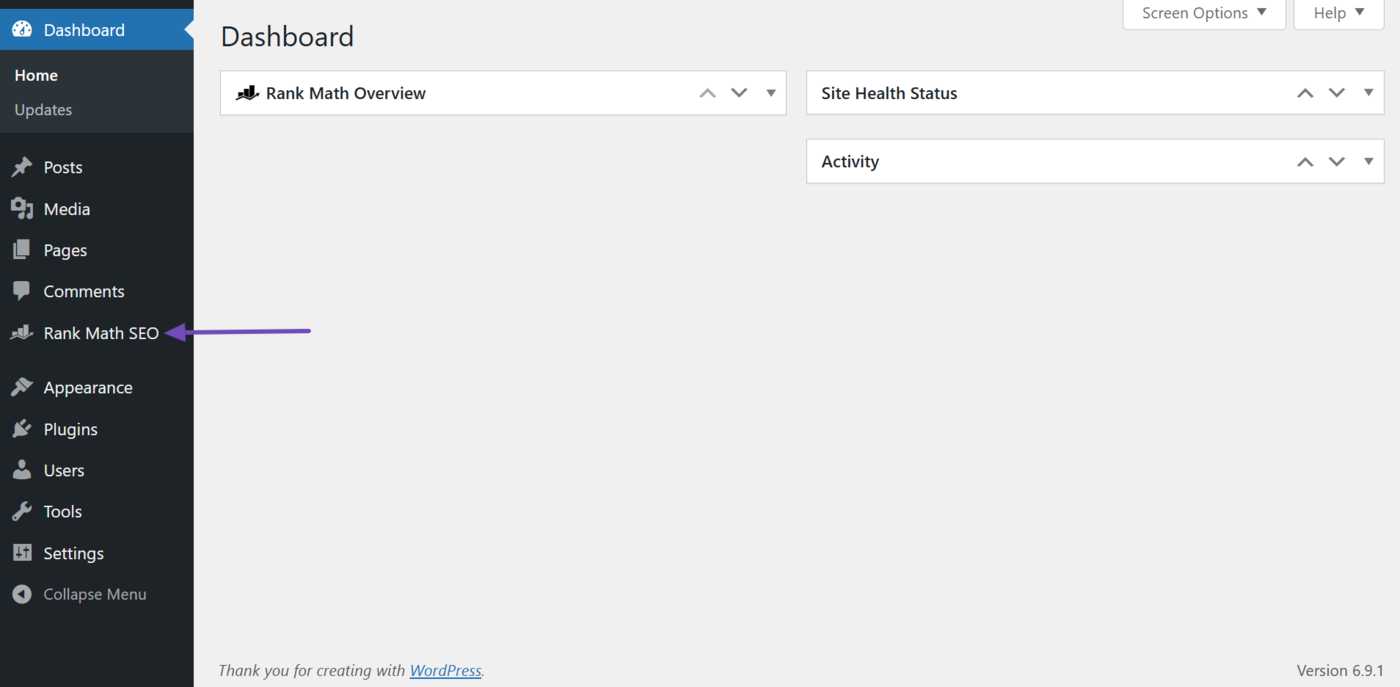
To get started, click Rank Math SEO from your WordPress dashboard.
You’ll need to get AI Link Genius to enable the module and create a broken link report. Head to the AI Link Genius page to get started.
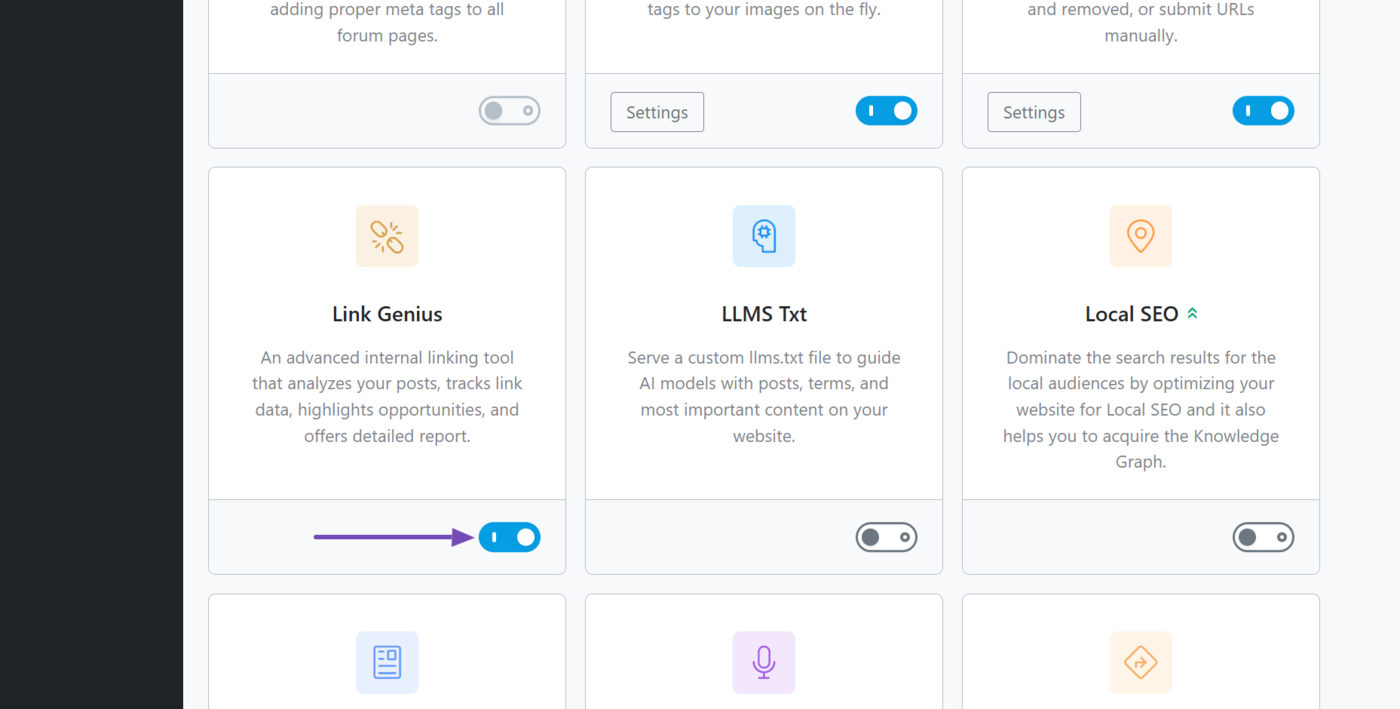
Once done, enable the Link Genius module, as shown below.
2 Head to the Broken Links Report
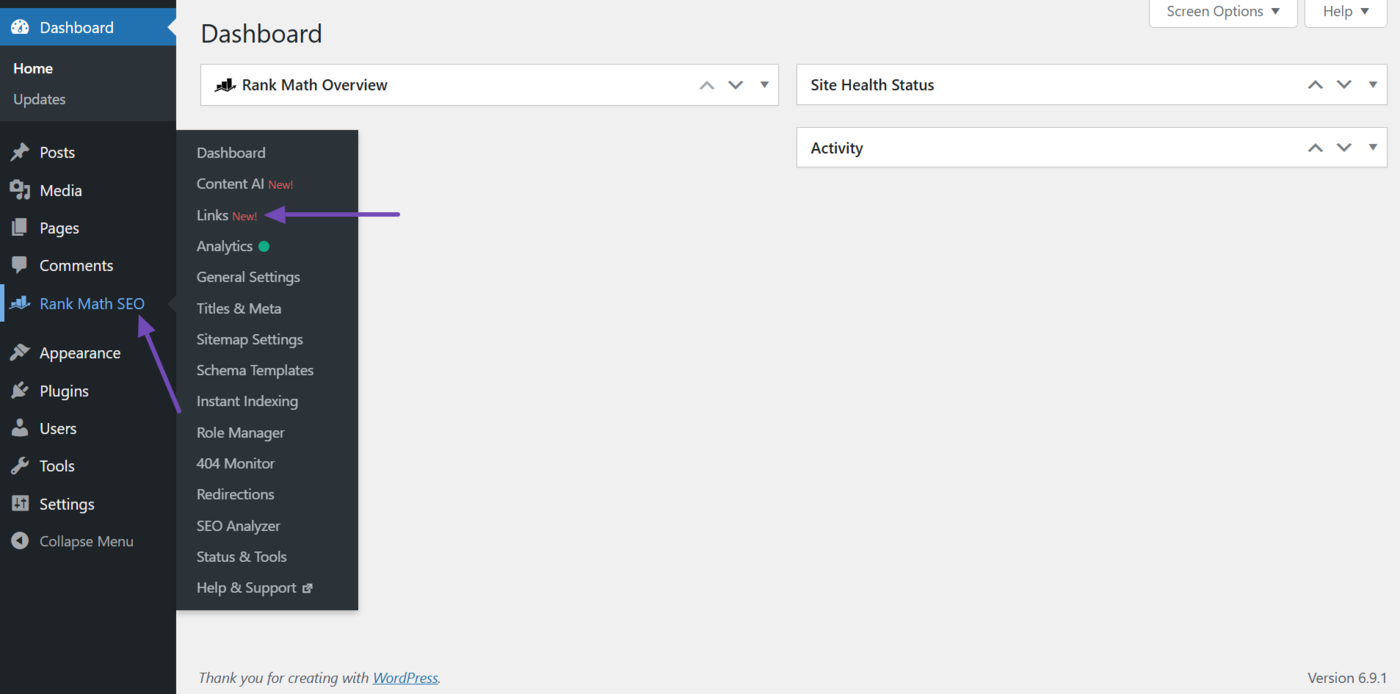
Now, click Rank Math SEO → Links, as shown below.
Then, click the Links tab.
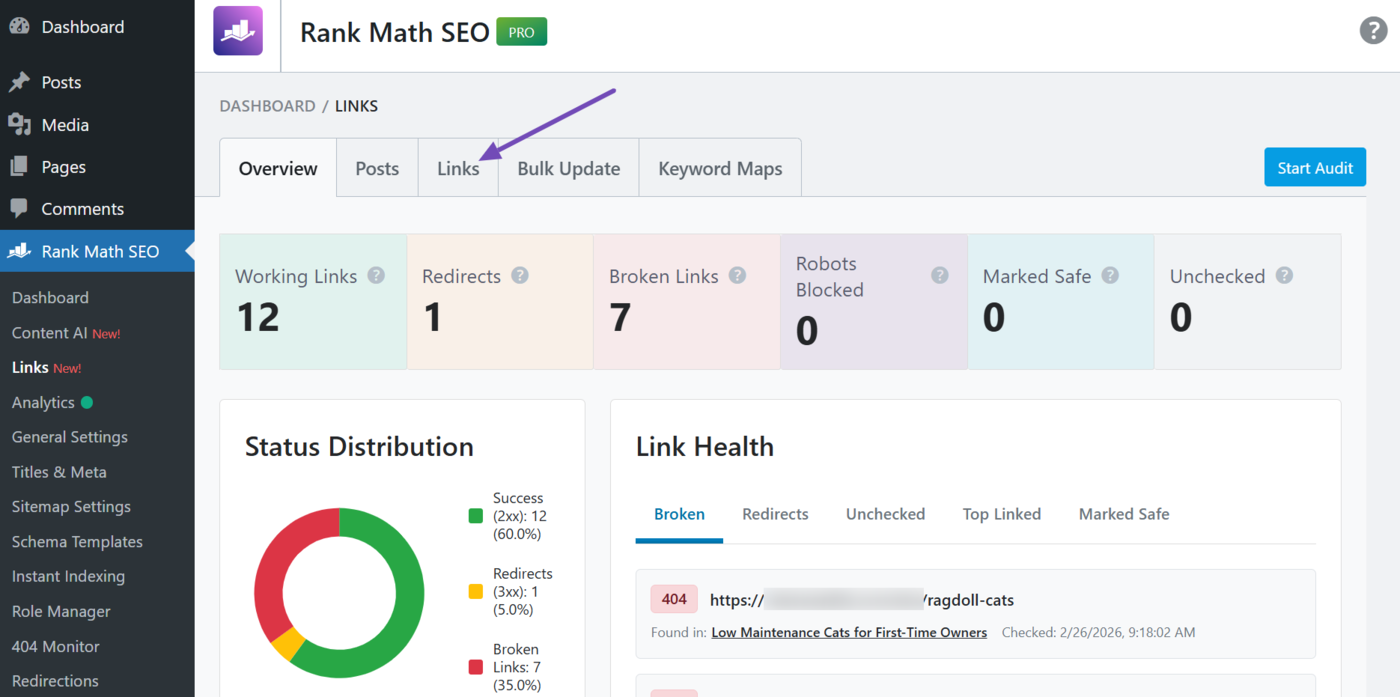
You will be presented with the status of your links. Click the Broken links filter, as shown below.
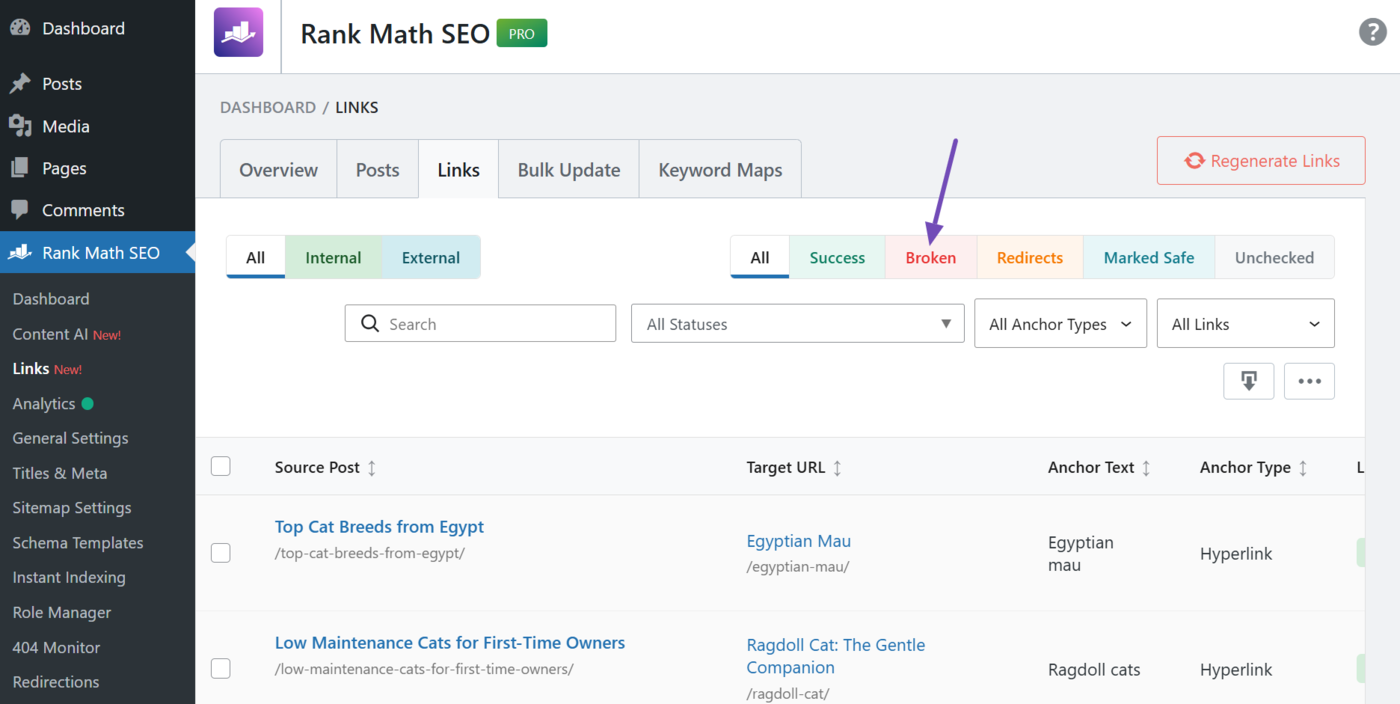
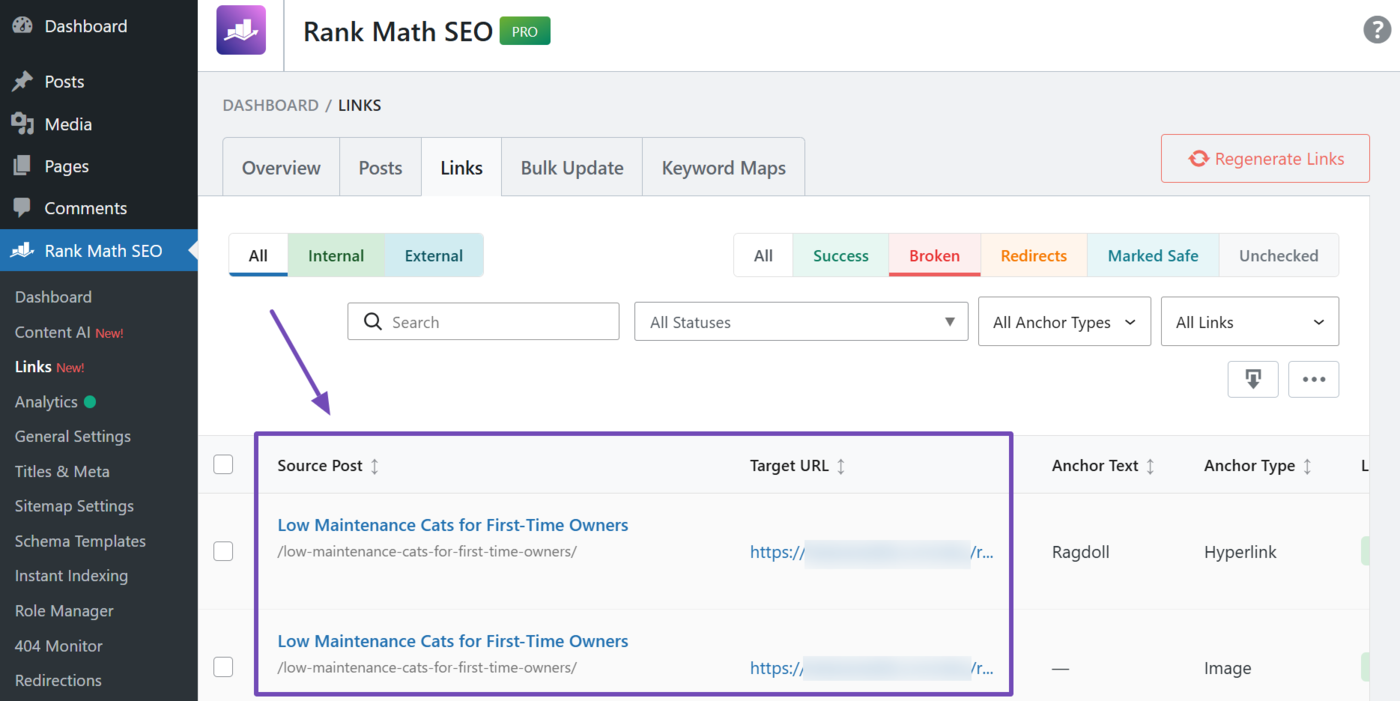
You will now be presented with the broken links on your site. The two main columns here are the source post and target URL columns.
- Source post: Shows the title and URL slug of the post containing the broken link
- Target URL: Shows either the URL of the broken link
3 Export Your Broken Link Report
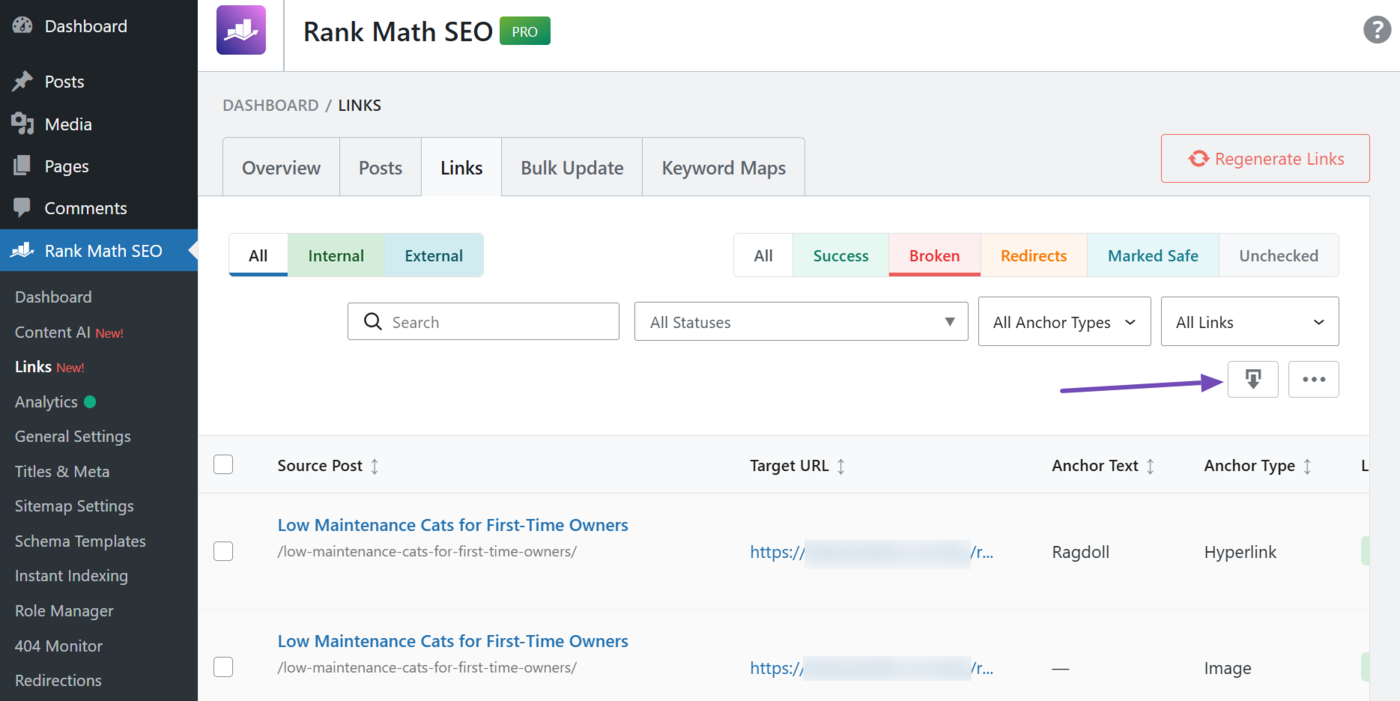
To export your broken link, click the Export icon, as shown below.
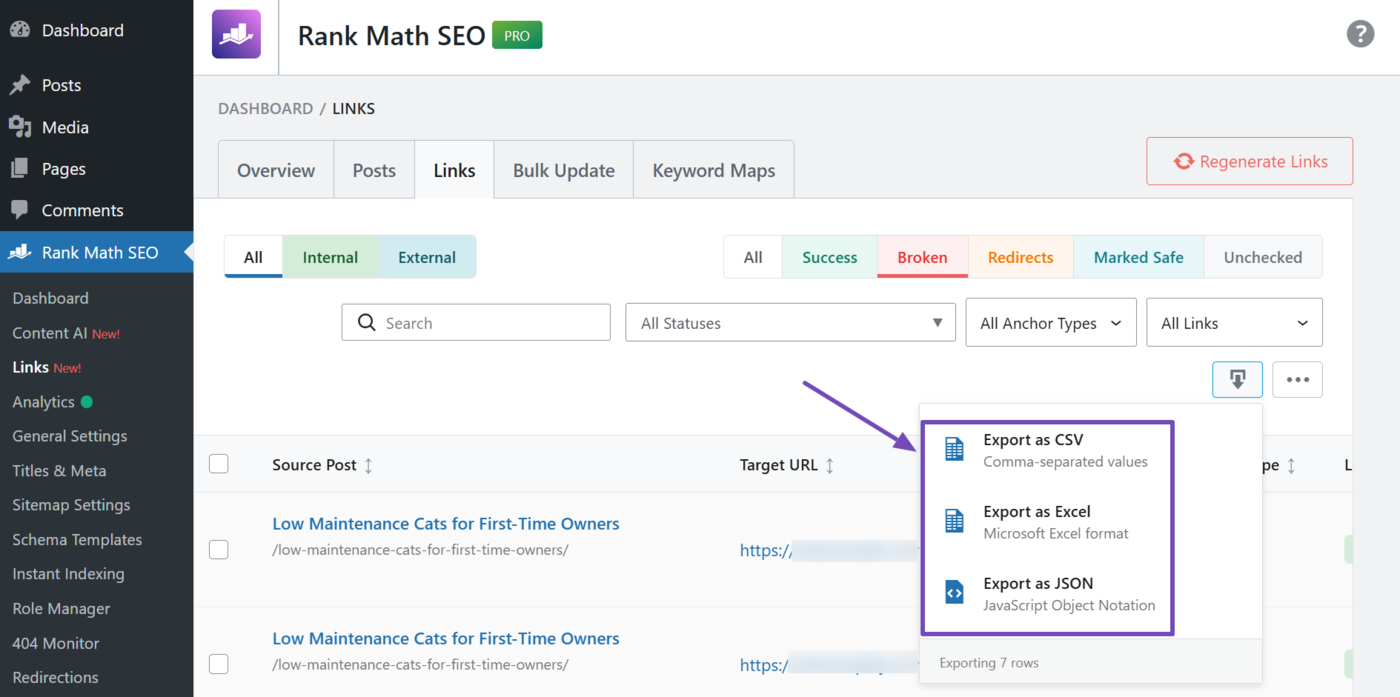
Then, select your document format. You can export the report in multiple formats, including:
- Export as CSV: Export the report in .csv format
- Export as Excel: Export the report in .xls format
- Export as JSON: Export the report in .json format
Once done, the broken link report will be downloaded to your device.
Note: If you have a large number of broken links, the export will be processed in the background and delivered to you through the email linked to your account. This ensures you do not have to stay on the page until the report is generated.
4 How to Customize Your Broken Link Report
You may want to customize your broken link report before export. This ensures you can view, analyze, and export the specific details you need. You can customize your report using:
- Search bar
- Link type filter
- Dropdown filters
- Column visibility toggle
4.1 Search Bar
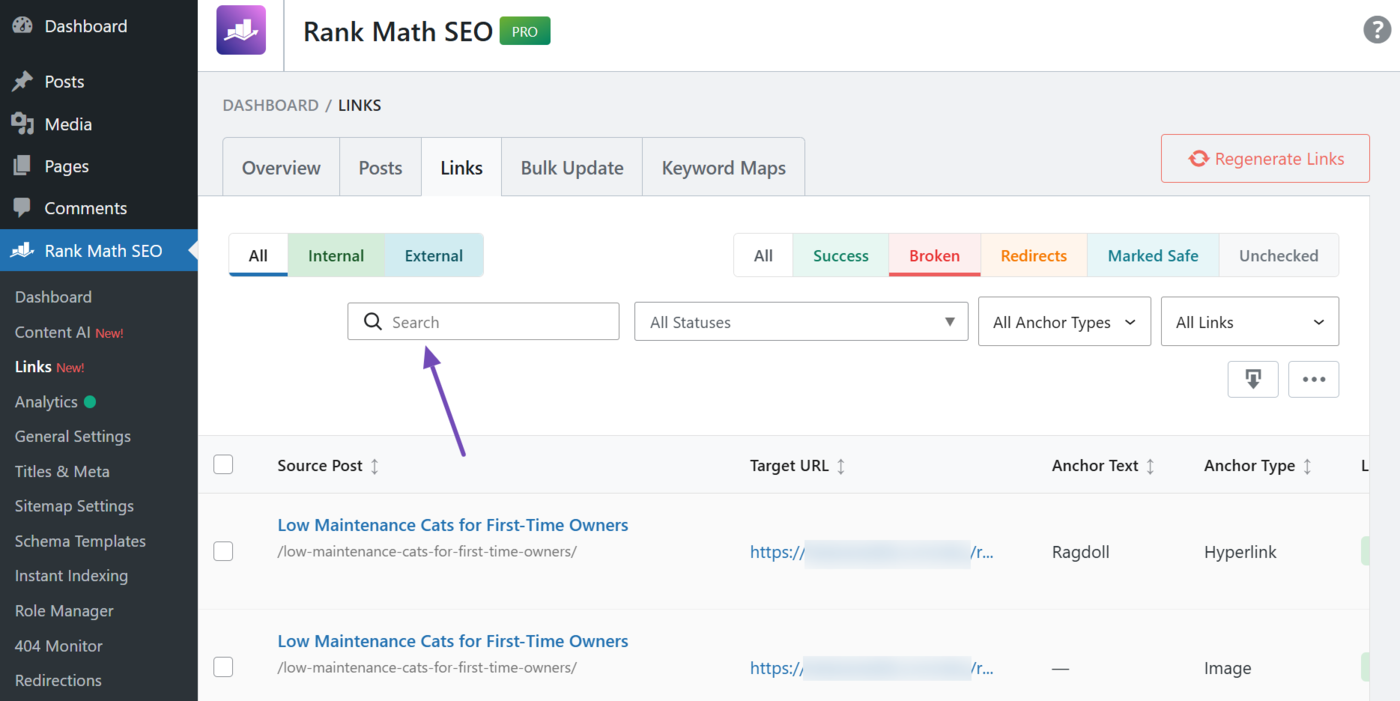
Use the search bar to find specific URLs. The should match the URLs in the target URL field, either in part or in full. Make sure to include hyphens - and forward slashes / where relevant.
4.2 Link Type Filter
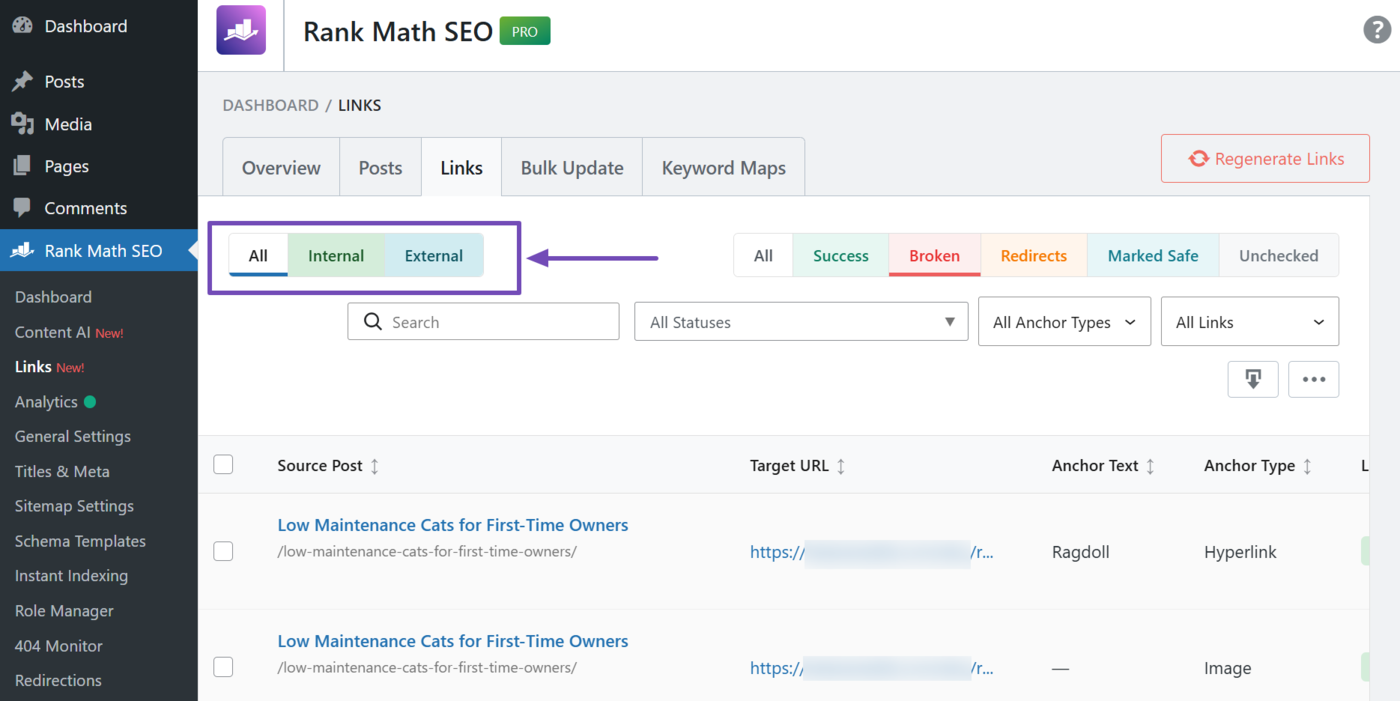
Select the type of link to view. The available options include:
- All: View internal and external broken links
- Internal: View internal broken links only
- External: View external broken links only
4.3 Dropdown Filters
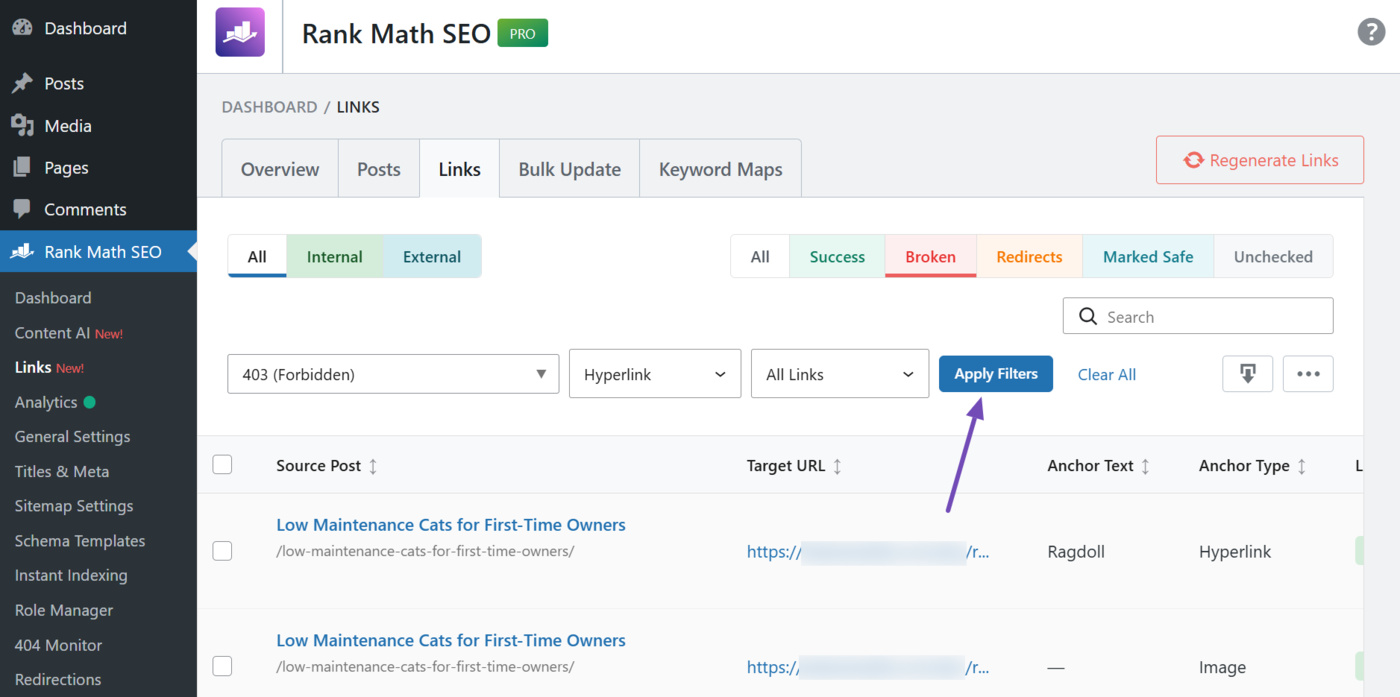
The broken links report includes multiple dropdown filters, including:
- HTTP status filter
- Anchor type filter
- Nofollow status filter
Customize the filters you want to apply to the report. Once done click Apply Filters to update the report.
a. HTTP Status Filter
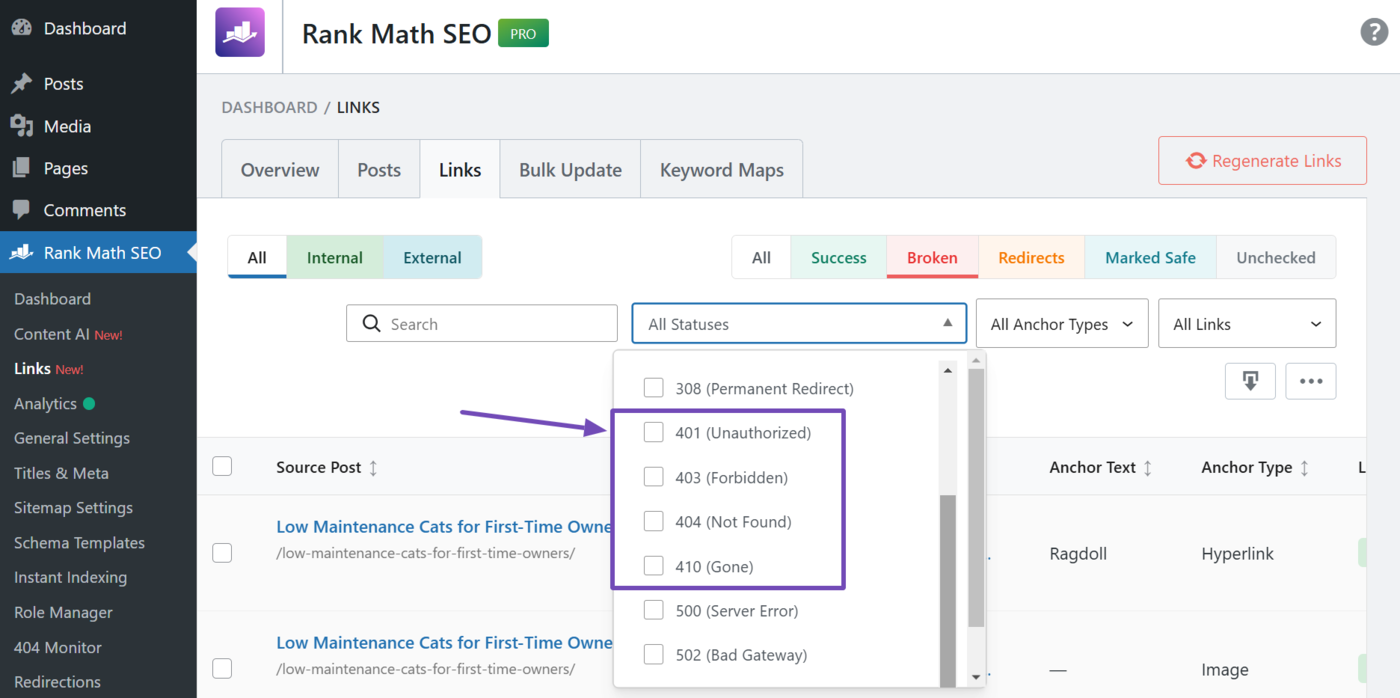
The HTTP status filter lets you find links that return specific HTTP codes.
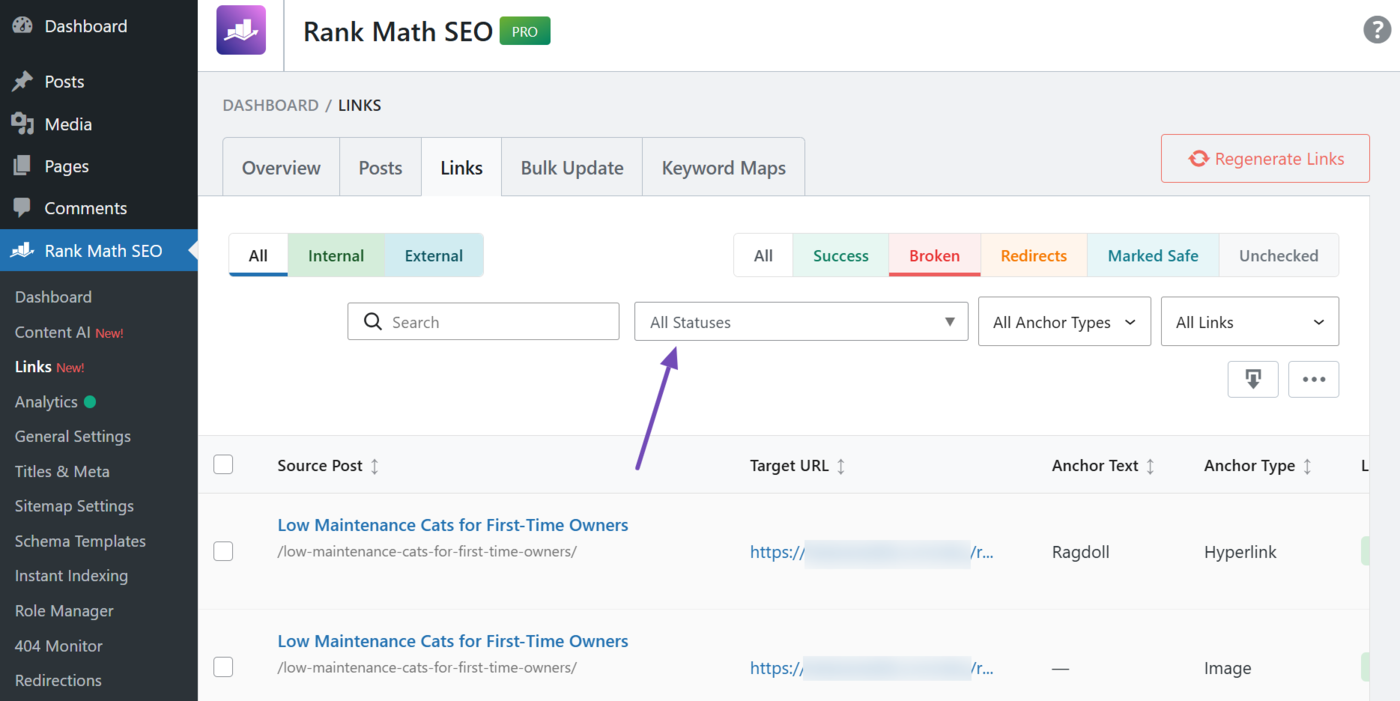
Broken links, for one, return 4xx status codes, such as:
- 401 (Unauthorized)
- 403 (Forbidden)
- 404 (Not Found)
- 410 (Gone)
These are the status codes you should focus on. Select the ones you want to review. (You can select multiple HTTP status codes.)
Note: You should ignore the non-4xx status codes in the filter since they do not return broken links.
b. Anchor Type Filter
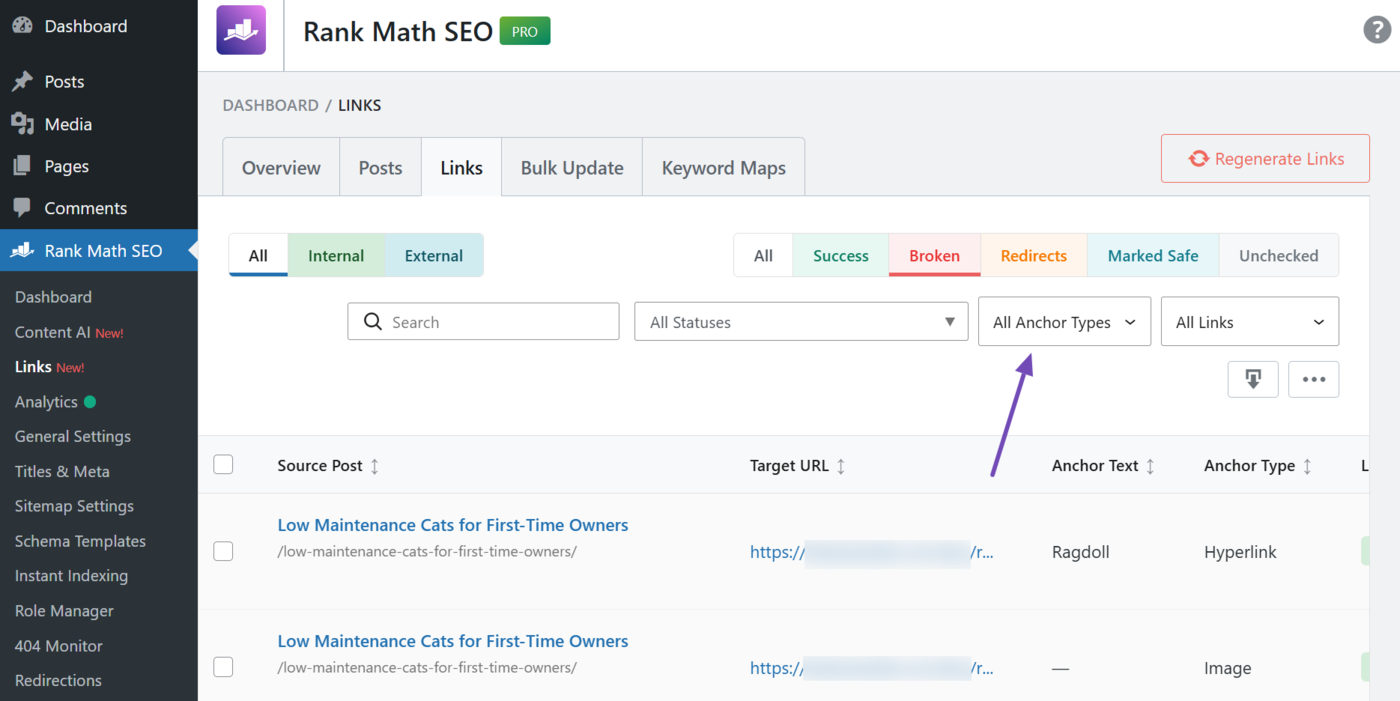
Broken links may appear in hyperlinks (text) or images. Select either Hyperlink or Image, depending on which type you want to view. To view both hyperlinks and images, select All anchor types.
c. Nofollow Status Filter
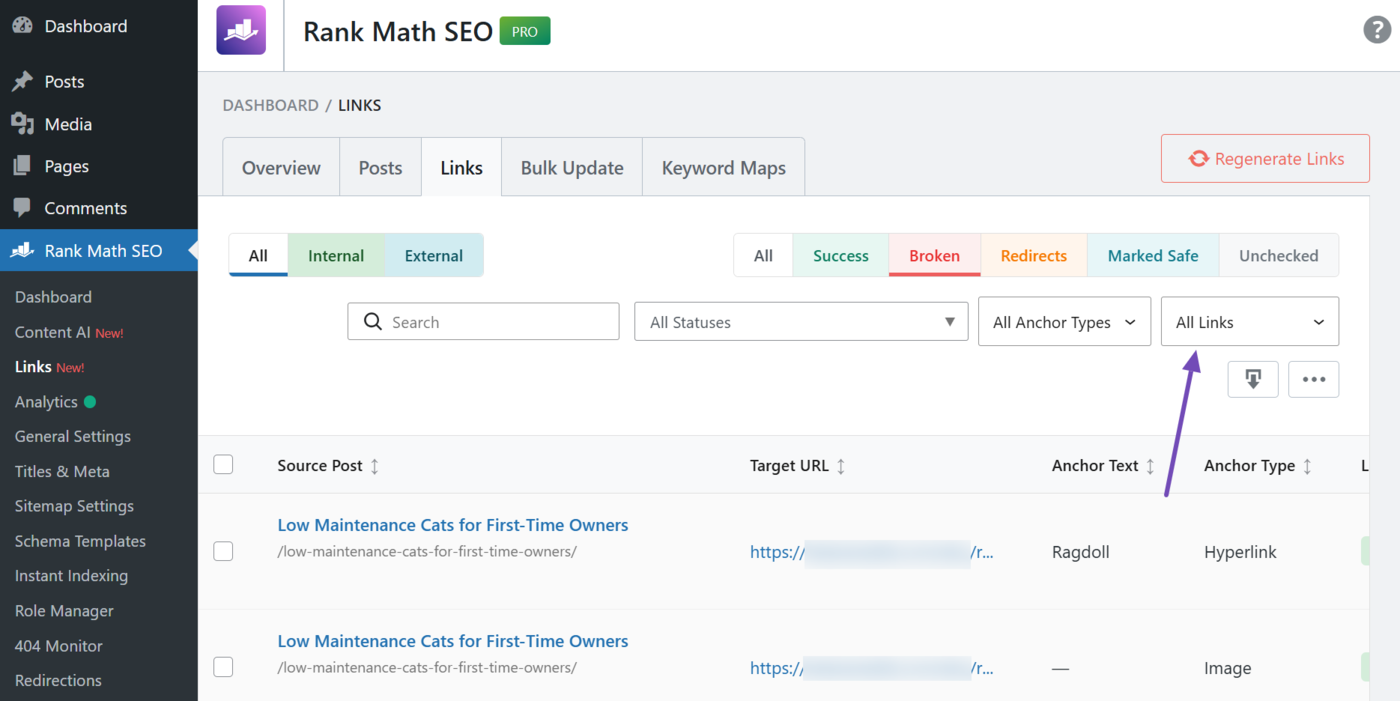
Broken links can be may include a nofollow tag.
- With nofollow: Only show nofollow links
- Without nofollow: Only show dofollow links
- All links: Show both nofollow and dofollow links
4.4 Column Visibility Toggle
The details of your broken links are organized into multiple columns, as shown below.
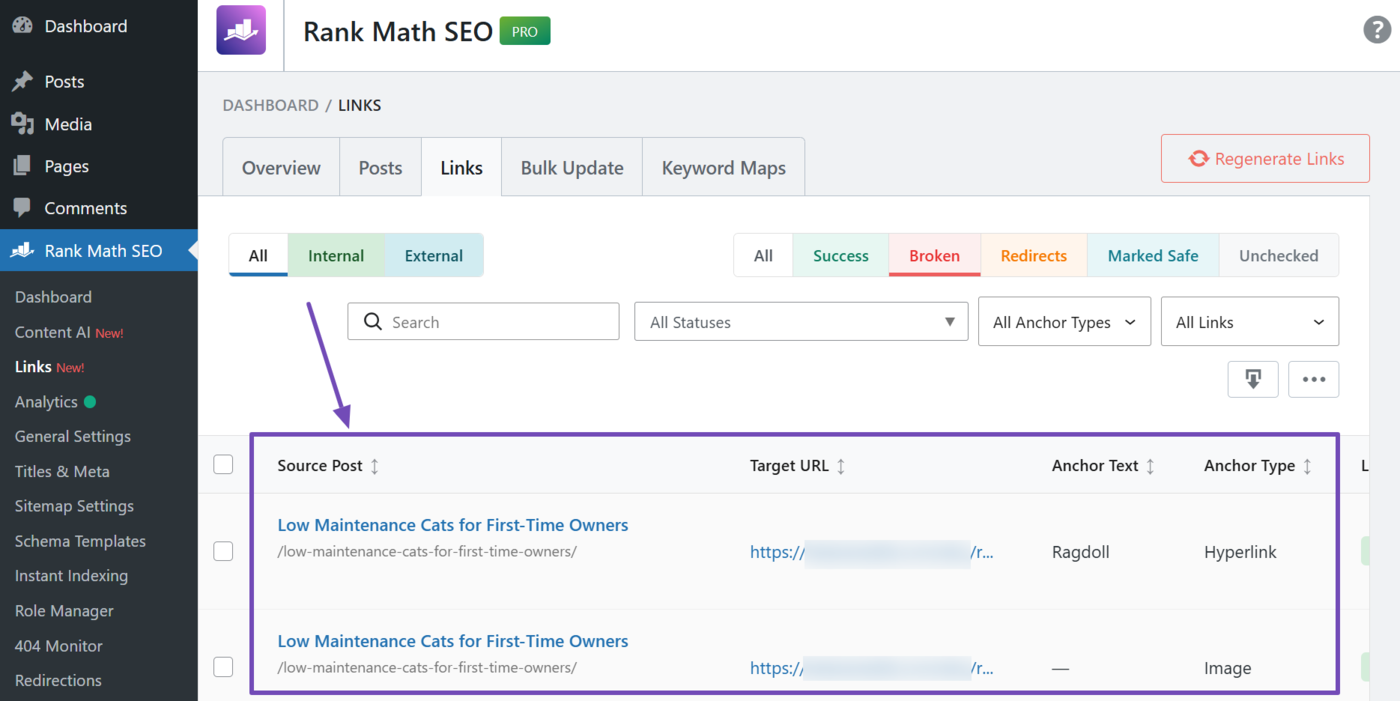
AI Link Genius will export all these columns. However, you can hide the columns you do not want to export. To do that, click the column visibility toggle.
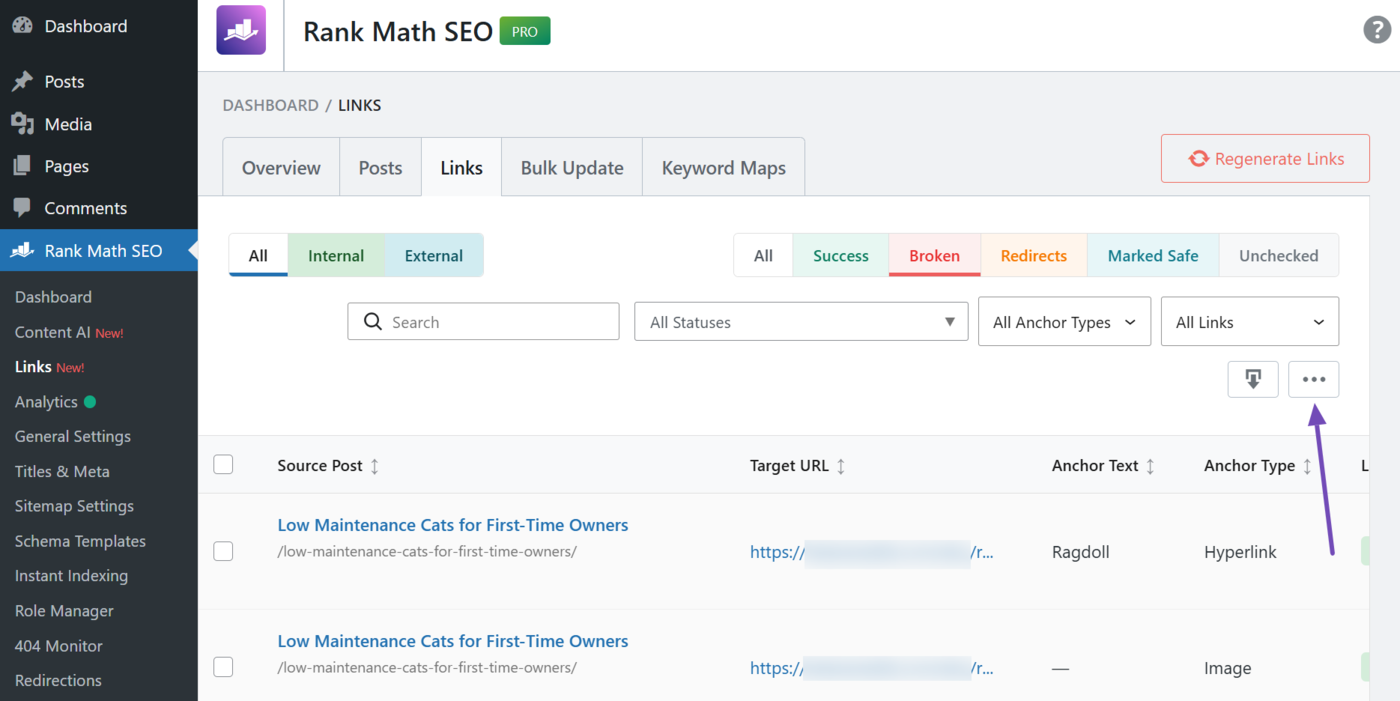
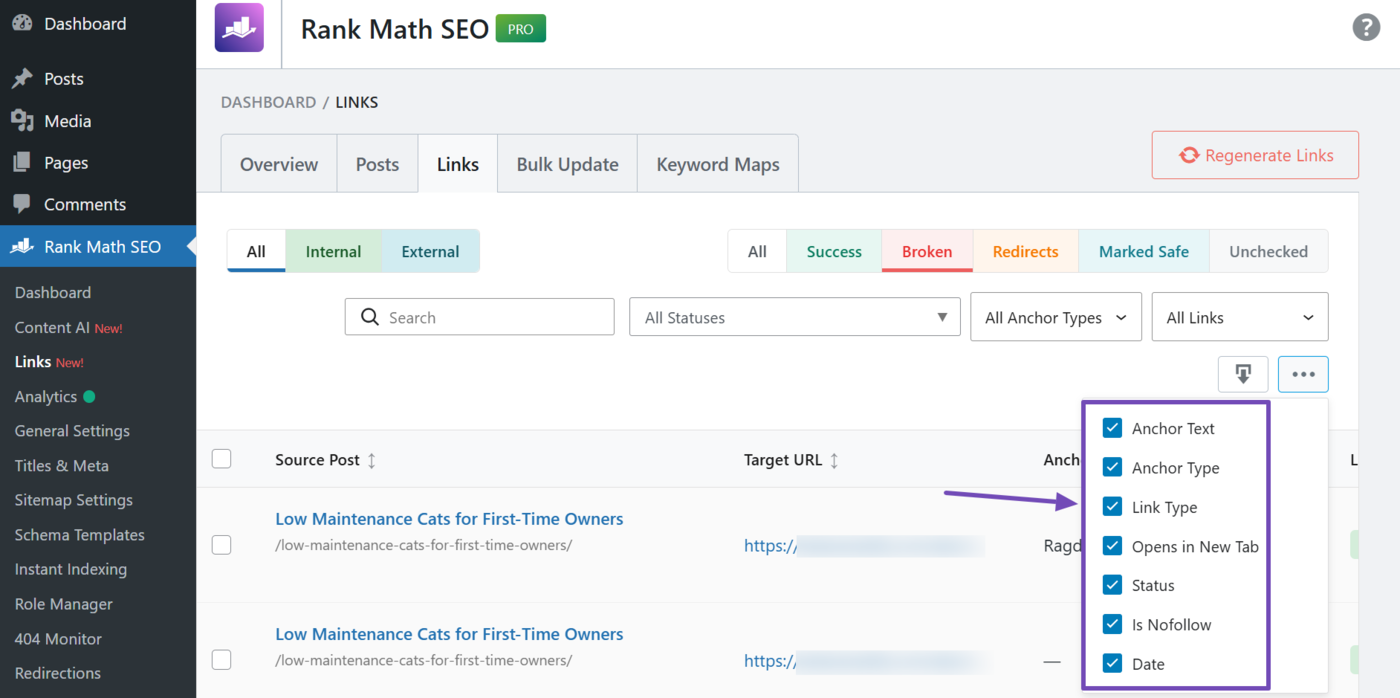
Now, uncheck the columns you do not want to export. (You can uncheck all columns except the source post and target URL columns.) The columns you can uncheck include:
- Anchor text: Shows the anchor text of the hyperlink
- Anchor type: Shows whether the anchor is a hyperlink or image
- Link type: Shows whether the broken link is an internal or external link
- Opens in new tab: Shows whether the broken link opens in a new tab or the current tab
- Status: Shows the specific HTTP status code returned by the broken link
- Is nofollow: Indicates whether the broken link is set to follow or nofollow
- Date: Shows the date the broken link was discovered or last checked
Once done, you can now export your broken links.
That is how to customize and export your broken links using AI Link Genius. If you have any questions, you’re always more than welcome to contact our dedicated support team, who are available 24/7, 365 days a year.