

SEO in 2026 looks very different from how it worked just a few years ago. Search hasn’t disappeared, but how audiences discover information has expanded beyond traditional search results.
Today, audiences find answers through Google, AI Overviews, voice assistants, and tools like ChatGPT. Sometimes they click on a website. Sometimes they don’t. Sometimes they never even see a list of links.
That’s why modern SEO statistics aren’t just about rankings and traffic anymore. They’re about visibility, trust, and being referenced by systems that summarize the web instead of listing it.
In this post, I’ll walk you through the SEO statistics that’ll help you understand what the data means for your strategy.
The goal isn’t to chase algorithms. It’s to understand how search works now and align your strategy with it. So, without any further ado, let’s get started.
Table Of Contents
- Search Engine & User Behaviour: Who’s Searching and How Often
- Visibility and Click Behaviour: What Ranking and SERP Format Mean Now
- Content Length, Depth, and Relevance: Why Long/Complete Content Still Matters
- Backlinks and Authority: They Still Matter, Maybe More Than You Think
- Mobile, Voice, Local & Changing Search Context: What’s New in How People Search
- Conclusion
1 Search Engine & User Behaviour: Who’s Searching and How Often
Understanding how visitors search can change the way you plan your content, and looking at SEO statistics helps you see what users do every day. Search activity hasn’t slowed down; it has expanded.
1.1 People Search Constantly Throughout the Day
Every time you type a question into a search bar, you’re doing what billions of others do each day. Google processes over 8.5 million searches every second, which shows how often visitors turn to search for quick answers, instructions, comparisons, and ideas.
Think about a normal day:
- You might look for breakfast places near you.
- A coworker might search for the best budget laptop.
- A student might check how to solve a math problem.
These actions seem small, but they happen everywhere, all the time.
But SEO statistics show that visitors now split discovery across multiple surfaces, including:
- Traditional search results
- AI Overviews
- Chat-based assistants
- Voice queries
- Local result packs
A Gartner report predicts that search engine volume could drop by 25% by 2026 as users increasingly turn to AI chatbots and virtual agents for information. Audiences still ask questions all day, but they don’t always type them into Google the same way anymore.
1.2 Google Remains the Main Gateway, Even for AI Answers
Google still controls ~89.9% of the global search market, and AI Overviews are built directly into Google Search.
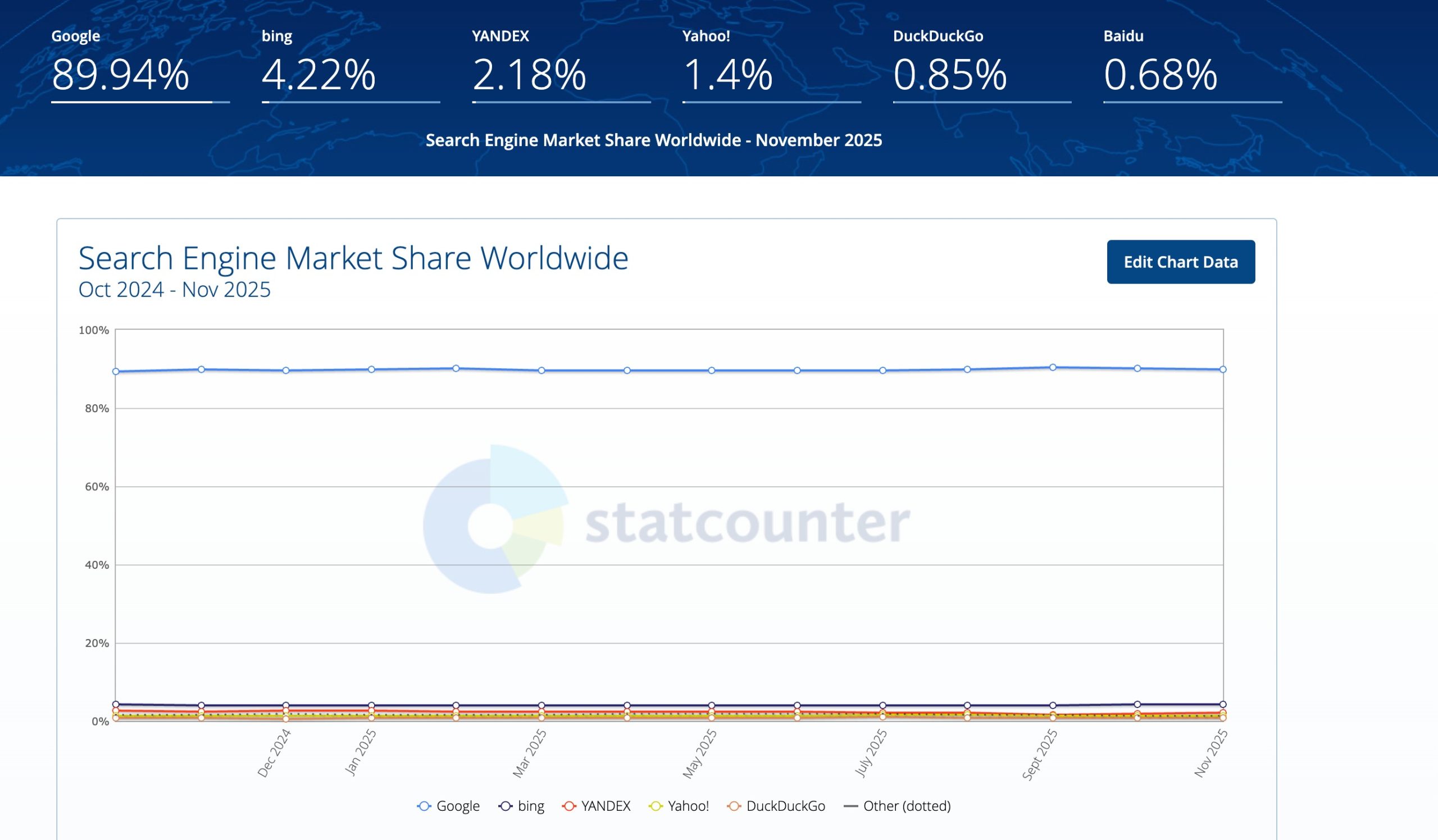
This matters because:
- AI answers are not replacing search
- They are reshaping how search results are presented
Even when users don’t click, Google remains the starting point for most discovery. SEO in 2026 still starts with Google, but it doesn’t end with blue links.
2 Visibility and Click Behaviour: What Ranking and SERP Format Mean Now
SEO statistics show that ranking on Google still helps, but clicks now depend on how search results are displayed. This is where traditional SEO and AI search begin to overlap.
2.1 Rankings Still Influence Trust and Selection
Being the top organic result on Google still gives you an advantage. One major study on SEO statistics from Backlinko found that the #1 result gets about 27.6% of all clicks.
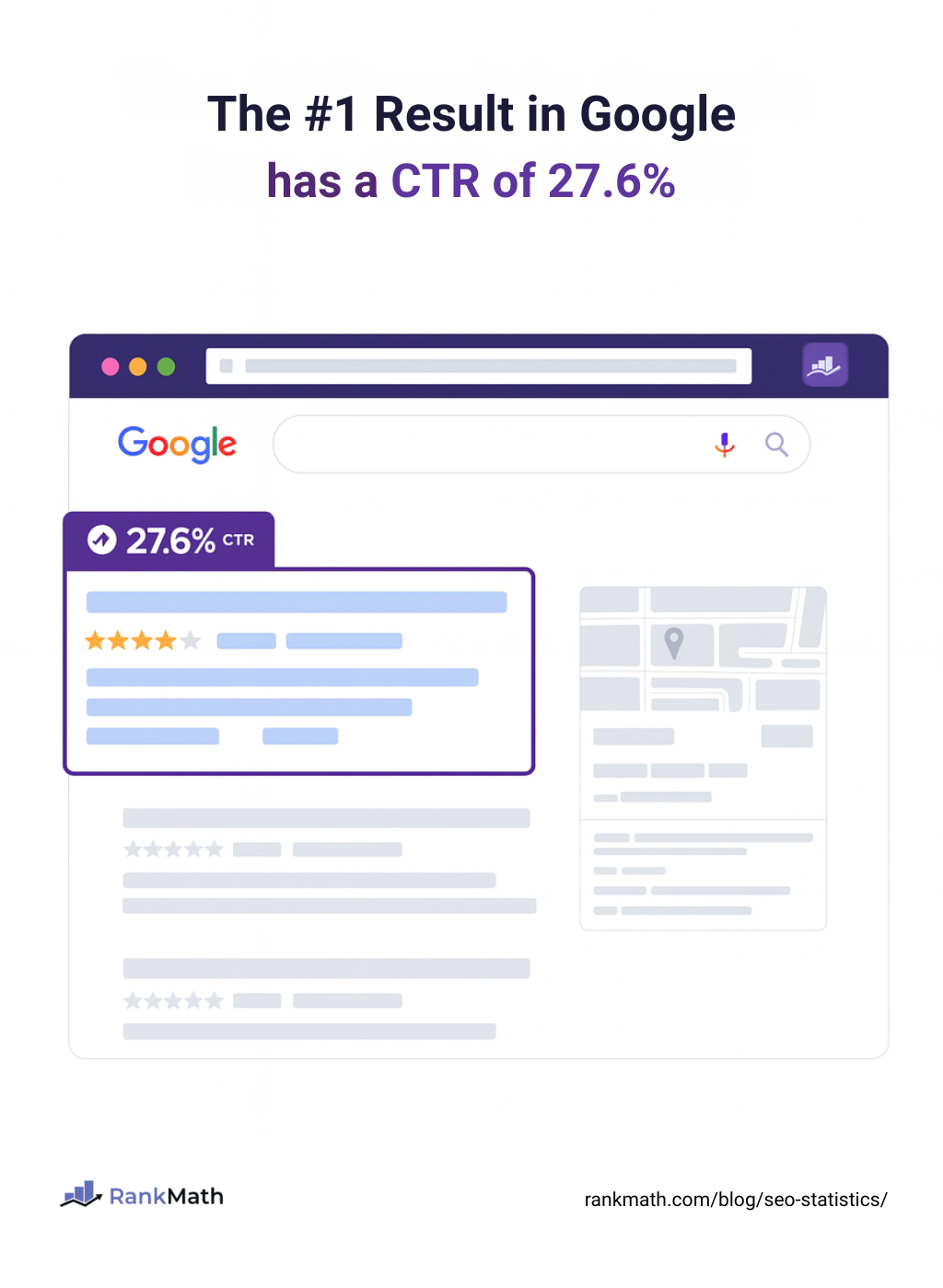
This means nearly one out of three visitors will choose the first thing they see on the page. If someone searches best running shoes for flat feet, for example, most searchers will simply click the very first result, assuming it’s the most useful.
AI systems prefer sourcing information from already trusted, high-ranking pages. So even when clicks drop, ranking well increases your chance of being cited or summarized by AI.
2.2 AI Overviews and Zero-Click Searches Are Reshaping Traffic
Search pages have changed a lot. You now see featured snippets, questions with dropdown answers, and AI-style quick summaries.
According to a study by Search Engine Journal:
- A growing percentage of searches end without a website click
- AI Overviews often answer questions directly
- Publishers lose some traffic but gain brand exposure and authority signals
This creates a new metric that didn’t matter before: visibility without clicks
If your content is used in an AI Overview or summary, visitors may not visit your page, but they still see your brand.
2.3 Visibility is Now a Long-Term Asset
SEO statistics in 2026 suggest that success comes from:
- Being referenced consistently
- Appearing in summaries
- Becoming a trusted source across multiple queries
Getting into top positions still helps, but it may help in a wider way than before. It’s not only about getting visitors to click. It’s also about building awareness, trust, and authority over time.
If audiences consistently see your name in search results, even without clicking every time, you become familiar to them. The next time they need information on that topic, they are more likely to click on your site because they recognize it.
So your focus shouldn’t only be How do I get more clicks? It should also be: How often does my content get selected as an answer?
This can include:
- Writing deeper content
- Answering common questions directly
- Structuring sections clearly so they can appear as snippets
By aiming for visibility and depth, you improve both traffic potential and long-term trust.
Key SEO Statistics & Takeaways
- The #1 organic result gets about 27.6% of clicks
- Zero-click searches are increasing due to AI Overviews
- Search features like featured snippets can reduce overall clicks, because many users now get answers directly in the SERP (Search Engine Results Page)
- High-ranking pages are more likely to be cited by AI systems
- Visibility now includes being referenced, not just clicked
3 Content Length, Depth, and Relevance: Why Long/Complete Content Still Matters
When you publish online, the depth of your content can affect how visitors find it, share it, and trust it.
When you look at recent SEO statistics, one thing is clear: you’re more likely to rank higher when your content is long, detailed, and truly relevant to what audiences want. AI has changed how content is used, but not what kind of content wins.
3.1 Content Depth Supports Multiple Discovery Paths
A short post usually only tackles one main idea. A longer piece lets you cover multiple related questions in one place, which helps different types of readers. AI systems prefer pages that clearly explain topics in sections.
A long guide can:
- Rank in traditional search
- Appear in featured snippets
- Be cited in AI Overviews
- Answer voice search questions
For example, instead of writing a single answer to How to grow tomatoes, a long guide can include:
- Best soil conditions
- Watering schedules
- Common diseases
- Indoor vs. outdoor growing
- Troubleshooting tips
This approach meets several search needs at once. Someone might want a quick solution, while someone else may want a full step-by-step method. When you cover both, you reach a wider audience.
3.2 AI Rewards Structured, Clear Information
Audiences search differently depending on what they need:
- Broad searches: How to start a blog
- Specific questions: How long should a blog post be for SEO
- Deep dive: Step-by-step blogging checklist for beginners
A longer article can include sections that respond to all three types of questions. This increases your visibility for different keywords and gives users what they need without forcing them to leave your page.
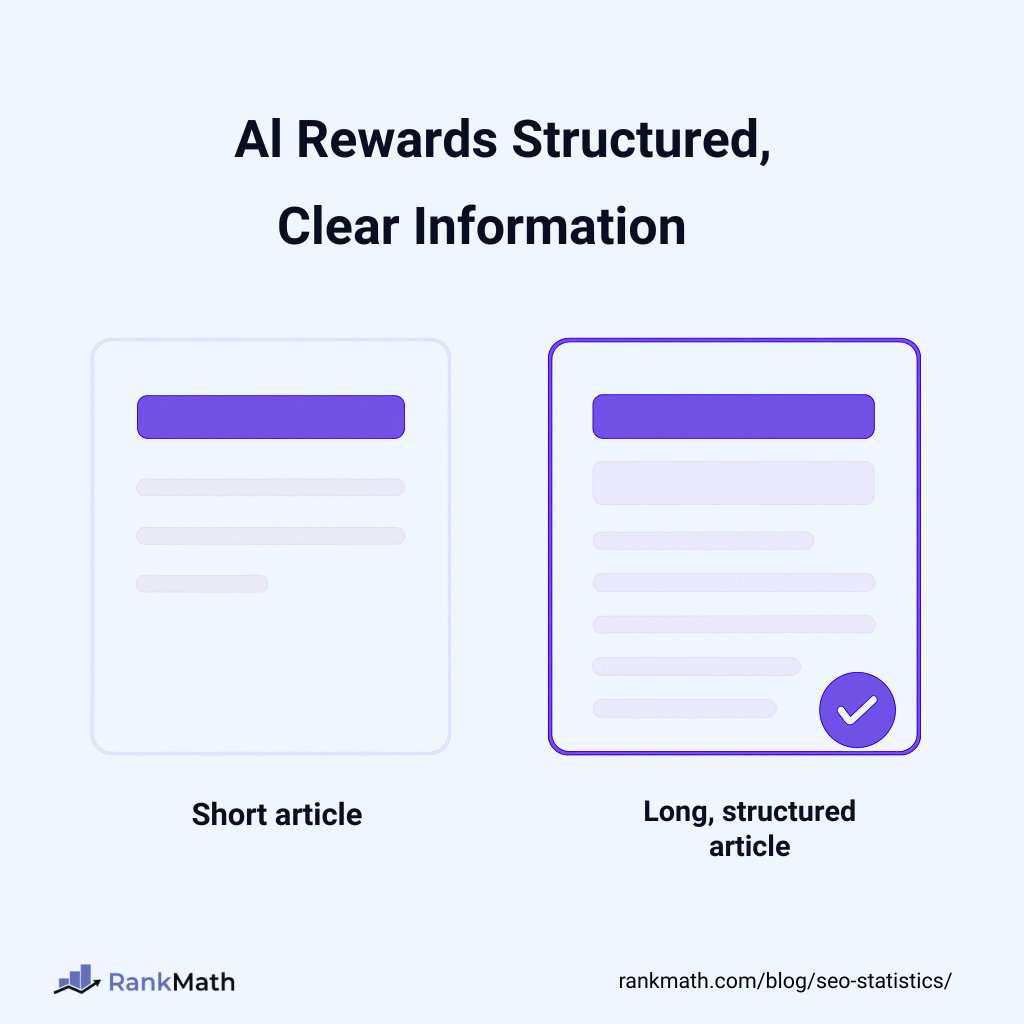
It’s important to note that:
- AI systems favour clear headings, definitions, and explanations
- Pages that explain concepts step-by-step are more likely to be reused
Depth isn’t about word count. It’s about coverage and clarity.
3.3 Think in Terms of “Complete Value”
You don’t need to write long articles just to hit a word count. The goal is to create complete content, that answers questions clearly and anticipates what a reader might ask next.
Instead of asking, How long should my content be? ask:
- Have I answered the questions someone would naturally have?
- Did I include examples, steps, or options?
- Would someone need to search again after reading this?
If the answer is no, you likely need more depth.
Key SEO Statistics & Takeaways
- Long-form content tends to get 77.2% more backlinks than short articles.
- The average result on Google’s first page across many searches contains around 1,447 words, showing that detailed content often ranks among the top results.
- AI systems favour complete, well-structured content
- Depth increases visibility across search and AI platforms
4 Backlinks and Authority: They Still Matter, Maybe More Than You Think
While search interfaces are changing and AI-generated answers are becoming common, the systems behind those answers still rely on trust signals. Backlinks remain one of the most effective ways to establish trust.
4.1 Many Webpages Have No Backlinks
One of the clearest signals from SEO statistics is how rare backlinks actually are.
Data from Backlinko shows that around 94–95% of all web pages have zero backlinks. This means the vast majority of content published online is never referenced by another site.
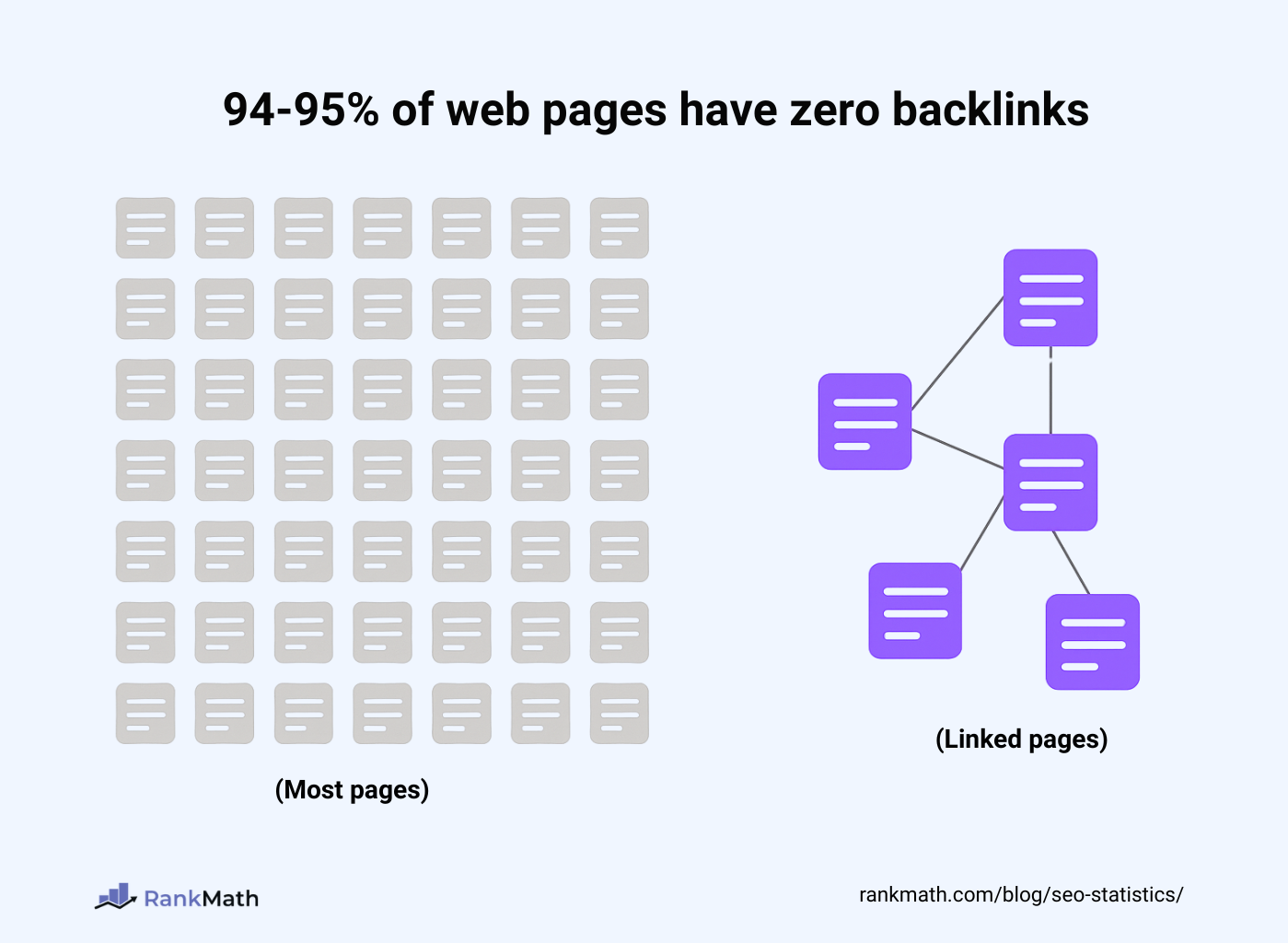
In practical terms, this informs you of two things:
First, most content does not earn authority by default. Publishing alone is not enough. If a page has no backlinks, it exists in isolation, with little external validation.
Second, even a small number of quality links can put you ahead of most pages. When almost everyone has zero backlinks, earning a few relevant ones already makes your content stand out in terms of credibility.
This gap is important in both traditional search and AI-driven discovery. Pages without links give search engines and AI systems very little reason to trust them.
4.2 Pages That Rank Well Usually Have Many Backlinks
Backlinko’s data shows that high-ranking pages tend to have significantly more backlinks. In fact, the page at #1 in Google search results has, on average, 3.8 times more backlinks than pages ranking between #2 and #10.

Research highlighted by Search Engine Journal shows that AI systems tend to prefer trusted domains and authoritative pages when deciding what content to summarize or cite. This is not accidental. AI models need ways to reduce risk, especially when answering factual or sensitive questions.
Backlinks help AI systems answer three key questions:
- Is this source widely referenced by others?
- Has this content been validated outside its own website?
- Is it safe to summarize or quote this page as an answer?
Pages with strong backlink profiles are more likely to be used as sources in AI-generated responses because links act as third-party signals of reliability. In this way, backlinks are no longer just a ranking factor; they are also a trust filter for AI.
So even if a user never clicks your page, having authority increases the chance that your content influences what users see through AI summaries.
4.3 Longer, High-Quality Content Attracts More Backlinks
Another important finding from Backlinko: long-form content attracts about 77.2% more backlinks than shorter posts do.
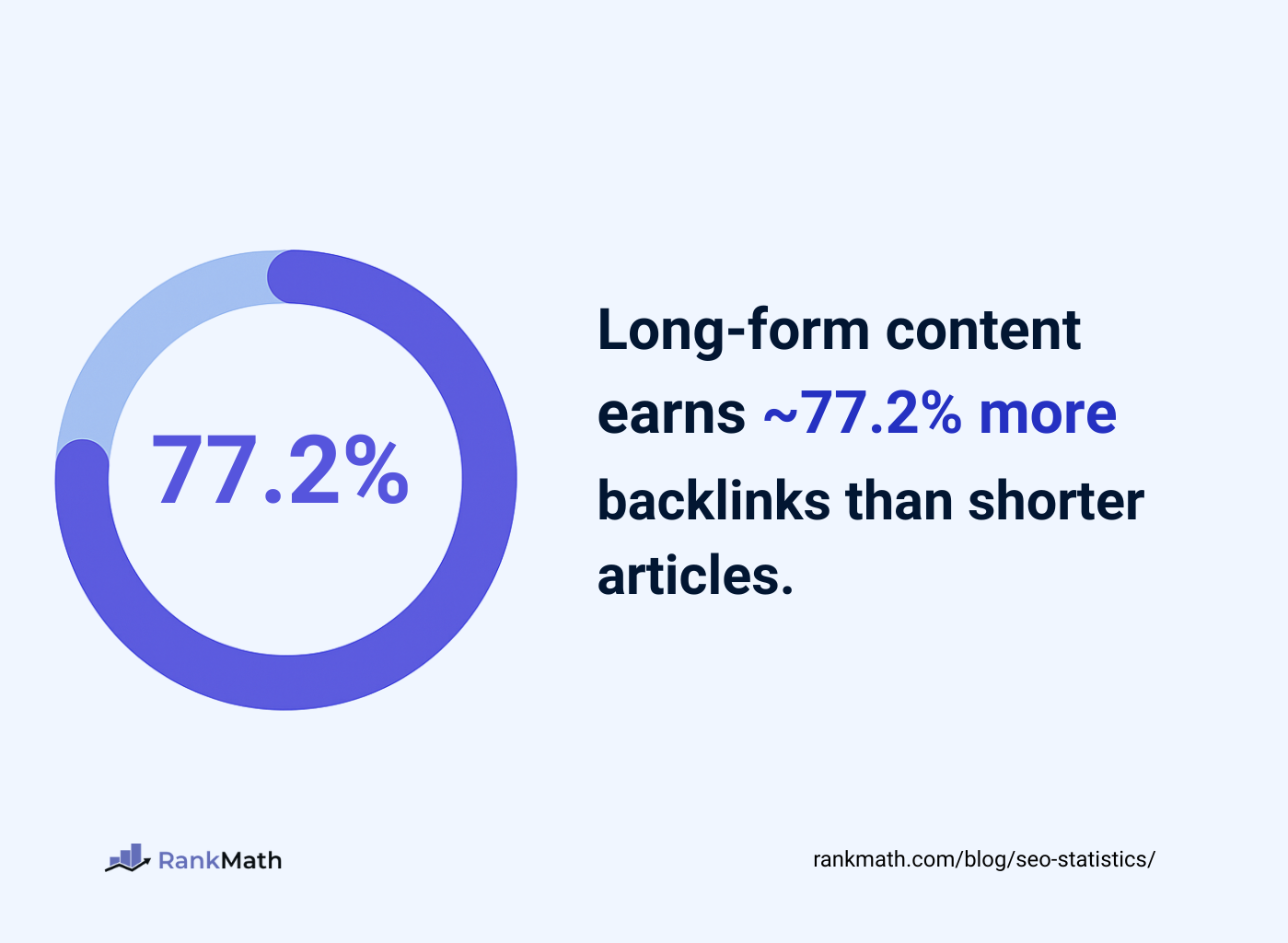
Why does that matter? Longer content tends to cover a topic in depth, address multiple sub-questions, and provide value to a wider audience. That makes it more likely for other sites to reference it.
This shift reflects how both search engines and AI systems evaluate links. A single link from a respected, relevant website often carries more weight than many low-quality or unrelated links.
If you write a short, surface-level article, you limit linking potential. But a detailed, comprehensive guide about setting up a home office for remote work, for example, can include sections on ergonomics, lighting, equipment, budget, and maintenance, making it more useful and link-worthy.
Key SEO Statistics & Takeaways
- 95% of web pages have zero backlinks, making authority rare and valuable
- The #1 ranking page has about 3.8× more backlinks than pages ranking lower
- Long-form articles get ~77.2% more backlinks than short ones.
- Backlinks influence not only rankings, but also AI citations and summaries
5 Mobile, Voice, Local & Changing Search Context: What’s New in How People Search
Audiences don’t search the same way they did a few years ago. SEO statistics reveal that more searches now happen on mobile, through voice, and with local intent, so you need to understand how audiences actually search today to stay visible.
5.1 Mobile Search Is the Default, Not an Option
Mobile search is no longer “growing.” It is the norm.
SEO statistics from a Backlinko study shows:
- Mobile searches account for the majority of browsing activity across industries.
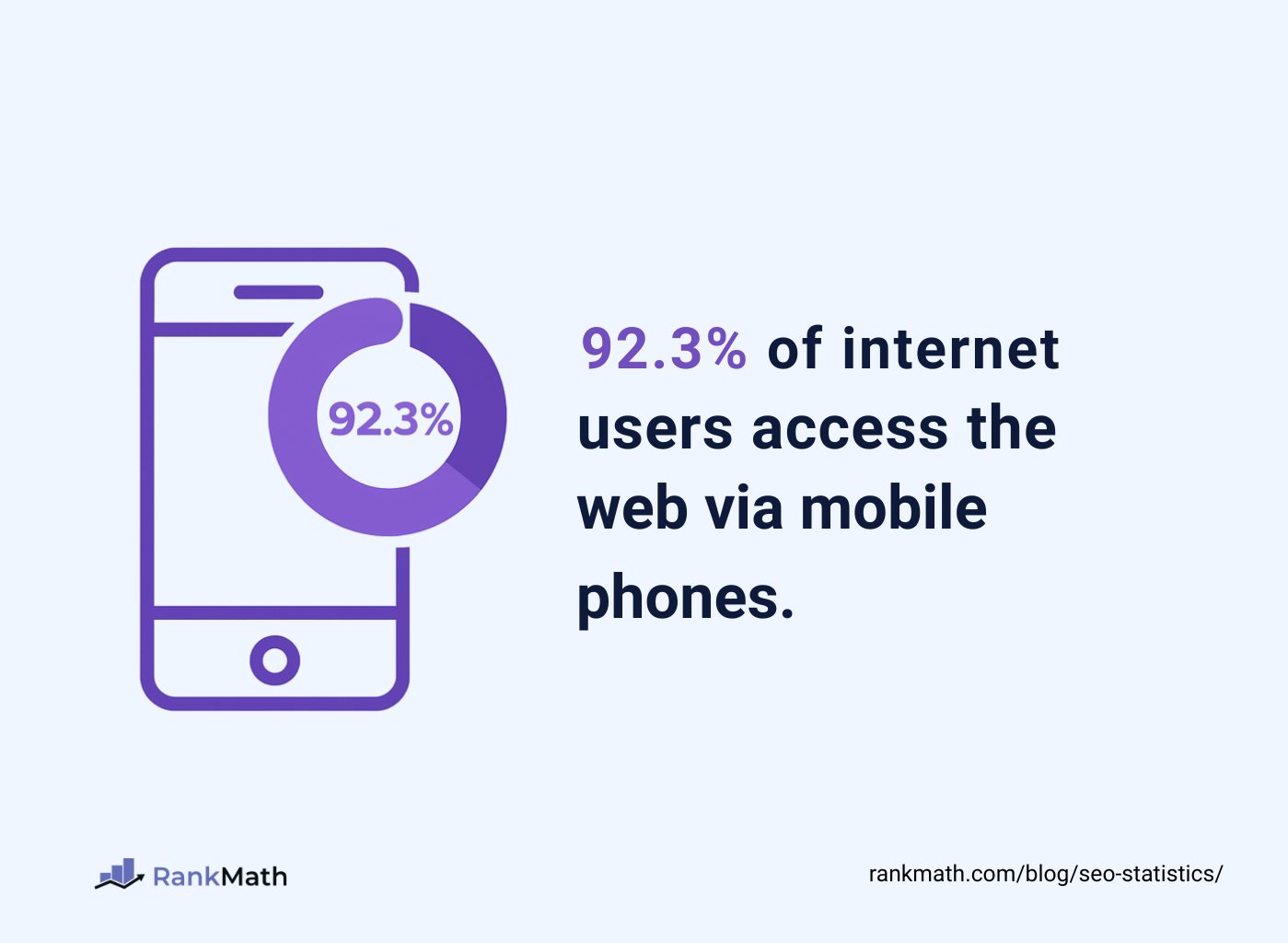
- 92.3% of internet users access the web via mobile phones, making mobile the primary way people search.
But the impact goes beyond screen size.
What’s changed with AI search
- If your page is slow, cluttered, or hard to read, users don’t wait, and AI systems are less likely to surface it.
- AI Overviews and AI-powered answers are most often shown on mobile screens.
- Users scan faster and make decisions quicker.
5.2 Voice Search Prefers Short, Clear Answers
Voice search and AI answers behave in similar ways: both look for clear, short, reliable responses.
According to Backlinko’s voice-search research:
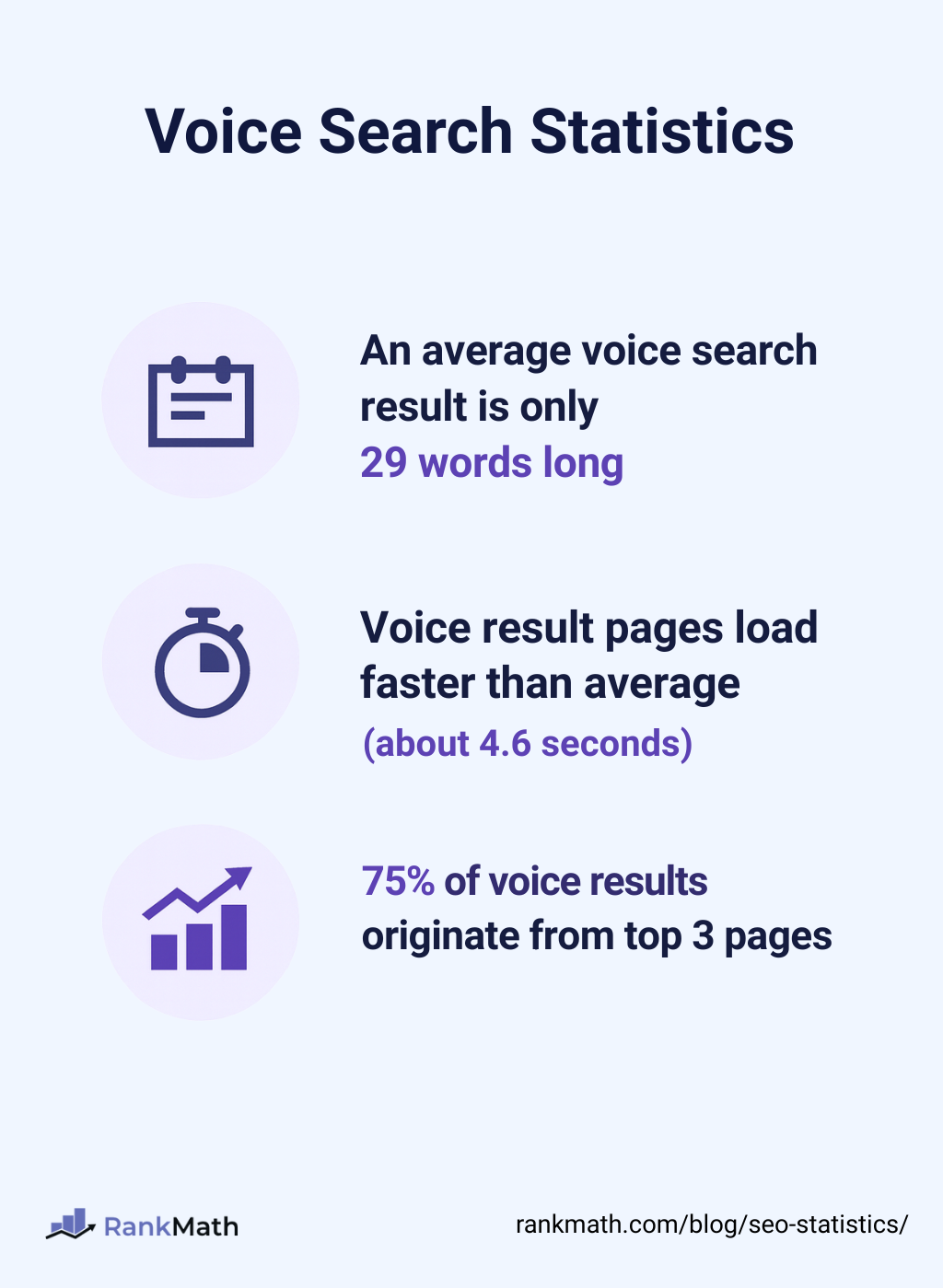
- The average voice-search result is only 29 words long.
- The pages that rank for voice search often load in about 4.6 seconds, which is faster than average.
- Most voice-search results come from pages that already rank high among regular search results; about 75% of voice results originate from one of the top 3 pages for that query.
What’s new in 2026 is how this connects to AI systems:
- AI systems prefer simple explanations
- Pages with clear structure and authority are more likely to be summarized or cited
- Long content still works, but only when it’s well-organized
Because voice search tends to favour quick answers, users expect fast, clear, and straightforward information. If your content is long but buried deep, it might not serve voice-search users well, unless you structure parts of it for quick answers.
5.3 Local Search – Visitors Look for Nearby Businesses, Often via Mobile
Search context isn’t just about what the audience searches, but where they search from. According to Search Engine Land, mobile searches now generate 60% of all web traffic.
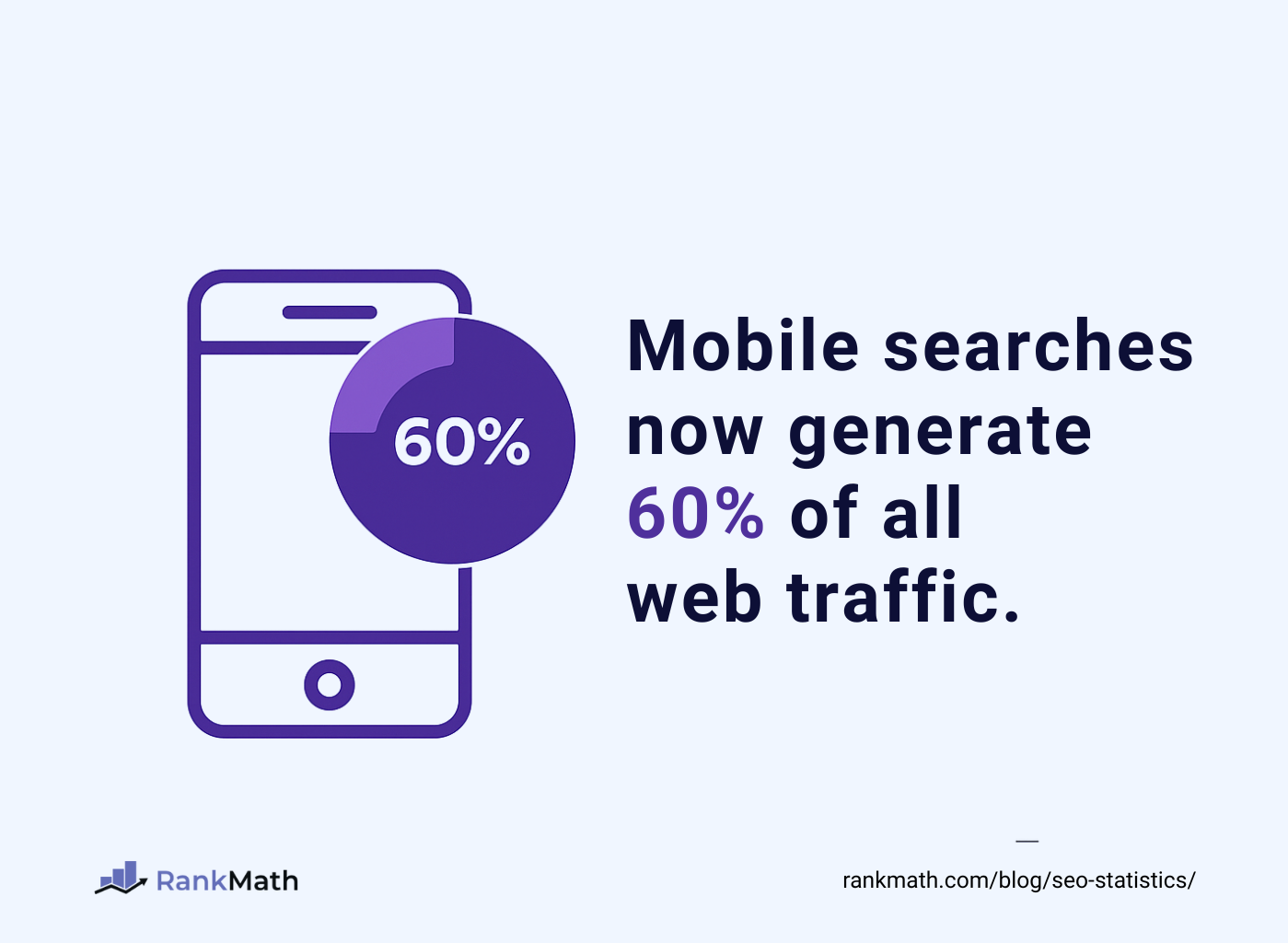
Additionally, many searches have local intent: users are searching for services, stores, or businesses nearby, not just general information. A well-maintained business profile, accurate contact/location info, and mobile-friendly pages can make the difference between being found and being overlooked.
Because visitors often search when they are already out (on their phones), meeting them where they are can lead directly to visits or purchases, even if they don’t click through to your full website content.
5.4 Search Context Now Includes AI, Not Just Users
One of the biggest changes shown in SEO statistics for 2026 is who consumes your content.
It’s no longer just humans. According to Search Engine Land, 58.5% plan to use human-written content supported by AI, not fully automated content, whether they want a fast answer, a longer read, or directions to a nearby business.
SEO Statistics show that:
- AI systems select sources based on trust and clarity
- Pages with stronger authority signals are more likely to be referenced
- AI visibility is becoming as important as traditional rankings
Your content must work in two ways:
- Help users
- Be understandable and trustworthy for AI systems
SEO is no longer only about search engine ranking pages. It’s about AI choosing which sources to trust.
Key SEO Statistics & Takeaways
- 92.3% of internet users access the web using a mobile phone.
- Mobile traffic makes up a very large share of web visits, mobile searches and mobile browsing have become dominant.
- The average voice-search result is 29 words long, highlighting how brief and direct voice answers tend to be.
- Pages ranking for voice search load faster, around 4.6 seconds on average, and speed matters for voice SEO.
- 75% of voice search answers come from top-ranking pages, reinforcing the link between authority and AI visibility.
- 77.9% worry AI-generated answers will reduce clicks, showing why visibility beyond traffic matters
6 Conclusion
SEO statistics for 2026 show that search is still one of the strongest ways to reach the audience, but the rules are different now.
You can no longer rely only on rankings, keywords, or traffic numbers. Search results increasingly provide answers directly, often powered by AI, and visibility now happens in more places than just website visits.
The goal is no longer clicks alone. It’s being the source that search engines and AI choose to trust and show.
When you focus on helping users first, clearly, honestly, and consistently, then visibility, authority, and long-term growth tend to follow.
If you like this article, let us know by tweeting @rankmathseo.