Are you looking to gain an edge in the ever-competitive world of SEO? One effective strategy is to closely monitor your competitors and analyze their SEO tactics.
Knowing what works for your competitor is a low-hanging fruit because your competitor has already tried and tested things. This means you skip the trial and error and get more remarkable results with less work.
In this knowledgebase article, we will show you how to gain valuable insights into your competitor’s SEO strategies using Rank Math.
The SEO Analyzer allows you to inspect your competitor’s webpages and gain valuable insights into their SEO strategy.
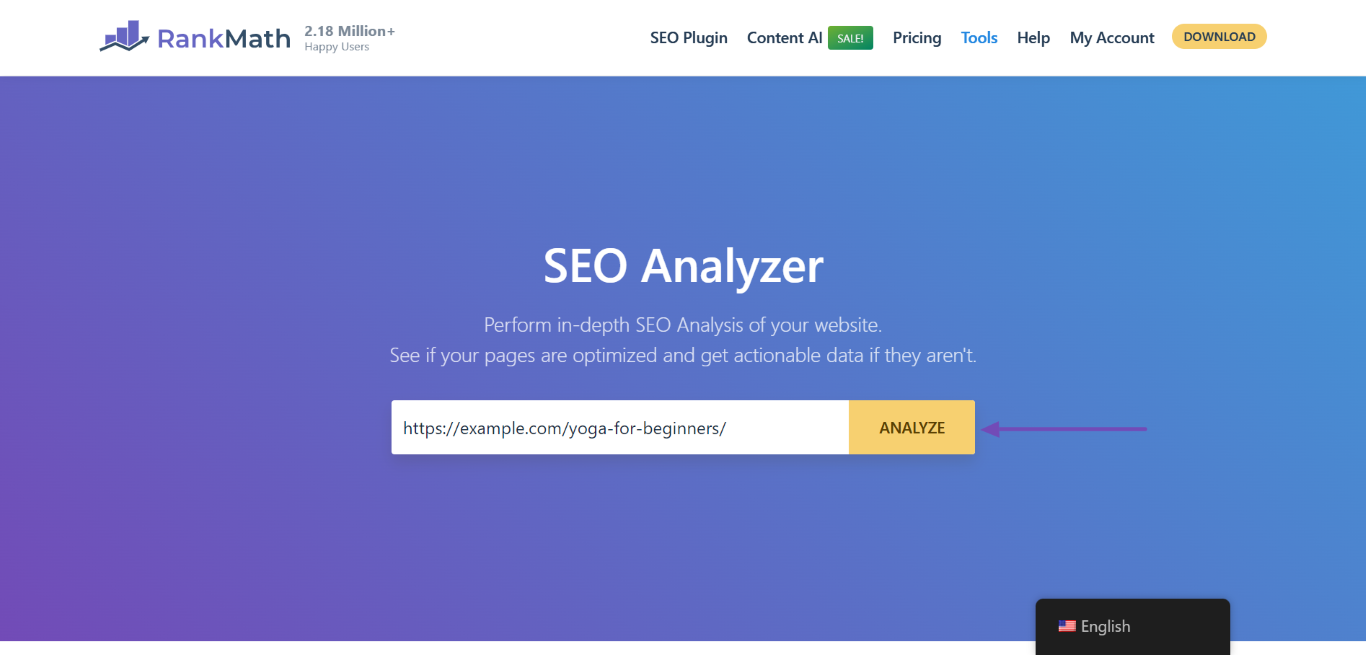
Rank Math PRO users can access the SEO Analyzer from their WordPress dashboard. If you don’t have PRO, you can use our free SEO Analyzer tool. Enter your competitor’s URL into the available field and click ANALYZE.
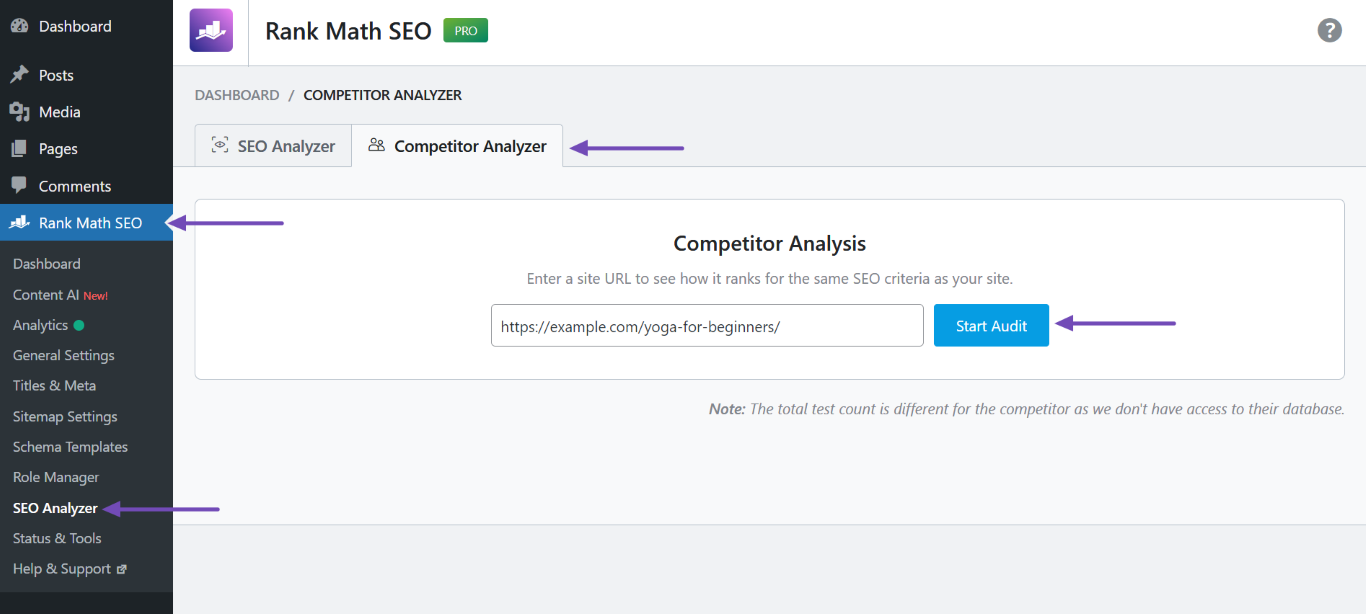
If you’re using Rank Math PRO, head to Tableau de bord WordPress → Rank Math SEO → Analyseur de référencement → Analyseur de concurrents. Once done, enter your competitor’s URL into the field and click Start Audit, comme indiqué ci-dessous.
Noter: If the SEO Analyzer is not displayed, head to Tableau de bord WordPress → Rank Math SEO et activer le Analyseur de référencement module.
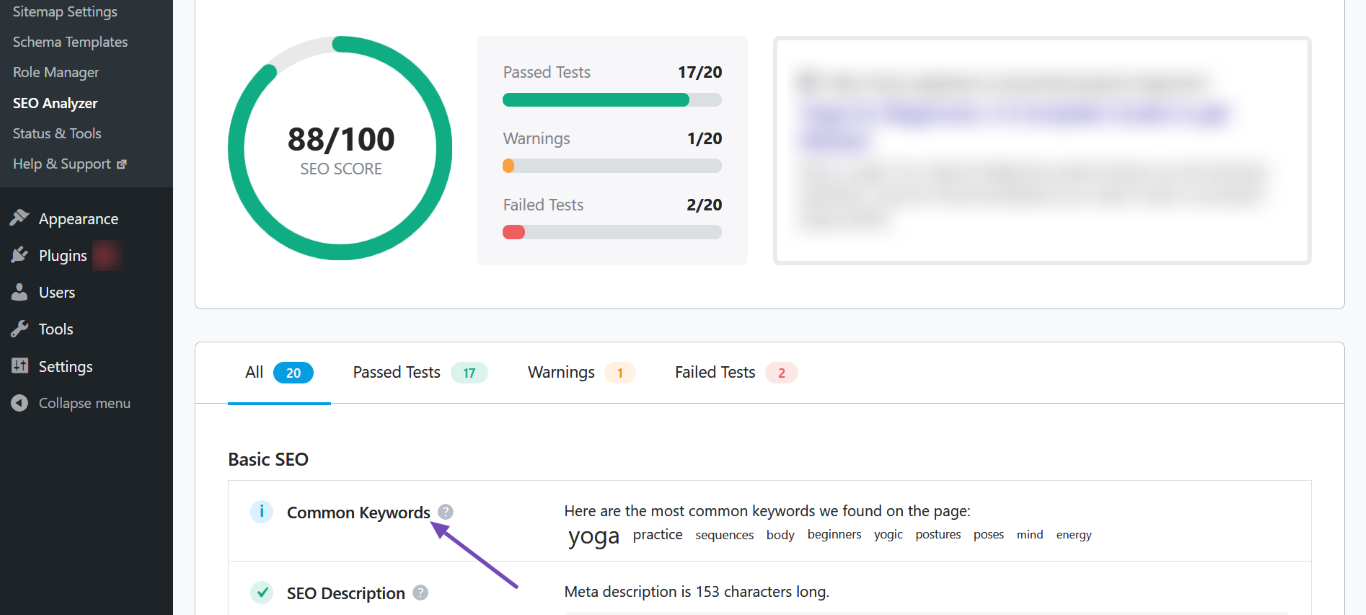
The SEO Analyzer will run a series of tests on your competitor’s URL and return with the results. Below, we have listed the results you want to pay attention to.
1.1 Mots clés courants
This section lists the most common keywords detected on your competitor’s page. These are the same keywords search engines use to understand the intent of your competitor’s website. You may want to optimize your page for these keywords.
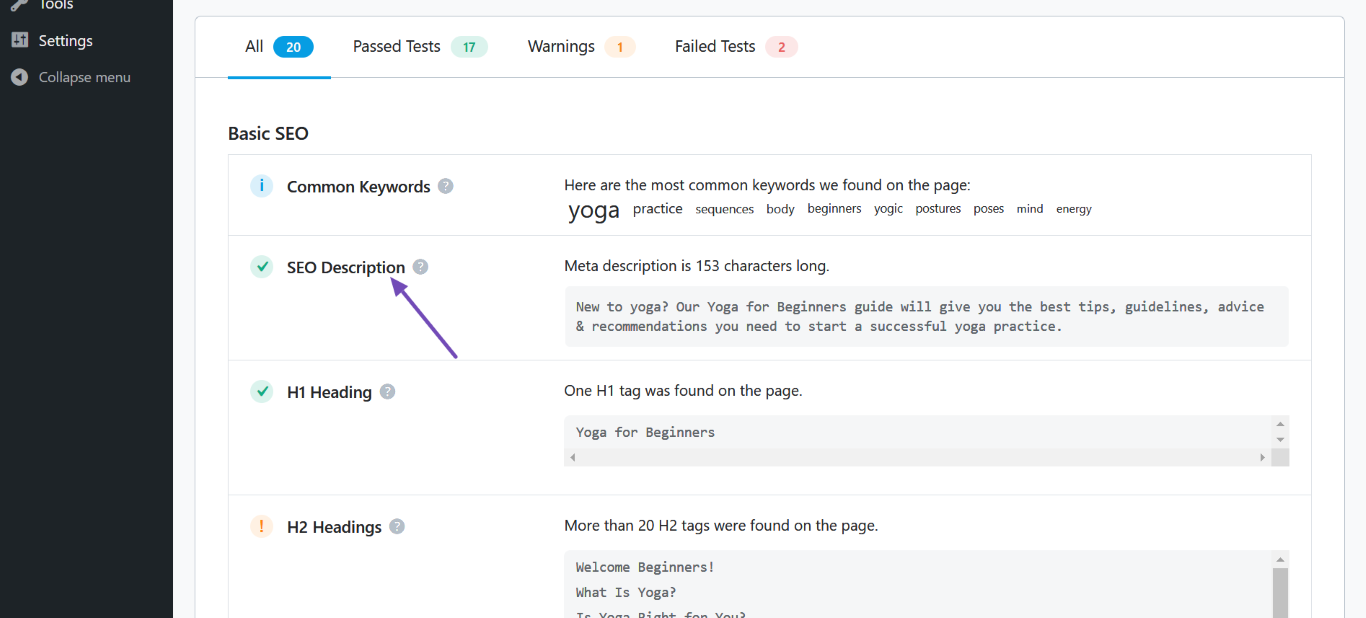
1.2 Description SEO
This section lists the SEO meta description your competitor included in their content. You can use a similar SEO description for your competing page. An ideal SEO description should be between 50 and 160 characters.
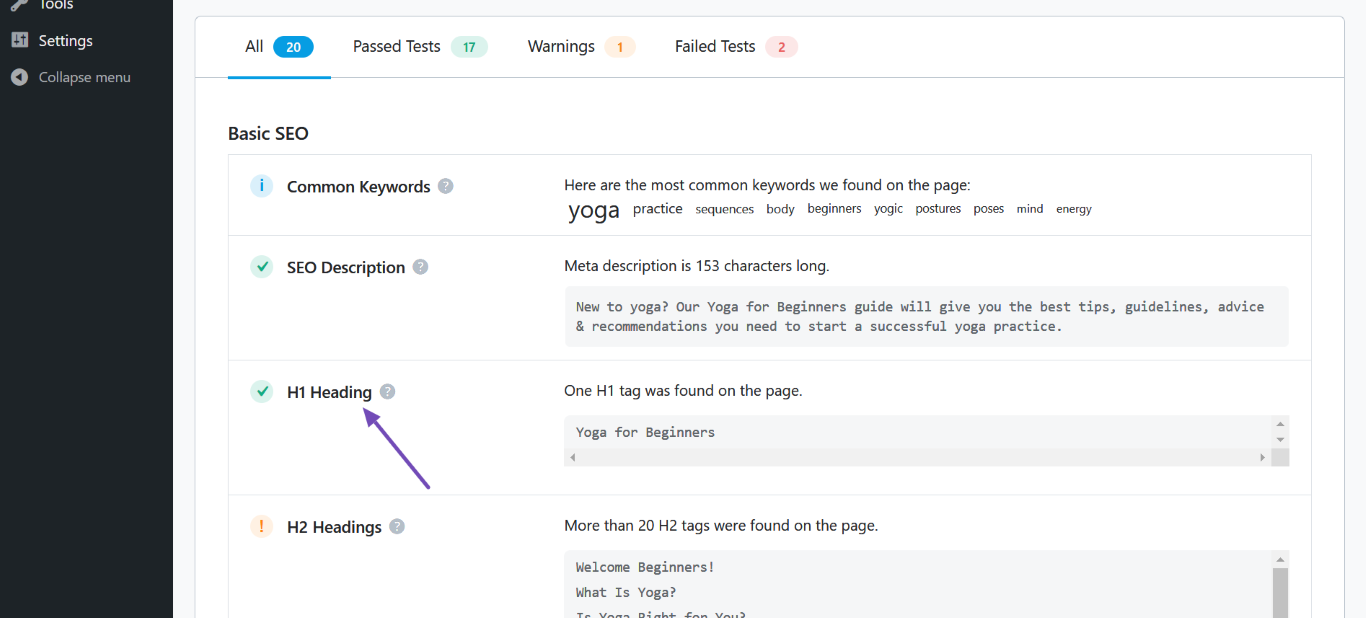
1.3 Titre H1
This section contains the H1 heading of your competitor’s content. You’ll have to create a better H1 for your page.
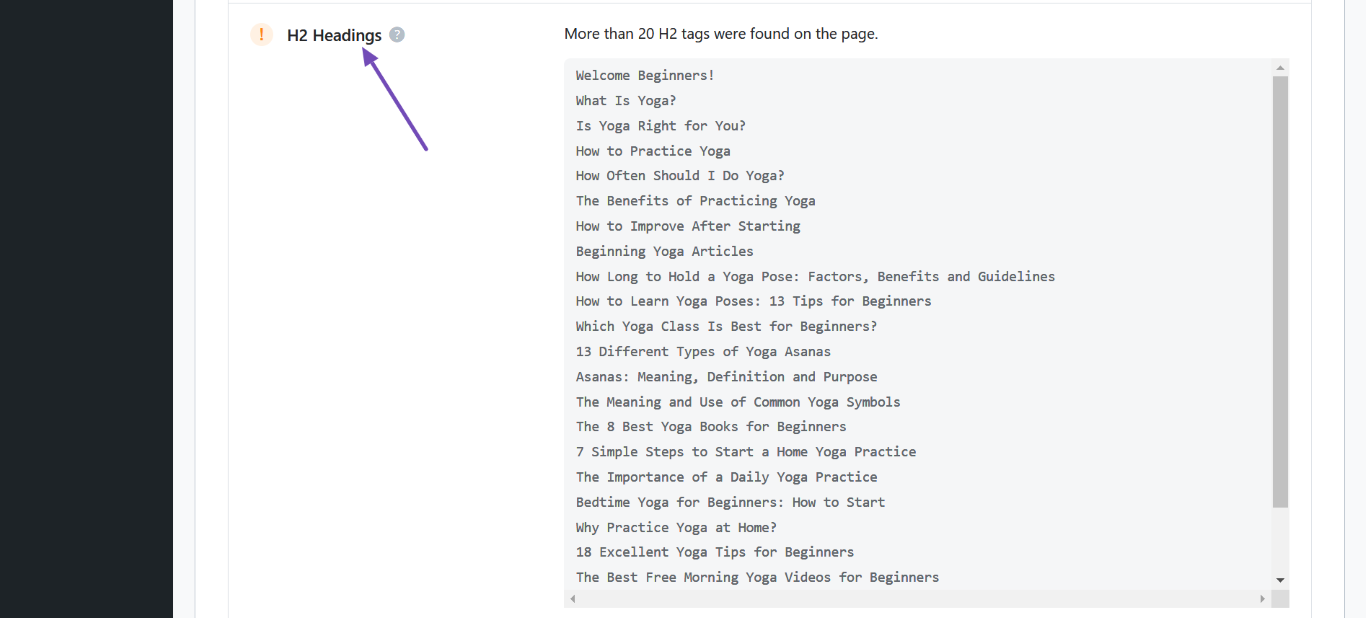
1.4 Rubriques H2
This section displays the H2 headings in your competitor’s content & gives an outline of your competitor’s article. You can get an idea of what your competitor is covering and try to cover in your article as well.
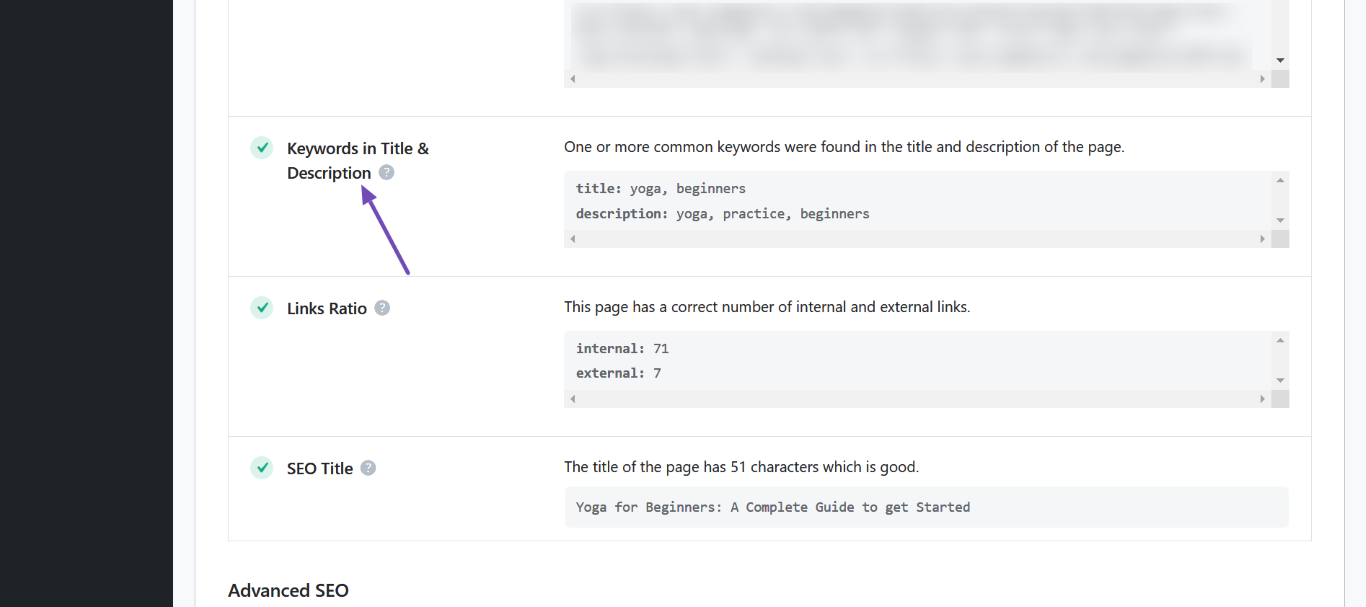
1.5 Mots clés dans le titre et la description
This field compares the keywords on your competitor’s page with those on their webpage’s SEO title and description. Keywords that appear on the page and its SEO title and description will be displayed here.
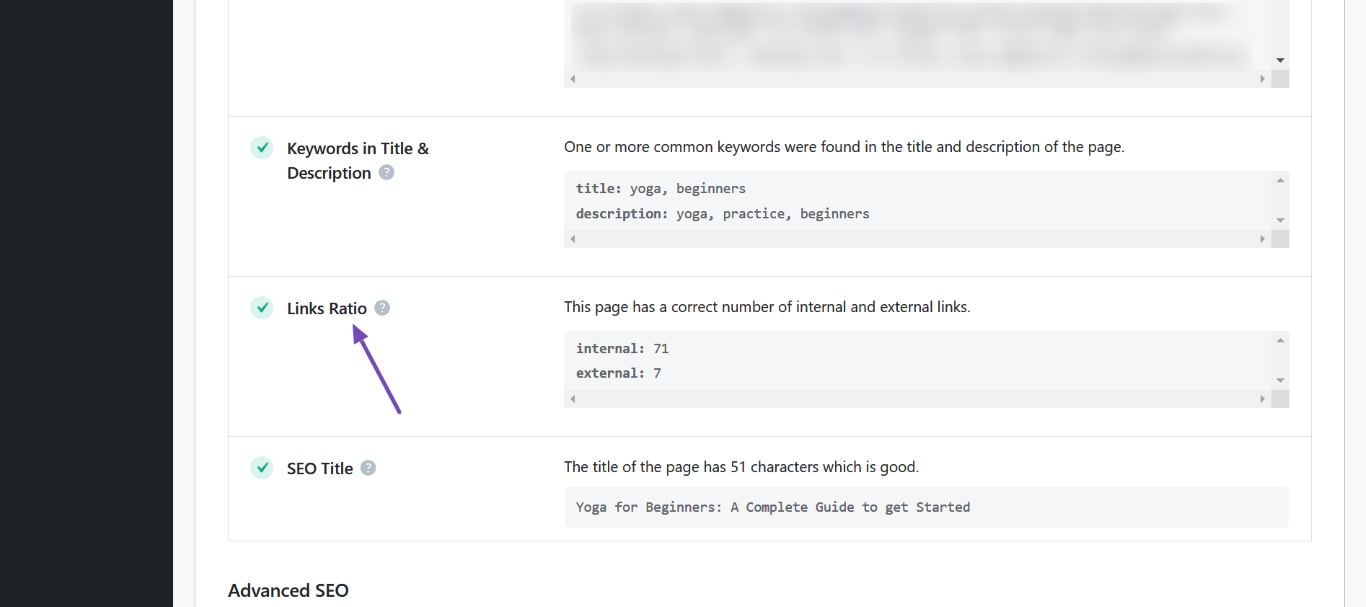
1.6 Rapport de liens
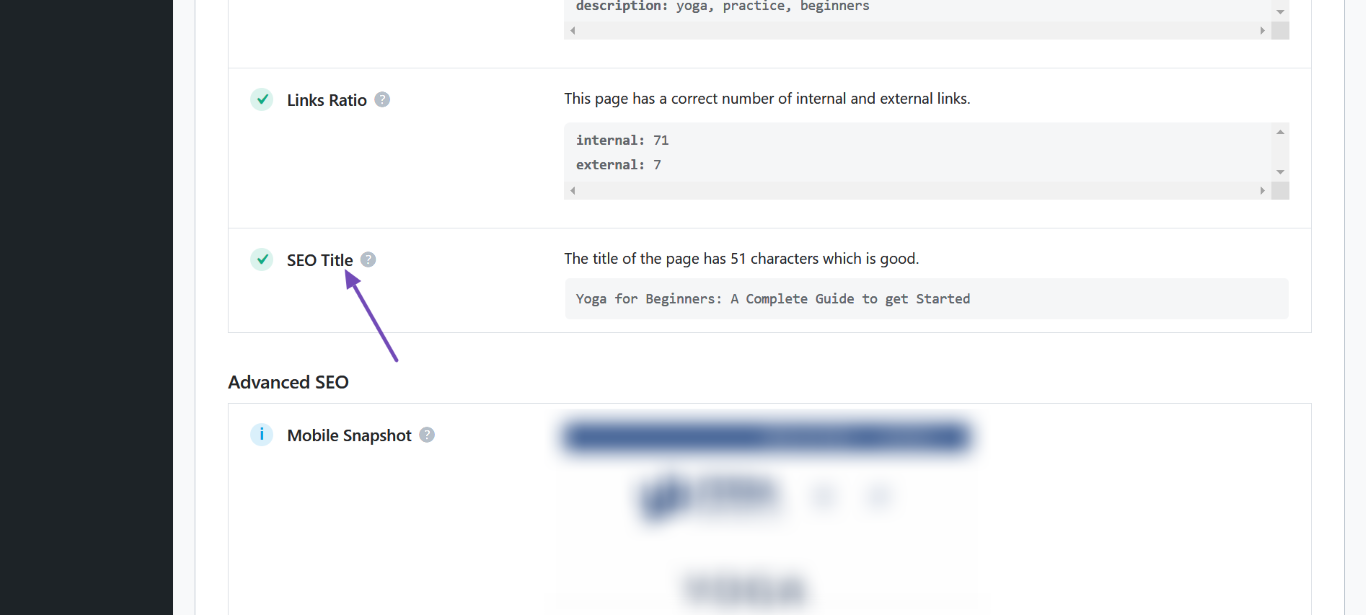
The Links Ratio field compares your competitor’s internal and external links. You can review the number of internal and external links to guide you on the number of links to include in your content.
1.7 Titre SEO
This section lists the SEO title of your competitor’s content. You can use a similar SEO title in your content. An ideal SEO title should be between 50 and 60 characters.
Now that you’ve gathered insights into your competitor’s SEO, it’s time to replicate their results using Content AI.
2 Research Using Content AI
If you wish to skip the previous process of manually collecting insights on your competitors, you can use our Content AI research feature.
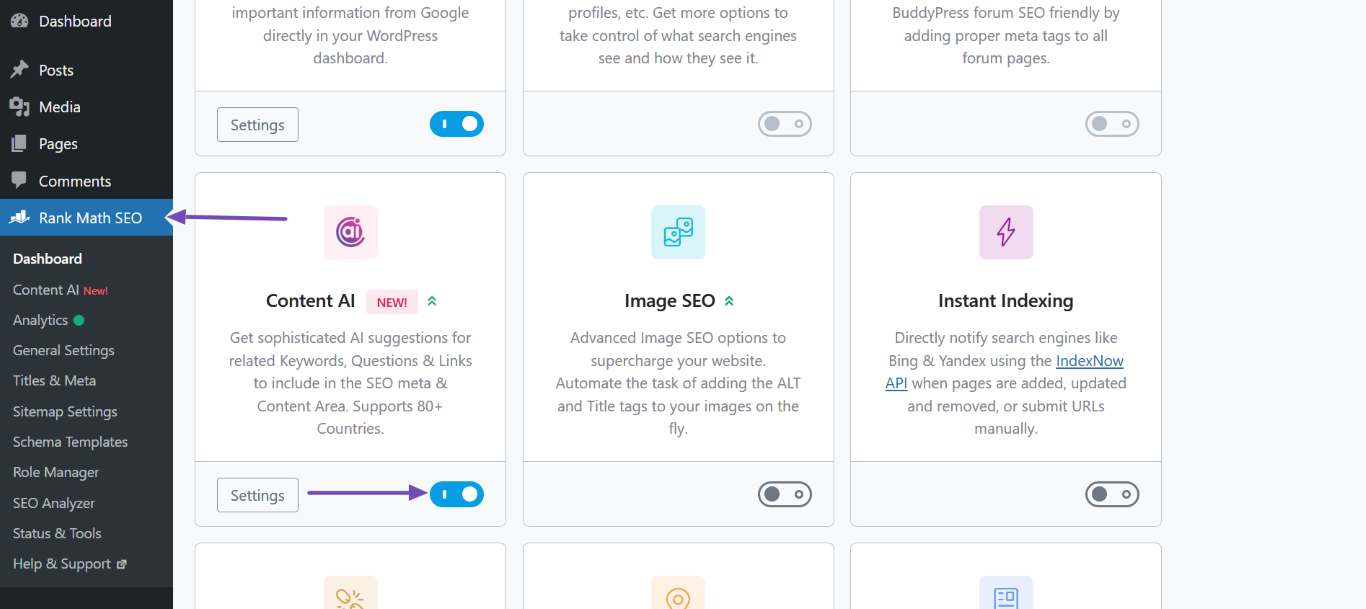
If you already have a Content AI membership, head to Tableau de bord WordPress → Rank Math SEO et activer le Content AI comme indiqué ci-dessous.
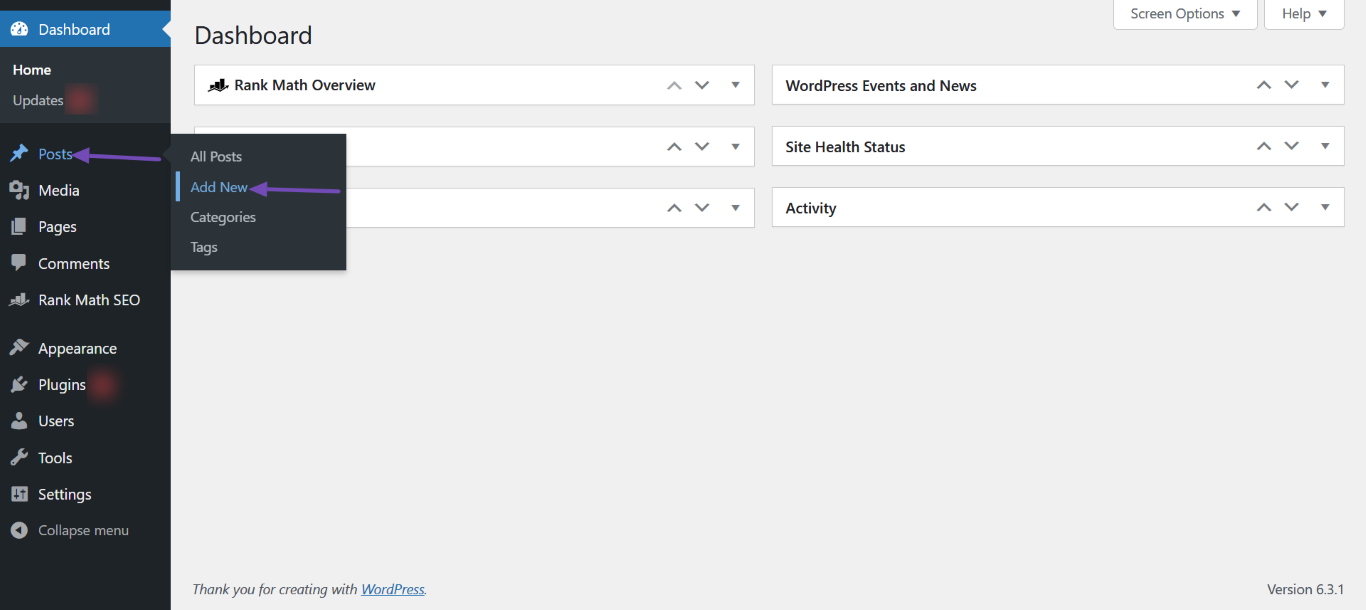
Once done, head to the post or page you’re creating to compete with your competitor’s content. If you have not begun creating the content, head to Tableau de bord WordPress → Des postes ou pages → Add New to begin drafting one.
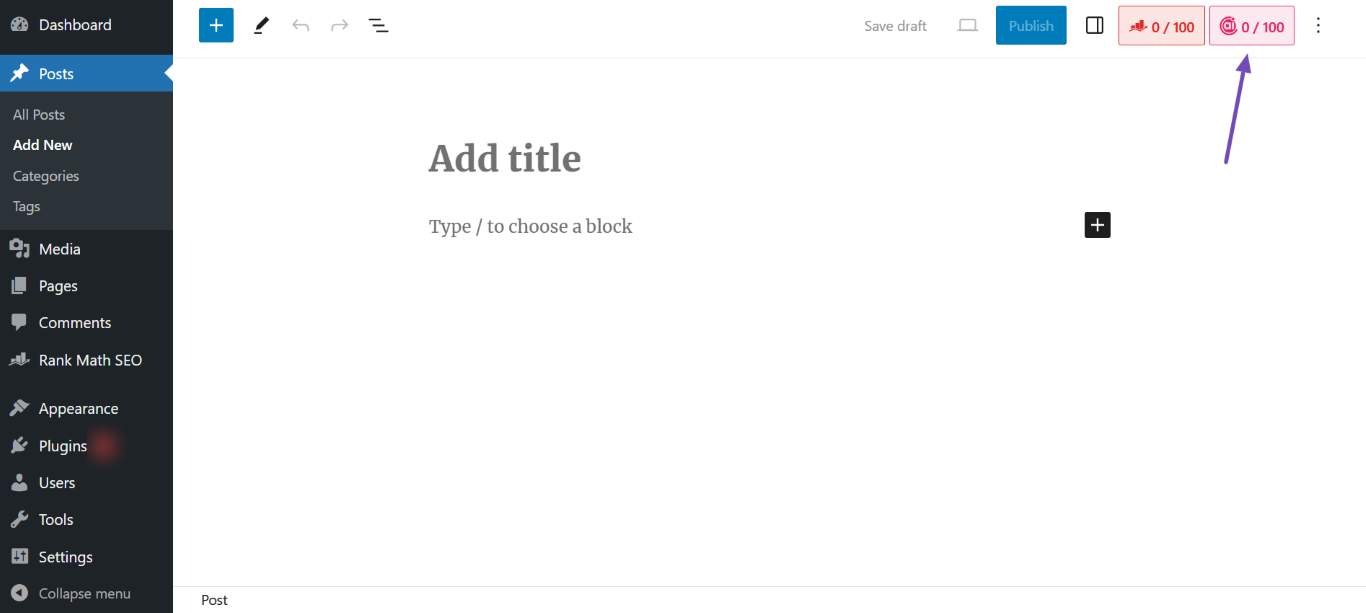
Ensuite, cliquez sur le Content AI icon at the top-right corner of the page.
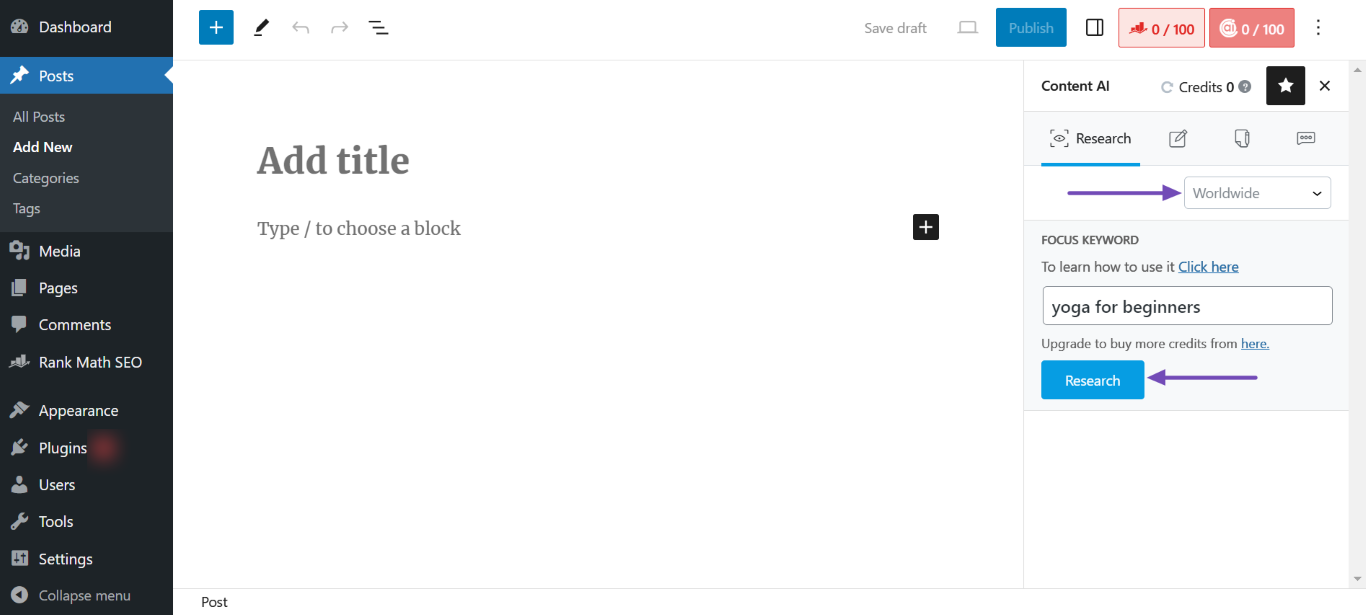
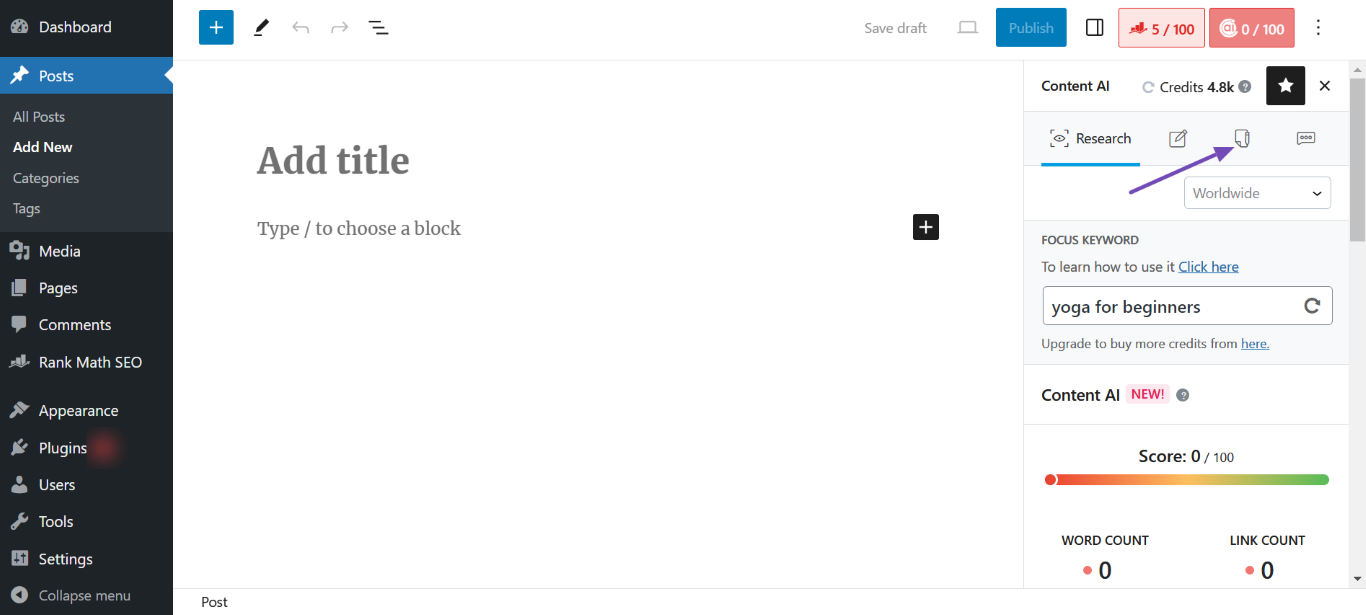
Once done, enter your keyword into the FOCUS KEYWORD field. If your target audience is from a specific country, select the country from the dropdown. Once done, click Research, comme indiqué ci-dessous.
Content AI will analyze the top content ranking for your desired keyword and return with suggestions on the headings, media, links, questions, and keywords to include in your content.
3 Generating a Competing Article Using Content AI
After gaining insights into the top-ranking content, the next step is to generate a competing article using Content AI.
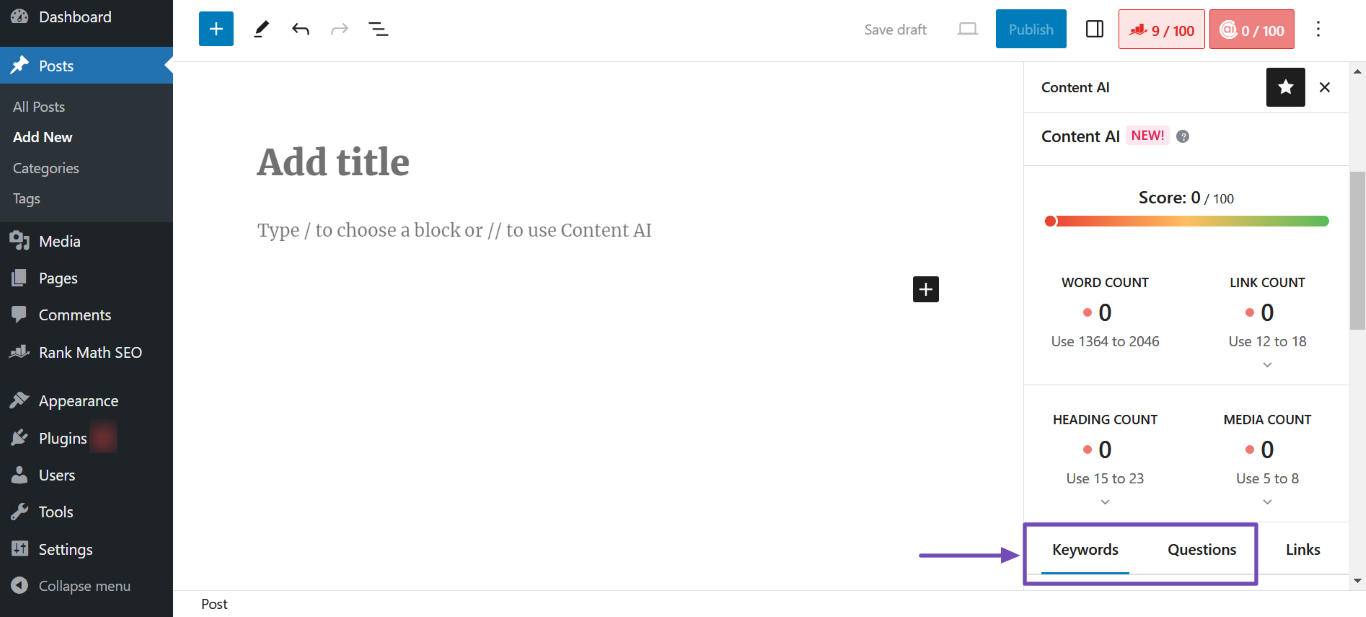
To get started, scroll to the bottom of the analysis results. You will be presented with some tabs. Now, we will show you how to convert the data in the Keywords and Questions tabs into high-quality content using Content AI.
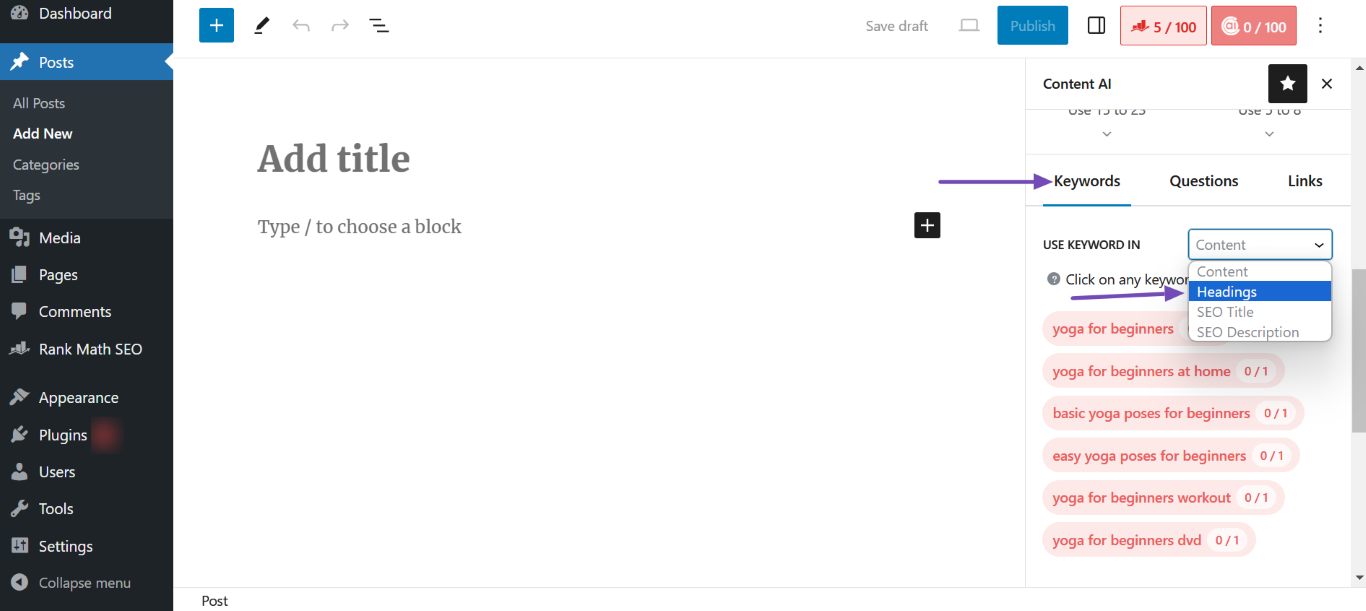
Here, scroll down to the Mots clés tab. Once done, click the USE KEYWORD IN dropdown and select Headings, comme indiqué ci-dessous.
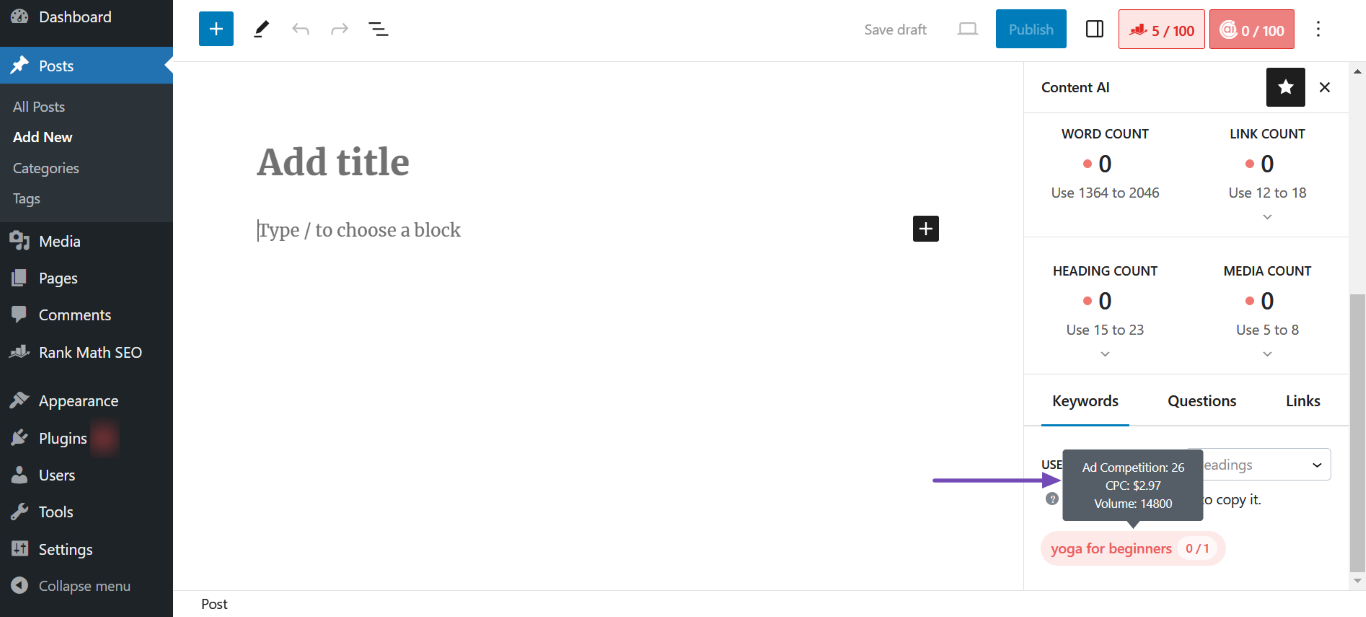
You will be presented with some keywords to include in your headings. Hover over the keywords to view their ad competition, cost per click (CPC), and search volume. Once you decide on the keyword to use in your H1 heading, click on it to copy it.
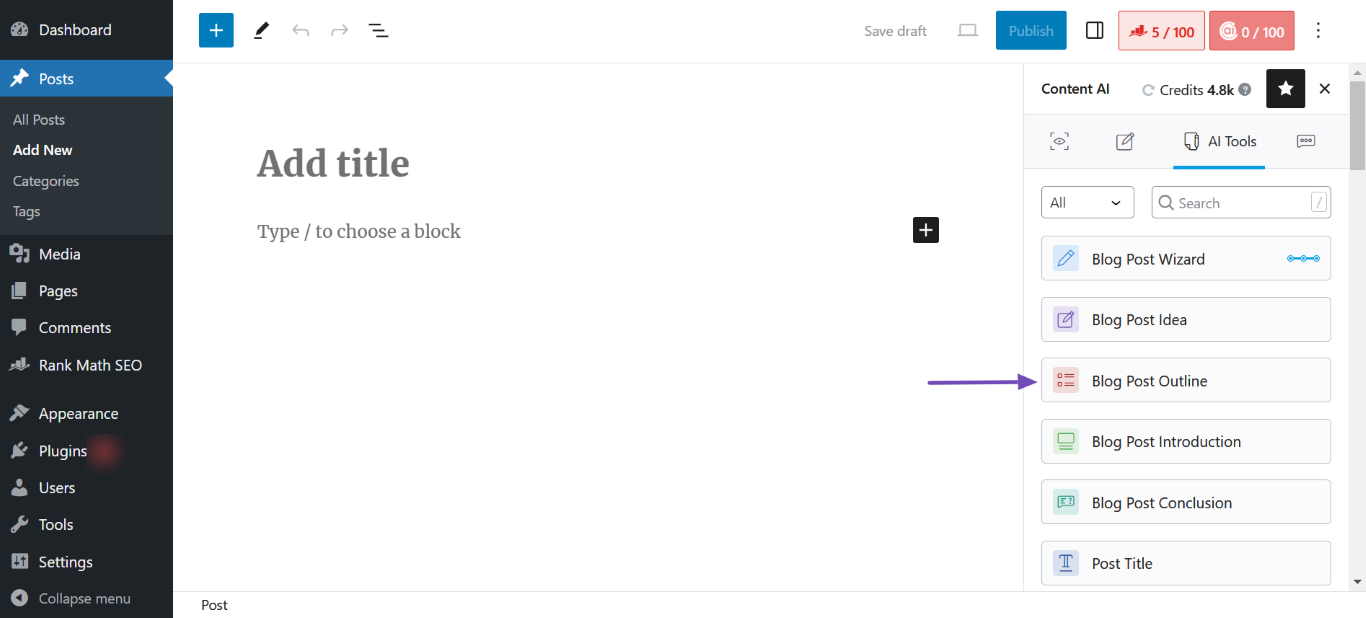
After copying the keyword, scroll up and click the AI Tools icône, comme indiqué ci-dessous.
Once done, select the Aperçu de l'article de blog AI tool.
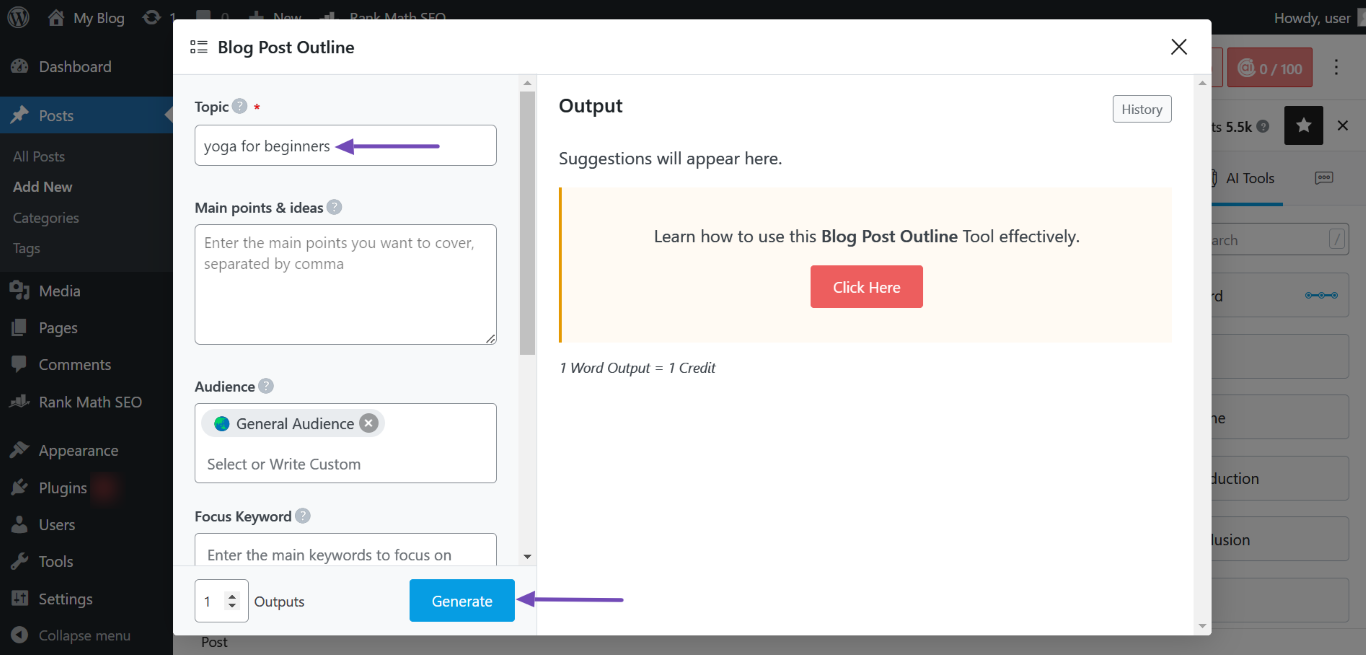
Now, paste the keyword into the Topic field. Once done, fill in the other fields and click Générer.
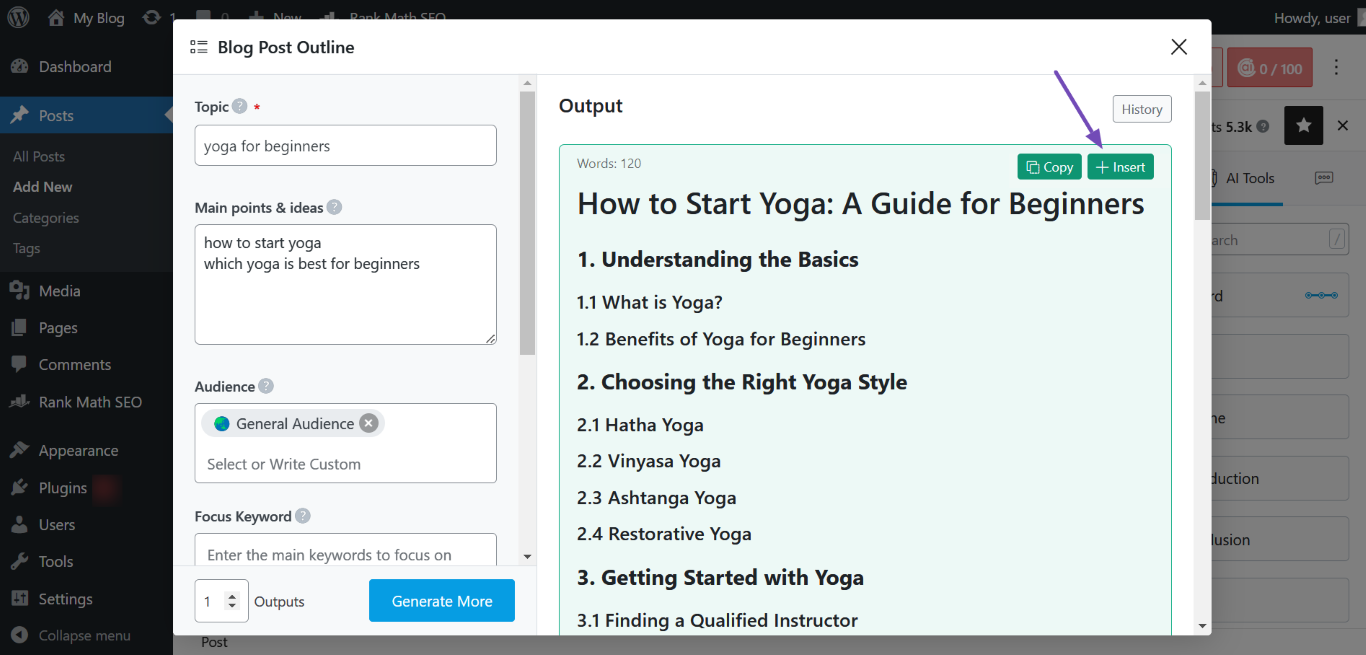
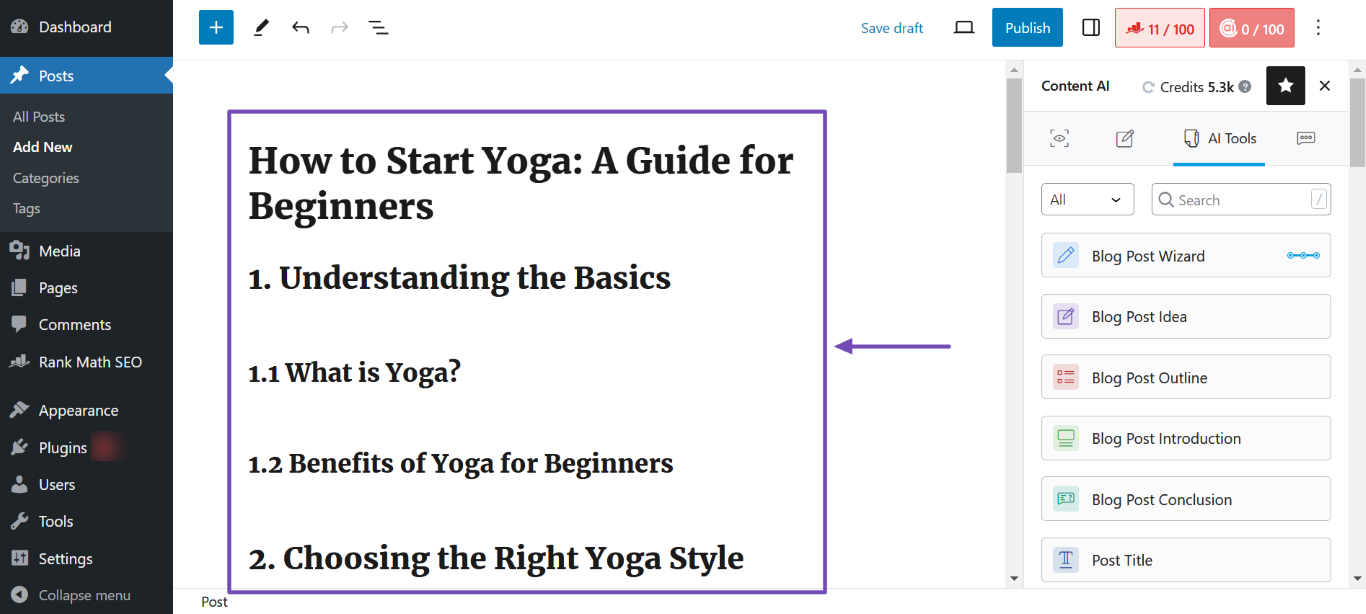
You will be presented with an outline for your content. Hover over the outline and click Insert.
The outline will be inserted into your editor, as shown below.
3.2 Step 2: Generate an Article
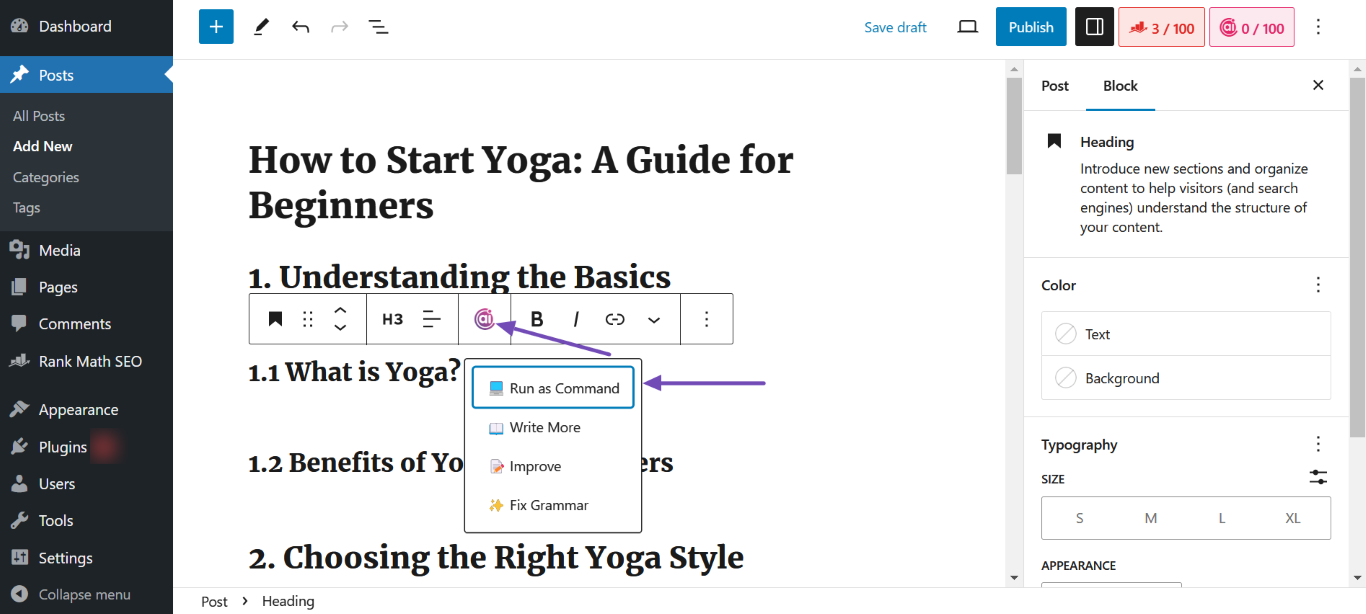
Now, it’s time to turn your outline into paragraphs. To get started, click on a heading and select the Content AI icon. Once done, click Run as Command.
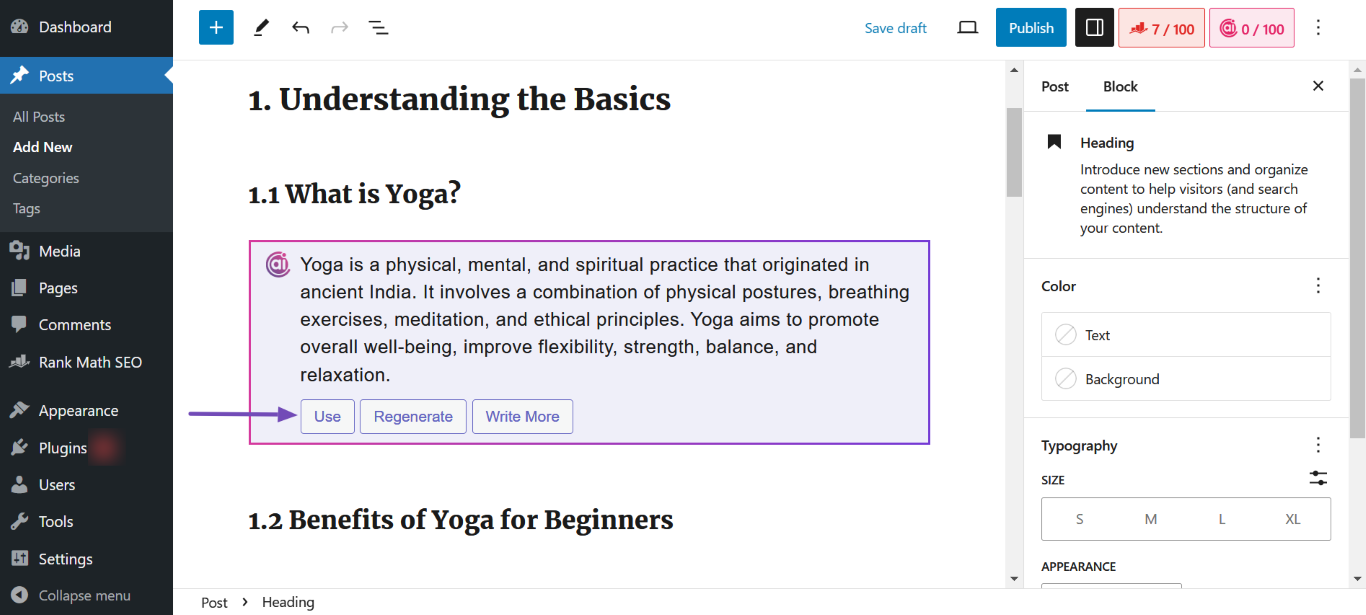
Content AI will generate paragraphs for the heading. To add the content to your article, click Utilisation. You can repeat this step for as many headings as you desire.
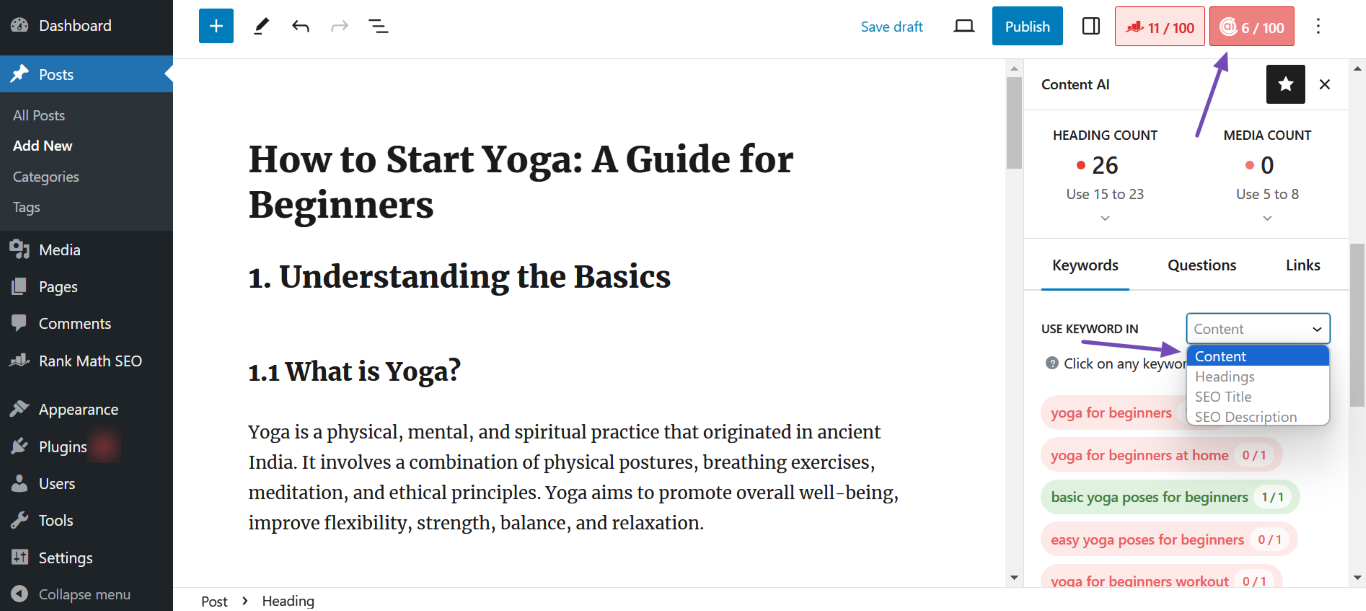
Once done, return to Content AI Metabox → Mots clés and select Content from the KEYWORDS IN USE dropdown. You will now proceed to include those keywords in your content.
3.3 Step 3: Generate an FAQ Block
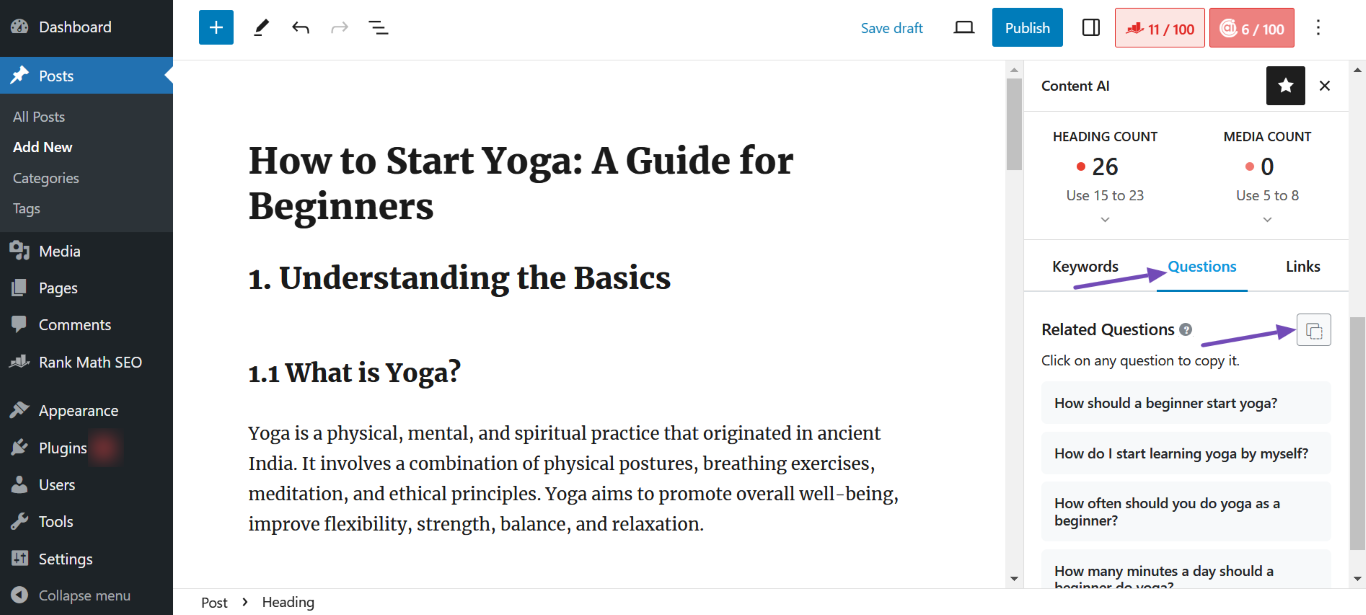
After creating your content, it’s time to create a Frequently Asked Questions (FAQ) block. To do that, click the Des questions tab and then the Copy icône, comme indiqué ci-dessous.
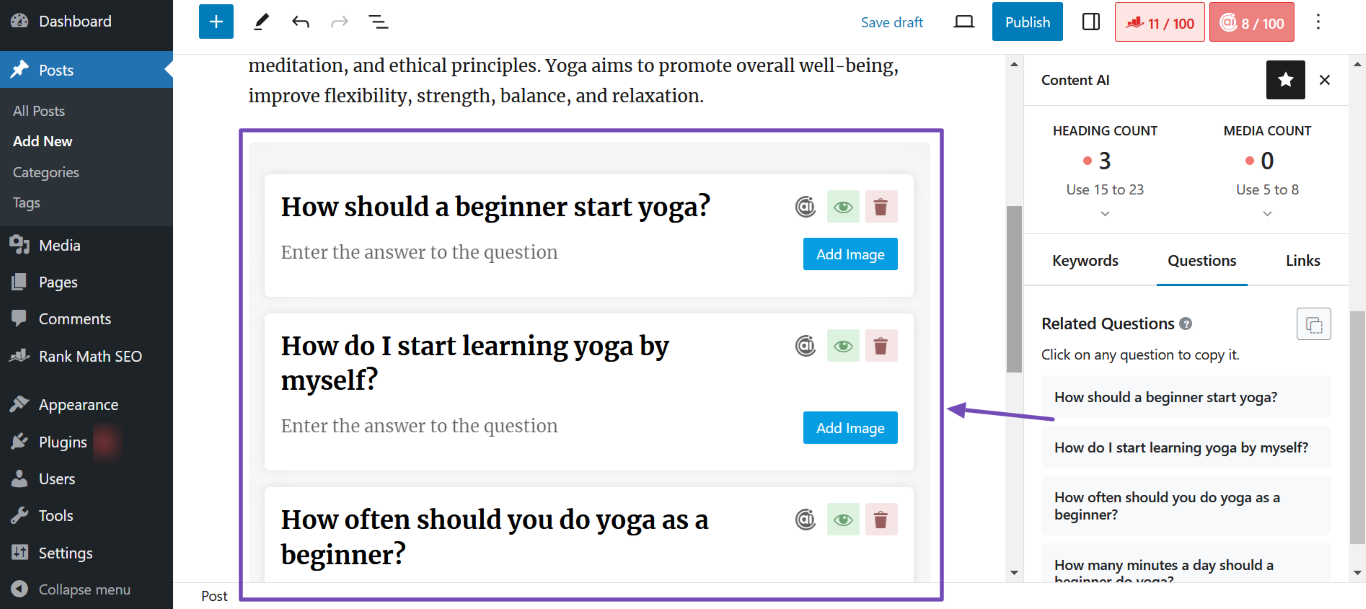
Next, head to the editor screen and click Ctrl+V on your keyboard. A FAQ block containing the questions will be added to your content, as shown below.
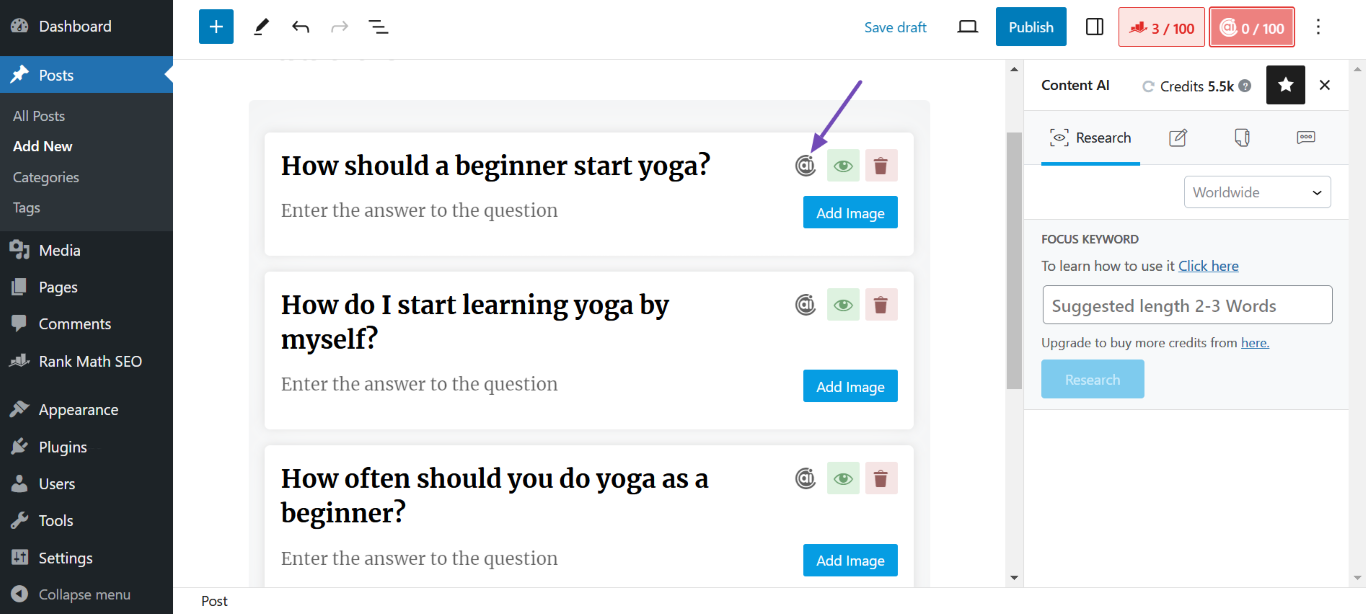
Now, it’s time to get Content AI to generate answers to those questions. To do that, head to a question and click the Content AI icône, comme indiqué ci-dessous.
Content AI will generate an answer to the question. You should repeat this step for the other questions.
3.4 Step 4: Generate an SEO Title and Description
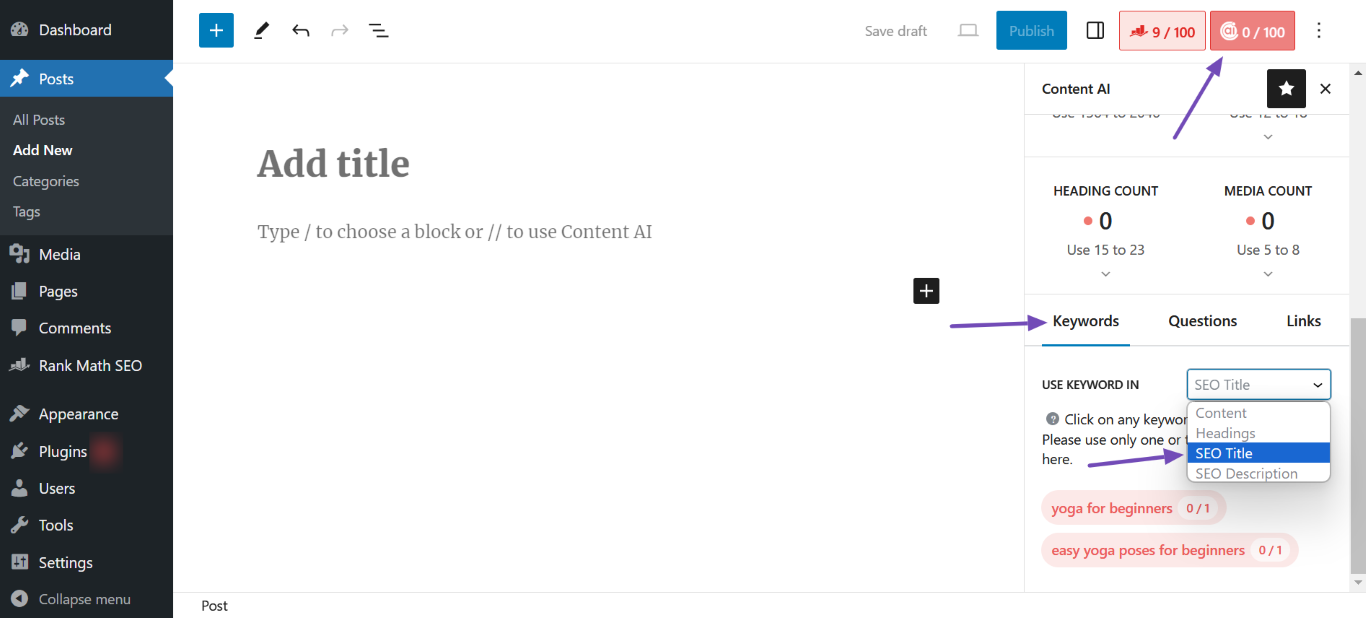
To generate an SEO title and description, return to Content AI Metabox → Mots clés. Once done, click the Use Keyword In dropdown and select Titre SEO.
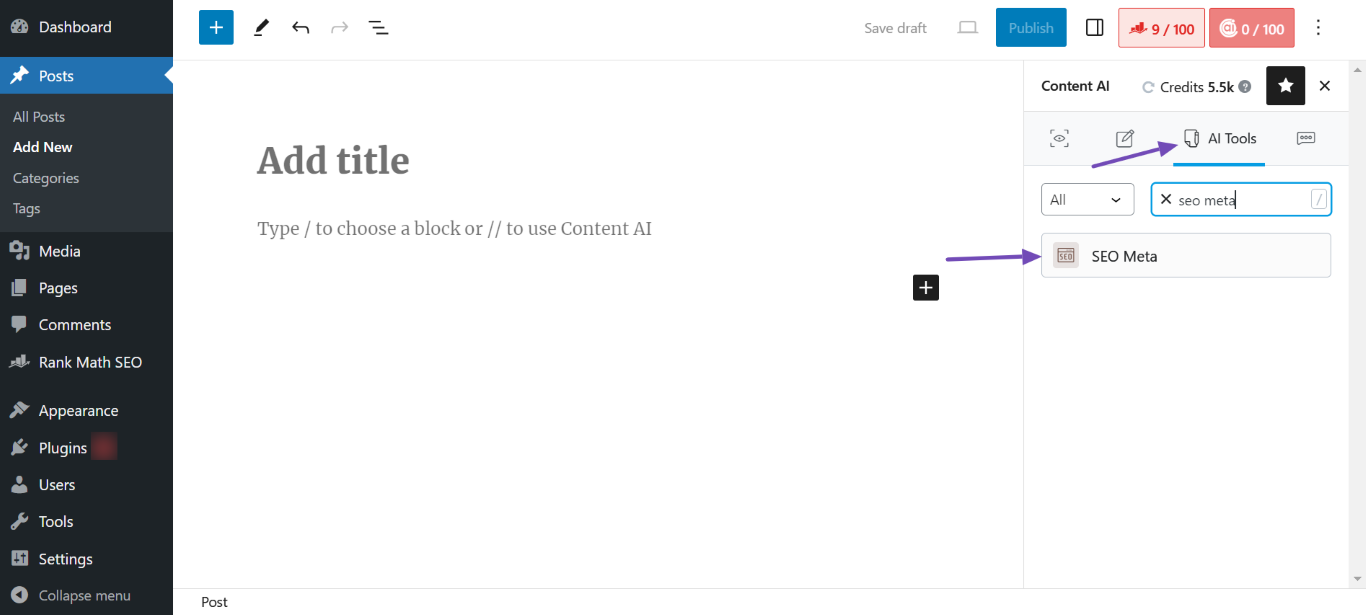
You will be presented with the keywords to include in your SEO title. Click on a keyword to copy it. Once done, scroll up and click the AI Tools icon. Then, select the Méta SEO AI tool, as shown below.
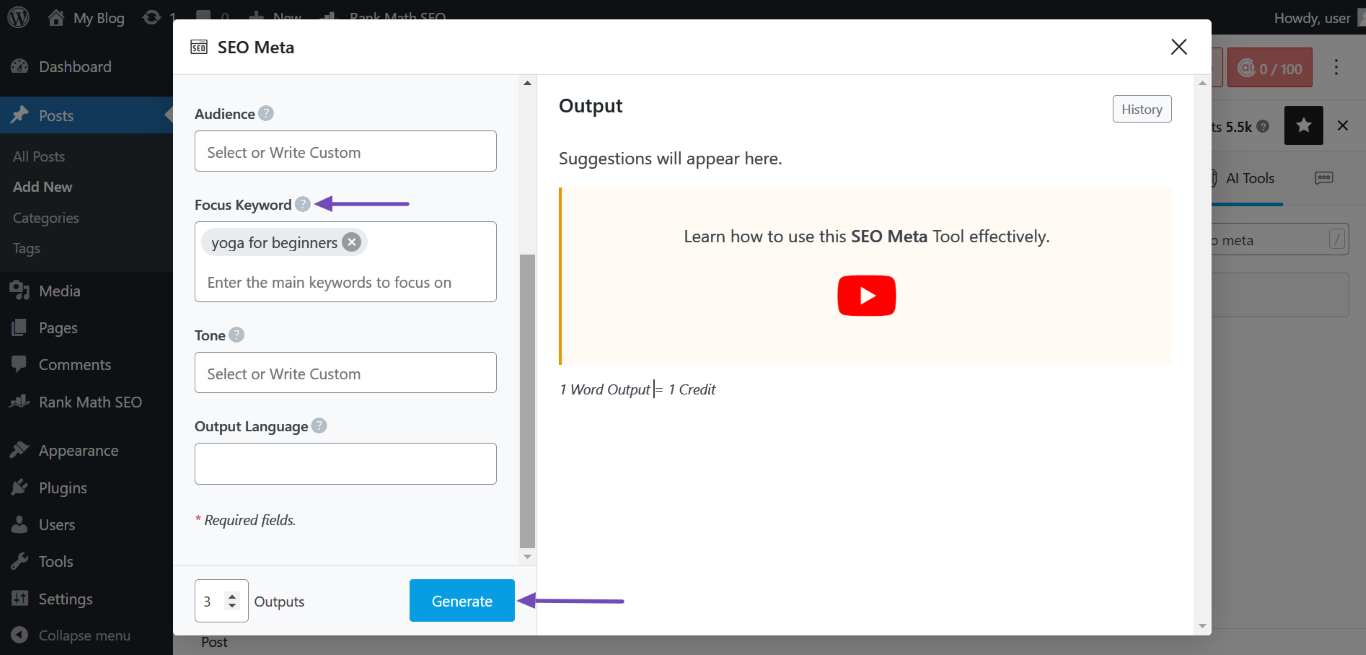
Next, paste the keyword you just copied into the Mot-clé ciblé field. Next, fill in the other fields and click Générer.
Noter: You can also copy the keyword in the SEO Description and paste it into the Focus Keyword field.
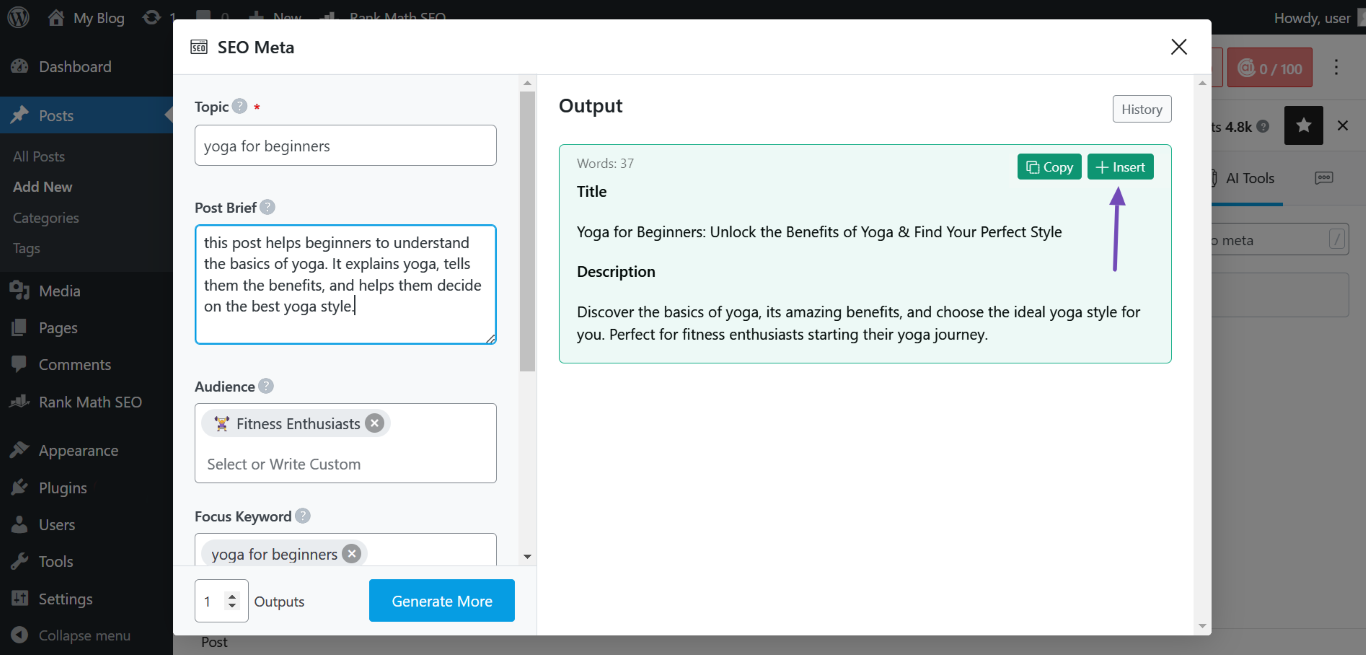
Once done, hover over the SEO meta title and description you just generated and click Insert.
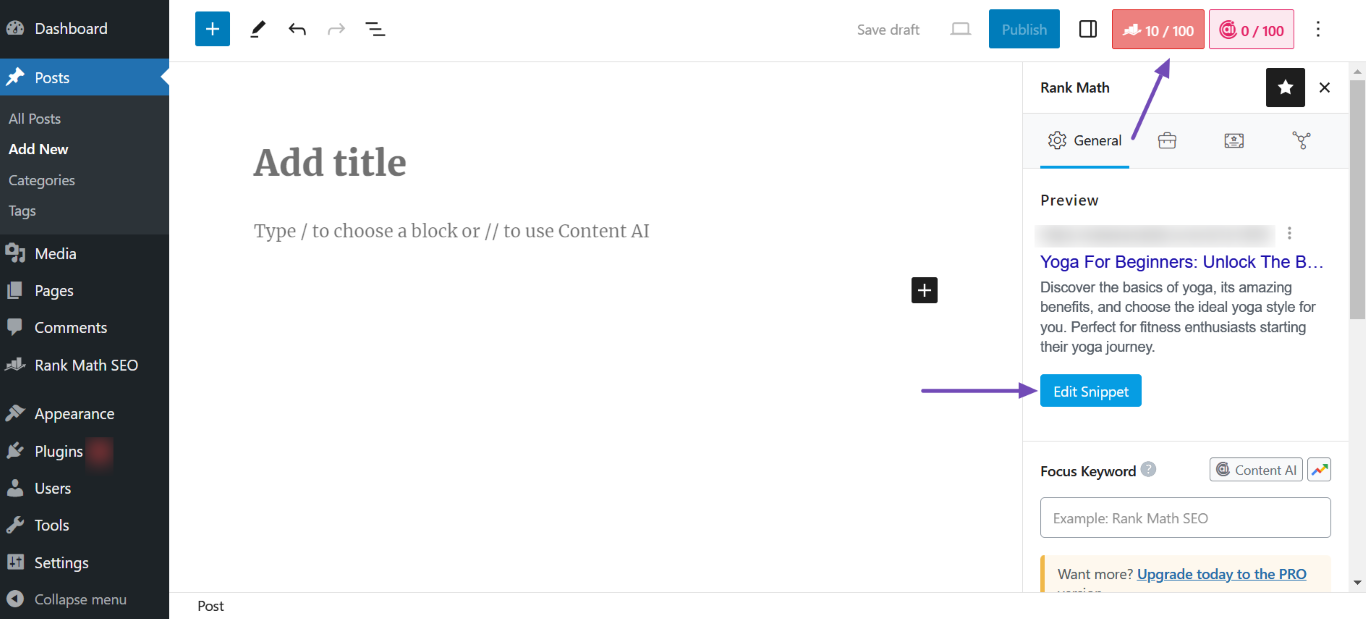
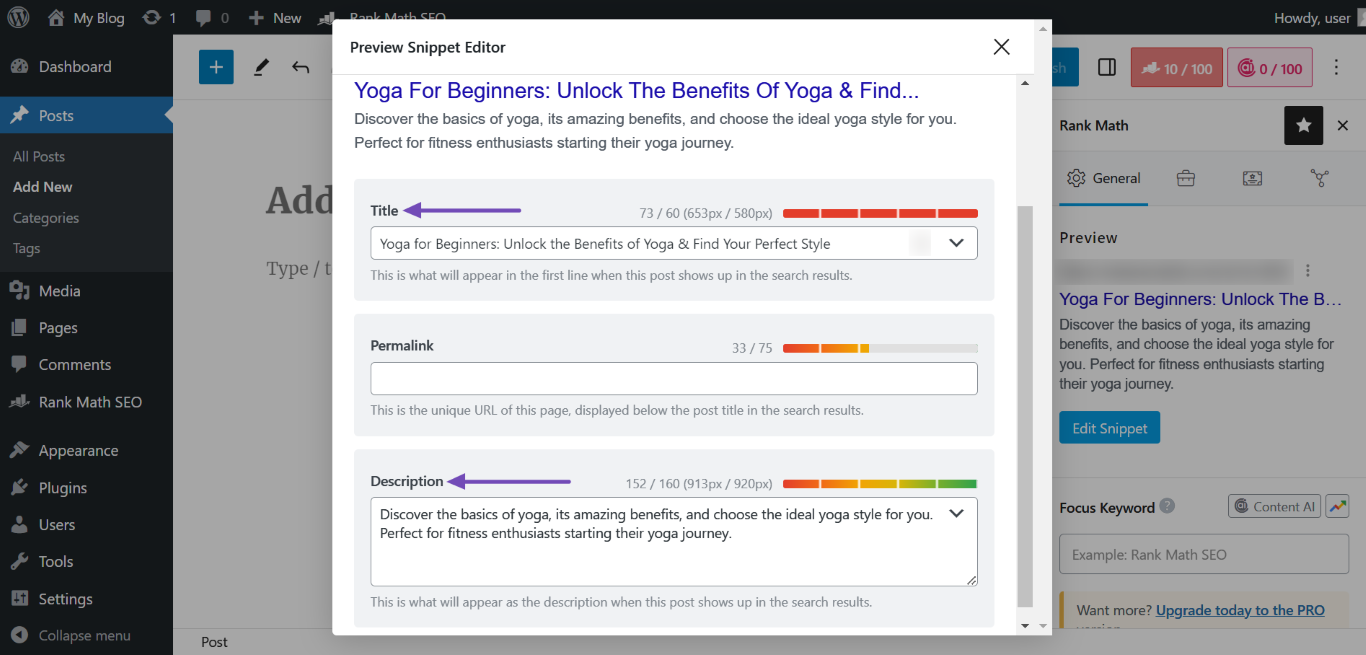
The SEO meta title and description will be added to your content. To view them, click the Rank Math SEO Metabox → Modifier l'extrait, comme indiqué ci-dessous.
You will be presented with your SEO title and description, as shown below.
You can now proceed to edit the article to your satisfaction. Once done, click Publier ou Update, comme indiqué ci-dessous.
In conclusion, Content AI allows you to dive deep into your competitor’s SEO tactics. By analyzing their keywords, backlinks, and content format, you can skip the errors and uncover valuable insights to enhance your SEO strategies.
We hope you’re able to analyze your competitor’s SEO using Content AI. If you have any questions, you’re more than welcome to contactez notre équipe d'assistance dédiée. Nous sommes disponibles 24h/24 et 7j/7, 365 jours par an…
Vous n’utilisez toujours pas Rank Math ?
L'installation prend moins de 5 minutes, y compris l'importation depuis votre ancien plugin SEO !
How to Spy on Your Competitor’s SEO Strategy Using Rank Math
Are you looking to gain an edge in the ever-competitive world of SEO? One effective strategy is to closely monitor your competitors and analyze their SEO