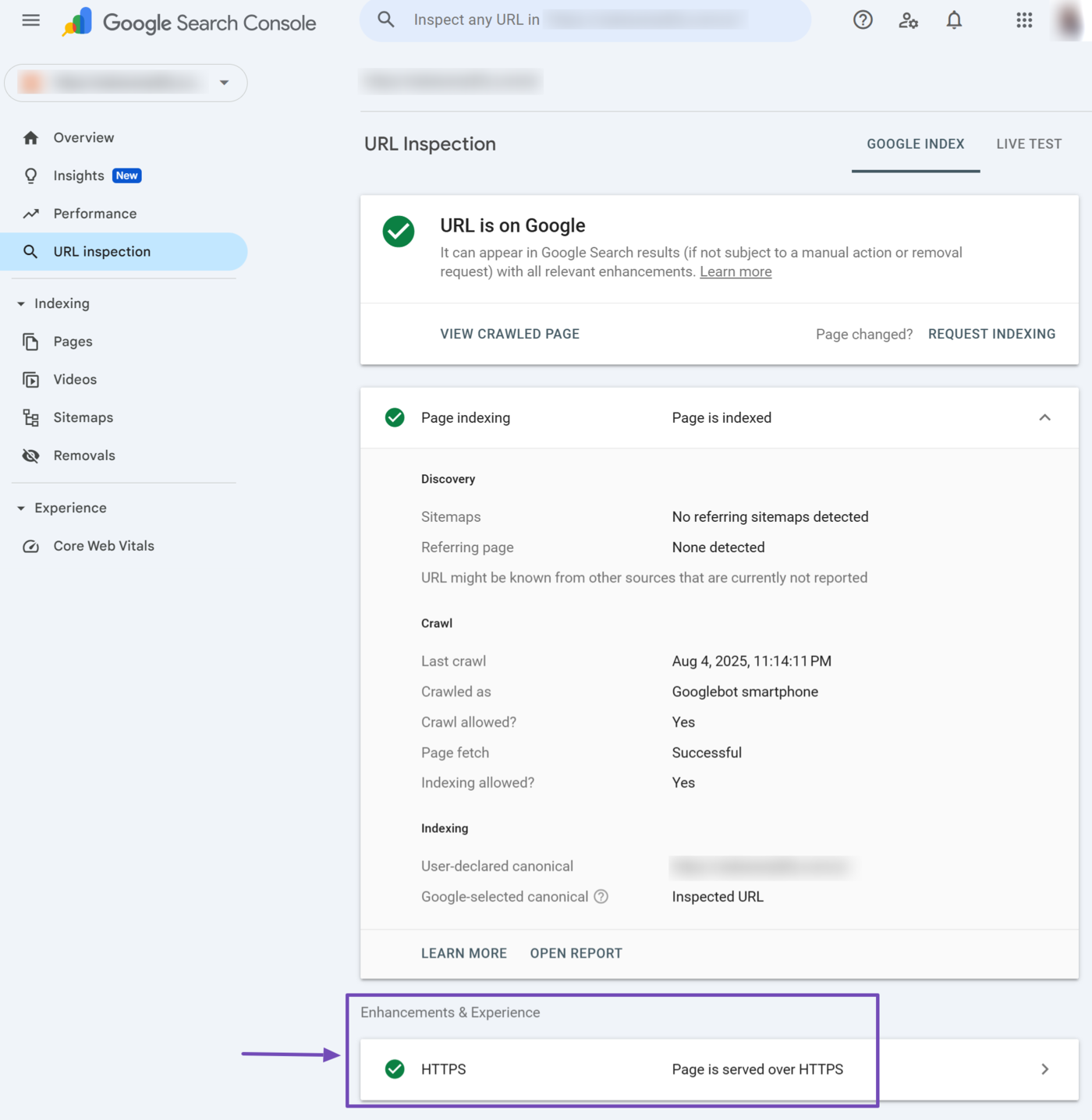
Was ist das URL-Inspektionstool?
Das URL-Inspektionswerkzeug ist ein Google Search Console Funktion, die detaillierte Informationen darüber liefert, wie Google eine bestimmte URL auf Ihrer Website. Sie ist exklusiv für Google und kann vom Blogger nur über ein Google Search Console-Konto aufgerufen werden.
Auch die URL-Kontrollel ermöglicht es Webmastern, den Indexstatus zu prüfen, zu identifizieren krabbelnd und Indizierung Probleme und die gerenderte Version ihrer Webseiten anzeigen. Blogger können damit auch beantragen, dass Google ihre Seiten indexiert.
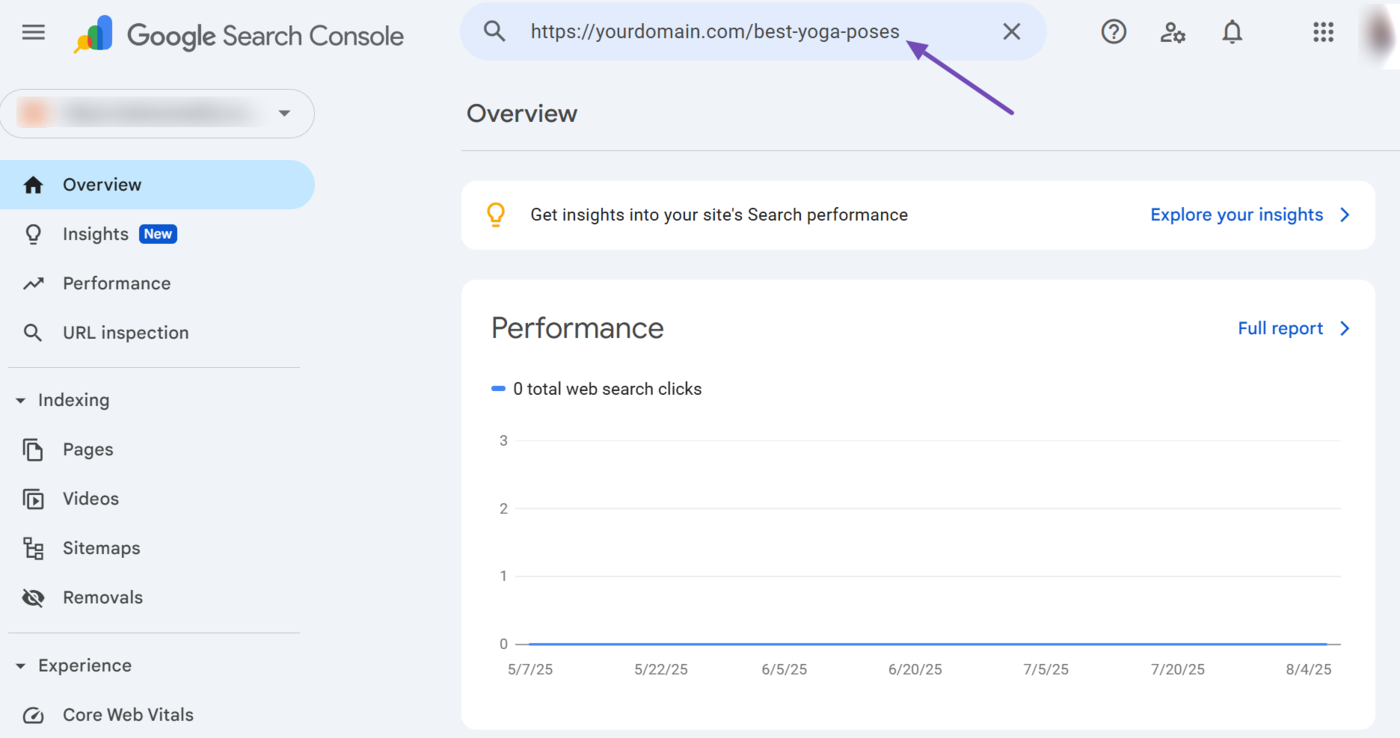
Das Tool zur URL-Überprüfung ist das Suchfeld am oberen Rand der Google Search Console. Sie können es schnell aufrufen, indem Sie auf das Feld selbst klicken oder indem Sie URL-Prüfung, Wie nachfolgend dargestellt.
{Beispiel für das Tool zur Überprüfung der URL in der Google Search Console
Bedeutung des Tools zur URL-Prüfung
Mit dem Tool zur URL-Inspektion können Blogger und SEO-Profis detaillierte Einblicke in die Wahrnehmung bestimmter Seiten auf ihrer Website durch Google gewinnen. Das Tool ermöglicht es Bloggern beispielsweise, Webseiten zu identifizieren, die Google gecrawlt, indiziert und nicht indiziert hat.
Mit dem Tool zur URL-Prüfung können Blogger auch die Probleme identifizieren, die Google daran hindern könnten, ihre Seiten zu crawlen und zu indizieren. Dies ist von entscheidender Bedeutung, da es sicherstellt, dass wichtige Seiten Ihrer Website für Google zugänglich sind und auf den Google-Suchergebnisseiten korrekt angezeigt werden.
Verwendung des Tools zur URL-Prüfung
Das Tool zur URL-Überprüfung ist intuitiv und einfach zu bedienen. Um loszulegen, melden Sie sich in Ihrem Google Search Console und geben Sie die zu prüfende URL in das URL-Prüfwerkzeug oben auf der Seite ein. Klicken Sie anschließend auf Eingeben auf Ihrer Tastatur.
Google Search Console wird den Indexstatus und andere Berichte über die URL zurückgeben.
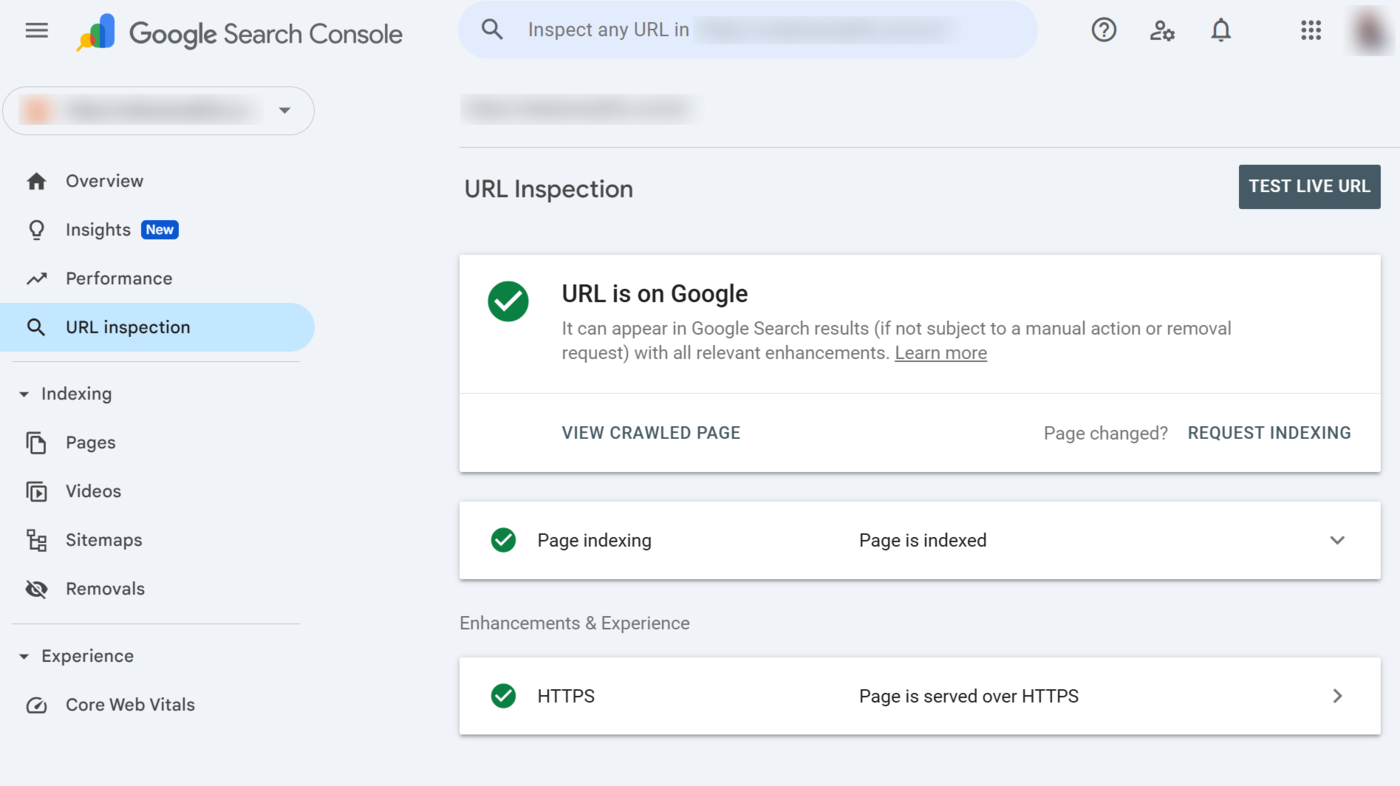
URL-Inspektionswerkzeug Berichte
Das URL-Inspektionstool bietet mehrere Optionen und Berichte, mit denen Sie bestimmte Aktionen durchführen und beurteilen können, wie Google Ihre Seiten wahrnimmt. Wir werden sie im Folgenden näher erläutern.
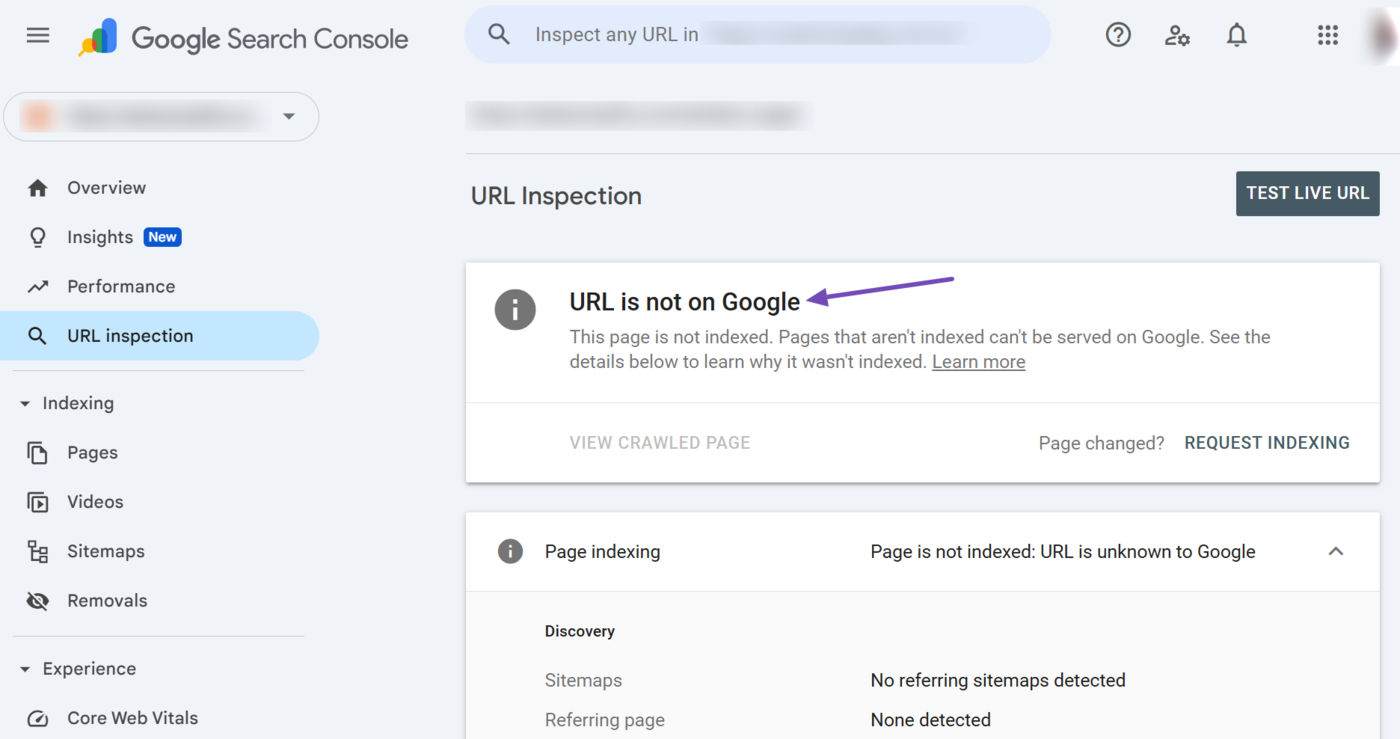
1 URL ist auf Google
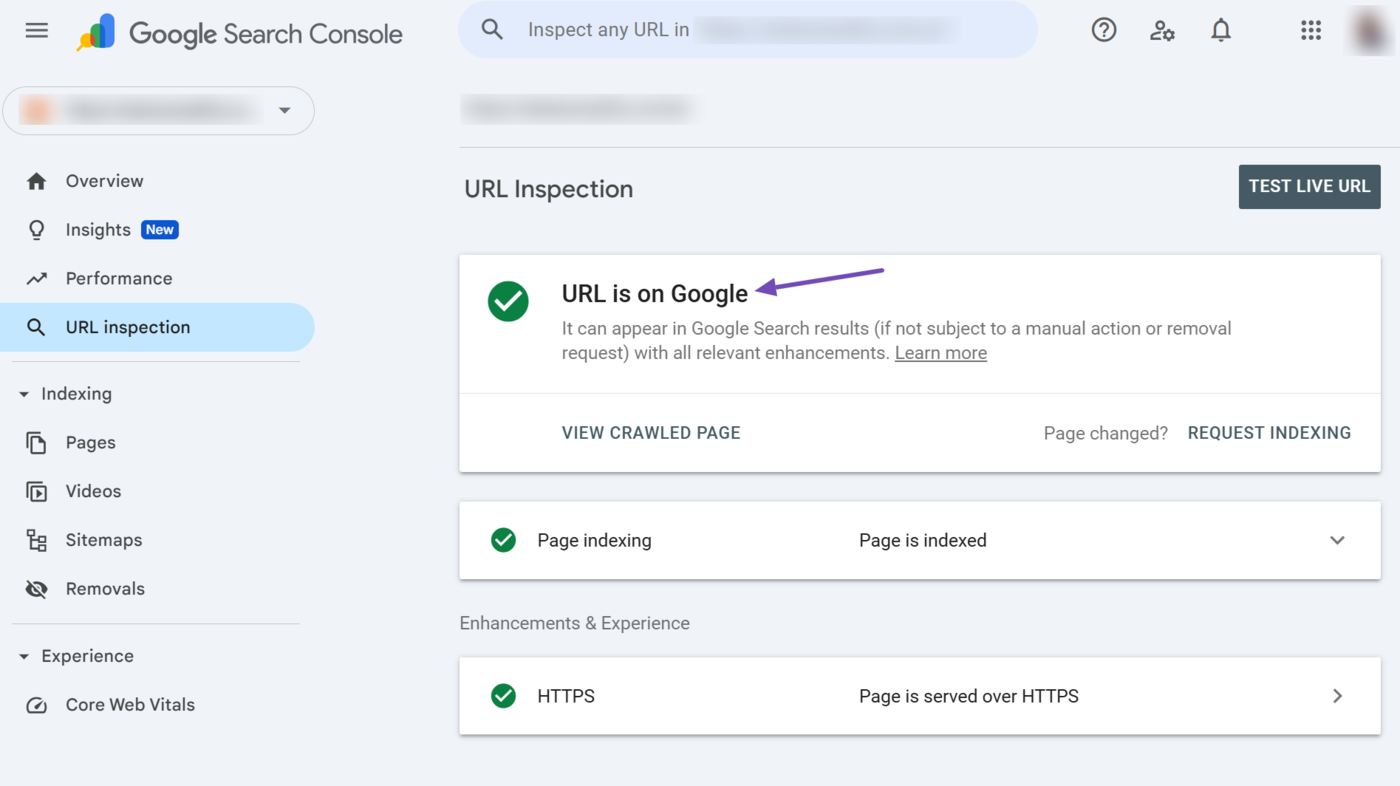
Oben im Tool URL-Inspektion befindet sich der Indexstatus. Es wird einer von zwei Statusberichten angezeigt:
- URL ist auf Google
- URL ist nicht bei Google
URL ist auf Google zeigt an, dass Google die Seite indiziert hat und sie auf der Website anzeigen kann. Suchergebnisseiten. Dieser Statusbericht ist keine Garantie dafür, dass Google die URL auf den Suchergebnisseiten anzeigen wird. Er zeigt nur an, dass die Seite für die Anzeige geeignet ist und Google sie möglicherweise anzeigt.
Auf der anderen Seite ist die URL ist nicht bei Google Statusbericht zeigt an, dass Google die URL nicht indiziert hat und sie nicht auf den Suchergebnisseiten anzeigen kann. Dieser Statusbericht zeigt an, dass die URL nicht verfügbar ist, oder dass Google sie aus bestimmten Gründen nicht crawlen oder indizieren konnte.
2 Indizierung anfordern
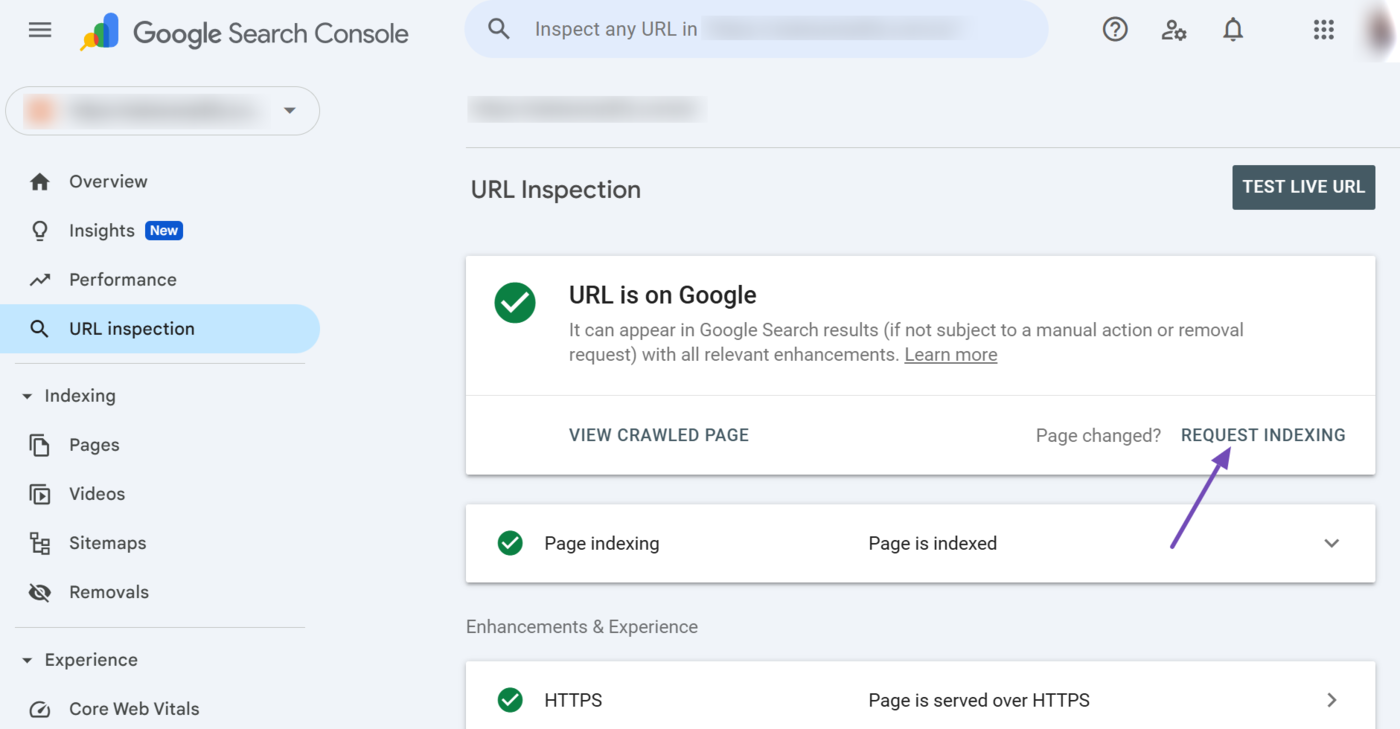
Mit der Option Indizierung anfordern können Sie Google auffordern, die Webseite zu indizieren. Dies ist praktisch, wenn Sie die Seite seit dem letzten Besuch von Google aktualisiert haben. Klicken Sie die Option jedoch nur einmal an, da ein mehrfaches Anklicken keinen Einfluss darauf hat, wie schnell Google die Seite neu aufruft.
3 Live-URL testen
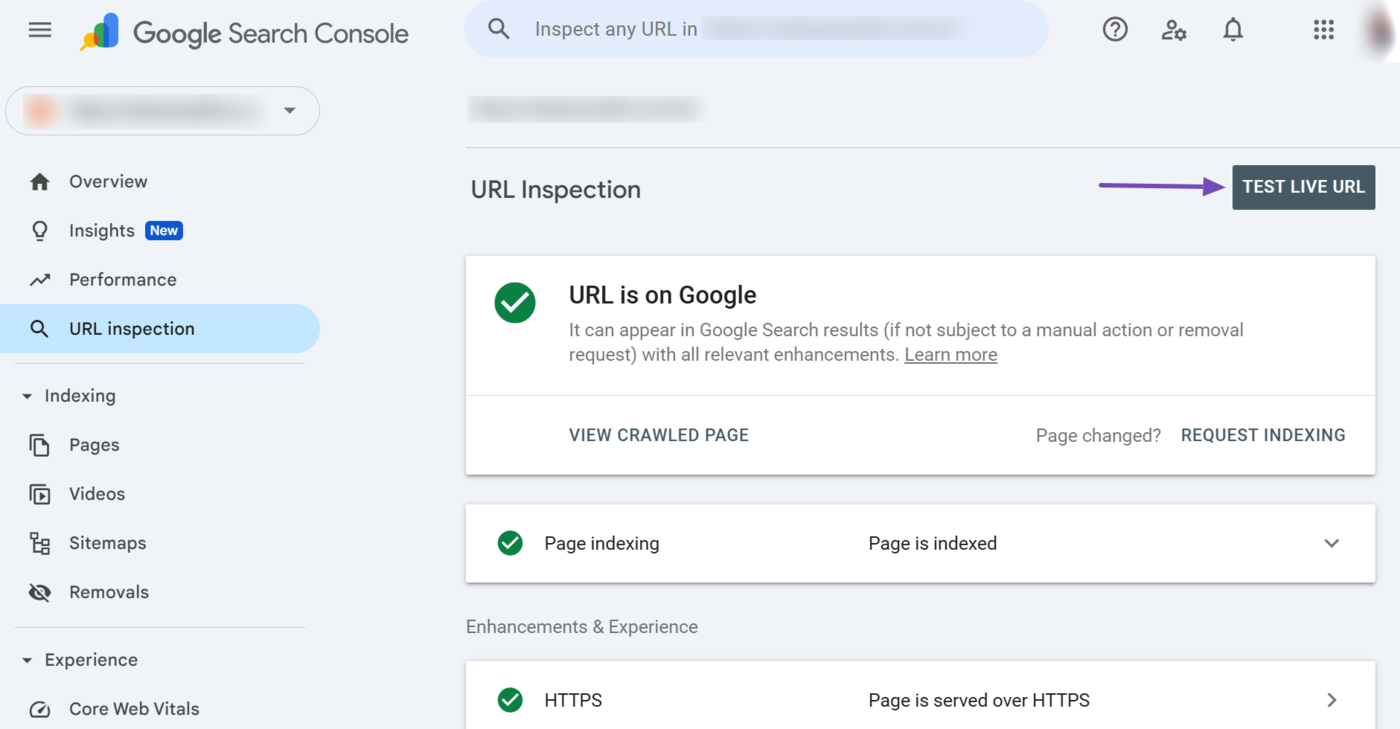
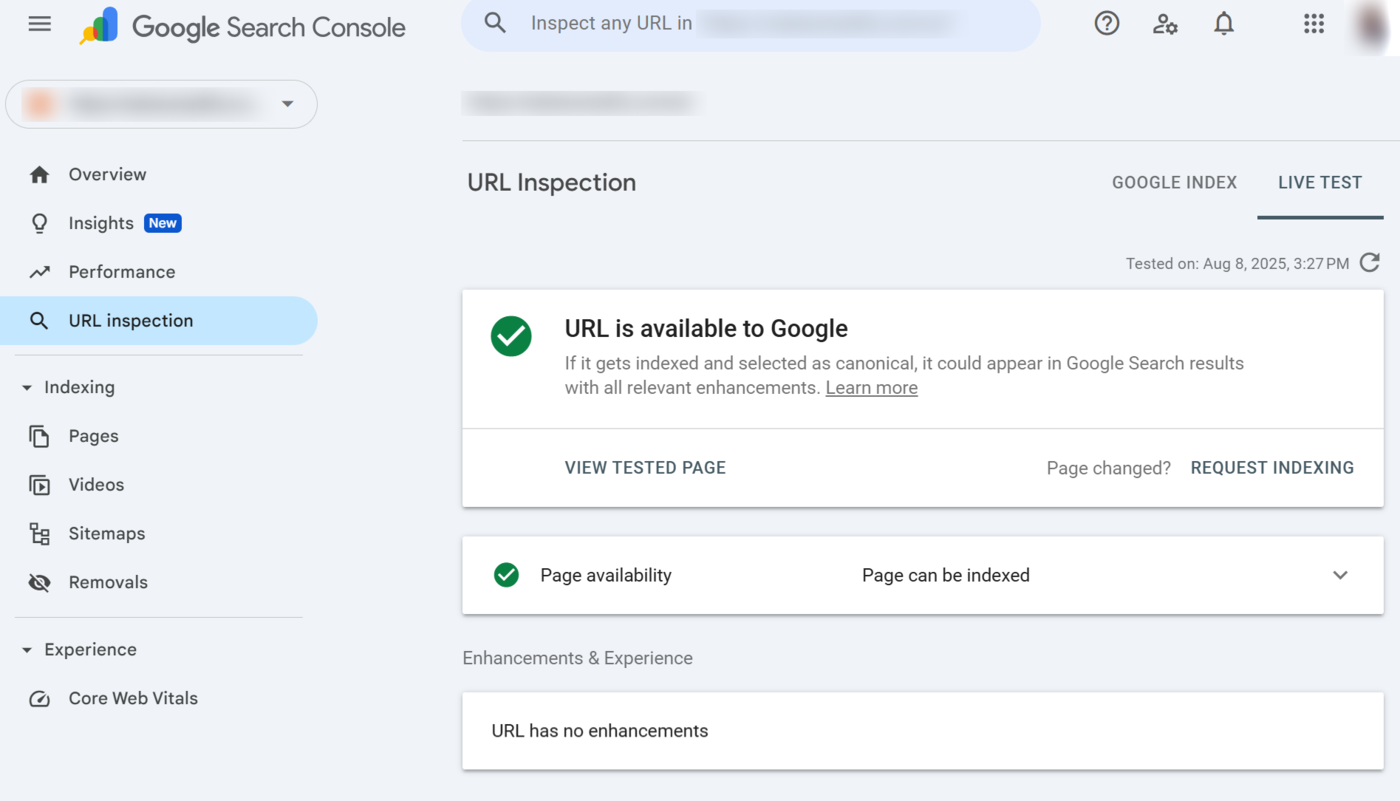
Mit der Option "Live-URL testen" können Sie sehen, wie die URL in Echtzeit erscheint und nicht, wie sie derzeit im Google-Index erscheint. Diese Option hilft dabei, Probleme auf der Seite zu erkennen oder sie nach der Behebung eines Problems zu testen.
Um die Live-URL zu testen, klicken Sie auf Live-URL testen.
Das Tool zur URL-Prüfung führt einen Live-Test der URL durch und gibt die Ergebnisse zurück. Überprüfen Sie die Ergebnisse, um die aktuelle Situation der Webseite zu diagnostizieren.
4 Indizierung von Seiten
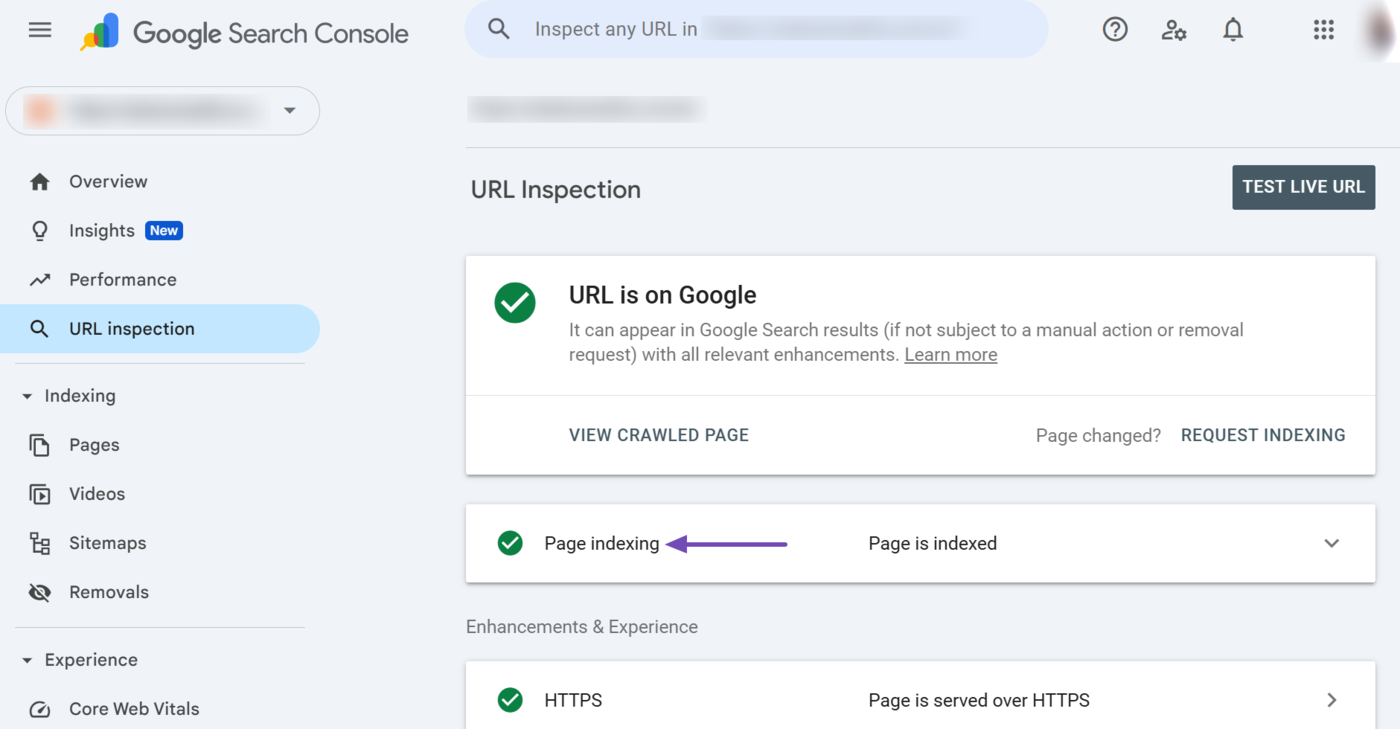
Der Seitenindizierungsbericht gibt Aufschluss darüber, wie Google die Seite entdeckt, gecrawlt und indiziert hat. Sie möchten, dass der Bericht eine Seite wird indiziert Nachricht. Klicken Sie auf den Bericht, um ihn zu erweitern.
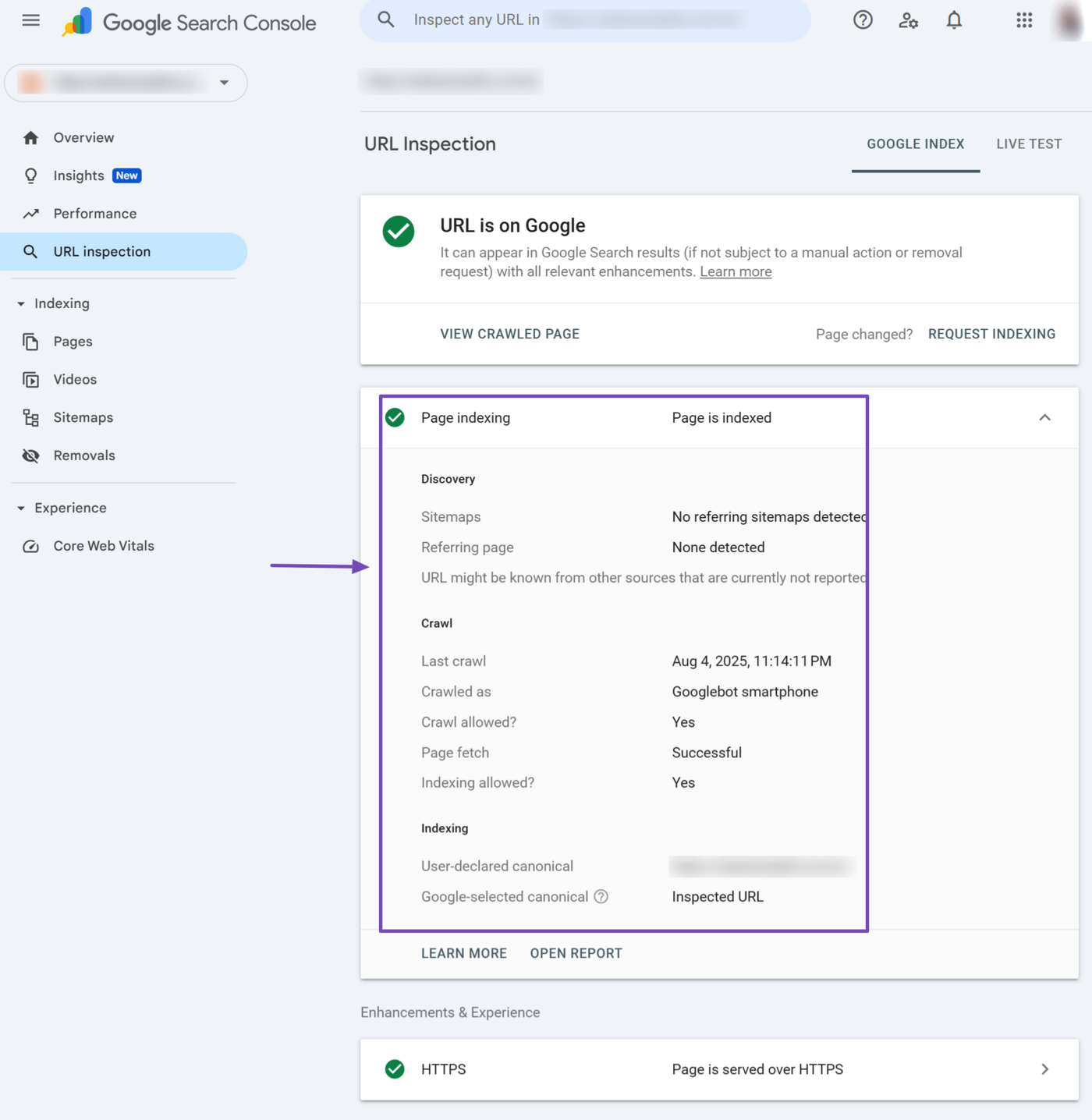
Nach der Erweiterung zeigt der Seitenindexierungsbericht mehrere Berichte an, darunter die folgenden:
- Sitemaps
- Verweisende Seite
- Letztes Krabbeln
- Gekrabbelt als
- Krabbeln erlaubt?
- Seite abrufen
- Indizierung erlaubt?
- User-declared canonical
- Google-selected canonical
We will explain the available reports below.
5 Sitemaps
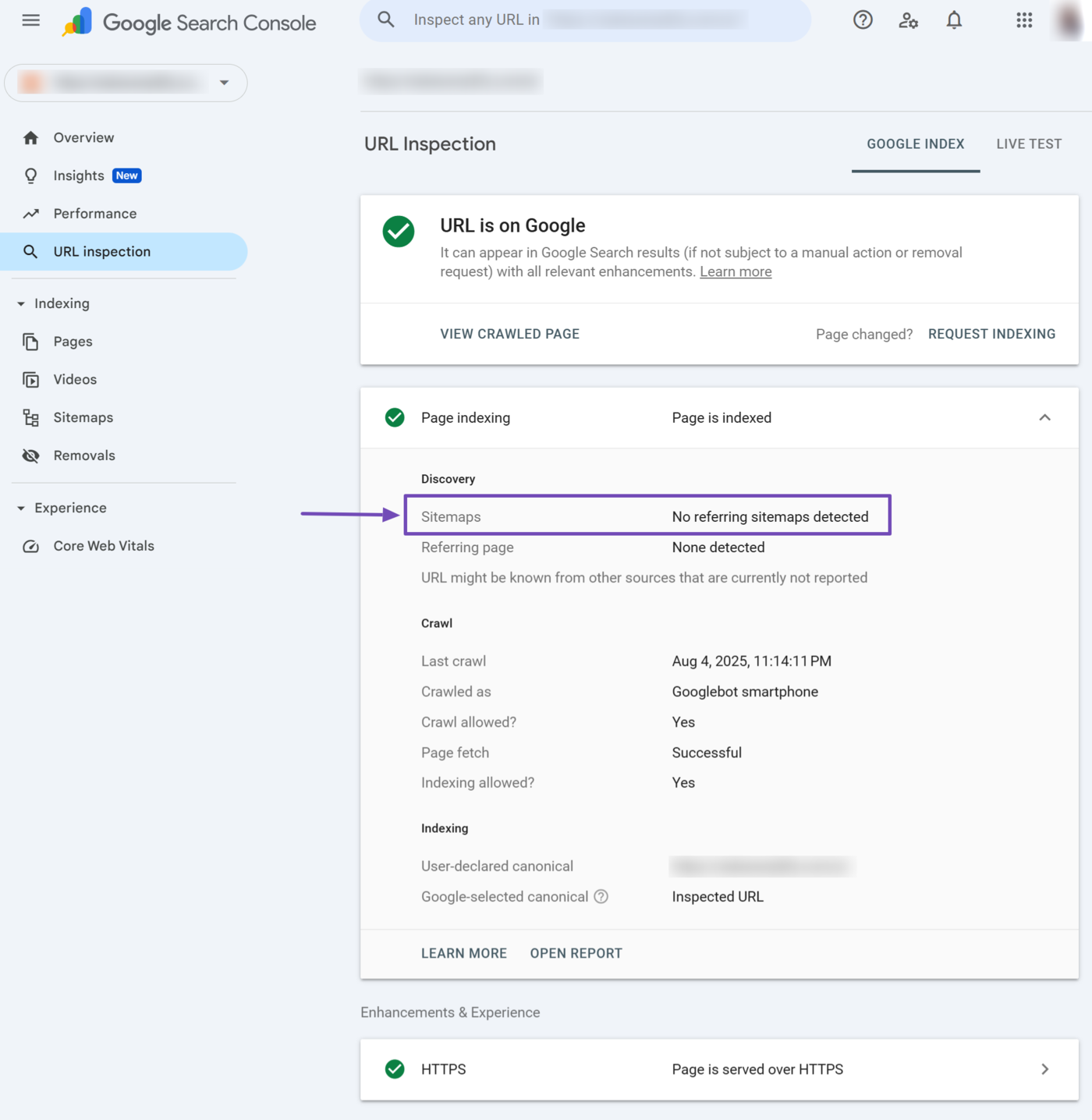
The sitemaps section should contain the URL of your Seitenverzeichnis. Otherwise, it may return “Temporary processing error” or “No referring sitemap detected.”
- Temporary processing error: This indicates a temporary issue that prevents Google from retrieving data from your sitemap. You may re-inspect the URL to check if it resolves the problem.
- No referring sitemap: This indicates that Google could not identify the sitemap that contains and refers to the inspected URL.
6 Referring Page
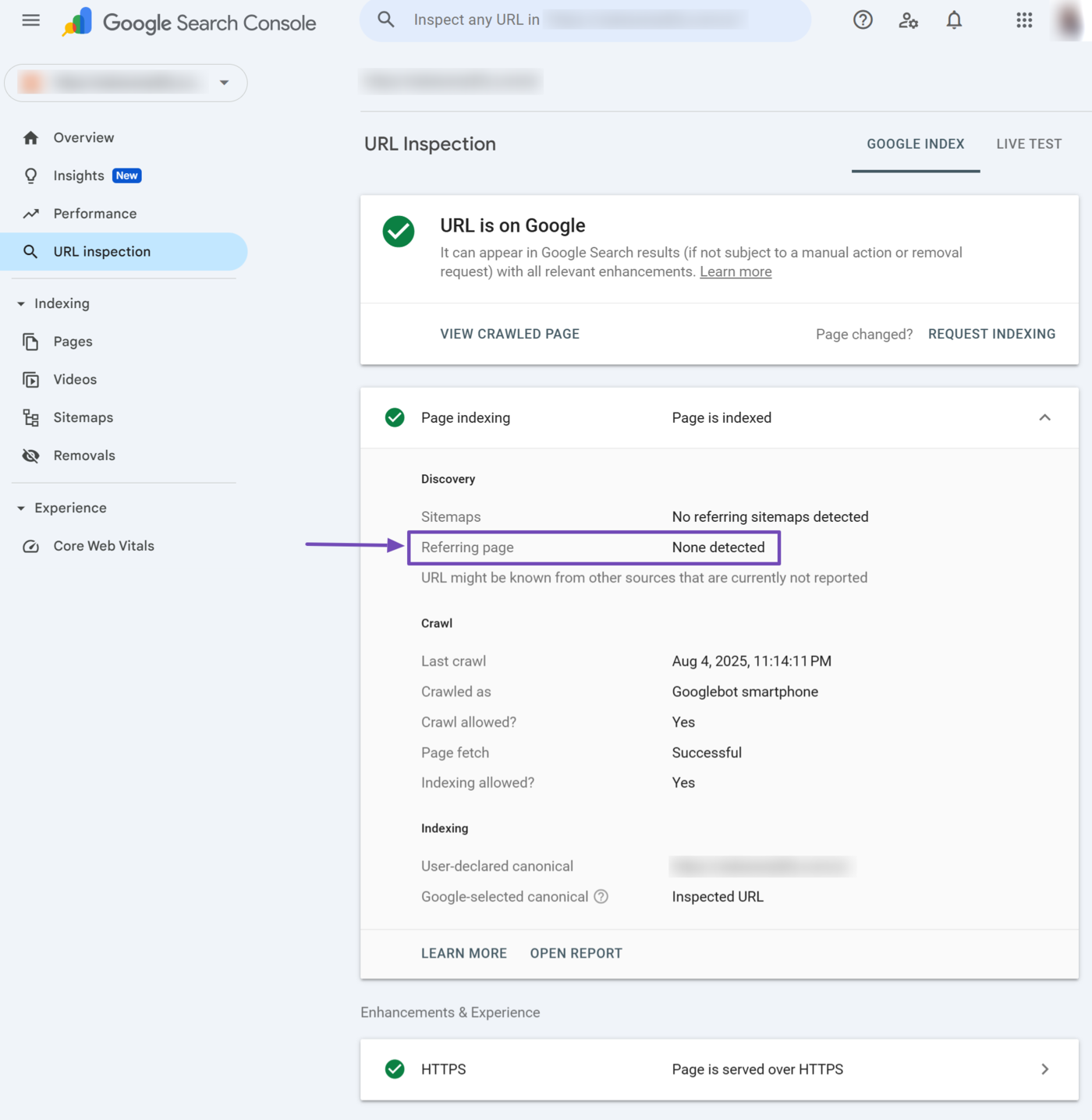
The referring page field contains the URL through which Google discovered the URL. This field may contain the inspected URL or the URL of some other page linking to it.
This field may also be blank if the referring information is not available. Optionally, it may display “URL might be known from other sources that are currently not reported” to indicate that Google discovered the URL through some other means.
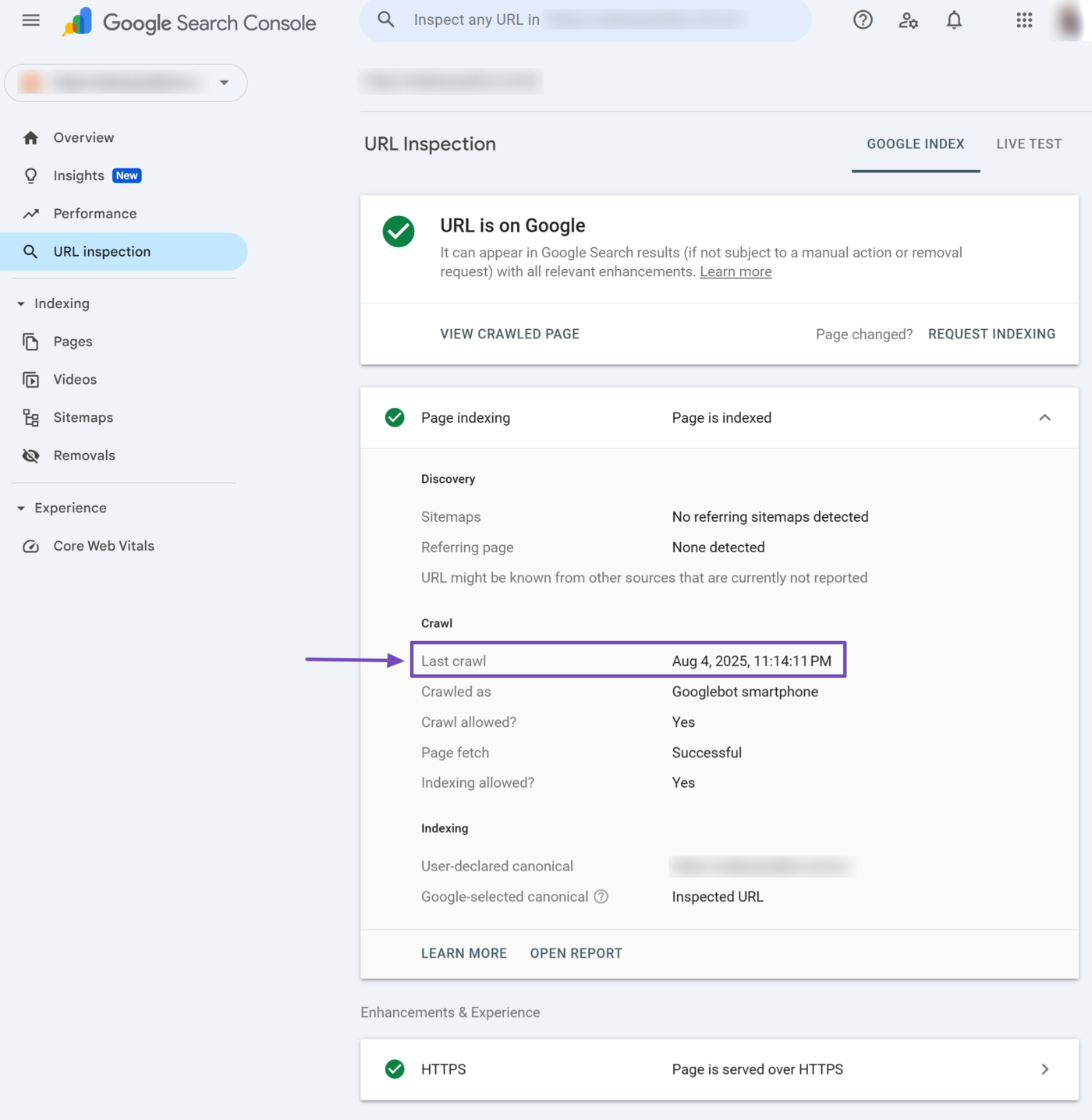
7 Last Crawl
The last crawl field specifies the date and time Google last crawled the inspected URL.
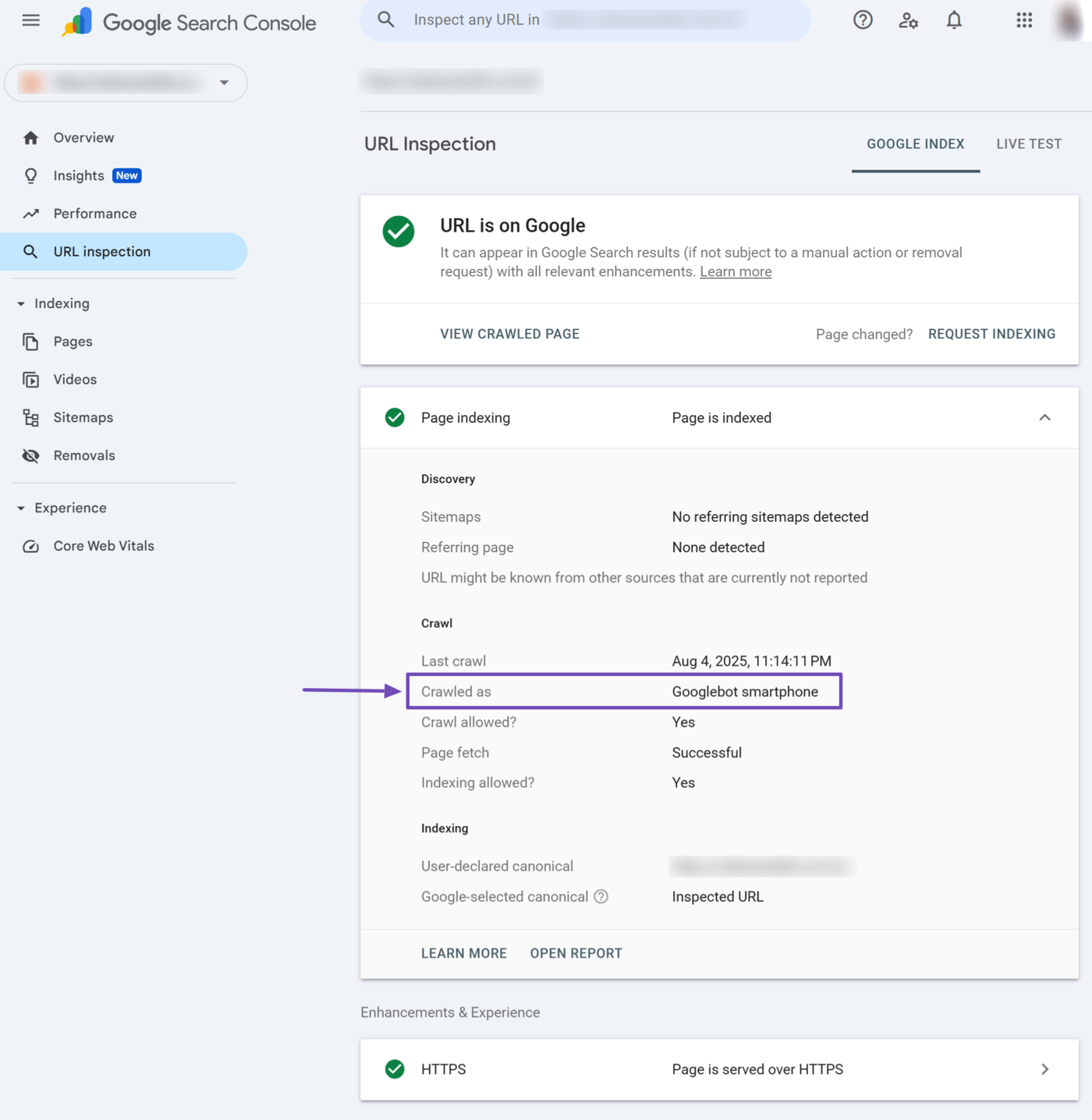
8 Gekrochen als
The crawled as field specifies the crawler Google used to crawl the URL. The crawler could be “Googlebot desktop” or “Googlebot smartphone.”
- Googlebot desktop: The Googlebot crawler that imitates a desktop
- Googlebot smartphone: The Googlebot crawler that imitates a smartphone
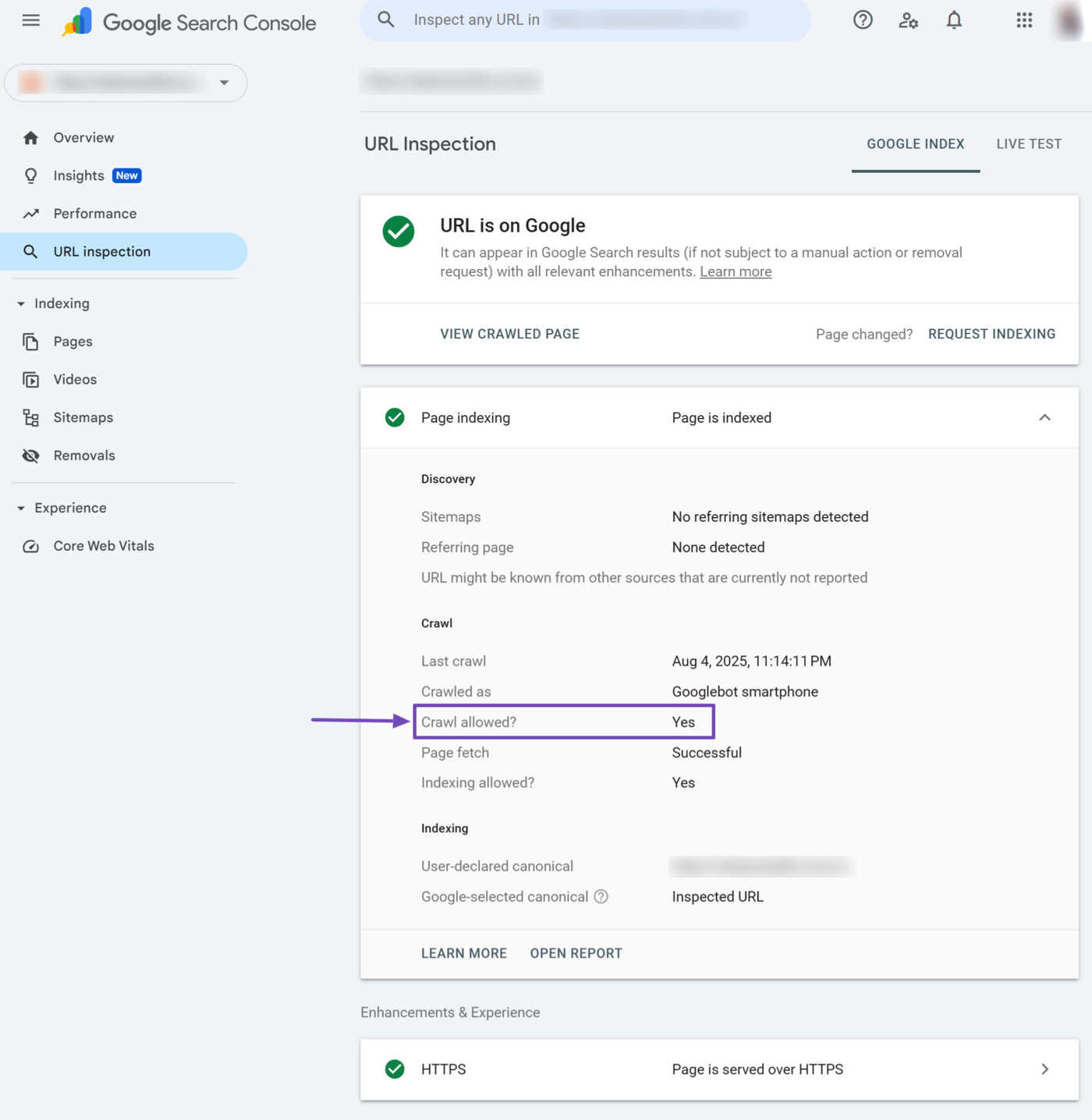
9 Crawl Allowed?
The crawl allowed field specifies whether you allow or block Google from crawling the page. It would return a Ja if you allow Google to crawl the page.
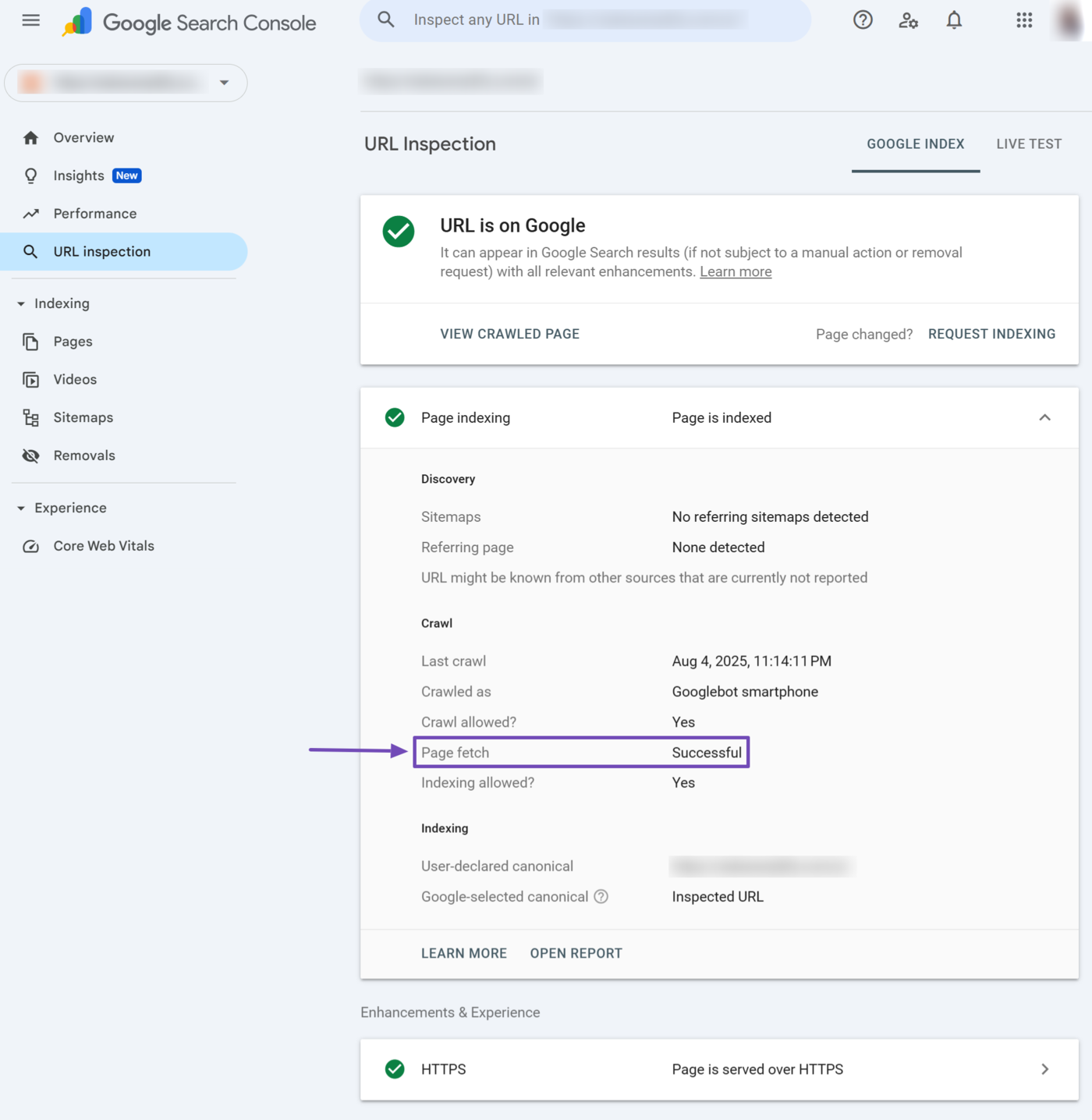
10 Seitenabruf
The page fetch field specifies whether Google can access the webpage. Google cannot index the page if it cannot fetch it. This field could return:
- Erfolgreich: Google was able to fetch the page
- Failed: Google cannot fetch the page, and will include why Google could not fetch the page
- N / A: Google cannot fetch the page for some unidentified reason
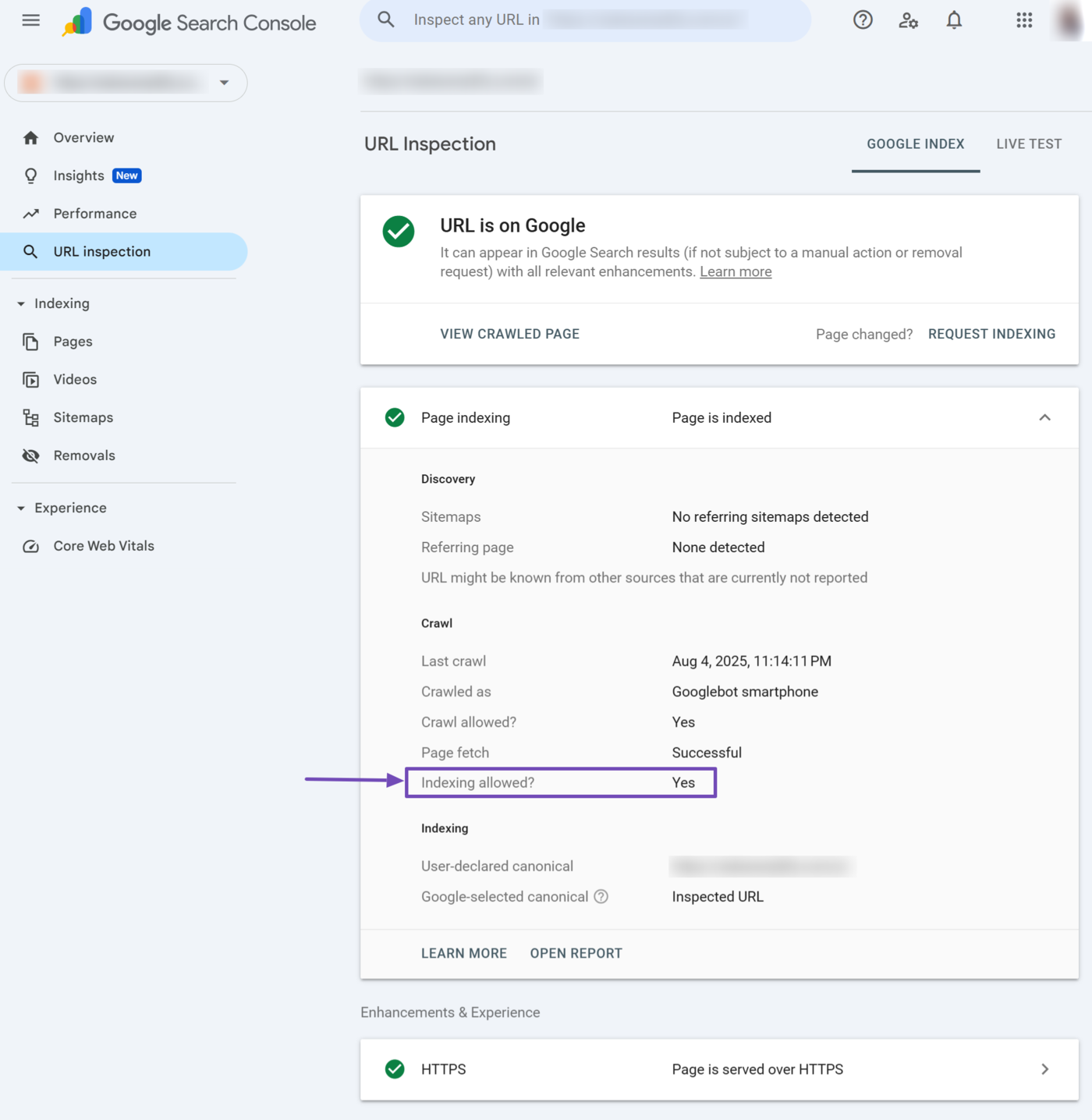
11 Indexing Allowed?
The indexing allowed field indicates whether you allow Google to index the page. It will return Ja if you allow indexing. Otherwise, it will return the reason Google could not index the page. Unindexed pages cannot appear on Google results pages.
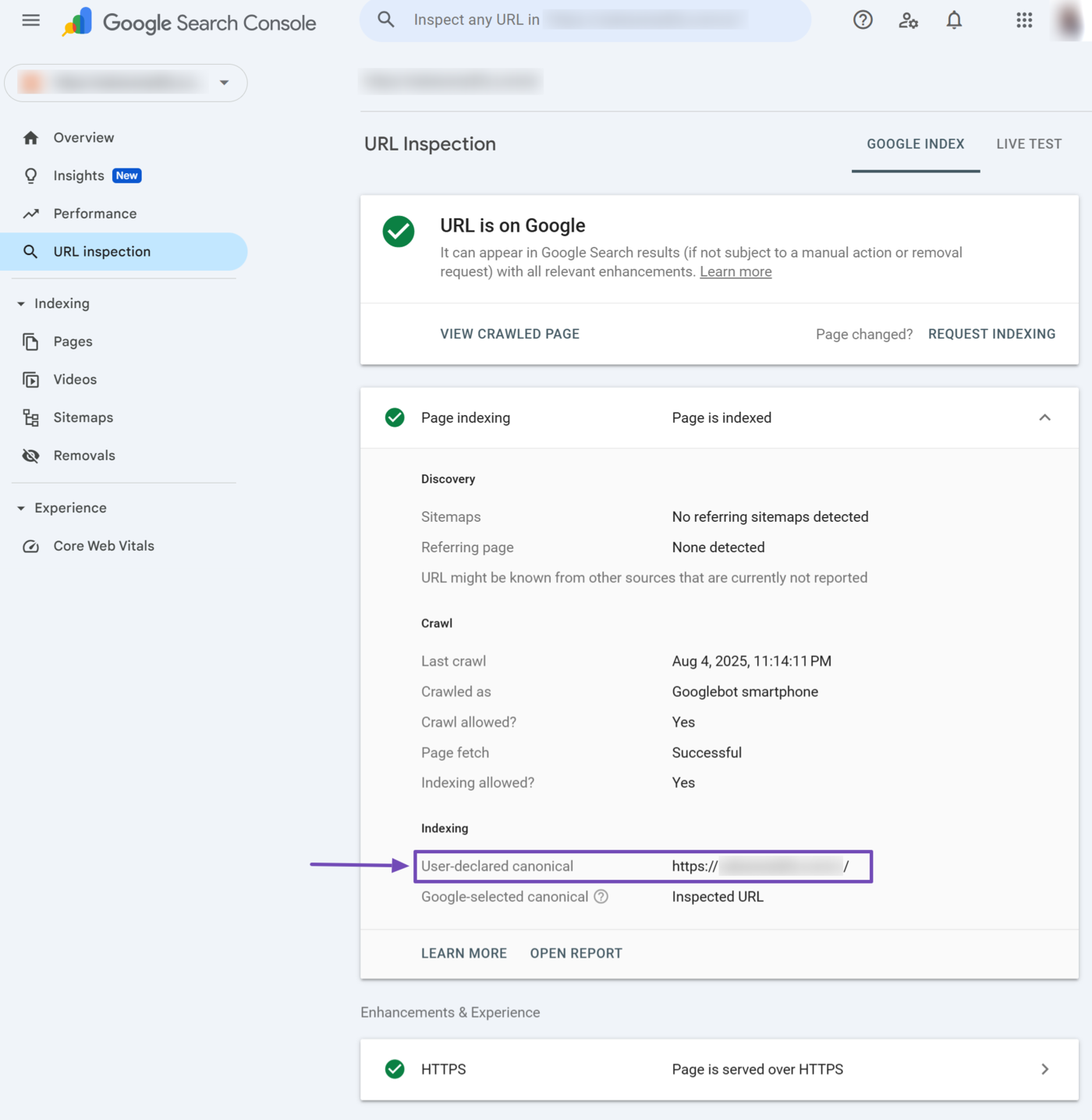
12 User-Declared Canonical
The user-declared canonical field indicates the kanonische URL you declared for the URL. The canonical URL indicates the main URL among a group of URLs that lead to the same content.
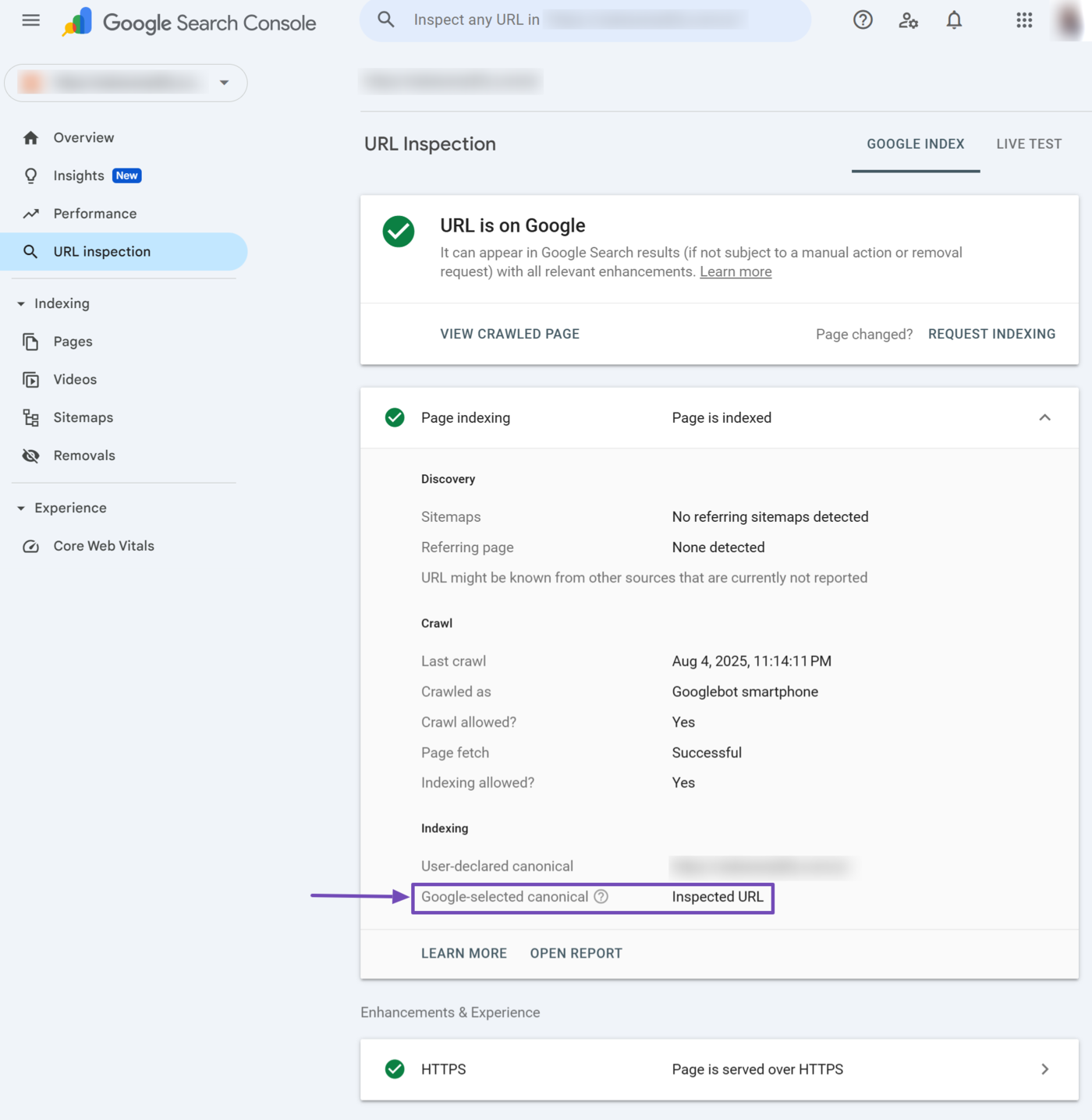
13 Google-Selected Canonical
The Google-selected canonical field specifies the URL that Google selected as canonical. If Google considers the URL you inspect as canonical, it displays Inspected URL. Otherwise, it will display the URL Google considers canonical.
This field may contain a URL from a different site under certain circumstances. This could happen if your content originally appeared on another site.
14 Experience & Enhancements
This Experience & Enhancements section outlines the enhancements made to the URL. The specific reports displayed here differ from URL to URL. For example, the inspected URL contains HTTPS.